
Database
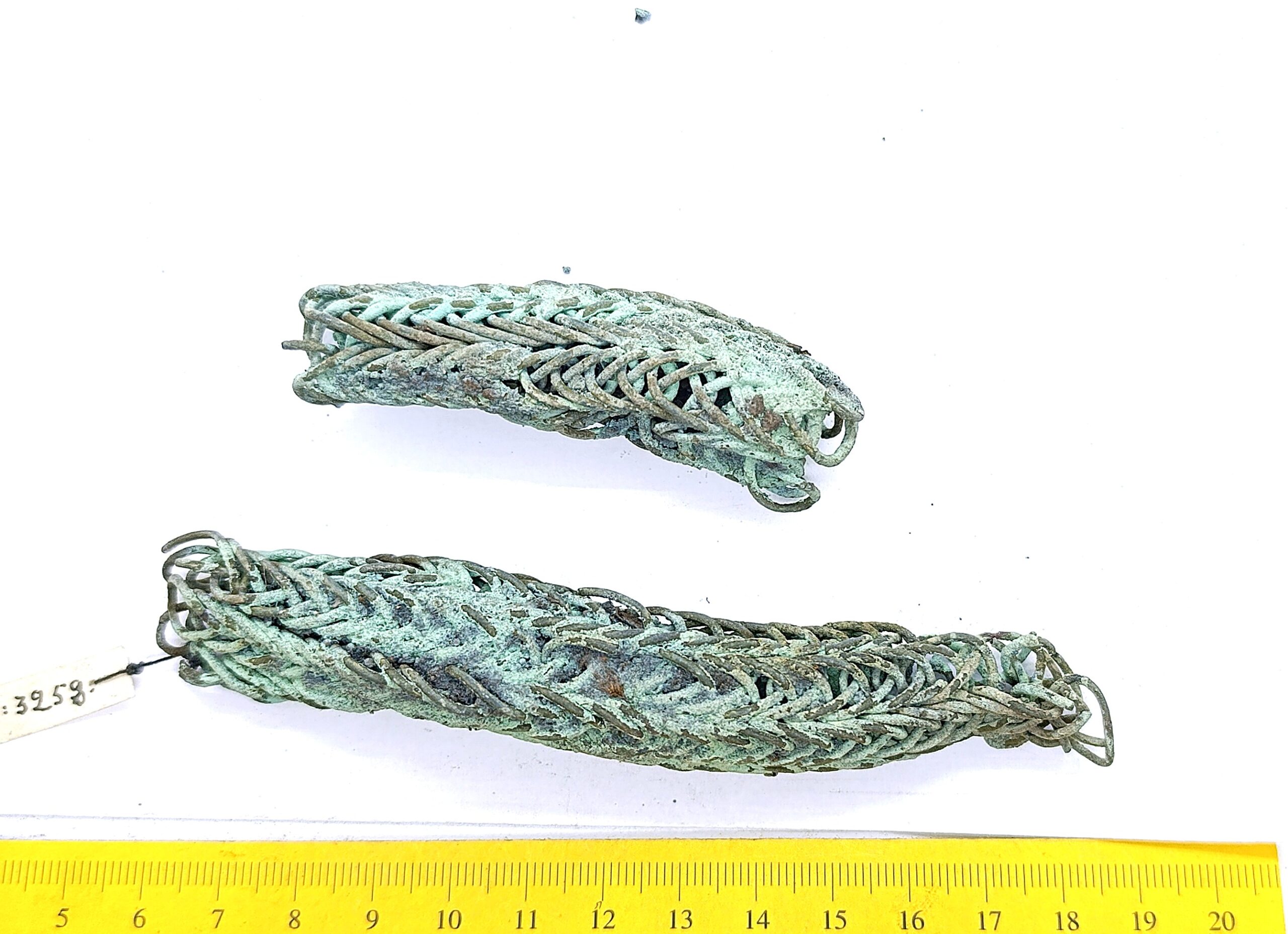
 Woven chain, copper alloy. Fragments of finely braided chains made of thin copper alloy wires have been compared to similar finds in Karelia (Ligi 1993, 50). In Latvia they appeared at the end of the 12th century and were still in use during the 13th century (Zariņa 2006, 276; Spirģis 2008, 175).
Literature:
Ligi, P. 1993. Vadjapärased kalmed Kirde-Eestis (9.–16. sajandil). – Vadjapärased kalmed Eestis 9.–16. sajandil. / Votic-style graves in Estonia from the 9th to the 16th centuries. Eds. V. Lang. (Muinasaja Teadus, 2.) Tallinn, 7–175.
Spirģis, R. 2008. Bruņrupuču saktas ar krūšu važiņrotām un lībiešu kultūras attīstība Daugavas lejtecē 10.–13. gadsimtā. Latvijas Vēstures Institūta Apgāds, Rīga.
Zariņa, A. 2006. Salaspils Laukskolas kapulauks 10.–13. gadsimts. Latvijas Vēstures Institūta Apgāds, Rīga.
Century:
12-13
Discovery code:
AI 3884: 3258
Viltina
Fragment of a neck ring, copper alloy.
Century:
10-13
Discovery code:
AI 3884: 3376
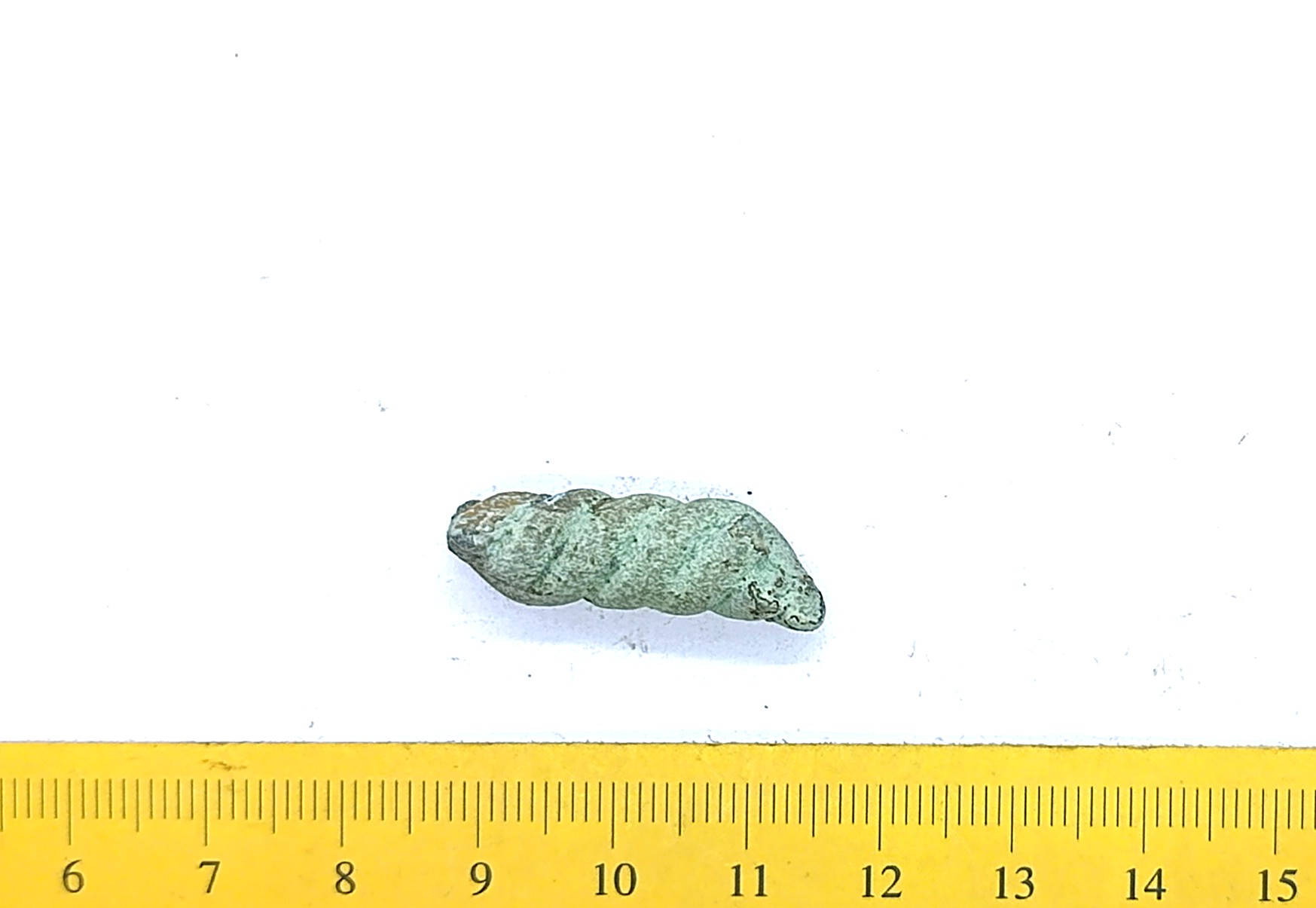
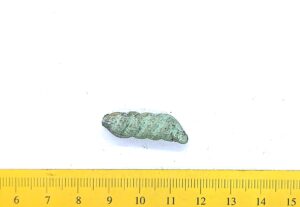 Fragment of a neck ring, copper alloy. Fragments of neck rings made of several twisted wires are common finds in Saaremaa stone graves with cremations. Since it is normally not possible to determine the exact type of these neck-rings, they can be dated to the whole period from the 10th to the 13th century (see also: Mägi 2002, 107).
Literature:
Mägi, M. 2002. At the Crossroads of Space and Time. Graves, Changing Society and Ideology on Saaremaa (Ösel), 9th–13th Centuries AD. (CCC Papers, 6.) Tallinn.
Century:
10-13
Discovery code:
AI 3884: 3376
Viltina
Fragment of a neck ring, copper alloy.
Century:
10-11
Discovery code:
AI 3884: 3517
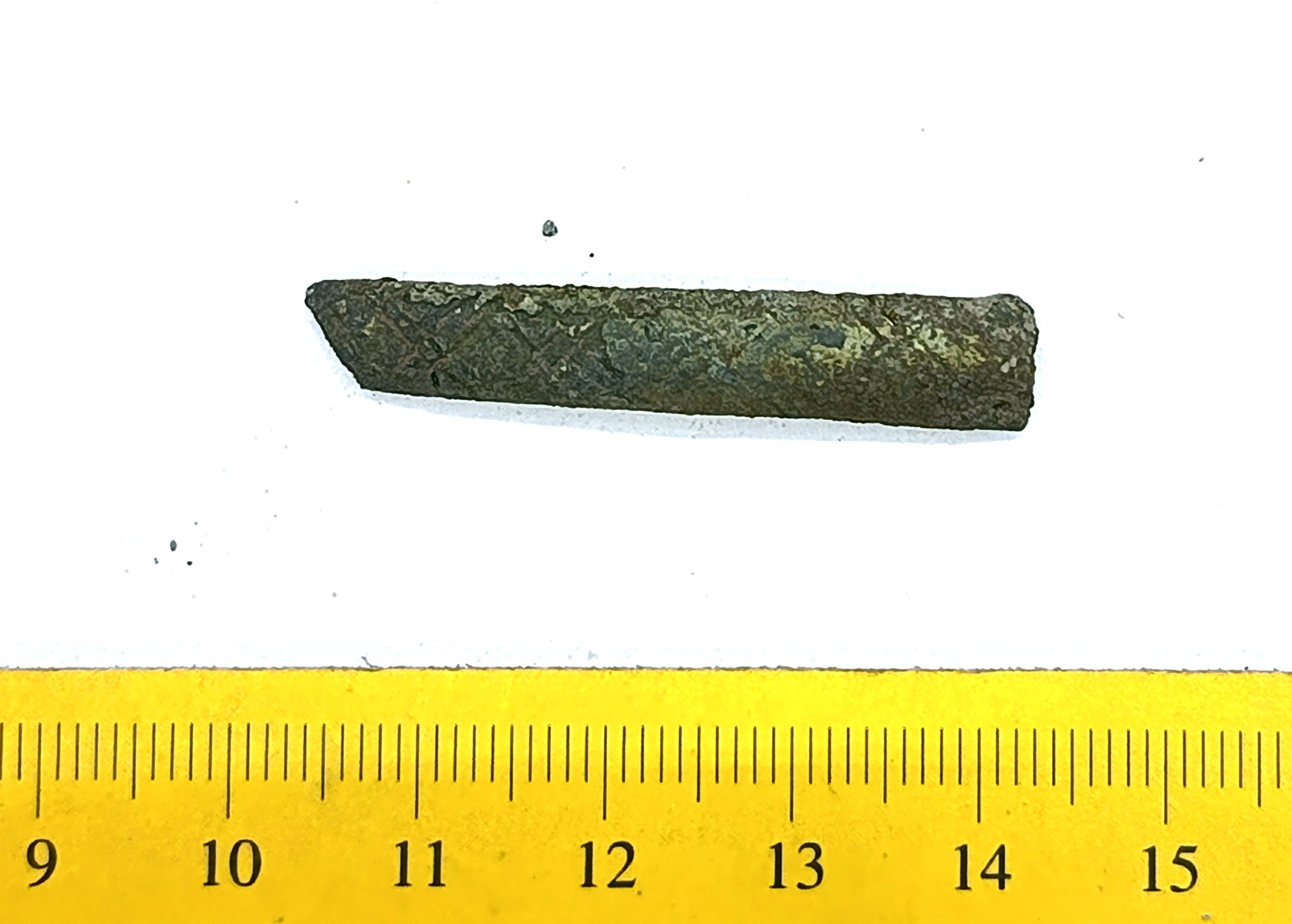
 Fragment of a neck ring, copper alloy. Composite neck rings are usually assembled from three separate rings, using copper alloy clasps. This type of neck ring has only been found on Saaremaa (Mägi 2002, 107; 2019, 73). Similar finds have been obtained from Kurzeme, and they were also worn by Semigallians in the 10th–11th centuries (Tvauri 2014, 144; Griciuvienė 2005, 76-77).
Literature:
Mägi, M. 2002. At the Crossroads of Space and Time. Graves, Changing Society and Ideology on Saaremaa (Ösel), 9th–13th centuries AD. (CCC papers, 6.) Estonian Academy of Sciences, Institute of History, Tallinn / Gotland University College, Centre for Baltic Studies, Gotland.
Mägi, M. 2019. Late Viking Age burial place and ritual deposits at Lööne, Saaremaa. – Archaeological Fieldwork in Estonia 2018, 67–78.
Tvauri, A. 2014. Rahvasterännuaeg, eelviikingiaeg ja viikingiaeg Eestis. Tartu Ülikooli Kirjastus. Tartu.
Griciuvienė, E. (prepared by) 2005. Žiemgaliai. Baltų archeologijos paroda. Katalogas. The Semigallians. Baltic Archaeological Exhibition. Catalogue. Vilnius – Riga, Lietuvos nacionalis muziejus; Latvijas Vēstures muzejs.
Century:
10-11
Discovery code:
AI 3884: 3517
Viltina
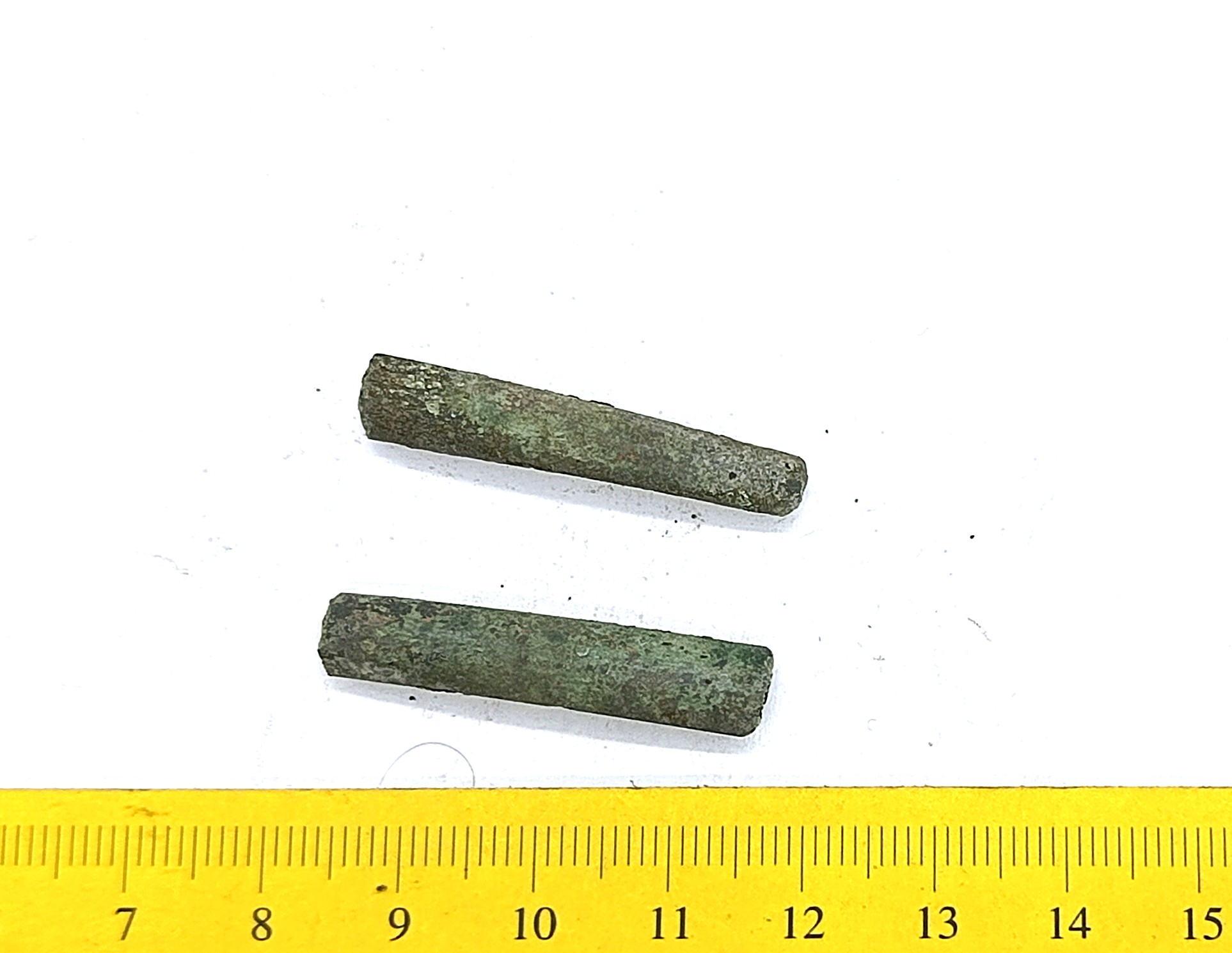
Fragments of a neck ring, 2, copper alloy.
Century:
10-11
Discovery code:
AI 3884: 3695
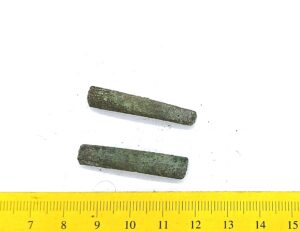 Fragments of a neck ring, 2, copper alloy. Composite neck rings are usually assembled from three separate rings, using copper alloy clasps. This type of neck ring has only been found on Saaremaa (Mägi 2002, 107; 2019, 73). Similar finds have been obtained from Kurzeme, and they were also worn by Semigallians in the 10th–11th centuries (Tvauri 2014, 144; Griciuvienė 2005, 76-77).
Literature:
Mägi, M. 2002. At the Crossroads of Space and Time. Graves, Changing Society and Ideology on Saaremaa (Ösel), 9th–13th centuries AD. (CCC papers, 6.) Estonian Academy of Sciences, Institute of History, Tallinn / Gotland University College, Centre for Baltic Studies, Gotland.
Mägi, M. 2019. Late Viking Age burial place and ritual deposits at Lööne, Saaremaa. – Archaeological Fieldwork in Estonia 2018, 67–78.
Tvauri, A. 2014. Rahvasterännuaeg, eelviikingiaeg ja viikingiaeg Eestis. Tartu Ülikooli Kirjastus. Tartu.
Griciuvienė, E. (prepared by) 2005. Žiemgaliai. Baltų archeologijos paroda. Katalogas. The Semigallians. Baltic Archaeological Exhibition. Catalogue. Vilnius – Riga, Lietuvos nacionalis muziejus; Latvijas Vēstures muzejs.
Century:
10-11
Discovery code:
AI 3884: 3695
Viltina
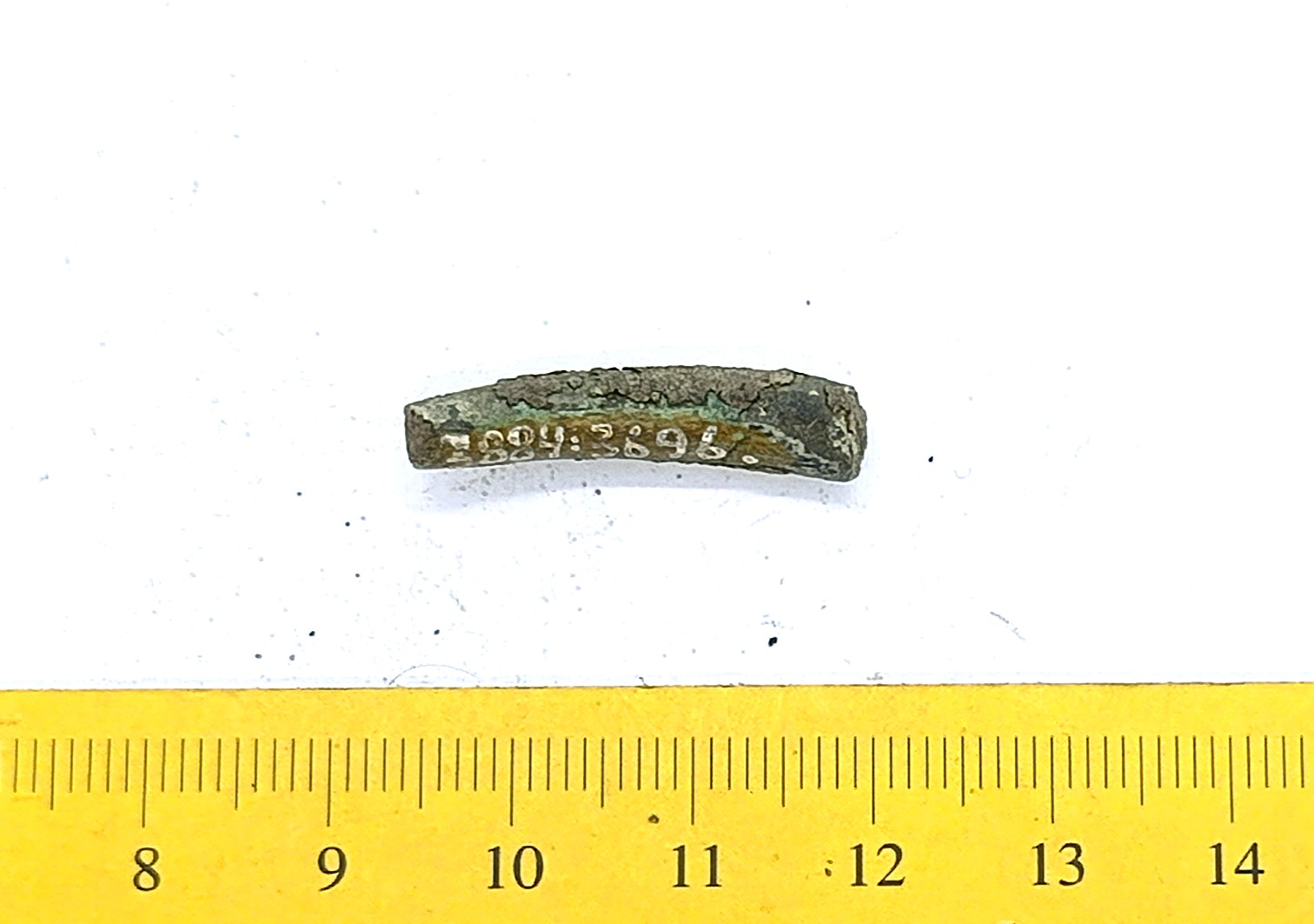
Fragment of a neck ring, copper alloy.
Century:
10-11
Discovery code:
AI 3884: 3696
 Fragment of a neck ring, copper alloy. Composite neck rings are usually assembled from three separate rings, using copper alloy clasps. This type of neck ring has only been found on Saaremaa (Mägi 2002, 107; 2019, 73). Similar finds have been obtained from Kurzeme, and they were also worn by Semigallians in the 10th–11th centuries (Tvauri 2014, 144; Griciuvienė 2005, 76-77).
Literature:
Mägi, M. 2002. At the Crossroads of Space and Time. Graves, Changing Society and Ideology on Saaremaa (Ösel), 9th–13th centuries AD. (CCC papers, 6.) Estonian Academy of Sciences, Institute of History, Tallinn / Gotland University College, Centre for Baltic Studies, Gotland.
Mägi, M. 2019. Late Viking Age burial place and ritual deposits at Lööne, Saaremaa. – Archaeological Fieldwork in Estonia 2018, 67–78.
Tvauri, A. 2014. Rahvasterännuaeg, eelviikingiaeg ja viikingiaeg Eestis. Tartu Ülikooli Kirjastus. Tartu.
Griciuvienė, E. (prepared by) 2005. Žiemgaliai. Baltų archeologijos paroda. Katalogas. The Semigallians. Baltic Archaeological Exhibition. Catalogue. Vilnius – Riga, Lietuvos nacionalis muziejus; Latvijas Vēstures muzejs.
Century:
10-11
Discovery code:
AI 3884: 3696
Viltina
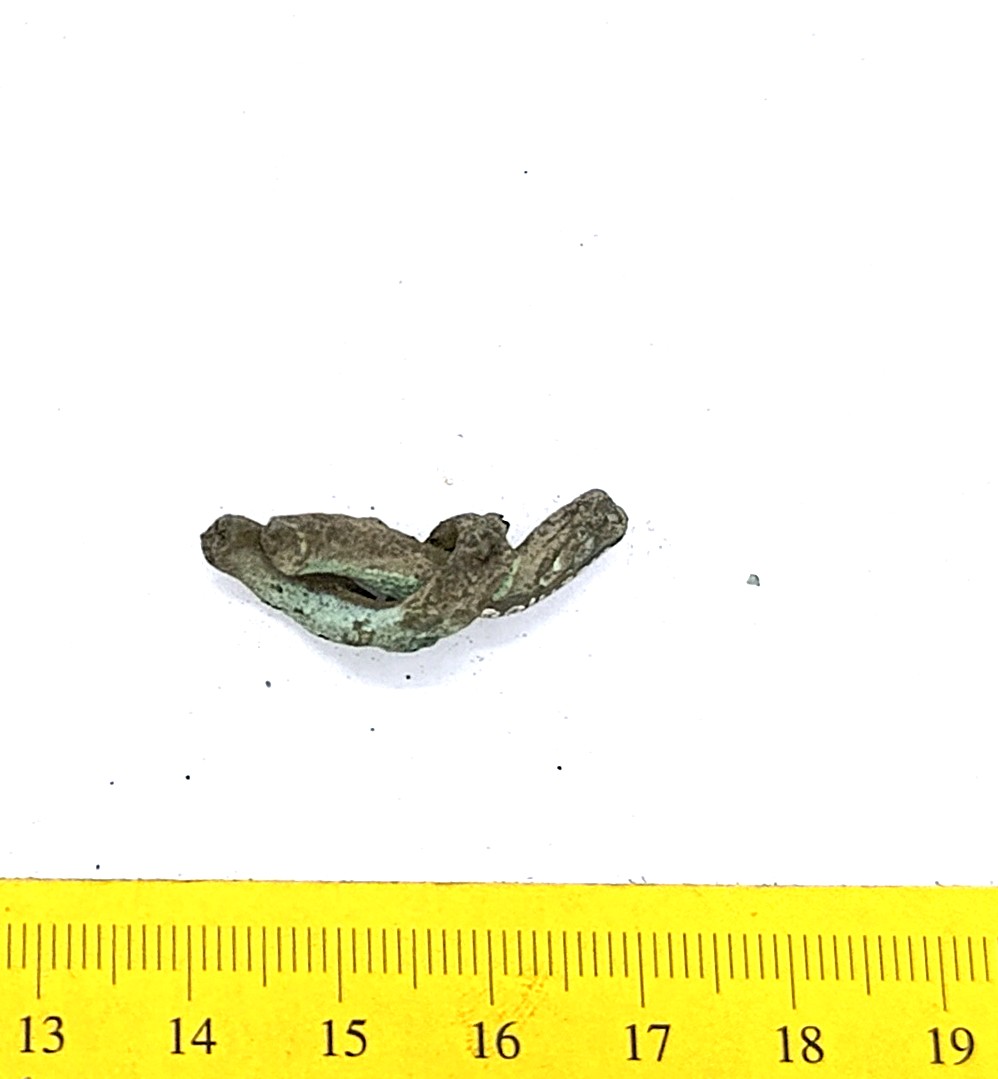
Fragment of chain woven of wires, copper alloy.
Century:
10-12
Discovery code:
AI 3884: 3768
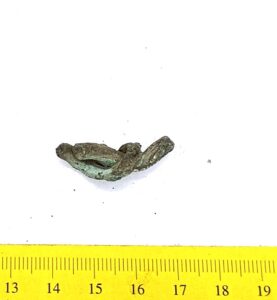 Fragment of chain woven of wires, copper alloy. Such chains were less common in Estonia than chains made of double-looped links. In Latvia, chains like these are associated with Scandinavian impact and are primarily dated to the 10th–11th centuries, sometimes to the 12th century (Spirģis 2008, 175).
Literature:
Ligi, P. 1993. Vadjapärased kalmed Kirde-Eestis (9.–16. sajandil). – Vadjapärased kalmed Eestis 9.–16. sajandil. / Votic-style graves in Estonia from the 9th to the 16th centuries. Eds. V. Lang. (Muinasaja Teadus, 2.) Tallinn, 7–175.
Spirģis, R. 2008. Bruņrupuču saktas ar krūšu važiņrotām un lībiešu kultūras attīstība Daugavas lejtecē 10.–13. gadsimtā. Latvijas Vēstures Institūta Apgāds, Rīga.
Zariņa, A. 2006. Salaspils Laukskolas kapulauks 10.–13. gadsimts. Latvijas Vēstures Institūta Apgāds, Rīga.
Century:
10-12
Discovery code:
AI 3884: 3768
Viltina
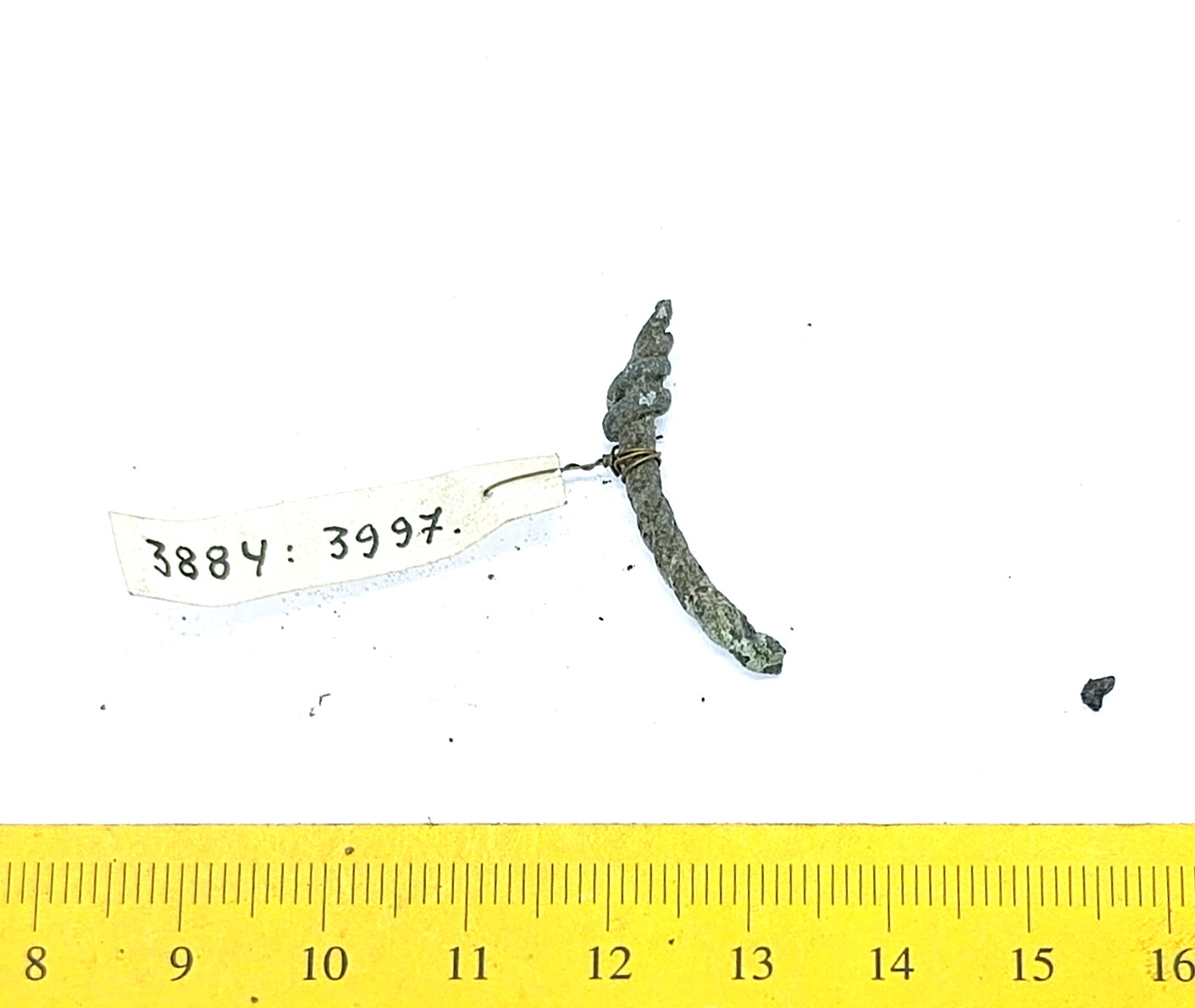
Fragment of a neck ring, copper alloy.
Century:
12-13
Discovery code:
AI 3884: 3997
 Fragment of a neck ring, copper alloy. Neck rings made of several twisted wires date back to the 12th–13th century and are one of the most common types of neck rings in the archaeological material of Saaremaa (Mägi 2002, 107). In Latvia, especially eastern Latvia, neck rings made of several twisted wires that had looped ends were worn already during the 11th–12th century (Zariņa 2006, 246).
Literature:
Mägi, M. 2002. At the Crossroads of Space and Time. Graves, Changing Society and Ideology on Saaremaa (Ösel), 9th–13th Centuries AD. (CCC Papers, 6.) Tallinn.
Zariņa, A. 2006. Salaspils Laukskolas kapulauks 10.–13. gadsimts. Rīga: Latvijas Vēstures Institūta Apgāds.
Century:
12-13
Discovery code:
AI 3884: 3997
Viltina
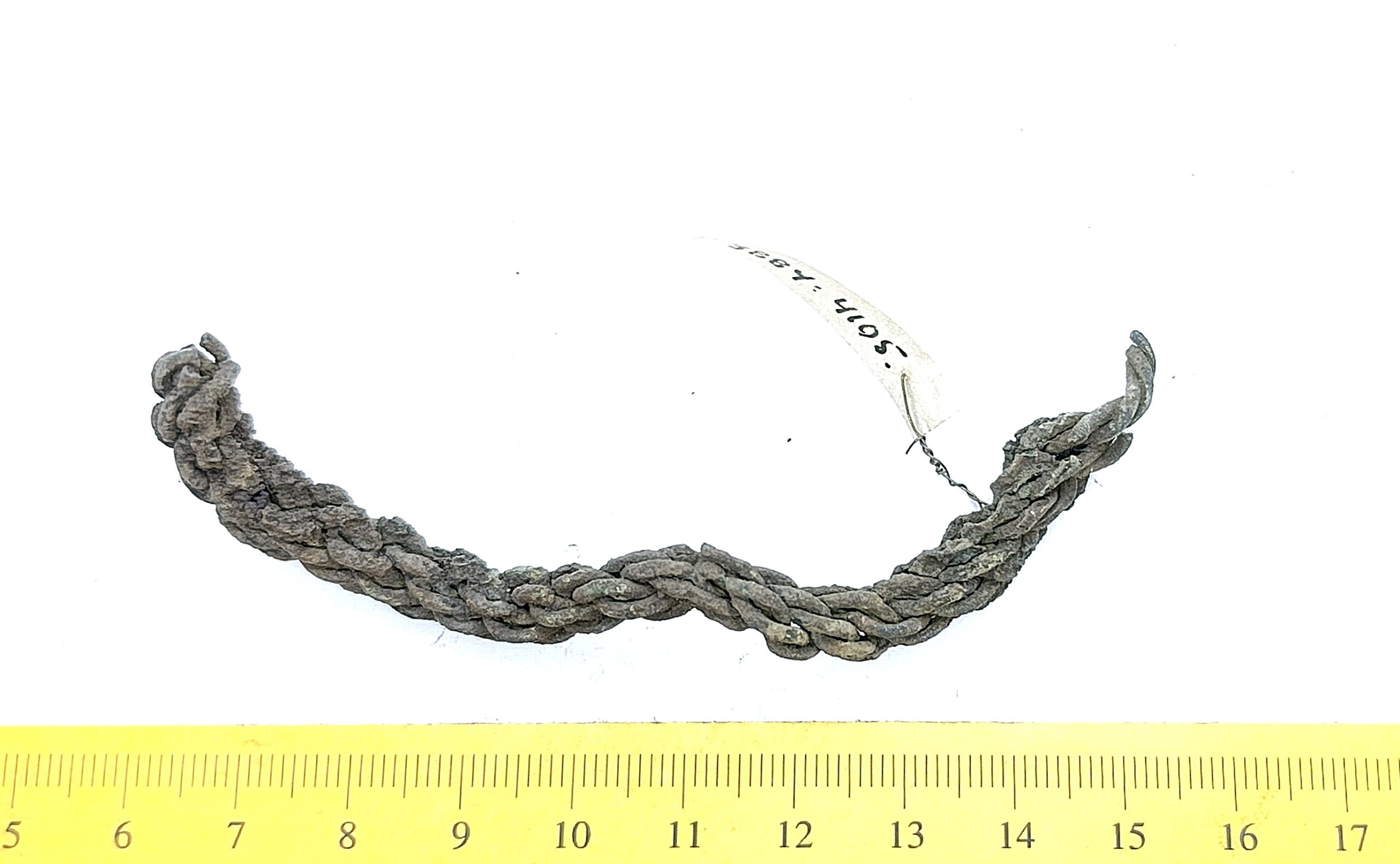
Fragment of a neck ring, copper alloy.
Century:
12-13
Discovery code:
AI 3884: 4105
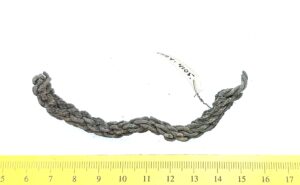 Fragment of a neck ring, copper alloy. Neck rings made of several twisted wires date back to the 12th–13th century and are one of the most common types of neck rings in the archaeological material of Saaremaa (Mägi 2002, 107). In Latvia, especially eastern Latvia, neck rings made of several twisted wires that had looped ends were worn already during the 11th–12th century (Zariņa 2006, 246).
Literature:
Mägi, M. 2002. At the Crossroads of Space and Time. Graves, Changing Society and Ideology on Saaremaa (Ösel), 9th–13th Centuries AD. (CCC Papers, 6.) Tallinn.
Zariņa, A. 2006. Salaspils Laukskolas kapulauks 10.–13. gadsimts. Rīga: Latvijas Vēstures Institūta Apgāds.
Century:
12-13
Discovery code:
AI 3884: 4105
Viltina
Fragment of a neck ring, copper alloy.
Century:
12-13
Discovery code:
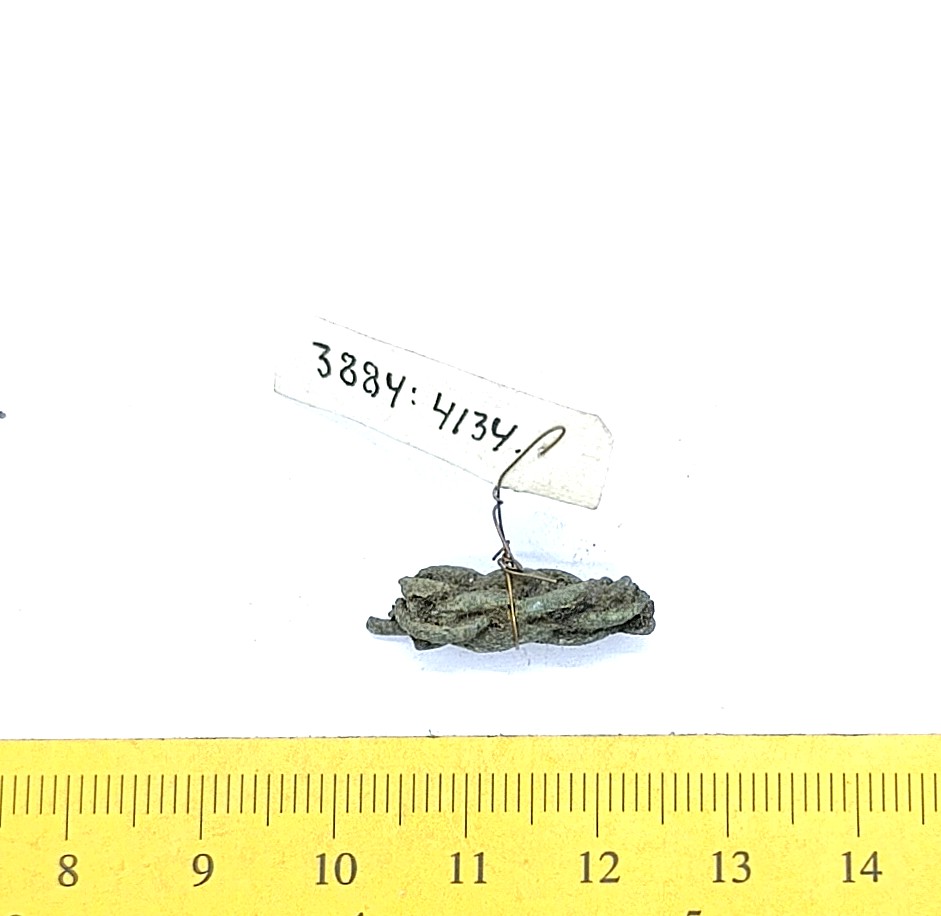
AI 3884: 4134
 Fragment of a neck ring, copper alloy. Neck rings made of several twisted wires date back to the 12th–13th century and are one of the most common types of neck rings in the archaeological material of Saaremaa (Mägi 2002, 107). In Latvia, especially eastern Latvia, neck rings made of several twisted wires that had looped ends were worn already during the 11th–12th century (Zariņa 2006, 246).
Literature:
Mägi, M. 2002. At the Crossroads of Space and Time. Graves, Changing Society and Ideology on Saaremaa (Ösel), 9th–13th Centuries AD. (CCC Papers, 6.) Tallinn.
Zariņa, A. 2006. Salaspils Laukskolas kapulauks 10.–13. gadsimts. Rīga: Latvijas Vēstures Institūta Apgāds.
Century:
12-13
Discovery code:
AI 3884: 4134

