
Database
Muhu
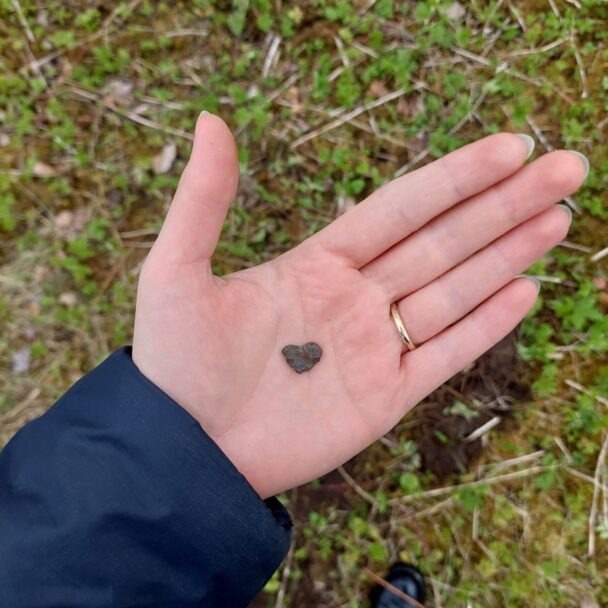
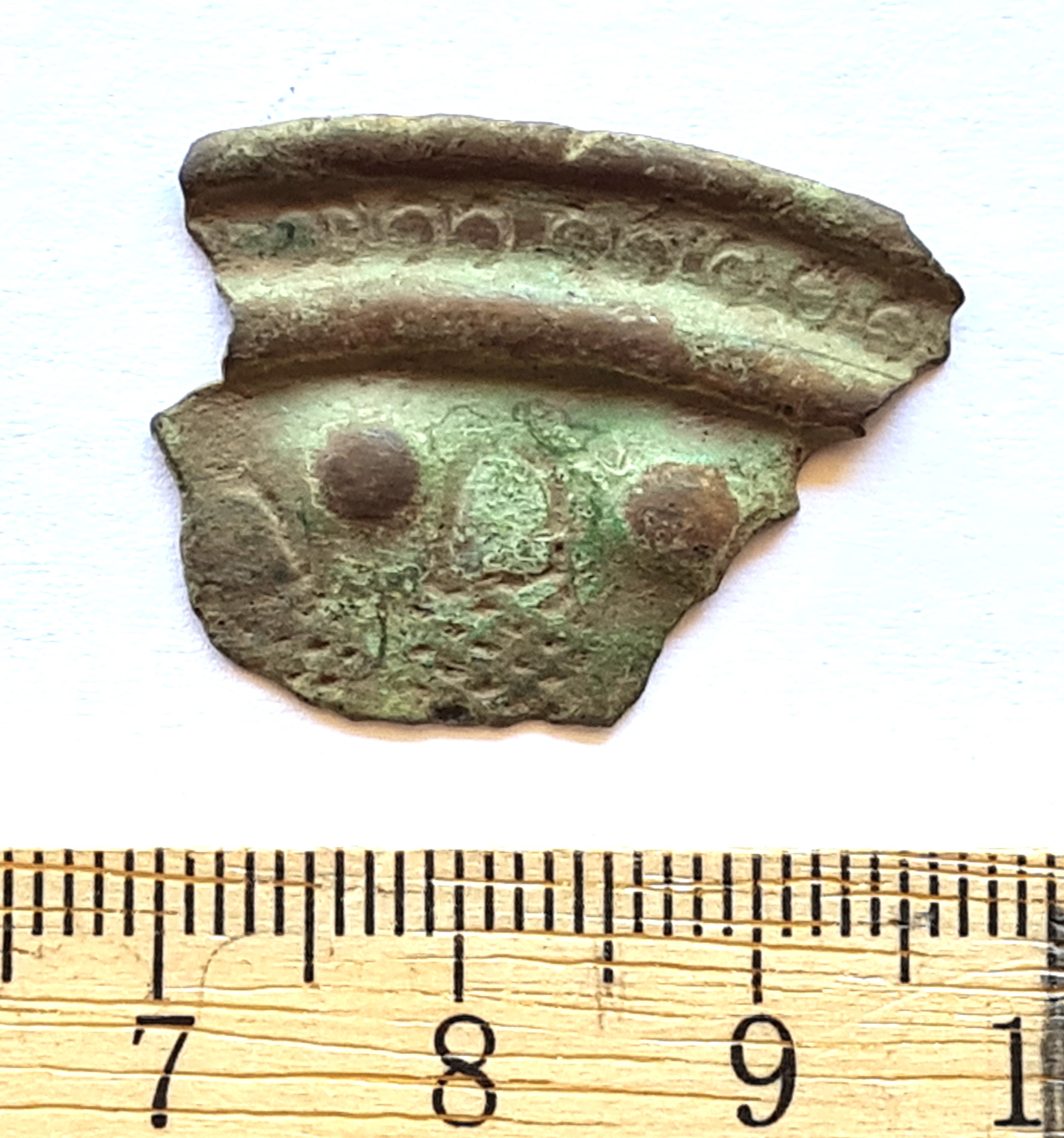
Fragment of round sheet pendant(?), copper alloy.
Century:
13-15
Discovery code:
SM 10973:36
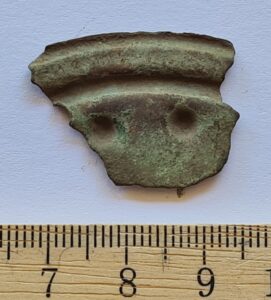
Fragment of round sheet pendant(?), copper alloy. Most likely Medieval.
Century:
13-15
Discovery code:
SM 10973:36

Muhu
Fragment of buckle, copper alloy.
Century:
13
Discovery code:
SM 10973:38
Fragment of buckle, copper alloy. Round-fronted female buckles. These were worn at both ends of the belt and fastened together, for example with an iron or bronze hook. They are characteristic primarily of 13th-century inhumation burials in Saaremaa and coastal Estonia (Mägi et al. 2019, 97; Lõhmus et al. 2018), but are only rarely found in stone graves with cremation burials.
Literature:
Mägi, M., Malve, M. & Toome, T. 2019. Early Christian burials at Valjala churchyard, Saaremaa. – Archaeological Fieldwork in Estonia, 2018, 93–118.;Lõhmus, M., Jonuks, T. & Malve, M. 2011. Archaeological salvage excavations at Kukruse: A Modern Age road, cremation field and 12th–13th century inhumation cemetery. Preliminary results. – Archaeological Fieldwork in Estonia, 2010, 103–114.
Century:
13
Discovery code:
SM 10973:38
Muhu
Fragment of artefact, copper alloy.
Century:
12-13
Discovery code:
SM 10973:39
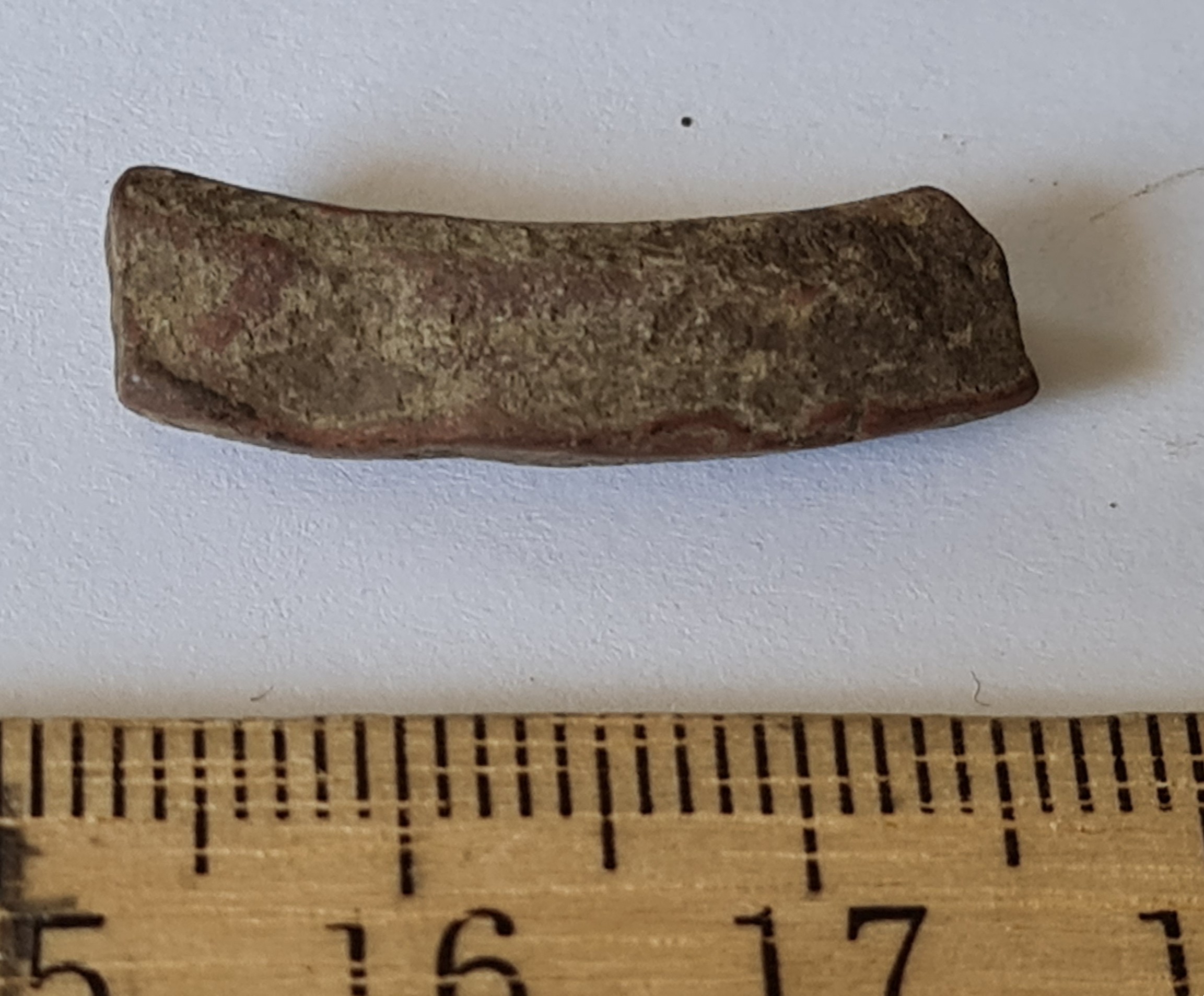
Fragment of artefact, copper alloy. Rhombic in cross-section. Possibly a fragment of the bow of a penannular brooch, in which case it would date to the 12th–13th centuries.
Century:
12-13
Discovery code:
SM 10973:39
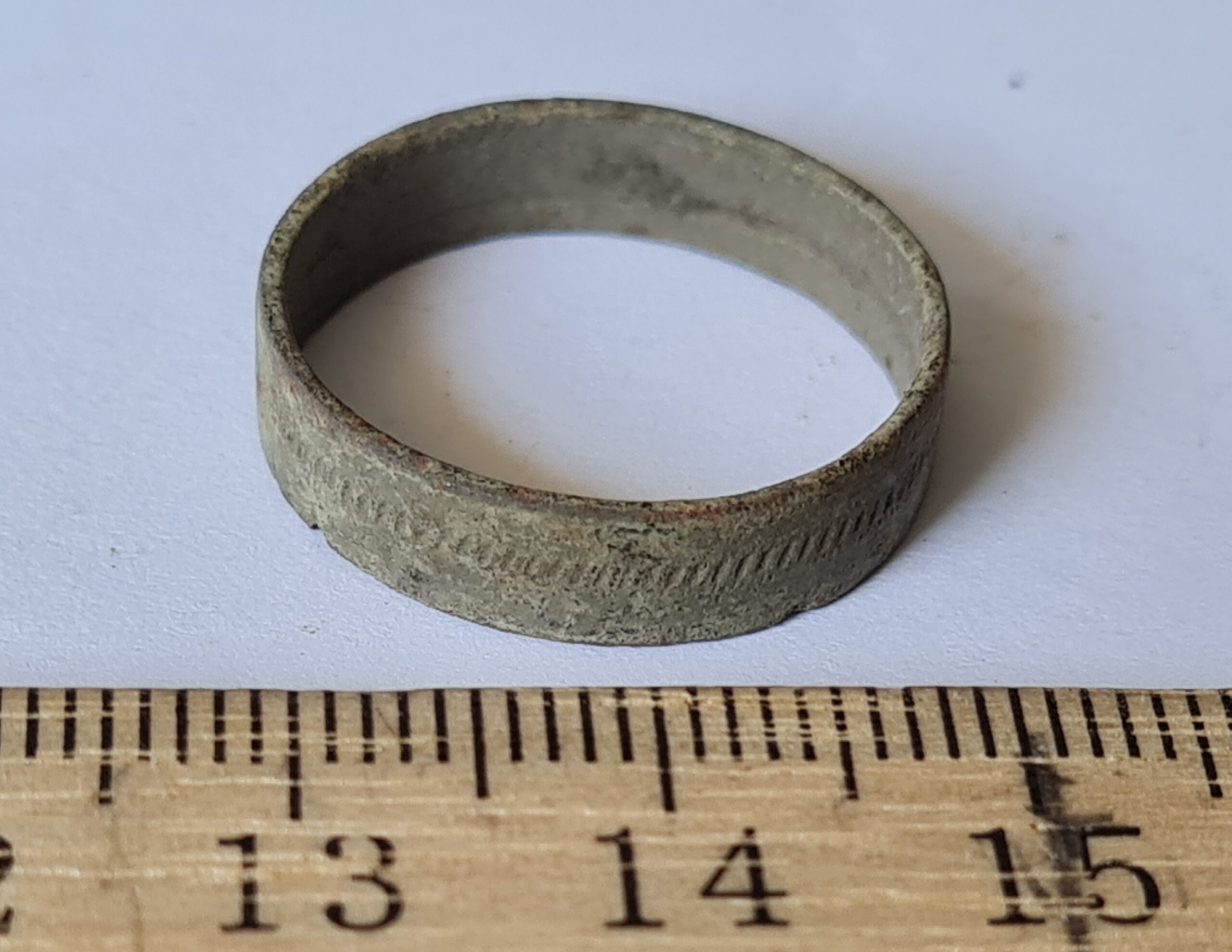
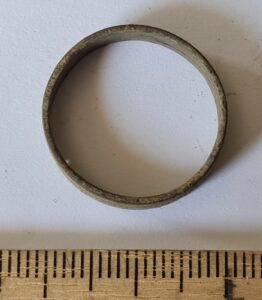
Simple ring, copper alloy. Simple bands, decorated with an ornament of notches running along the hoop. A similar example has been found in burial CCLXII at the Siksälä cemetery, dated to 1300–1450 (Valk et al. 2014, 287). Rings of this type were more widely distributed in the 13th–15th centuries (Valk & Laul 2014, 118–120).
Literature:
Valk, H. & Laul, S. 2014. Siksälä kalme I: Muistis ja Ajalugu. Tartu ülikool, Ajaloo ja arheoloogia instituut, Tallinn.;Valk, H., Ratas, J., Laul, S. 2014. Siksälä kalme II. Matuste ja leidude kataloog. Tartu Ülikool: Tartu.
Century:
13-15
Discovery code:
SM 10973:43
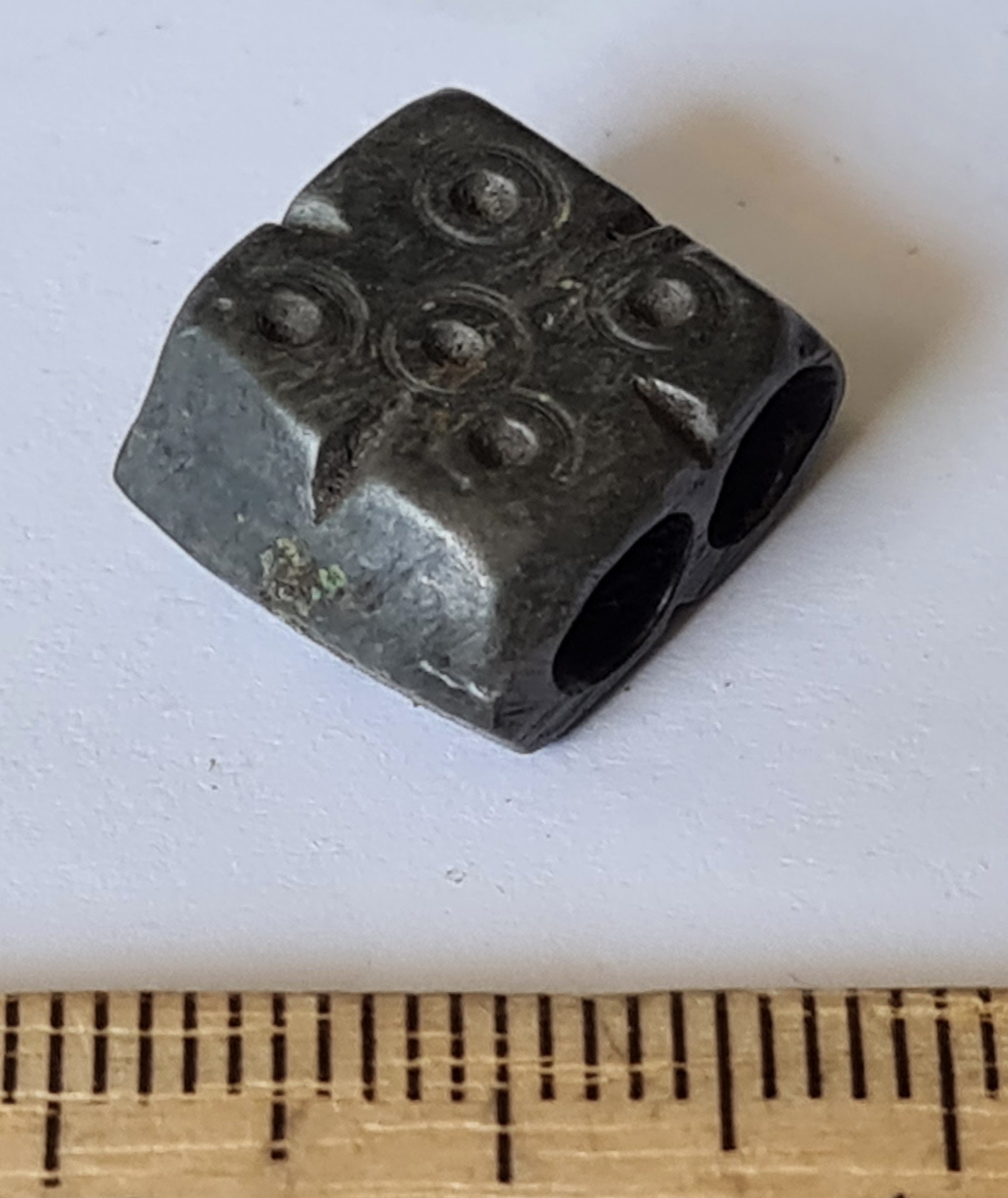
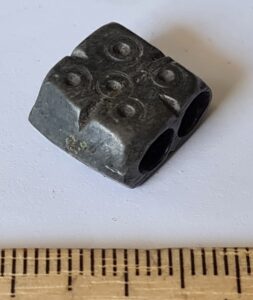
Cubic chain distributer, copper alloy. Chain distributors held together belts composed of metal rings, which have been found in several 13th-century inhumation burials, for example at Valjala (Mägi et al. 2019, 98–99). Such chain belts have been recovered mainly from women’s and children’s graves, and both the chains and the associated cubic chain distributers have been dated to the 12th–13th centuries (Kurisoo et al. 2023, 220–221).
Literature:
Mägi, M., Malve, M. & Toome, T. 2019. Early Christian burials at Valjala churchyard, Saaremaa. – Archaeological Fieldwork in Estonia, 2018, 93–118.;Kurisoo, T., Posti, M.-L., Jegorov, S. & Kangert, N. 2023. New public discoveries in 2022 against a backdrop of concerns about reporting and processing finds. – Archaeological Fieldwork in Estonia 2022, 217–238.
Century:
12-13
Discovery code:
SM 10973:44
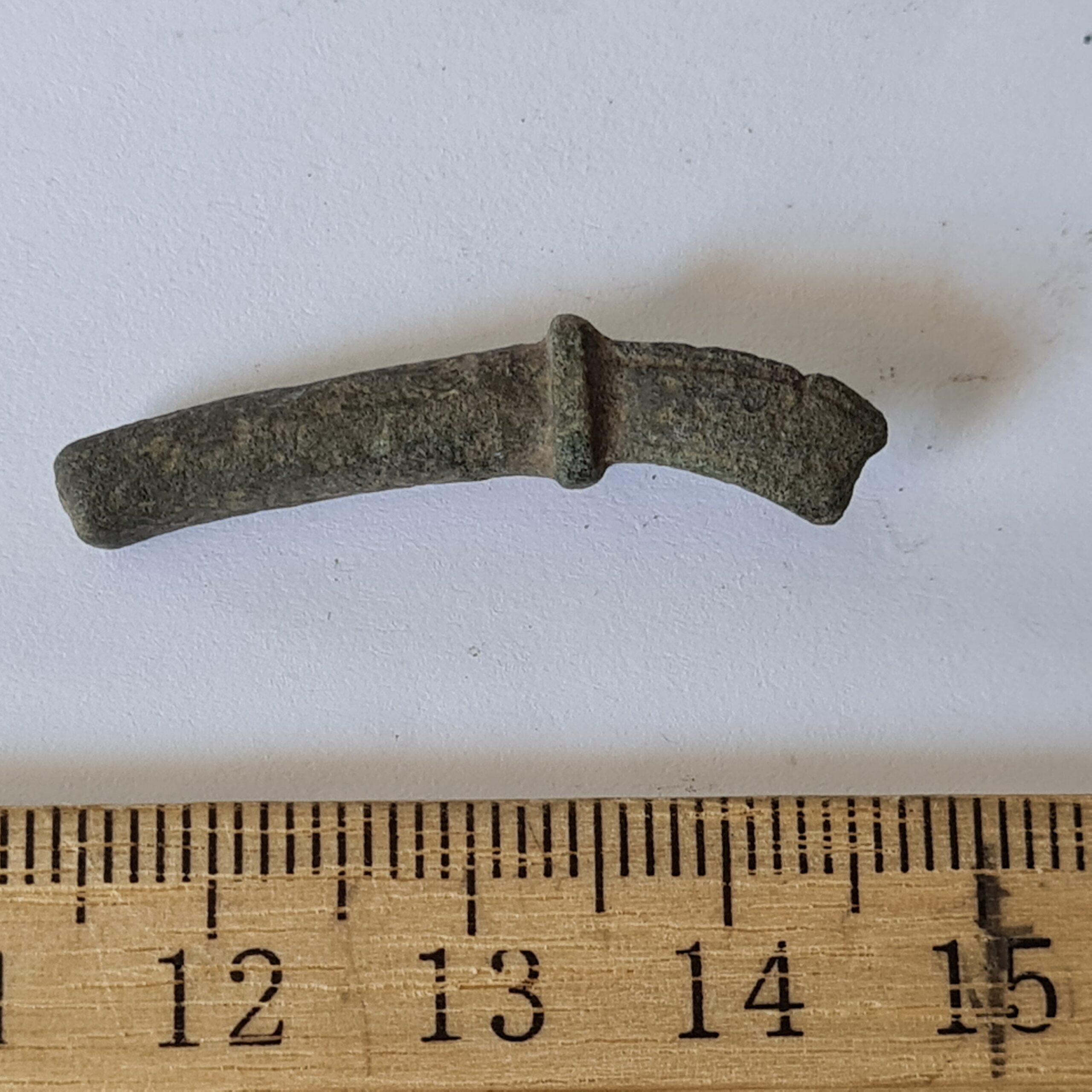
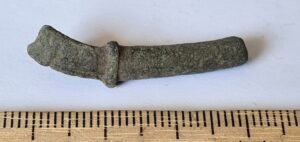
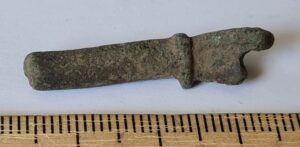
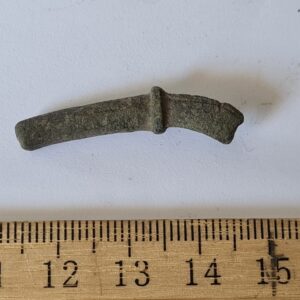
Fragment of pin, copper alloy. The shaft widens and has a perforation. Such loops are known, for example, on the 9th-century ring-headed pins (Mägi 1997). However, the object survives only as a fragment, and the identification cannot be considered entirely certain, especially since no other finds of such an early date are currently known from the surroundings of the Muhu hillfort.
Literature:
Mägi, M. 1997. Eesti merovingi-1 ja viikingiaegsed rinnanõelad -võõrapärased ja omad. – Eesti Arheoloogia Ajakiri 1997, I, 26-83.
Century:
9
Discovery code:
SM 10973:45
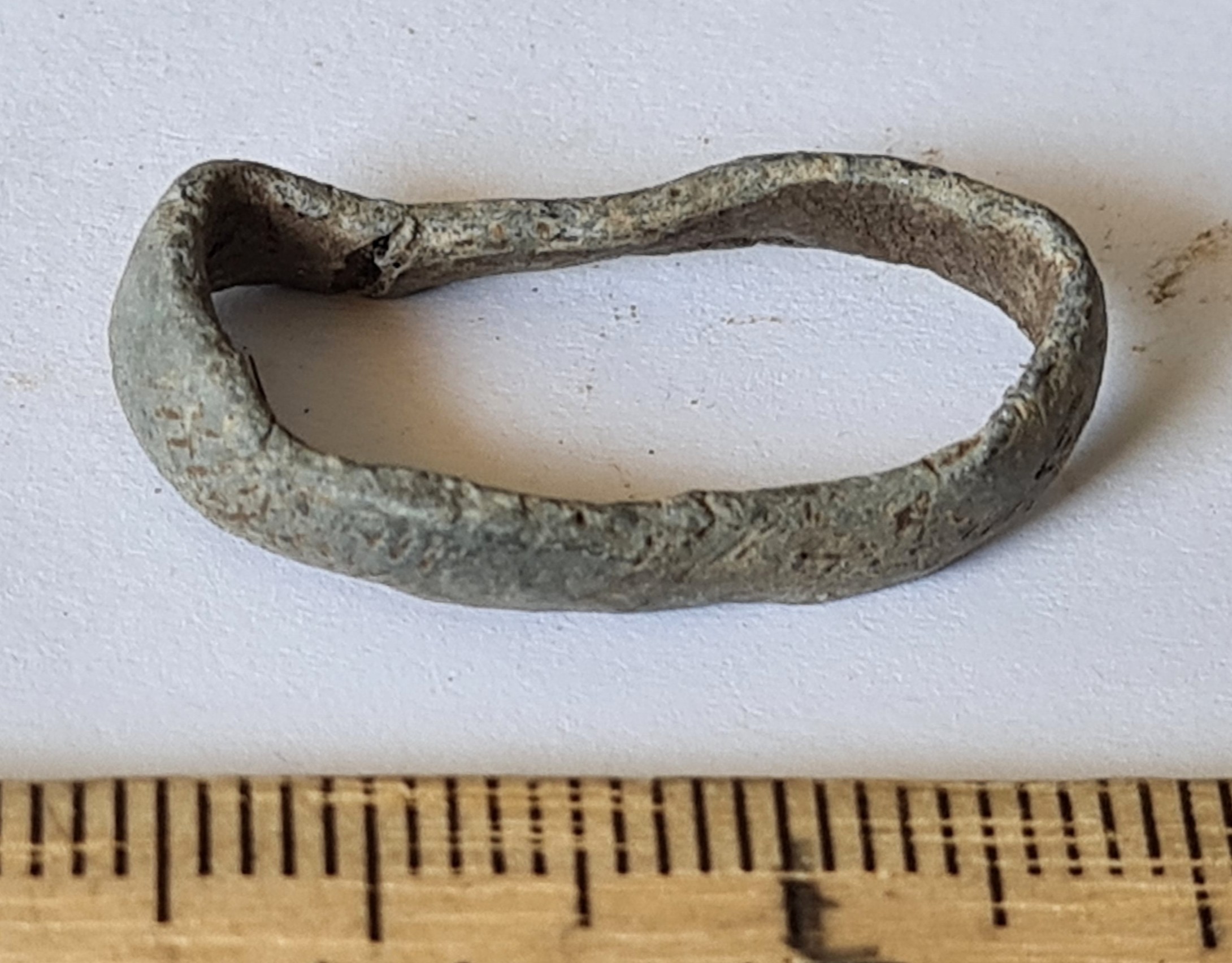
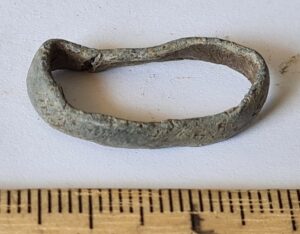

Simple ring, copper alloy. Simple bands from Medieval or Early Modern period.
Century:
13-17
Discovery code:
SM 10973:46
Muhu
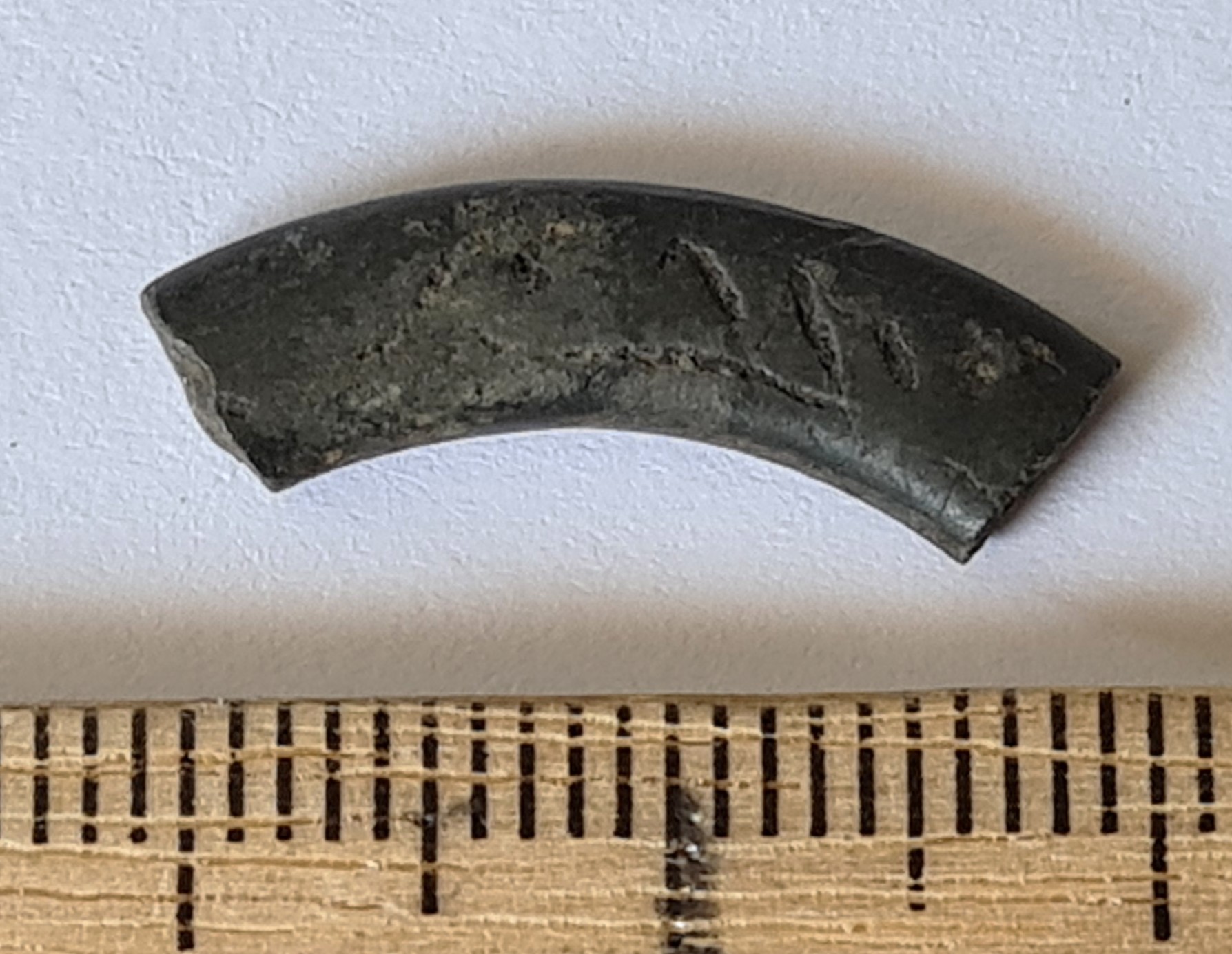
Fragment of buckle or brooch, copper alloy.
Century:
13-14
Discovery code:
SM 10973:47
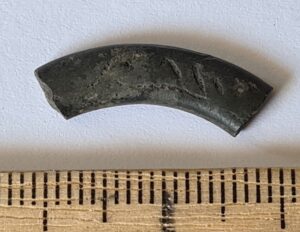
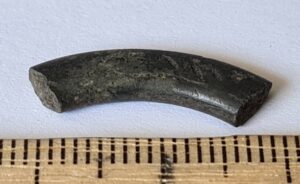
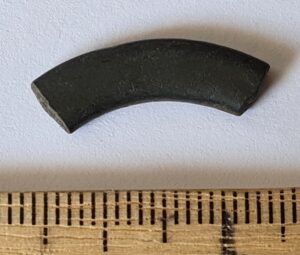
Fragment of buckle or brooch, copper alloy. Casted, with an ornament of notches on one side. Probably medieval.
Century:
13-14
Discovery code:
SM 10973:47
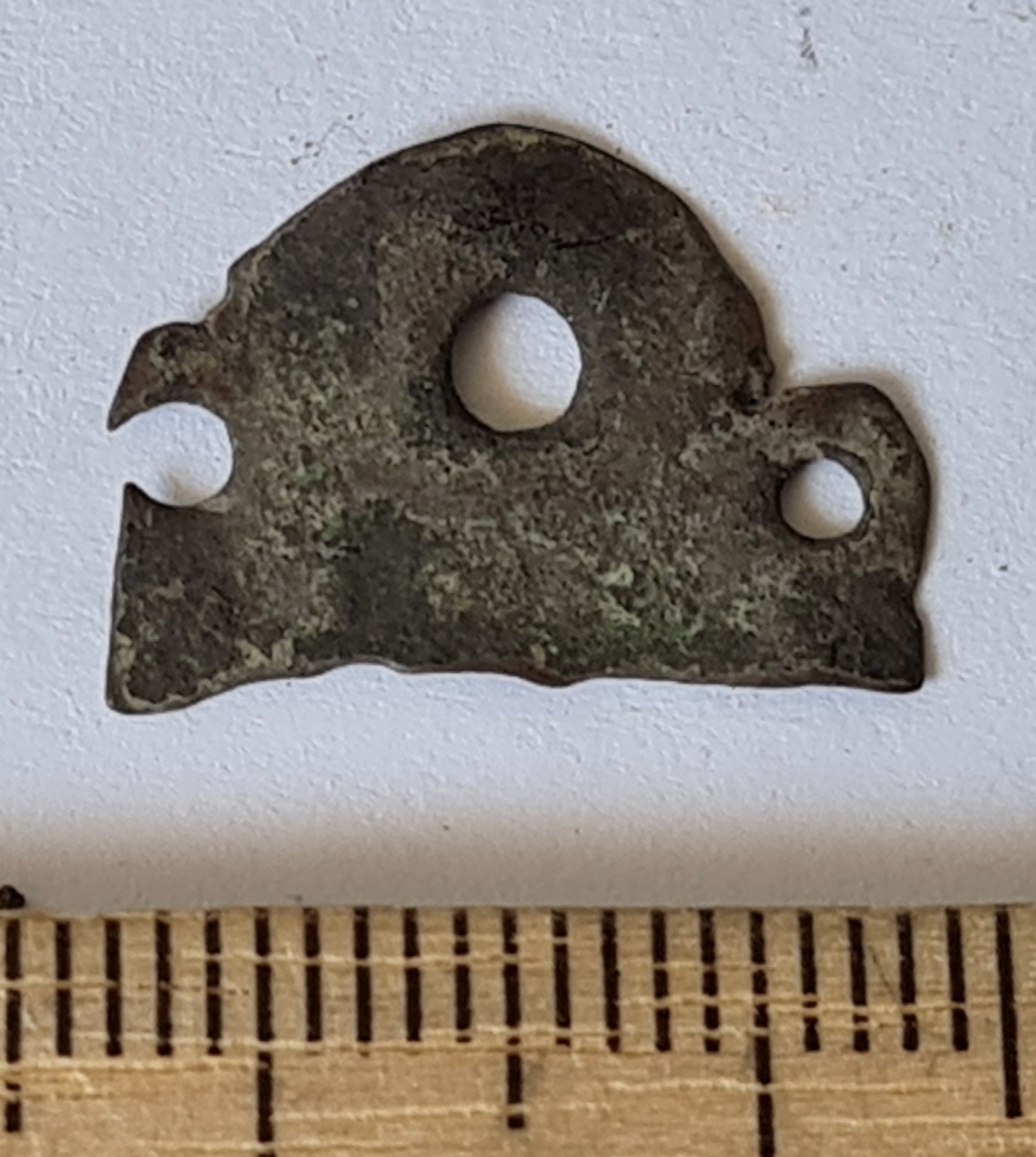

Fragment of artefact, copper alloy. Open-work, more precisely undetermined.
Century:
12-17
Discovery code:
SM 10973:48

