
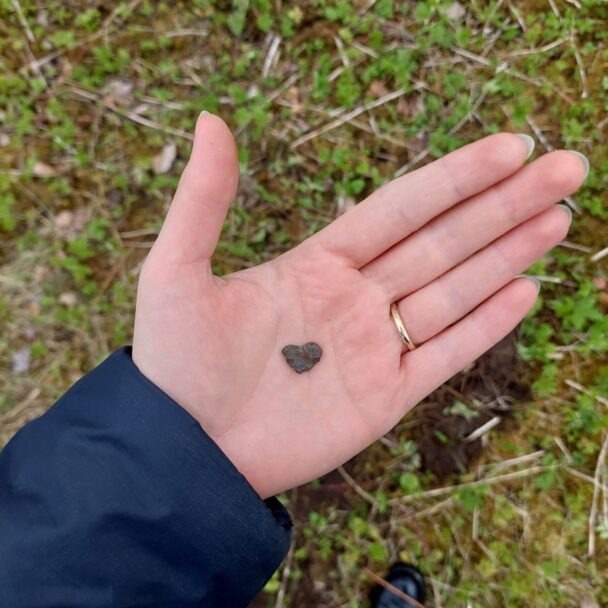
Database
Century:
11-13
Discovery code:
AI 3884: 3803
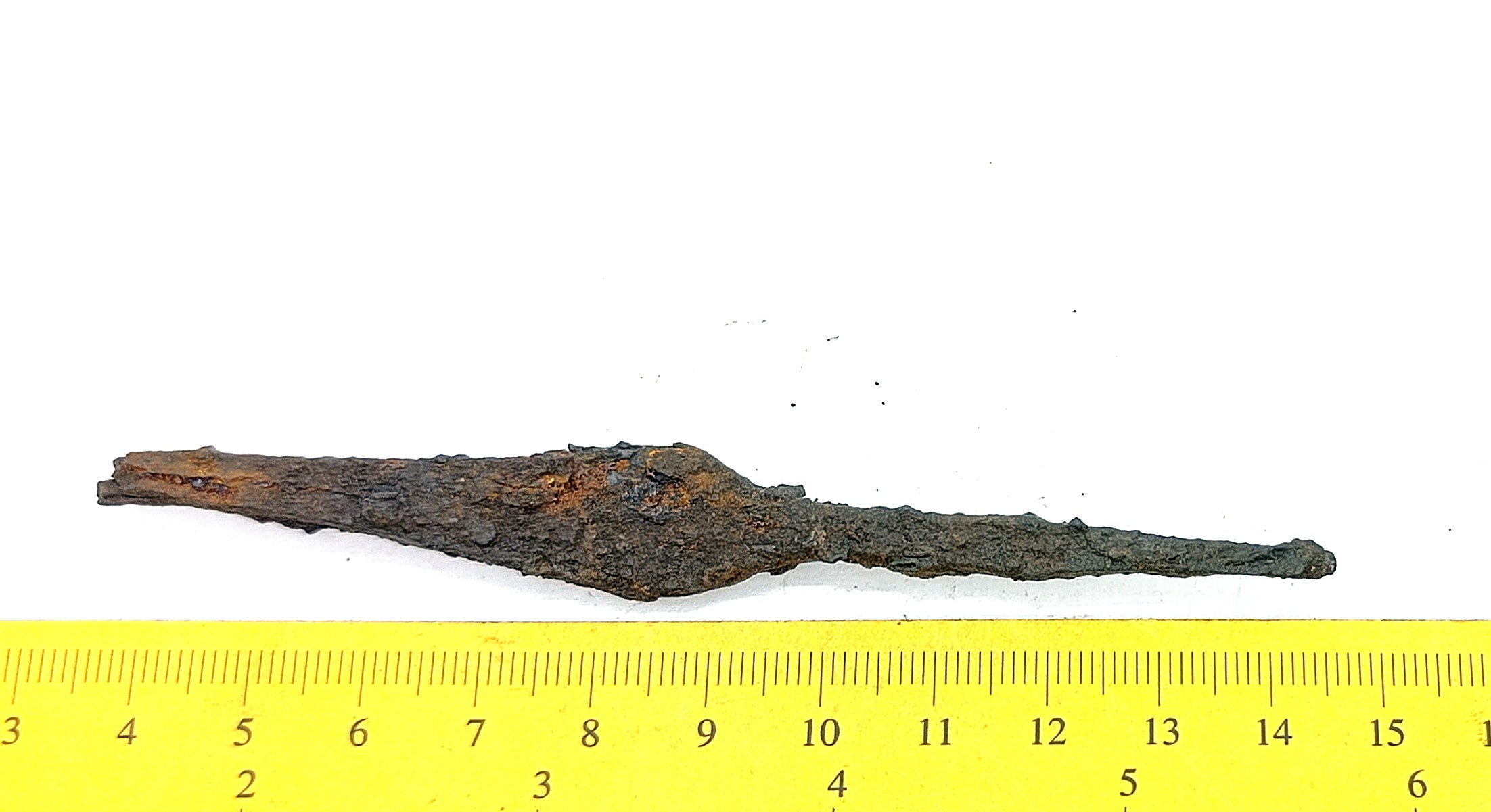
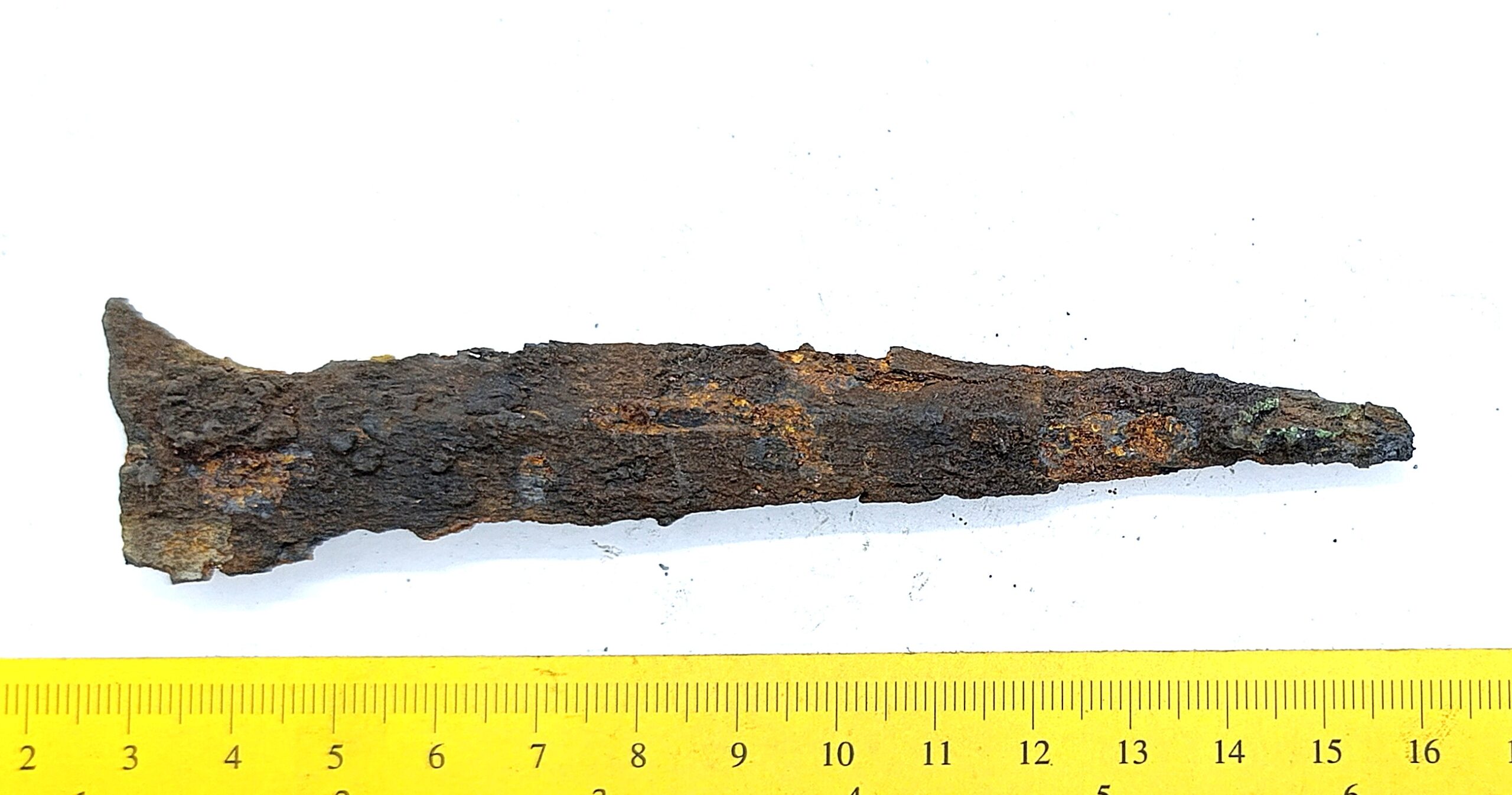
 Tanged spearhead, iron. The blade is rhomb-shaped, with a neck between the blade and the tang. Such javelin heads have been found in Latvia mainly in the Livonian area and in Couronia, both in medieval hillforts and in burials. They have been classified by Brūzis as type B1 and dated mainly to the 14th century (Brūzis 2016, 120, 280), although a dating to the 13th century cannot be excluded based on the find contexts. In Saaremaa they occur quite frequently in stone graves with cremation burials (e.g. Mägi 2002, pl. 69:5, 72:15, 73:5), where they are probably not later than the 13th century.
Literature:
Mägi, M. 2002. At the Crossroads of Space and Time. Graves, Changing Society and Ideology on Saaremaa (Ösel), 9th–13th centuries AD. Tallinn: Ajaloo Instituut, Tallinn/Center of Baltic Studies, Gotland.
Brūzis, R. 2016. Tuvcīņas ieroči Latvijā 14.–16. gadsimtā. – Rīga: Latvijas vēstures institūta apgāds.
Century:
13-14
Discovery code:
AI 3884: 3935
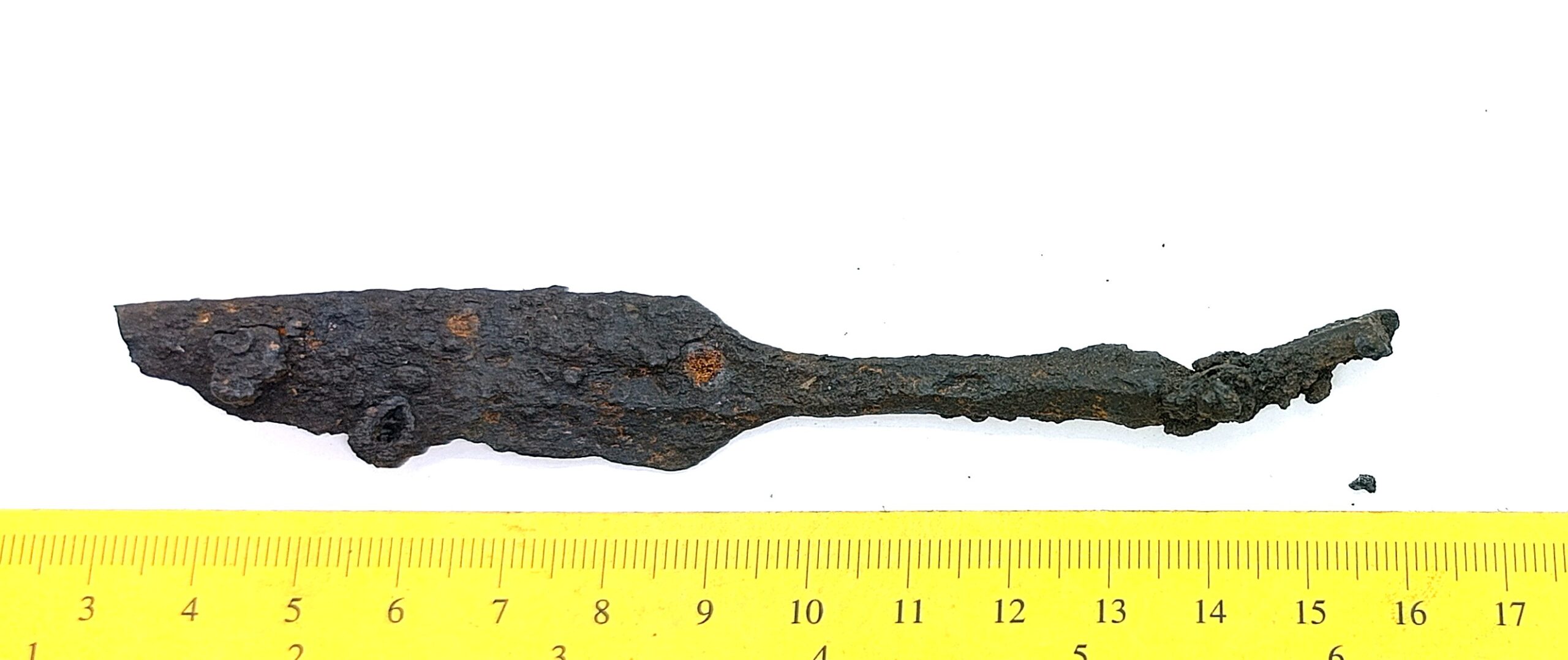
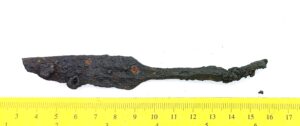
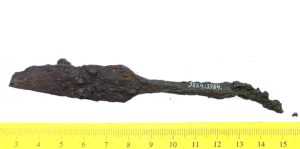 Tanged spearhead, iron. The blade is rhomb-shaped, with a neck between the blade and the tang. Such javelin heads have been found in Latvia mainly in the Livonian area and in Couronia, both in medieval hillforts and in burials. They have been classified by Brūzis as type B1 and dated mainly to the 14th century (Brūzis 2016, 120, 280), although a dating to the 13th century cannot be excluded based on the find contexts. In Saaremaa they occur quite frequently in stone graves with cremation burials (e.g. Mägi 2002, pl. 69:5, 72:15, 73:5), where they are probably not later than the 13th century.
Literature:
Mägi, M. 2002. At the Crossroads of Space and Time. Graves, Changing Society and Ideology on Saaremaa (Ösel), 9th–13th centuries AD. Tallinn: Ajaloo Instituut, Tallinn/Center of Baltic Studies, Gotland.
Brūzis, R. 2016. Tuvcīņas ieroči Latvijā 14.–16. gadsimtā. – Rīga: Latvijas vēstures institūta apgāds.
Century:
13-14
Discovery code:
AI 3884: 3984
Viltina
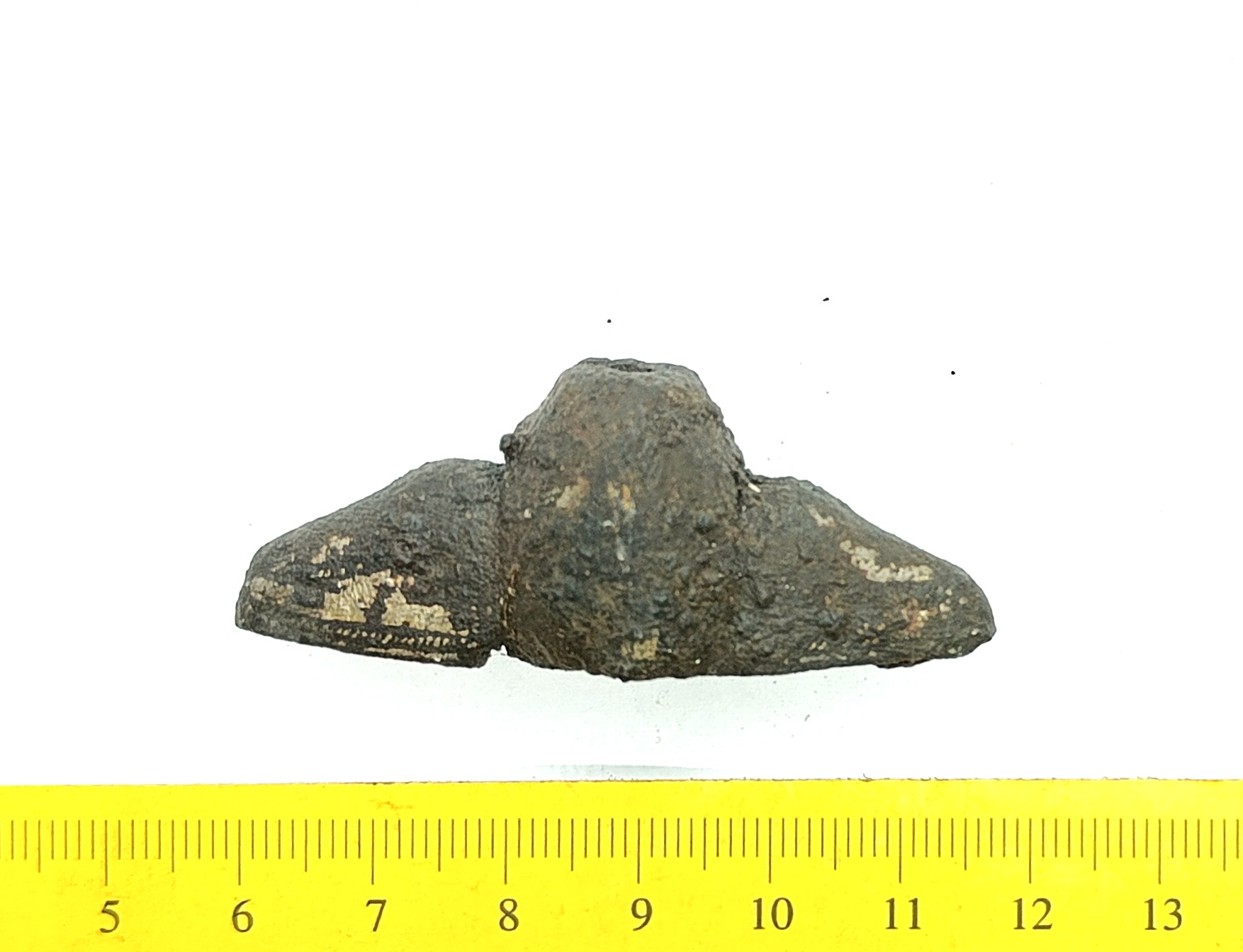
Pommel, iron, with silver inlay and corded ornament.
Century:
12
Discovery code:
AI 3884: 4039
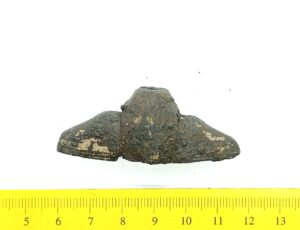
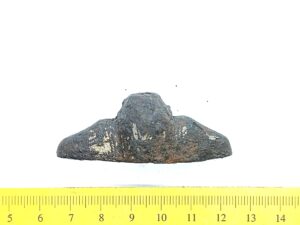
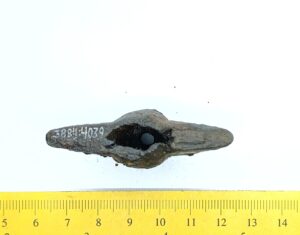
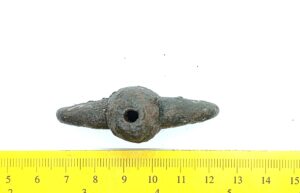 Pommel, iron, with silver inlay and corded ornament. Probably belongs to Petersen’s T or Z type (Mandel 1991, 118). The ornament is probably a development of the Urnes style (Jets 2017, 222) and could therefore be dated to the 12th century.
Literature:
Mandel, M. 1991. Eesti 8.–13. sajandi mõõkade tüpoloogiast ja dateerimisest. Muinasaja teadus, 1. Tartu-Tallinn. Lk 101–133.
Jets, I. 2013. Lahingu maod. Skandinaavia 9.-11. sajandi sajandi kunstistiilid Eesti arheoloogilistel leidudel. Tallinn: Tallinna Ülikooli Kirjastus.
Century:
12
Discovery code:
AI 3884: 4039
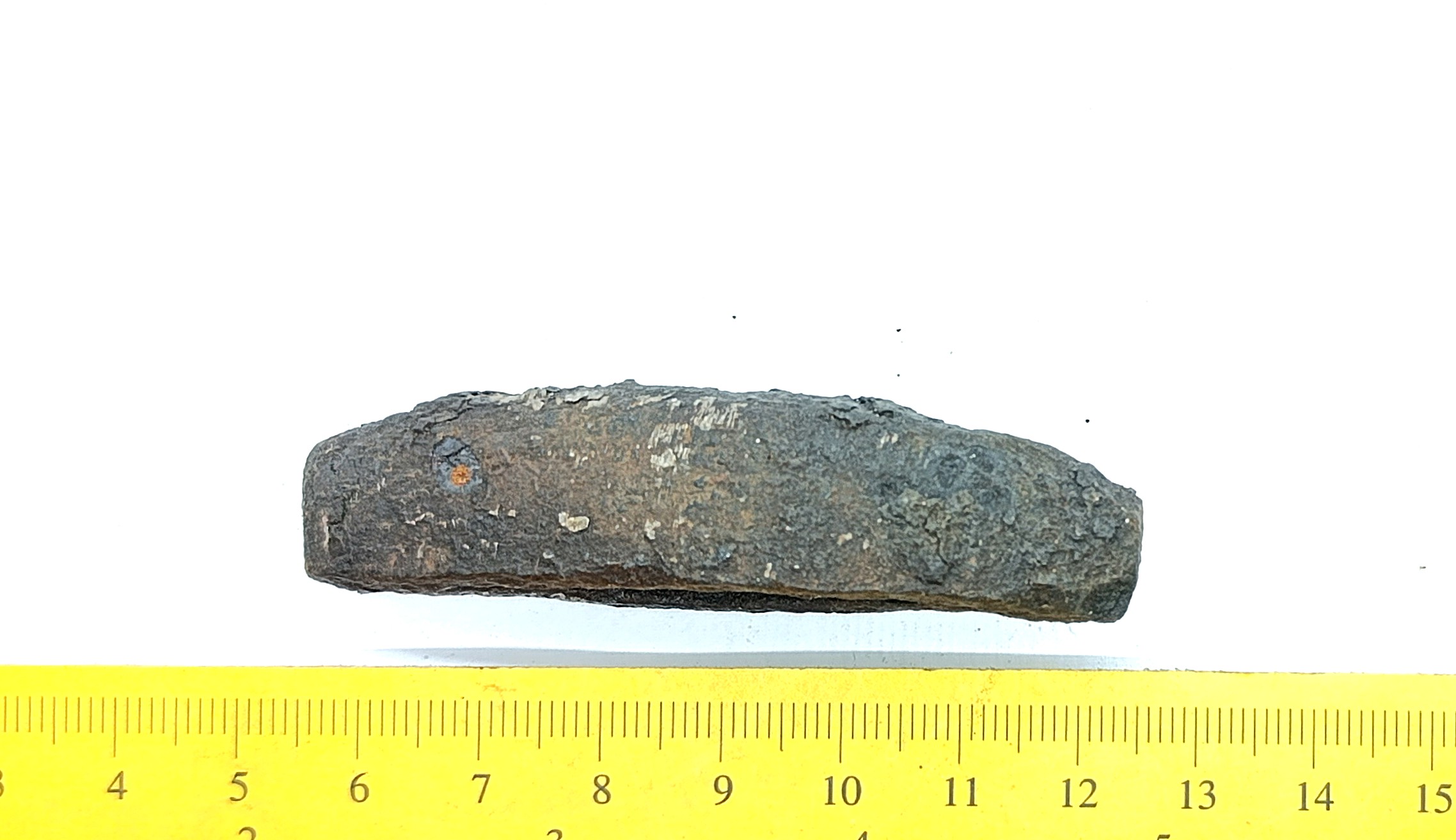
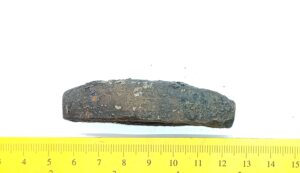
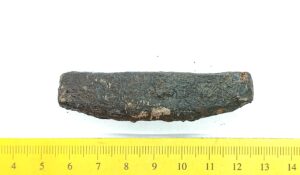
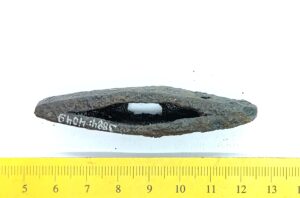
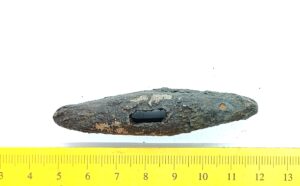 Pommel, iron. The later variant of Petersen´s Type T swords. Petersen and several ohter researchers date the T-type sword hilts to the second half of the 10th until the beginning of the 11th century (Moilanen 2015, 253). In the lands east of the Baltic Sea, such hilts were also widespread in the 11th-12th centuries, according to some scholars even as late as in the 13th century (Tomsons 2018, 59, 80-94). They are mainly represented by fragmentary finds in cremation burials, as well as at archaeological sites that have been destroyed or not properly analysed (Kazakevičius 1997, 123; Tomsons 2018, 142). In Estonia, they can mainly be dated to the 11th-12th centuries.
Literature:
Kazakevičius, V. 1997. On One Type of Baltic Sword of the Viking Period. – Archaeologica Baltica, 2, 117–132.
Moilanen, M. 2015. Marks of Fire, Value and Faith. Swords with Ferrous Inlays in Finland during the Late Iron Age (ca. 700–1200 AD). Suomen Keskiajan Arkeologian Seura: Turku.
Tomsons, A. 2018. Zobeni Latvijas teritorijā no 7. līdz 16. gadsimtam. (Latvijas Nacionālā Vēstures Muzeja raksti, 27.) Latvijas Nacionālais vēstures muzejs, Rīga.
Century:
11-12
Discovery code:
AI 3884: 4049
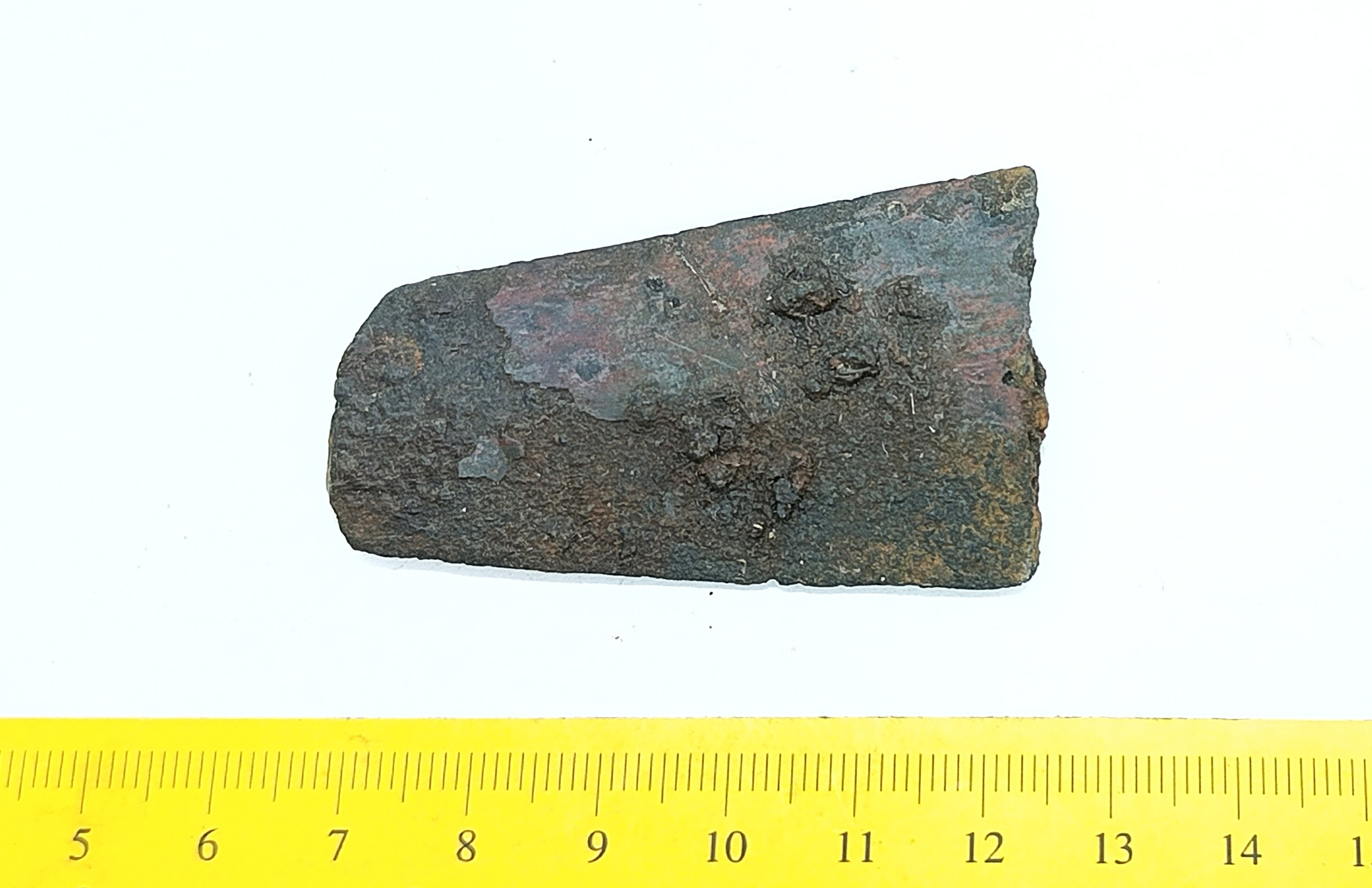
Century:
11-13
Discovery code:
AI 3884: 4091
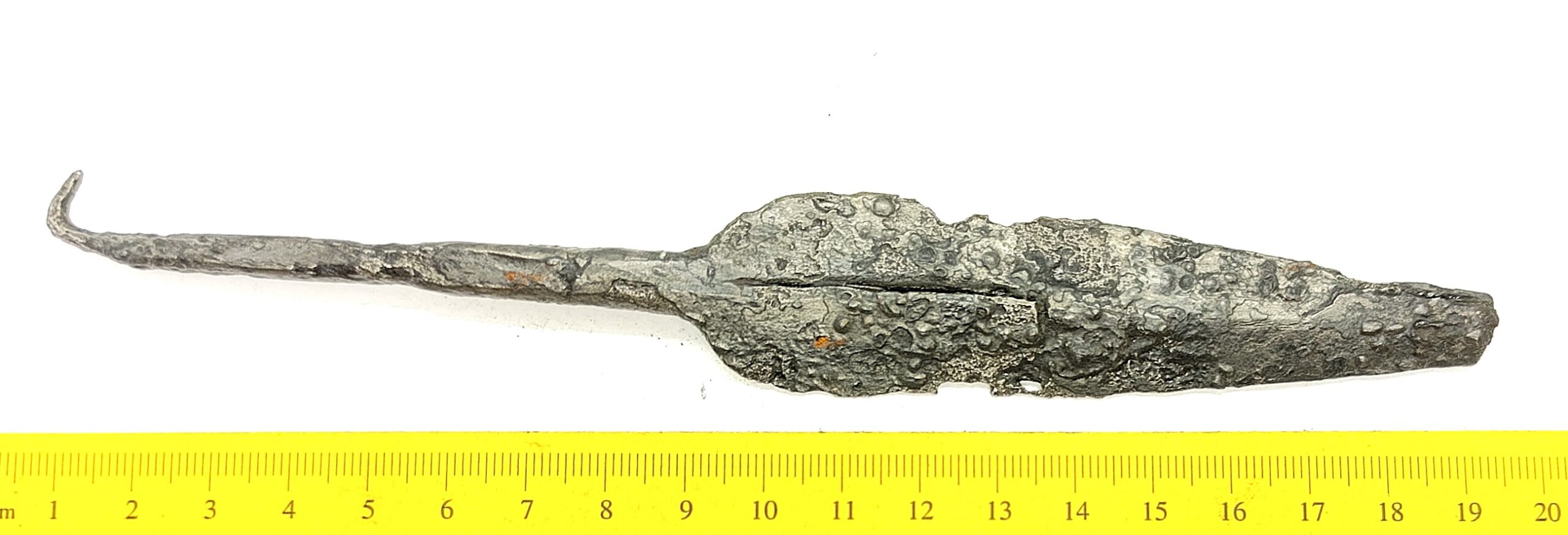
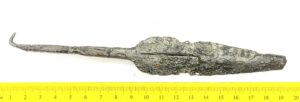
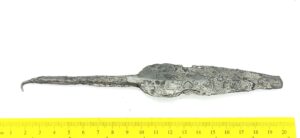 Tanged spearhead, iron. The blade is leaf-shaped, with a neck between the blade and the tang. Such javelin heads have been found in Latvia mainly in the Livonian area and in Couronia, both in medieval hillforts and in burials. They have been classified by Brūzis as type B1 and dated mainly to the 14th century (Brūzis 2016, 120, 280), although a dating to the 13th century cannot be excluded based on the find contexts. In Saaremaa they occur quite frequently in stone graves with cremation burials (e.g. Mägi 2002, pl. 69:5, 72:15, 73:5), where they are probably not later than the 13th century.
Literature:
Mägi, M. 2002. At the Crossroads of Space and Time. Graves, Changing Society and Ideology on Saaremaa (Ösel), 9th–13th centuries AD. Tallinn: Ajaloo Instituut, Tallinn/Center of Baltic Studies, Gotland.
Brūzis, R. 2016. Tuvcīņas ieroči Latvijā 14.–16. gadsimtā. – Rīga: Latvijas vēstures institūta apgāds.
Century:
13-14
Discovery code:
AI 3884: 4144
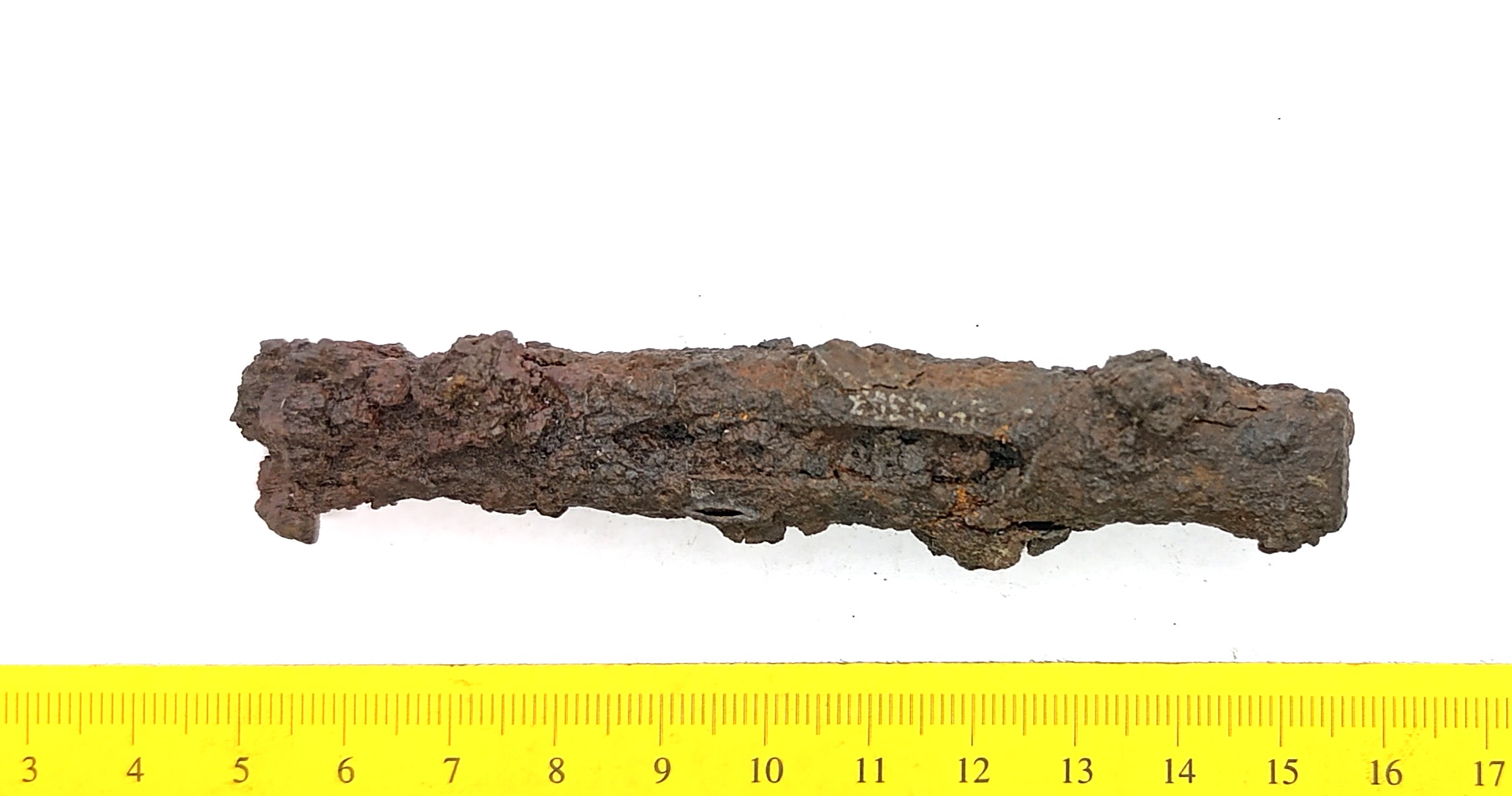
 Hilt guard, iron. Long straight guards in Latvia are dated, according to the shape of the pommel, from the second half of the 12th century to the end of the 13th century, sometimes to even later period (Tomsons 2018, 109-115).
Literature:
Tomsons, A. 2018. Zobeni Latvijas teritorijā no 7. līdz 16. gadsimtam. Latvijas nacionālā vēstures muzeja raksti nr. 27. Rīga.
Century:
12-13
Discovery code:
AI 3884: 4307
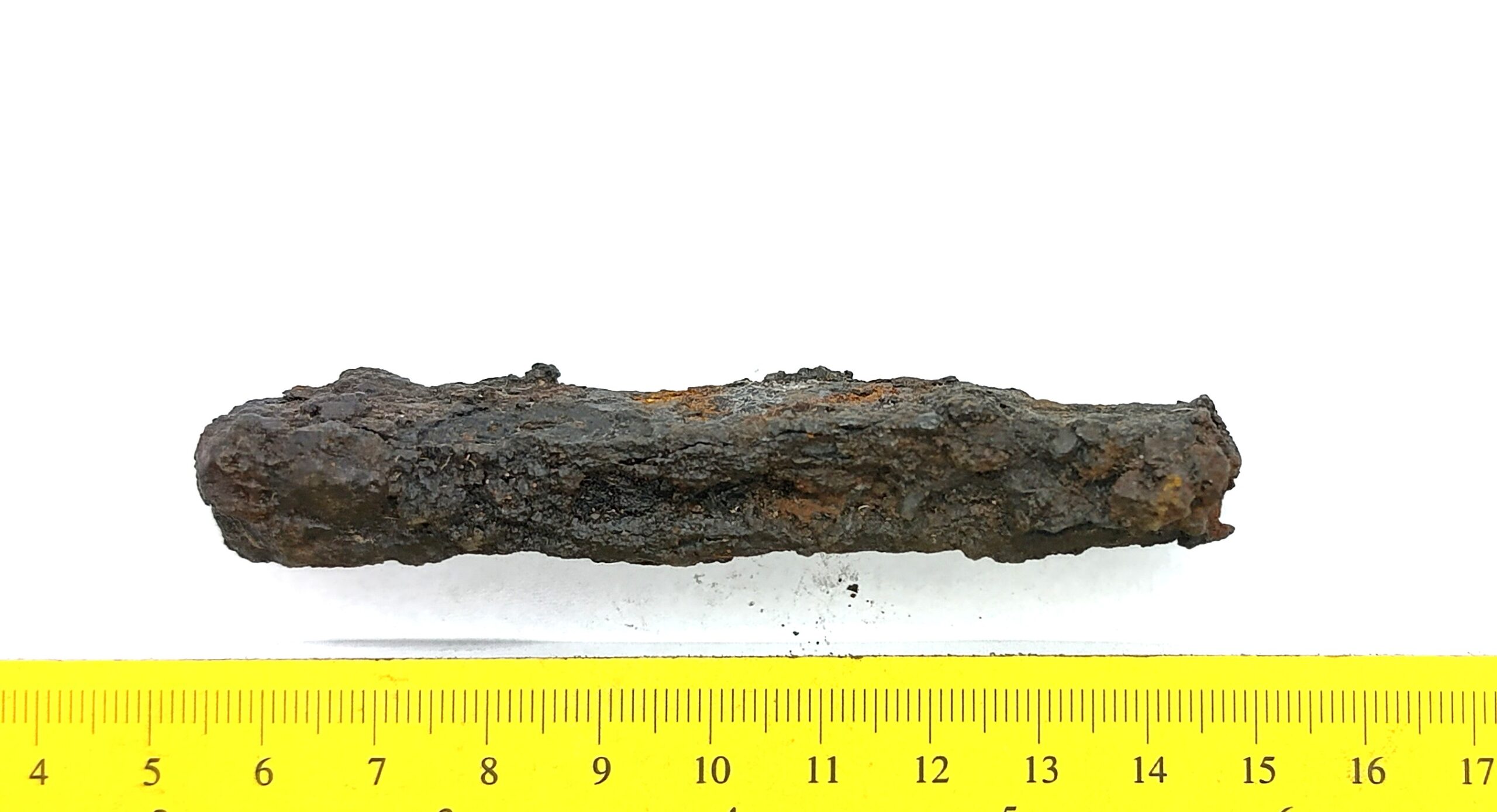
 Hilt guard, iron. Long straight guards in Latvia are dated, according to the shape of the pommel, from the second half of the 12th century to the end of the 13th century, sometimes to even later period (Tomsons 2018, 109-115).
Literature:
Tomsons, A. 2018. Zobeni Latvijas teritorijā no 7. līdz 16. gadsimtam. Latvijas nacionālā vēstures muzeja raksti nr. 27. Rīga.
Century:
12-13
Discovery code:
AI 3884: 4344

