
Database
Viltina
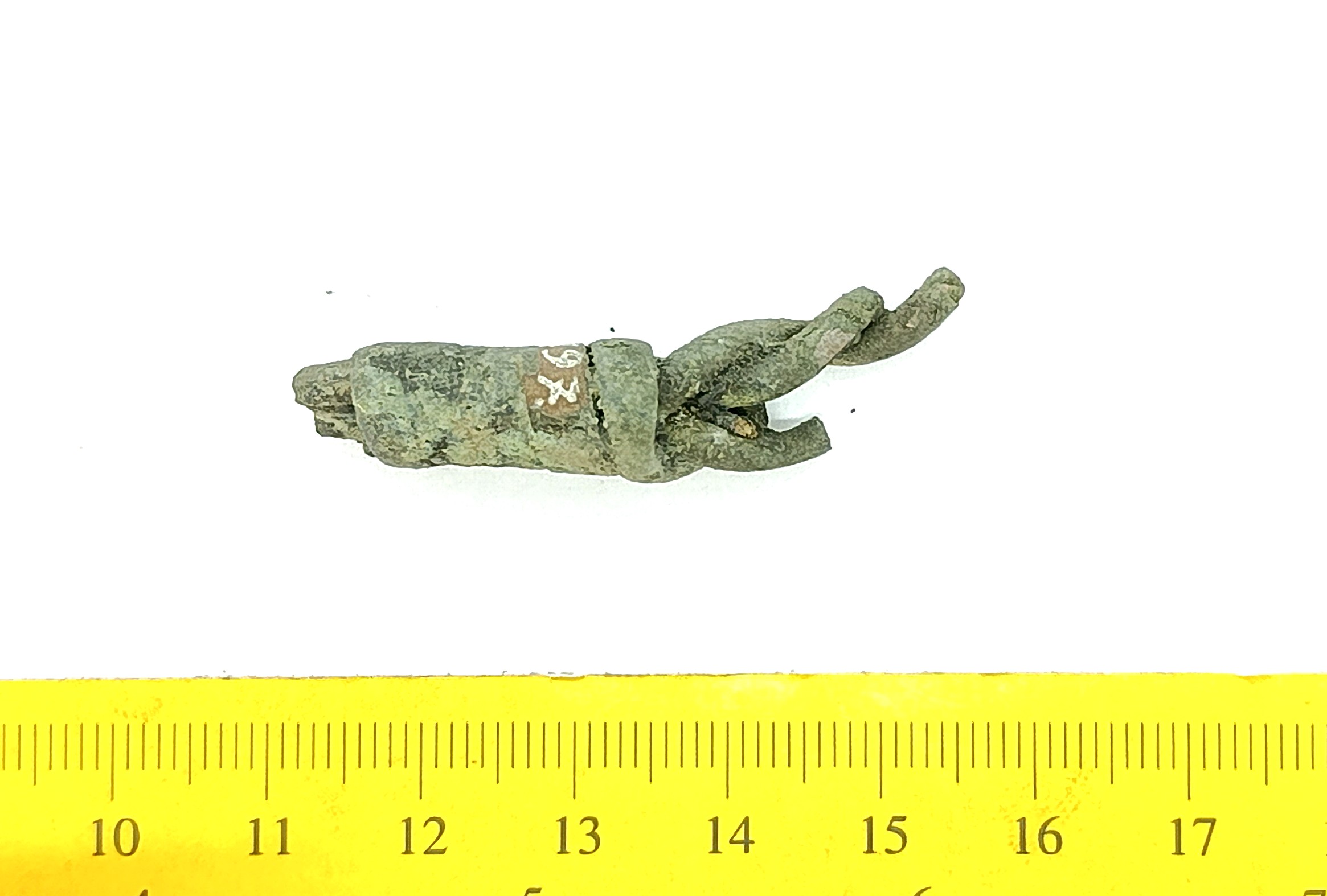
Neck ring, with two twisted rings, connected with a hook and a loop, copper alloy.
Century:
12-13
Discovery code:
AI 3884: 5497
Neck ring, with two twisted rings, connected with a hook and a loop, copper alloy. Such neck-rings have been found in inhumation graves (e.g. in Loona, Valjala; Mägi 2002, Pl. 98: 1; Mägi et al 2019, 97), but also in 13th-century hoards and deposits (e. g. Muhu, Lõhavere). Fragments of perhaps similar neck-rings have been also recorded in stone graves with cremations. Presumably appeared in the end of the 12th century.
Literature:
Mägi, M. 2002. At the Crossroads of Space and Time. Graves, Changing Society and Ideology on Saaremaa (Ösel), 9th–13th centuries AD. (CCC papers, 6.) Estonian Academy of Sciences, Institute of History, Tallinn / Gotland University College, Centre for Baltic Studies, Gotland.
Mägi, M.; Malve, M. & Toome, T. 2019. Early Christian burials at Valjala churchyard, Saaremaa. – Archaeological Fieldwork in Estonia 2018, 93−118.
Century:
12-13
Discovery code:
AI 3884: 5497
Viltina
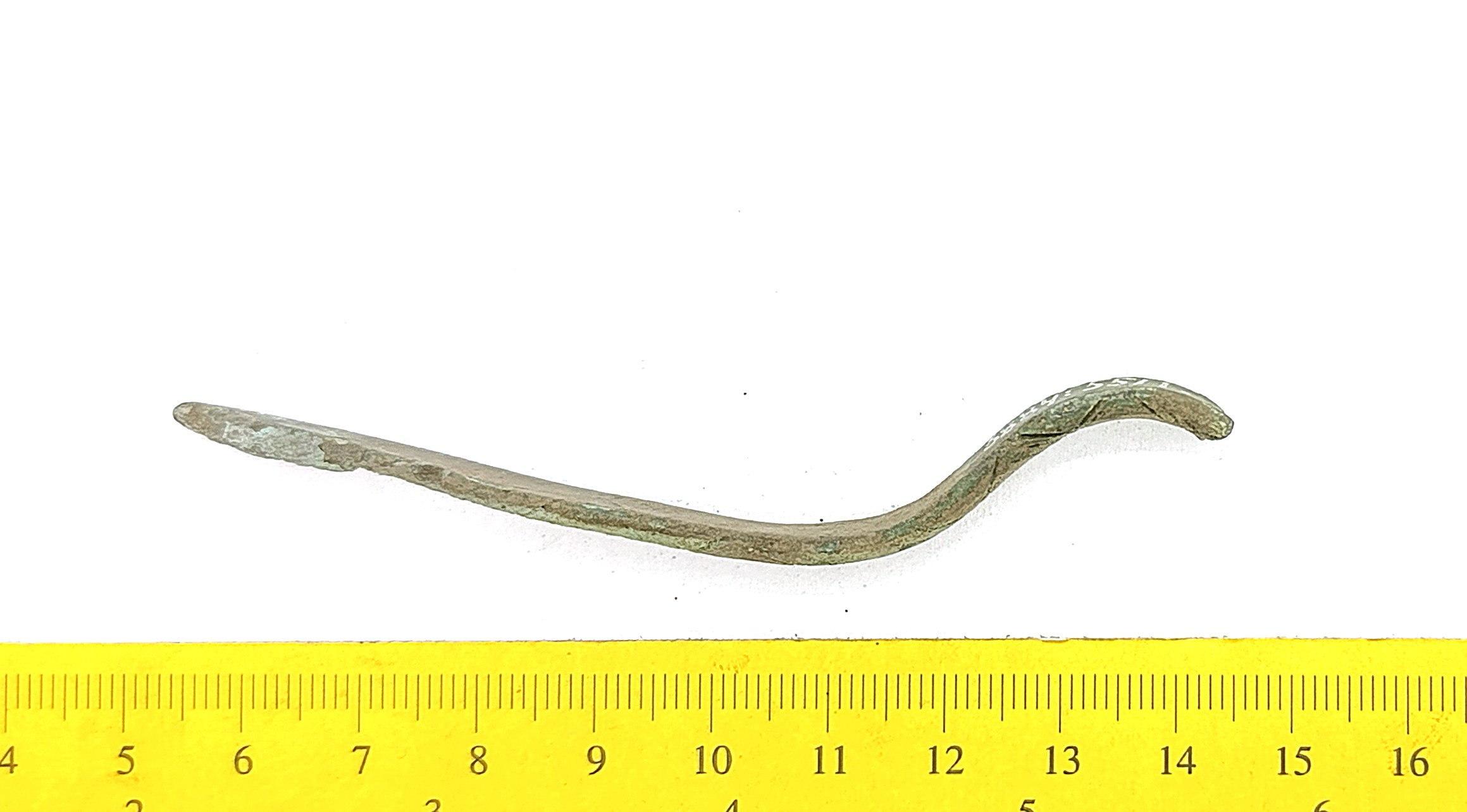
Fragment of a neck ring, copper alloy.
Century:
10-11
Discovery code:
AI 3884: 5511
Fragment of a neck ring, copper alloy. Composite neck rings are usually assembled from three separate rings, using copper alloy clasps. This type of neck ring has only been found on Saaremaa (Mägi 2002, 107; 2019, 73). Similar finds have been obtained from Kurzeme, and they were also worn by Semigallians in the 10th–11th centuries (Tvauri 2014, 144; Griciuvienė 2005, 76-77).
Literature:
Mägi, M. 2002. At the Crossroads of Space and Time. Graves, Changing Society and Ideology on Saaremaa (Ösel), 9th–13th centuries AD. (CCC papers, 6.) Estonian Academy of Sciences, Institute of History, Tallinn / Gotland University College, Centre for Baltic Studies, Gotland.
Mägi, M. 2019. Late Viking Age burial place and ritual deposits at Lööne, Saaremaa. – Archaeological Fieldwork in Estonia 2018, 67–78.
Tvauri, A. 2014. Rahvasterännuaeg, eelviikingiaeg ja viikingiaeg Eestis. Tartu Ülikooli Kirjastus. Tartu.
Griciuvienė, E. (prepared by) 2005. Žiemgaliai. Baltų archeologijos paroda. Katalogas. The Semigallians. Baltic Archaeological Exhibition. Catalogue. Vilnius – Riga, Lietuvos nacionalis muziejus; Latvijas Vēstures muzejs.
Century:
10-11
Discovery code:
AI 3884: 5511
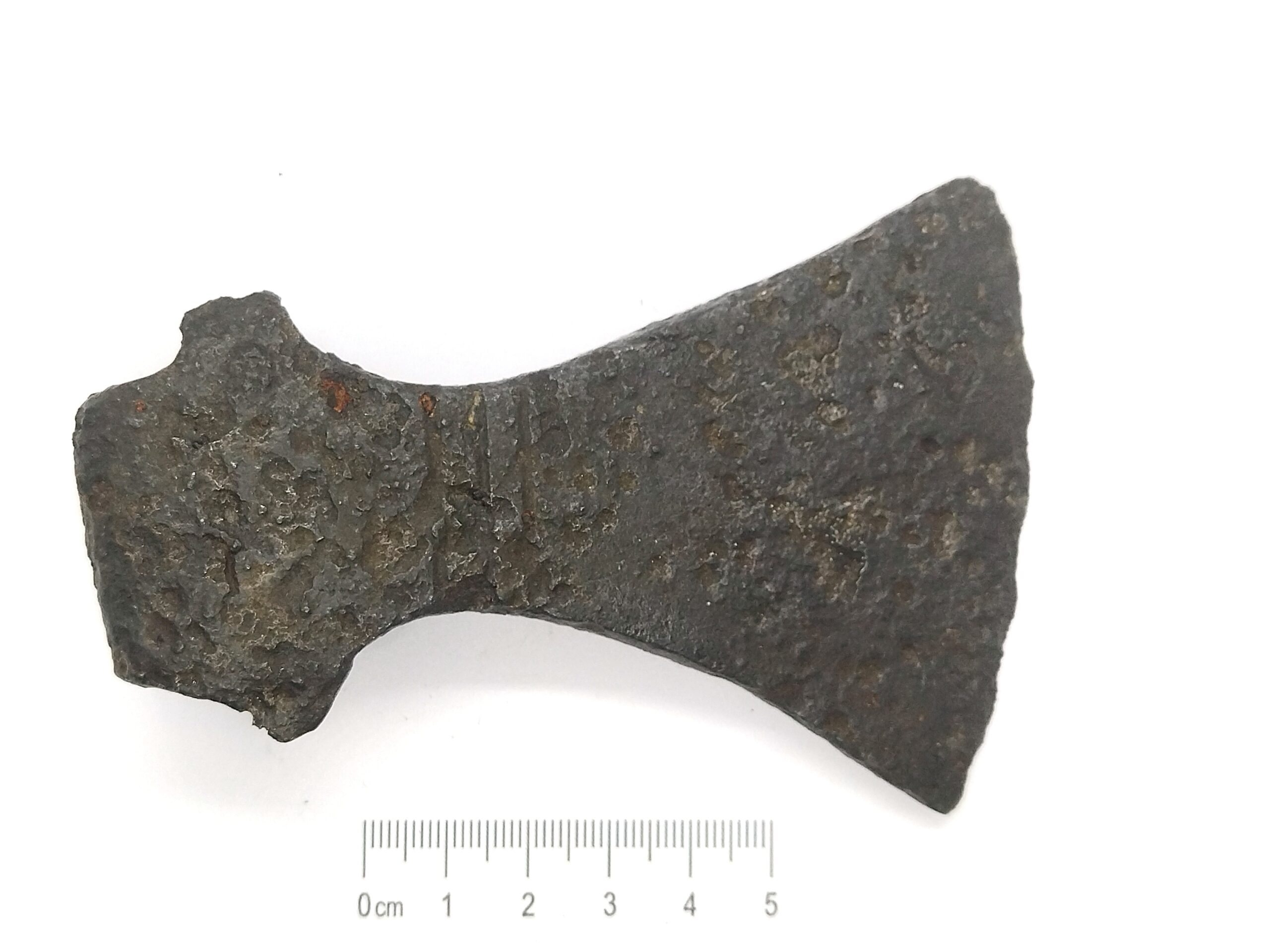
Axe, iron. Possibly Petersen´s Type M axe (Petersen 1919, 46-47). In Russia, Finland and Latvia, such broad axes are dated predominantly to the 11th-13th centuries (Kirpichnikov 1966, 30, 39; Atgāzis 1997; Lehtosalo-Hilander 1982, 52-53; Mugurēvičs 2008, 201), the latest variants in Latvia also in the 14th century (Brūzis 2016, 189). The broad butt of this specimen suggests that it belongs to the 12th-13th century.
Literature:
Petersen, J. 1919. De Norske Vikingesverd: en typologisk-kronologisk studie over vikingetidens vaaben. Kristiana.
Кирпичников, А. H. 1966. Древнерусское оружие IX – XIII вв. Выпуск 2. Копья, сулицы, боевые топоры, булавы, кистени. Наука: Москва.
Atgazis, M. 1997. Avas cirvji Latvija. Arheoloģija un etnogrāfija, XIX. Riga, 53–63.
Lehtsalo-Hilander, P.-L. 1982. Luistari II. The Artefacts. Suomen Muinaismuistoyhdistyksen Aikakauskirja Finska Fornminnesföreningens Tidskrift, 82: 2, Helsinki.
Mugurēvičs, Ē. 2008. Viduslaiku ciems un pils Salaspils novadā. Latvijas Vēstures Institūta Apgāds, Rīga.
Brūzis R. 2016. Tuvcīņas ieroči Latvijā 14.–16. gadsimtā. – Rīga: Latvijas vēstures institūta apgāds.2016. Tuvcīņas ieroči Latvijā 14.–16. gadsimtā. – Rīga: Latvijas vēstures institūta apgāds.
Century:
12-13
Discovery code:
AI 3884: 393
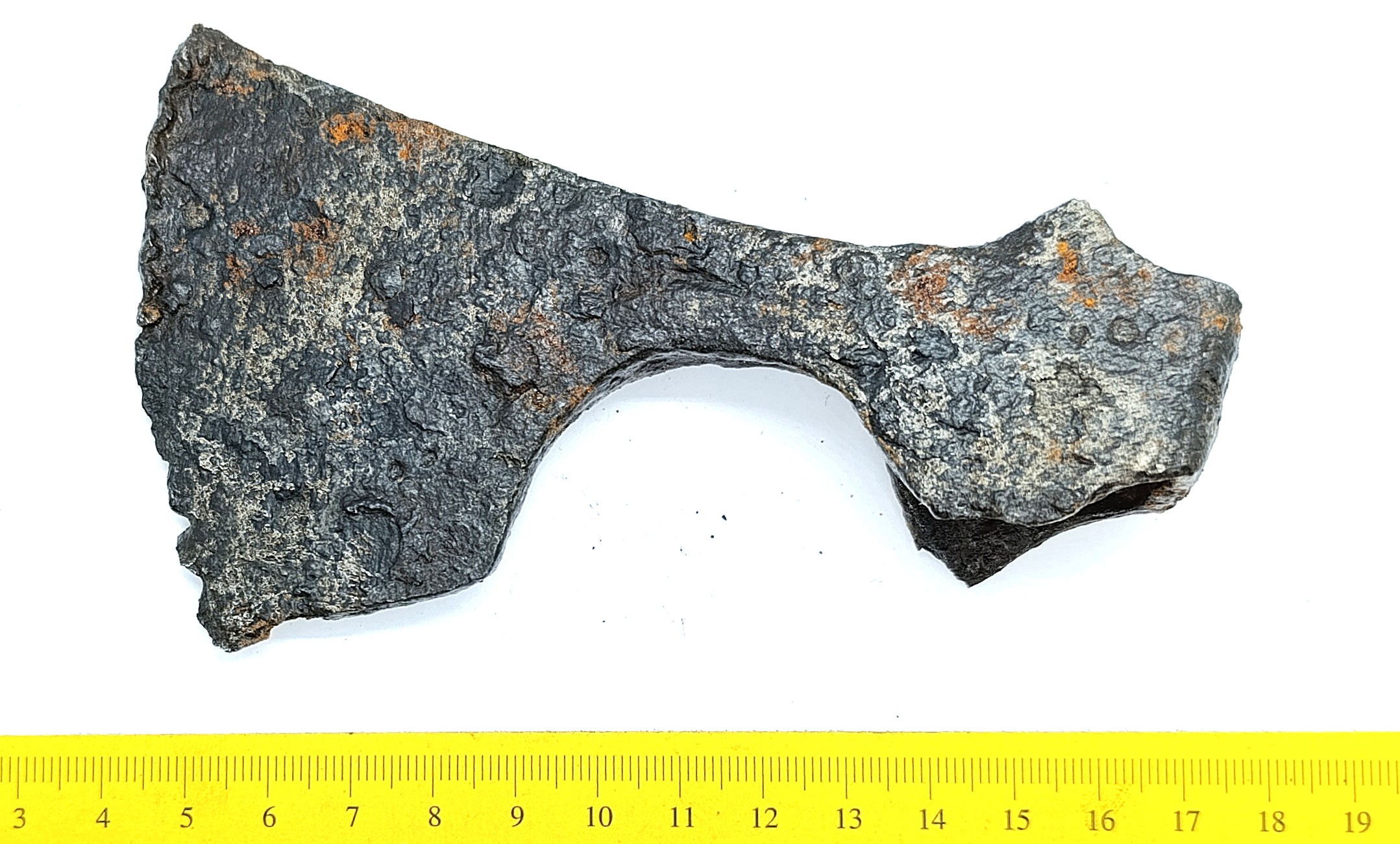
Axe, iron. Kirpichnikov’s Type VI, dated in Russia mainly to the 11th century, partly also to the 10th century (Kirpichnikov 1966, 30, 38-39). In Finland and in the Eastern Baltic, such axes were probably widespread mainly in the 11th century (Lehtosalo-Hilander 1982, 52–53).
Literature:
Кирпичников, А. H. 1966. Древнерусское оружие IX – XIII вв. Выпуск 2. Копья, сулицы, боевые топоры, булавы, кистени. Наука: Москва.
Lehtsalo-Hilander, P.-L. 1982. Luistari II: The Artefacts. SMYA 82: 2. Helsinki.
Century:
11
Discovery code:
AI 3884: 1315
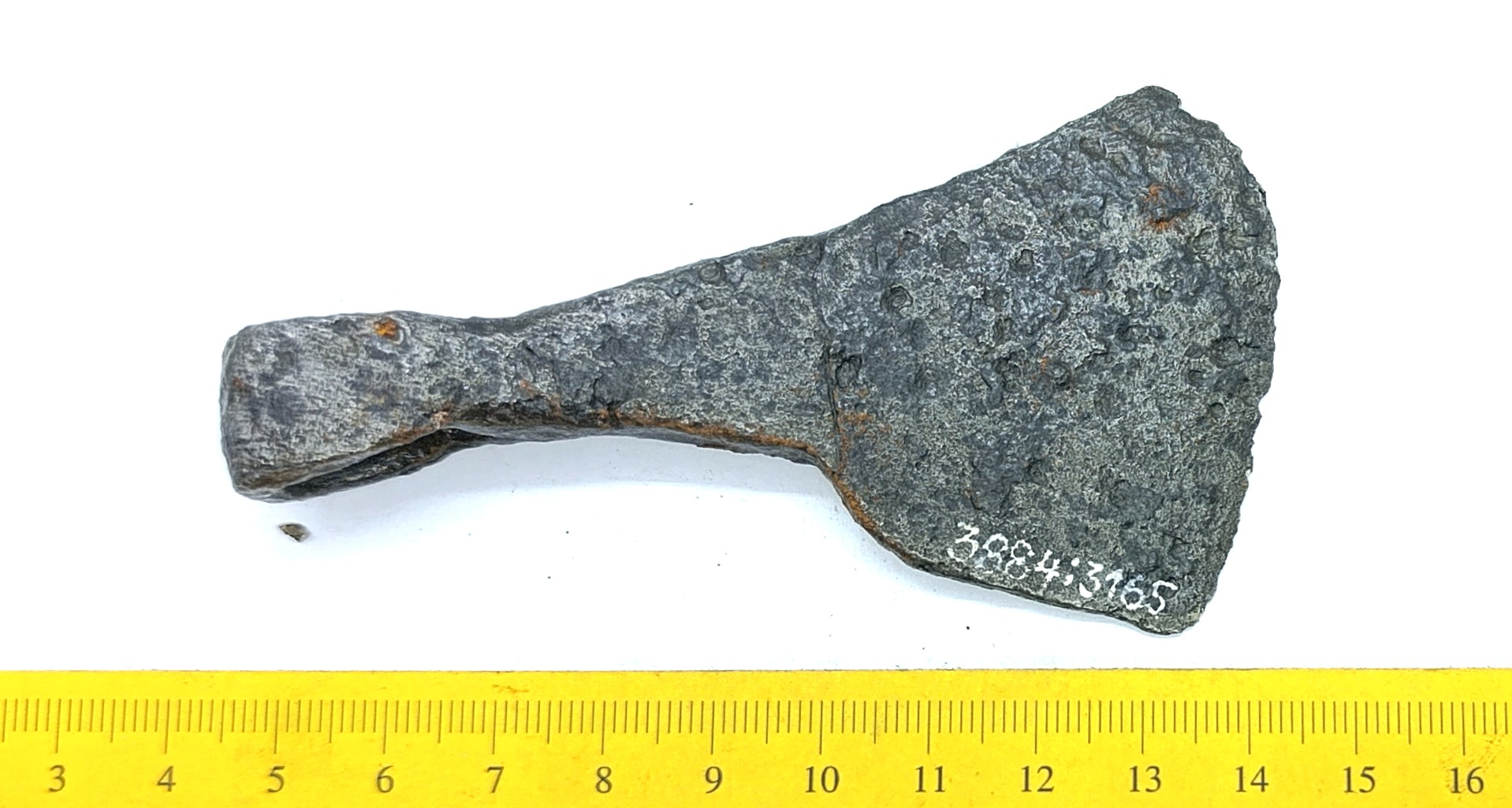
Axe, iron. Unusual shape, dated according to the find context of Viltina grave.
Century:
10-13
Discovery code:
AI 3884: 3165
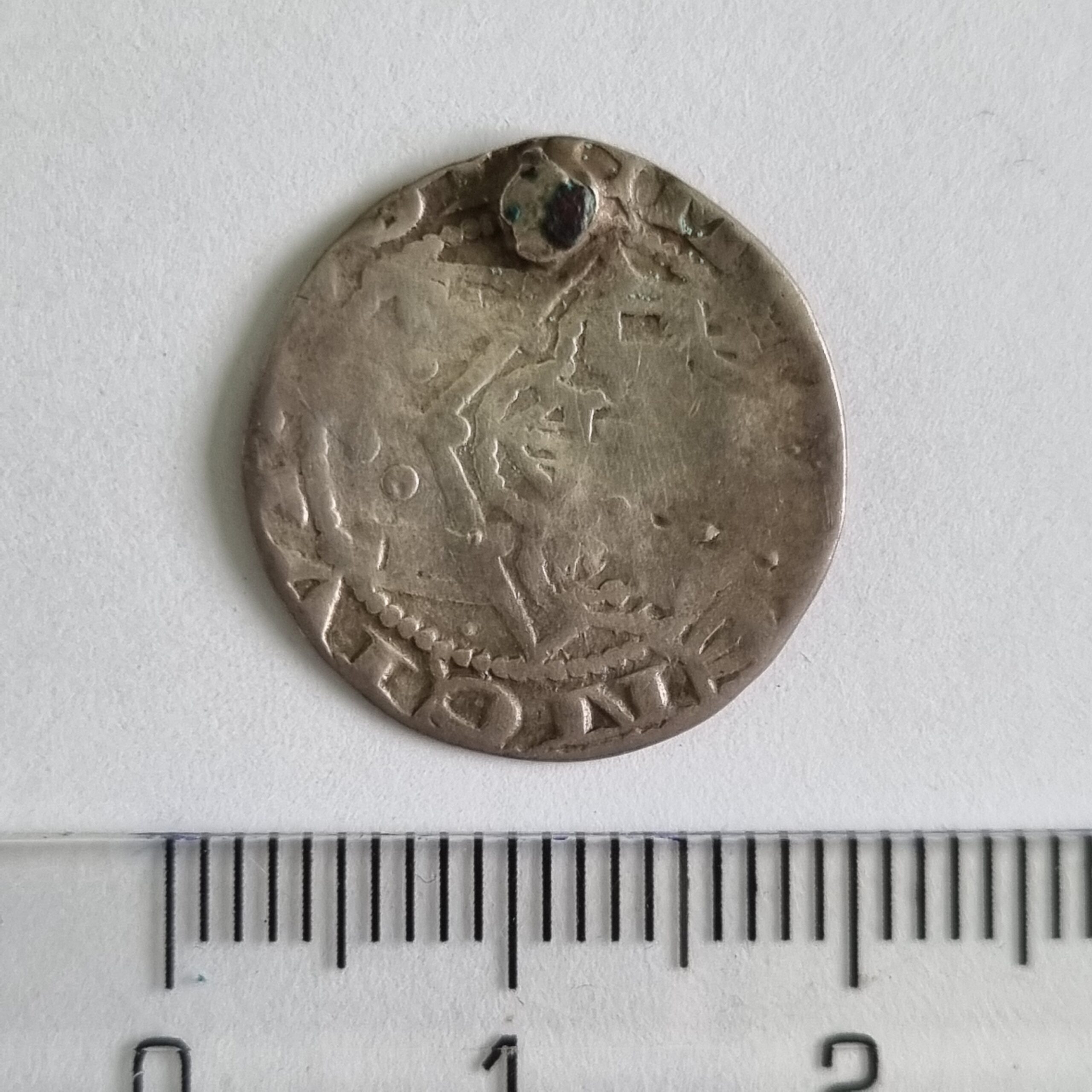
Pendant coin, silver. Germany, Paderborn, Simon I von der Lippe, 1247-1277. Photo Heikki Pauts.
Century:
13
Discovery code:
AI 3884: 27
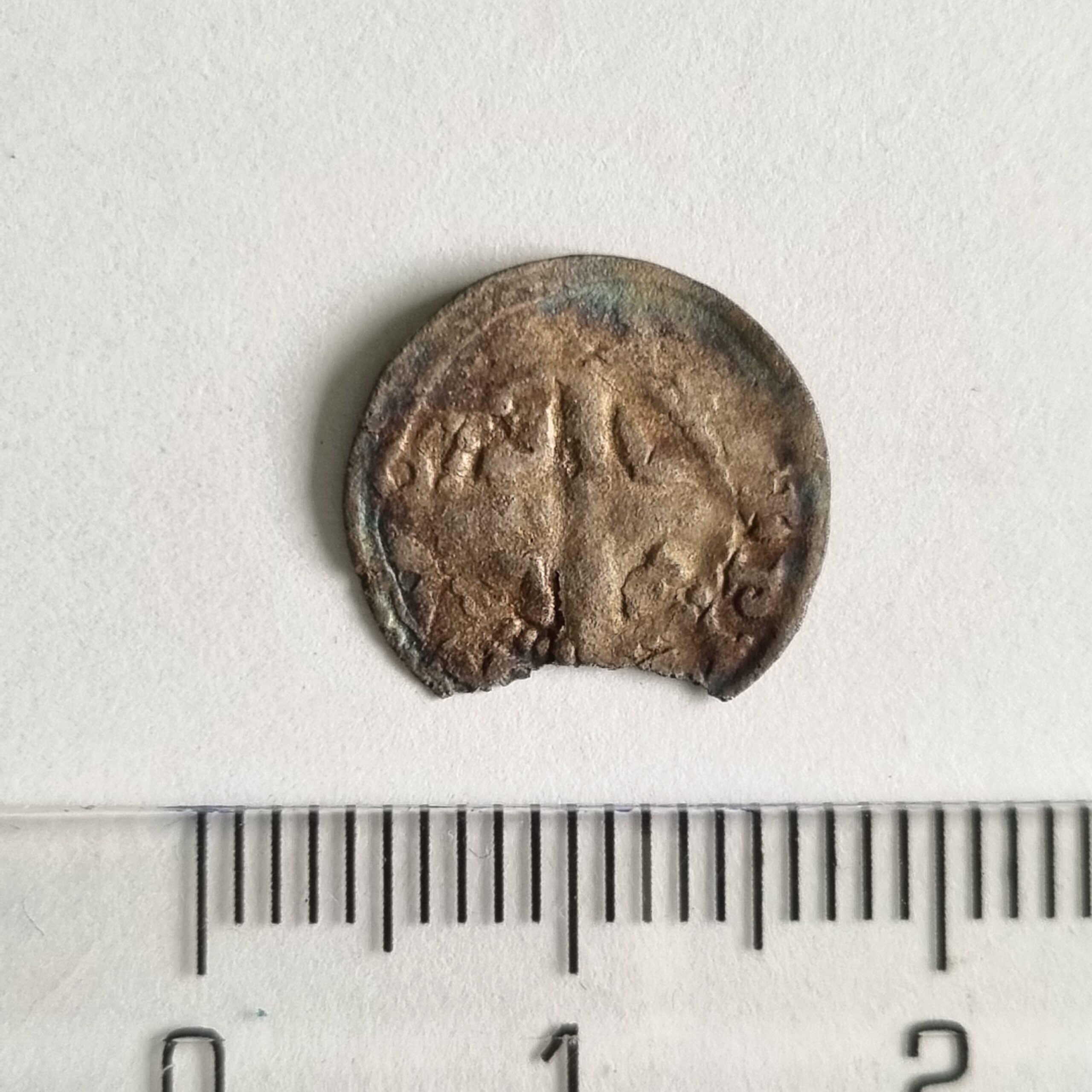
Coin, silver. Soest, Archbishop of Cologne Philipp, posthumous issue, 1167–1191. Photo Heikki Pauts.
Century:
12
Discovery code:
AI 3884: 114
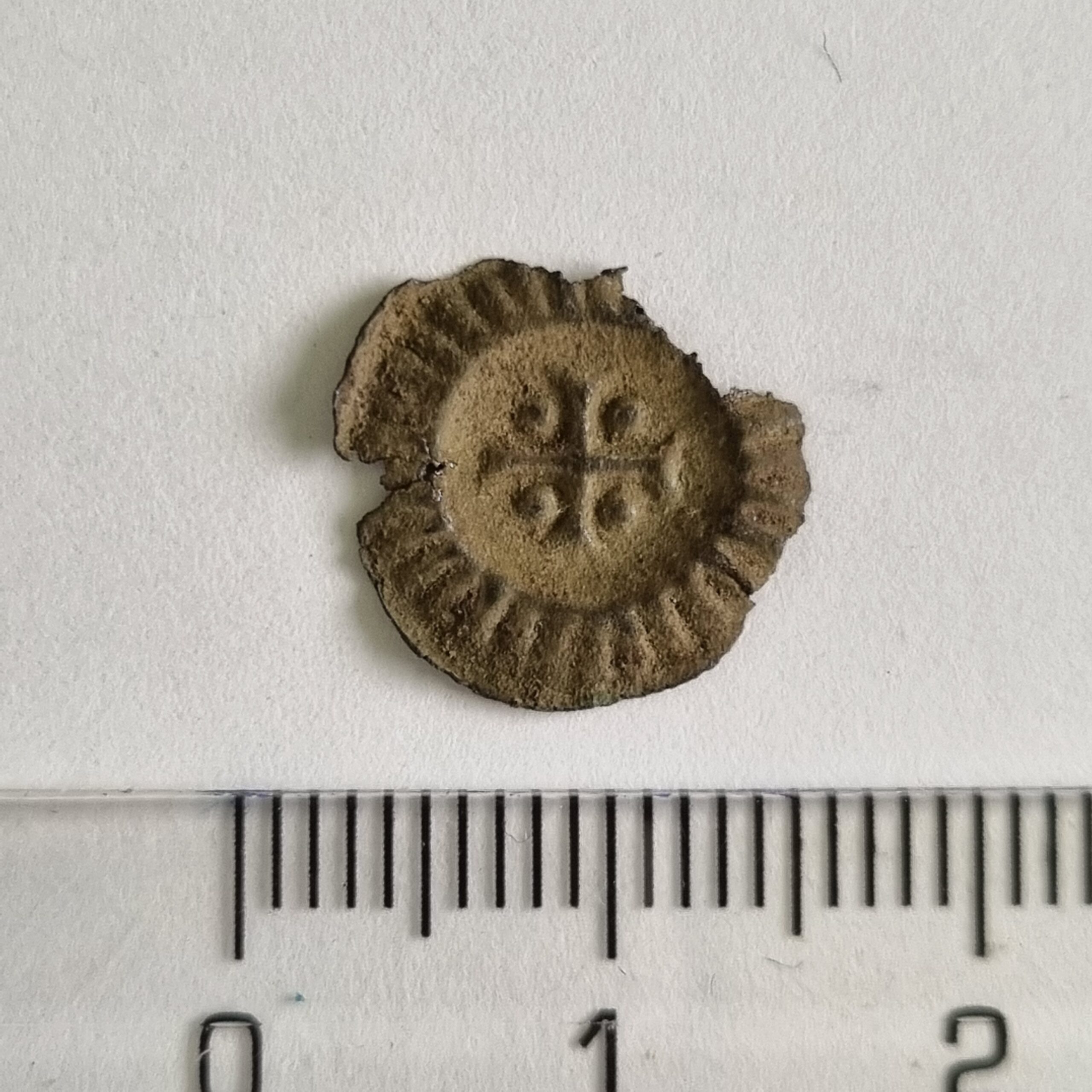
Coin, silver. Tallinn sherf, outwardly similar to a bracteate. Sherfs were struck in Estonian territories in the 15th century in Tallinn and Tartu. Photo by Heikki Pauts.
Century:
15
Discovery code:
AI 3884: 245
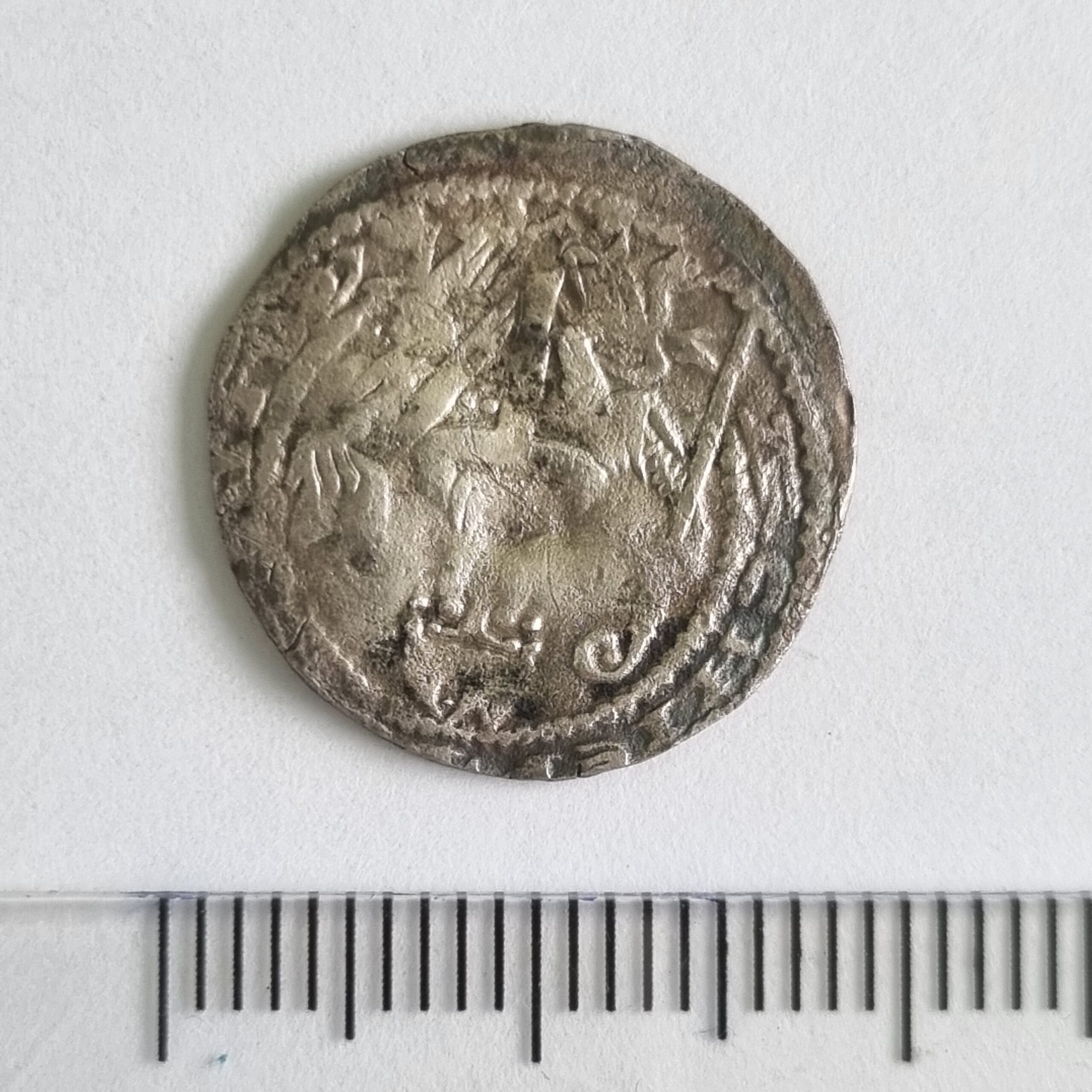
Coin, silver. Cologne, Archbishop Philipp, type 5, 1190–1191. Photo by Heikki Pauts.
Century:
12-13
Discovery code:
AI 3884: 307

