
Database
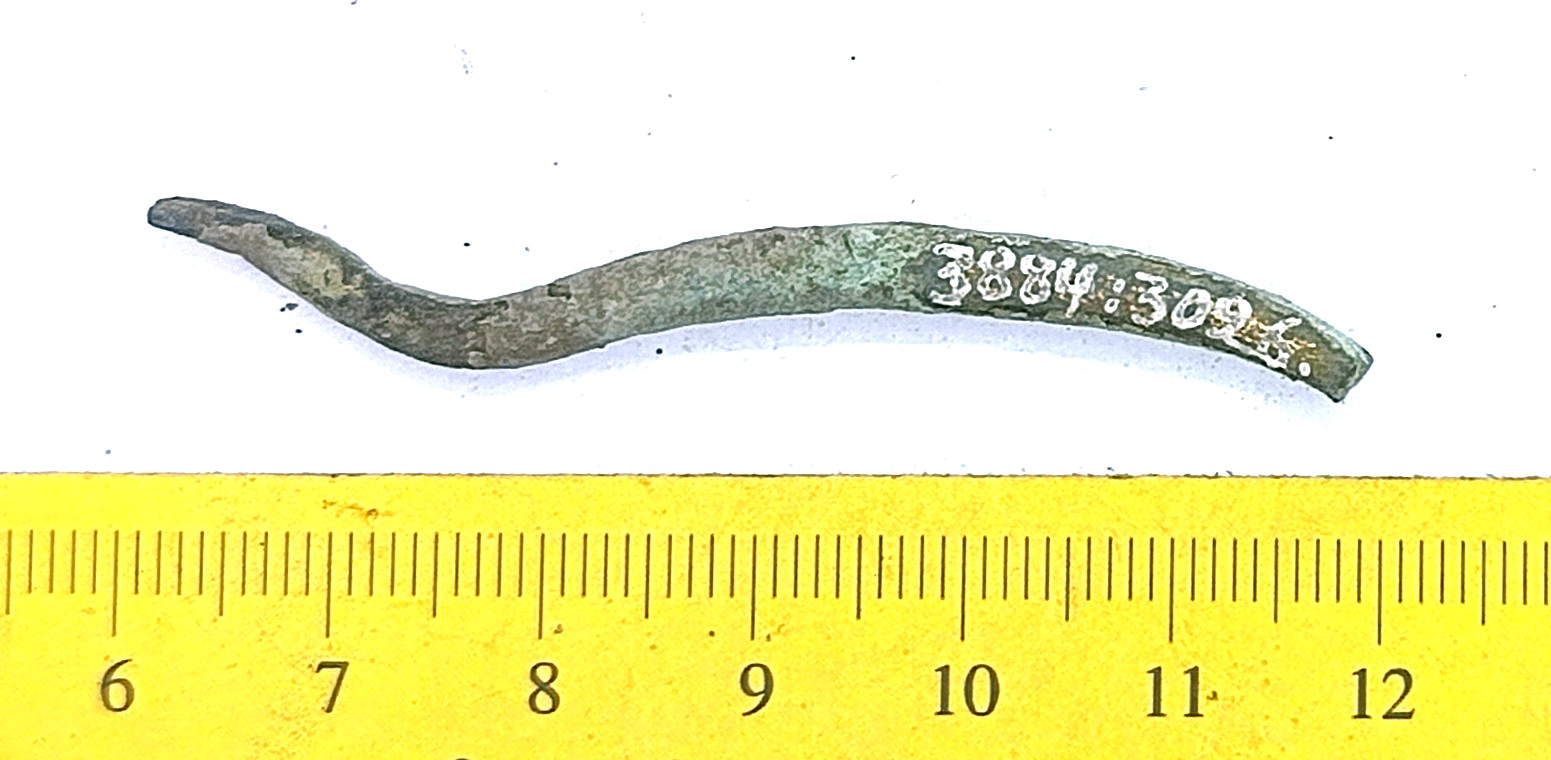
Century:
10-13
Discovery code:
AI 3884: 3026
Viltina
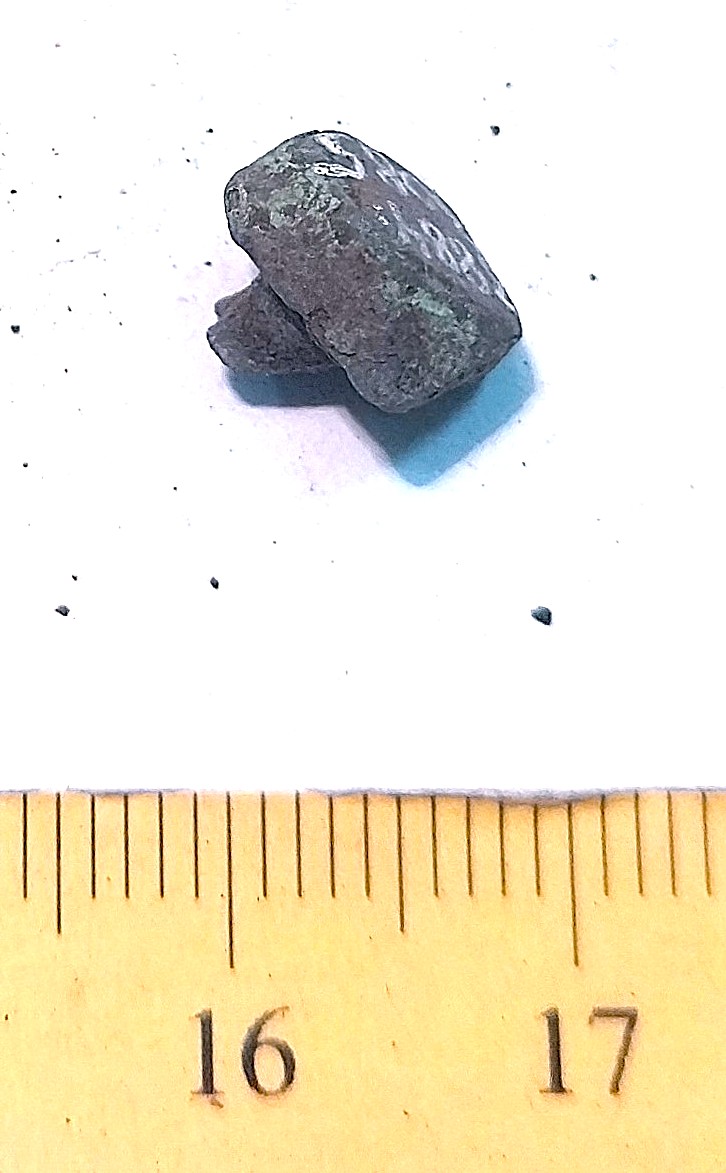
Penannular brooch with thickening terminals, copper alloy.
Century:
11-13
Discovery code:
AI 3884: 3085
Penannular brooch with thickening terminals, copper alloy. Possibly imported from Couronia, where such brooches have been found in 11th-13th-century burials (Griciuvienė 2009, 317, 339).
Literature:
Griciuvienė, E. (prepared by) 2009. Kuršiai. Genties kultūra laidosenos duomenimis. Baltų archeologijos paroda. Katalogas. The Curonians. Tribe Culture According to the Burial Data. Baltic Archaeological Exhibition. Catalogue. Lietuvos nacionalis muziejus, Latvijas Nacionālais vēstures muzejs, Vilnius – Riga.
Century:
11-13
Discovery code:
AI 3884: 3085
Viltina
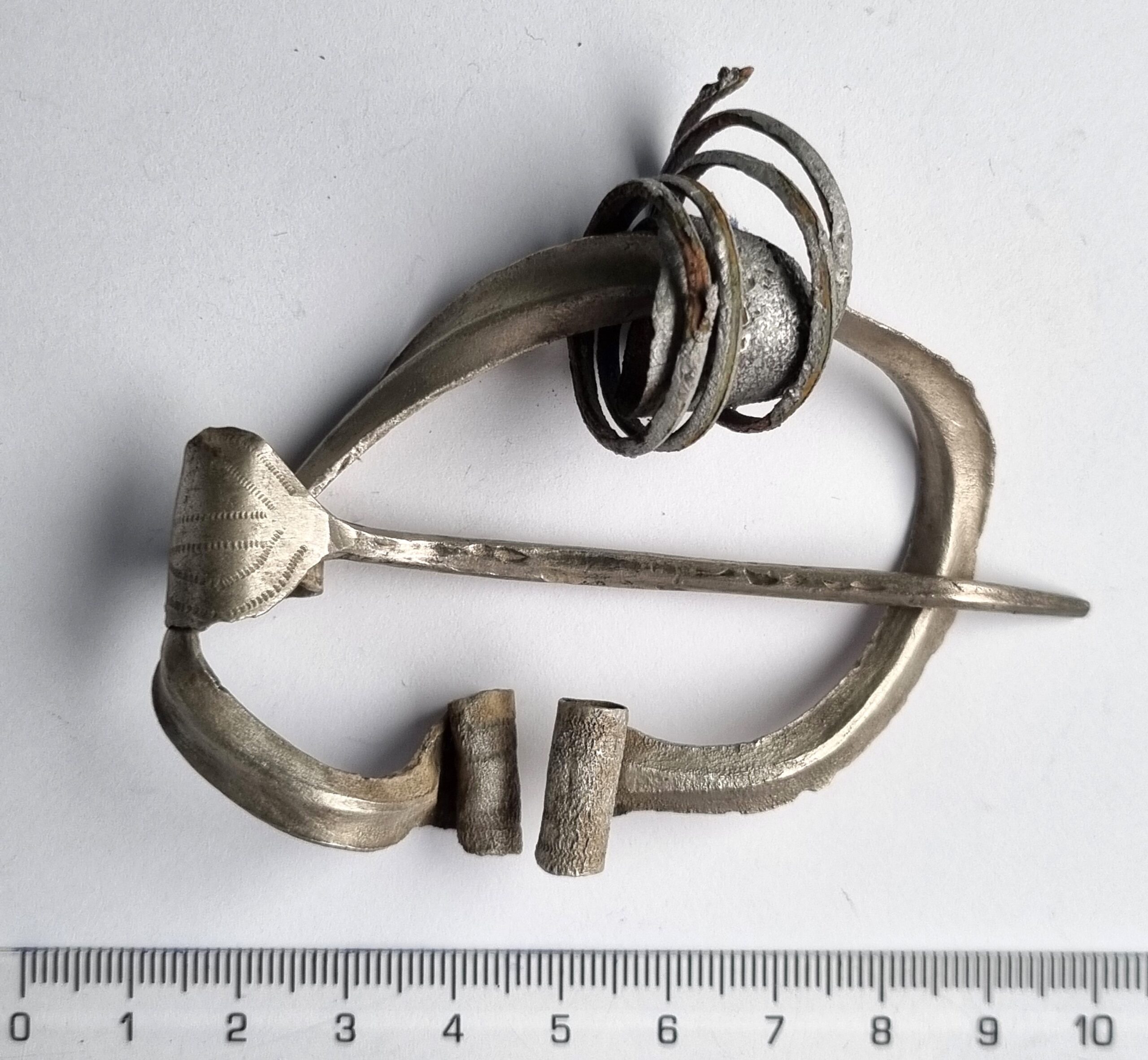
Penannular brooch with spiral finger-ring, silver.
Century:
12-13
Discovery code:
AI 3884: 3854
Penannular brooch with long rolled terminals, silver. Flat arch with ridge. Brooches with such arches are in Gotland and Finland dated to the 11th-12th centuries (Carlsson 1988, 75), but in Estonia they occur mainly in hoards dated to the 12th-13th centuries (Tõnisson 1962, 217-219; Pauts 1995, 49).
Spiral finger-ring with a widening middle part, copper alloy. Rings of this type were worn in the eastern coast of the Baltic Sea and NW Russia. According to the Finnish archaeological evidence, such finger-rings were used in the 7th-11th centuries (Lehtosalo-Hilander 1982, 122-128; Mägi 2002, 108). In Estonia, they are normally found in the 10th-11th-century sites, because 7th-9th-century sites, especially graves, are rare or absent.
Literature:
Tõnisson, E. 1962. Eesti aardeleiud. Muistsed kalmed ja aarded. Arheoloogiline kogumik II. Tallinn, 182–274.
Lehtosalo-Hilander, P.-L. 1982. Luistari II: The Artefacts. SMYA 82: 2. Helsinki.
Carlsson, A. 1988. Vikingatida ringspännen fran Gotland. (Stockholm Studies in Archaeology 8.)
Pauts, H. 1995. Lääne-Eesti hoburaudsõled (8.-13. sajand). Tartu Ülikool, Filosoofia teaduskond, Arheoloogia õppetool. Diplomitöö, Tallinn.
Mägi, M. 2002. At the Crossroads of Space and Time. Graves, Changing Society and Ideology on Saaremaa (Ösel), 9th–13th Centuries AD. (CCC Papers, 6.) Tallinn.
Century:
12-13
Discovery code:
AI 3884: 3854
Viltina
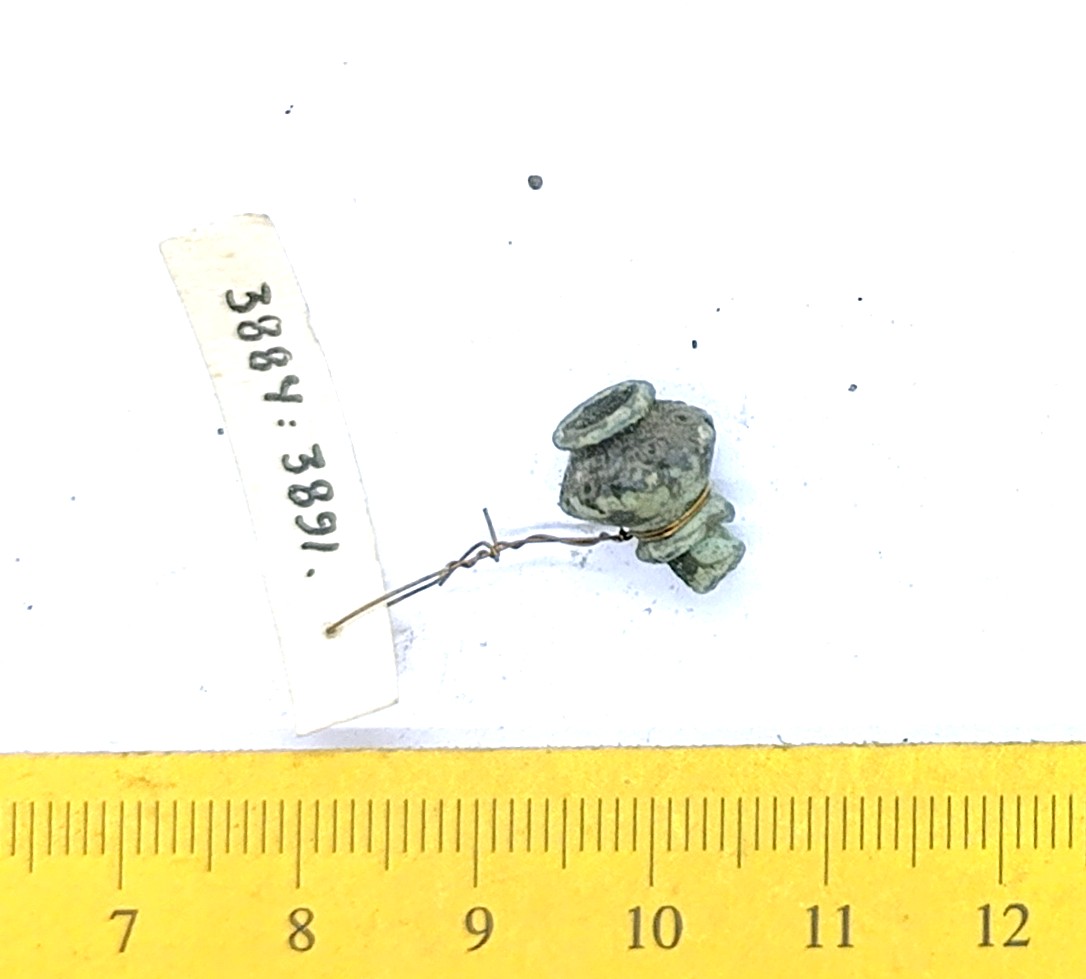
Penannular brooch with bi-conical poppy-shaped terminals, copper alloy.
Century:
10-11
Discovery code:
AI 3884: 3891
Penannular brooch with bi-conical poppy-shaped terminals, copper alloy. Brooches with such terminals were widespread, in addition to Saaremaa, especially in Couronia, Livic areas and Gotland, where they are dated to the 10th–11th centuries (Mägi 2002, 100–101; Vaska 2019, 198).
Literature:
Mägi, M. 2002. At the Crossroads of Space and Time. Graves, Changing Society and Ideology on Saaremaa (Ösel), 9th–13th centuries AD. CCC papers: 6. Gotland University College, Centre for Baltic Studies; Institute of History, Department of Archaeology. Tallinn, 2002.
Vaska, B. 2019. Rotas un ornaments Latvijā no bronzas laikmeta līdz 13. gadsimtam. Latvijas Nacionālais vēstures muzejs. Rīga.
Century:
10-11
Discovery code:
AI 3884: 3891
Viltina
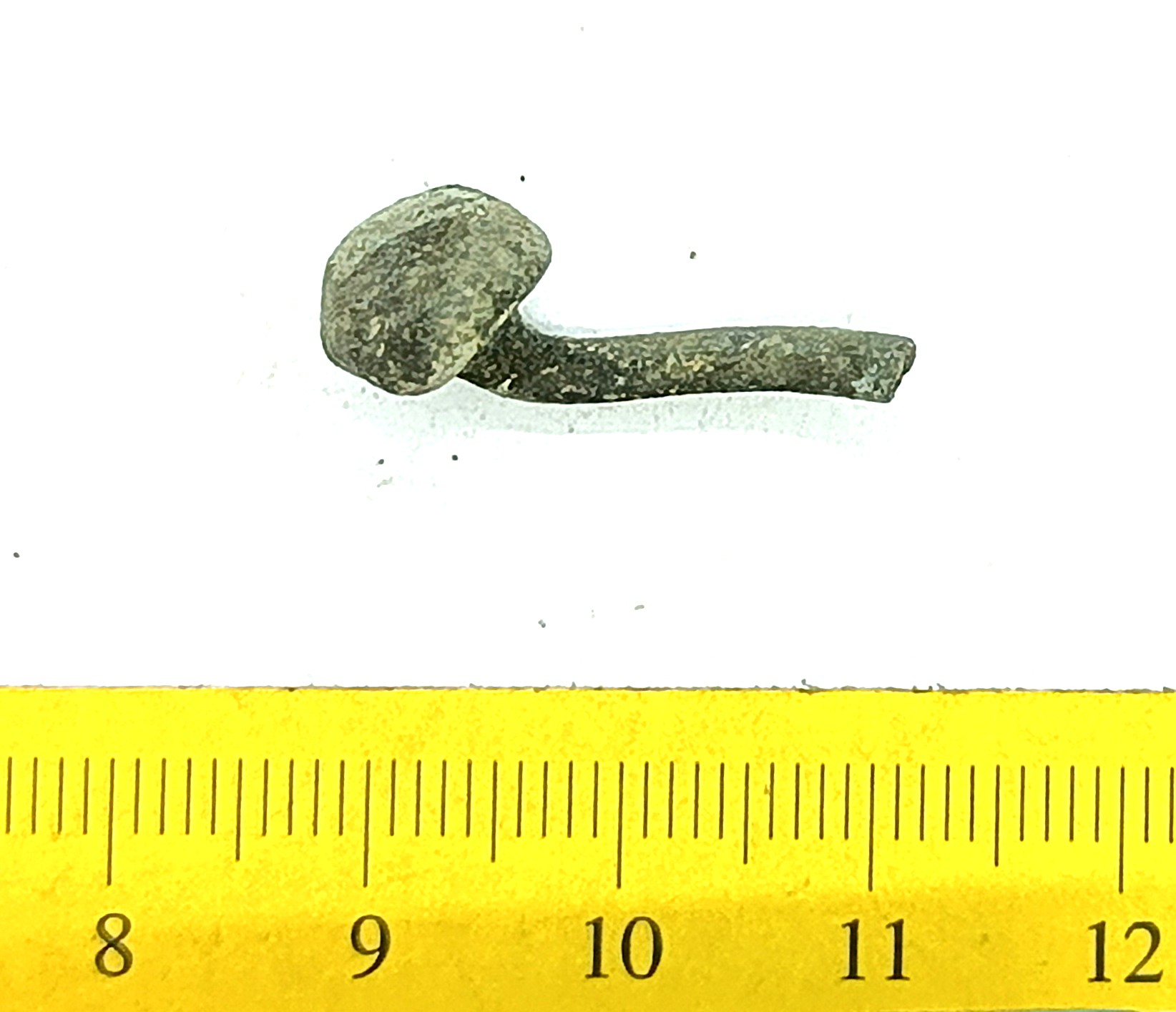
Penannular brooch with knob-shaped terminals, copper alloy.
Century:
13-15
Discovery code:
AI 3884: 4297
Penannular brooch with knob-shaped terminals, copper alloy. Such brooches have been found in stone graves with cremations, where they can belong to the late 12th century. They are more widespread in inhumation graves or found as stray-finds. In Siksälä Cemetery, SE-Estonia, such brooches are dated, depending on the shape of the ring and pin, to the 13th-15th centuries (Valk & Laul 2014, 102-103).
Literature:
Valk, H. & Laul, S. 2014. Siksälä kalme I: Muistis ja Ajalugu. Tartu ülikool, Ajaloo ja arheoloogia instituut, Tallinn.
Century:
13-15
Discovery code:
AI 3884: 4297
Viltina
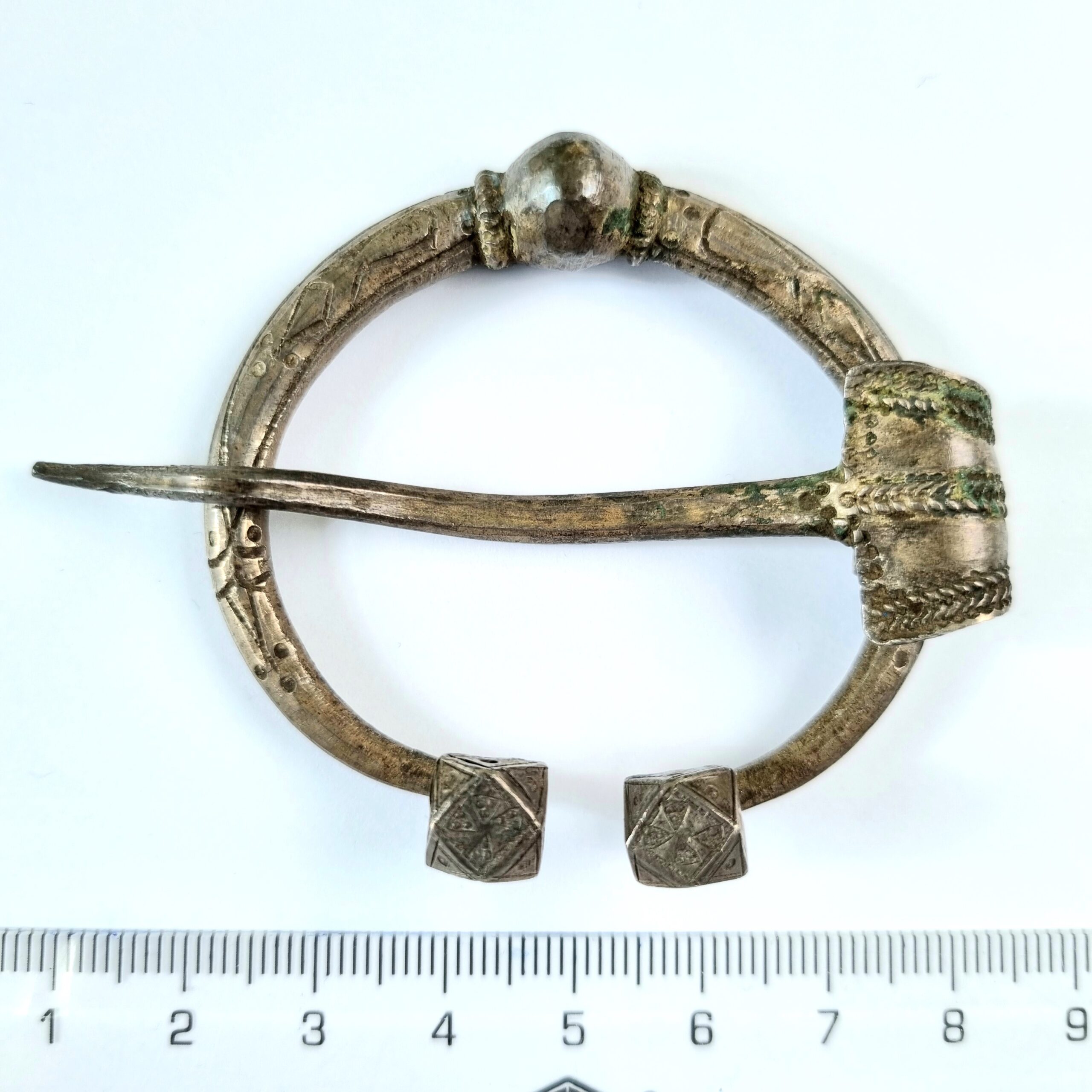
Penannular brooch with faceted terminals, silver.
Century:
13
Discovery code:
AI 3884: 4563
Penannular brooch with faceted terminals, silver. The section of the arch is rhomb and there is a gnarl on the arch. Such brooches are in Estonia dated predominantly to the first half of the 13th century. Similar brooches have been, among other places, found in 13th-century inhumation graves (Pauts 1997, 197; vt. ka Valk et al. 2018, fig. 12).
Literature:
Pauts, H.1997. Pahaga hoburaudsõled Eestis. – Eesti Ajaloomuuseum. Töid ajaloo alalt, I. Tallinn, 79–115.
Valk, H., Kivirüüt, A., Rammo, R., Ots, M., Ratas, J. 2018. Archaeological investigations on Ala-Kõrtsi cemetery in Urvaste parish centre in Võrumaa. – Archaeological Fieldwork in Estonia 2017, 97–110.
Century:
13
Discovery code:
AI 3884: 4563
Century:
10-13
Discovery code:
AI 3884: 4614
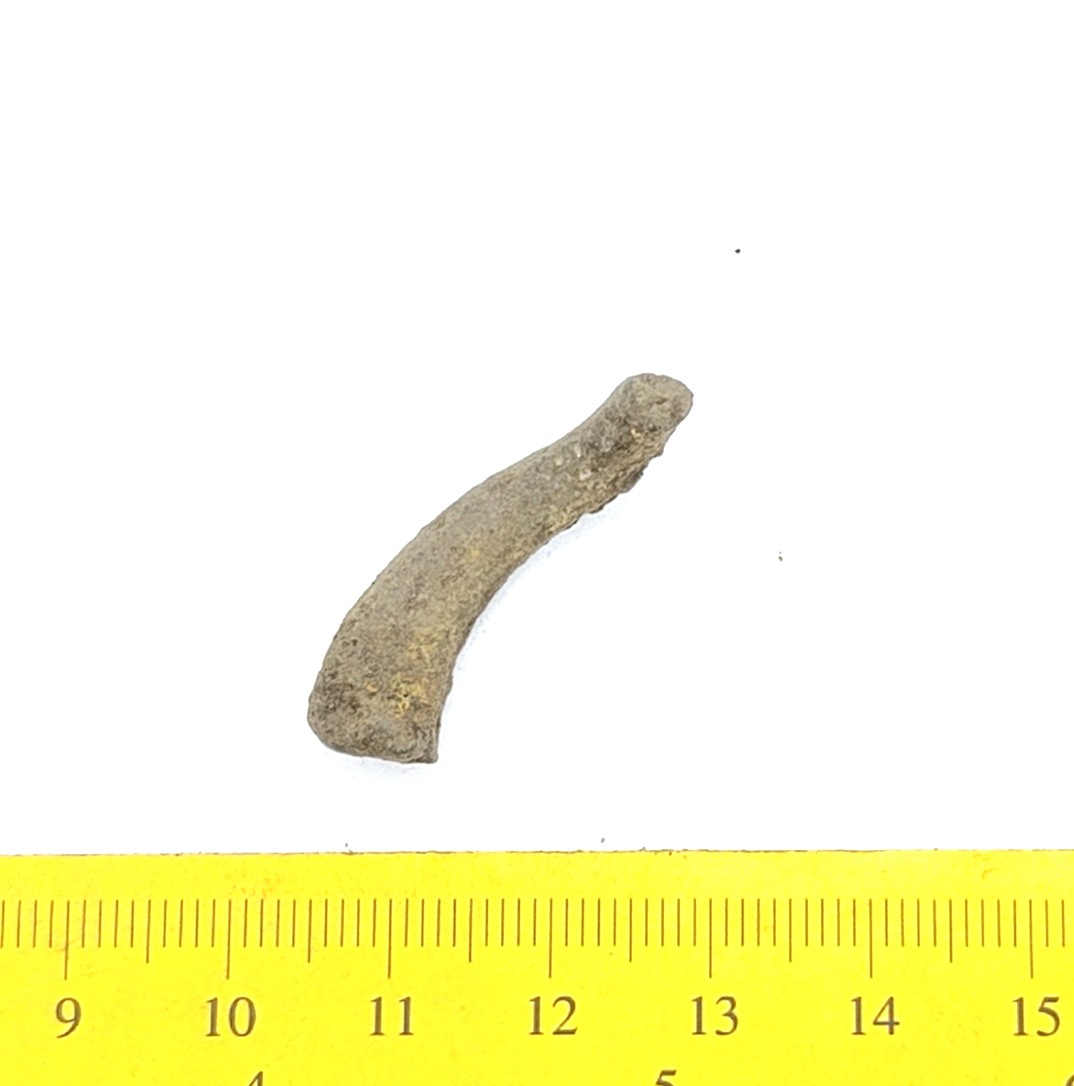
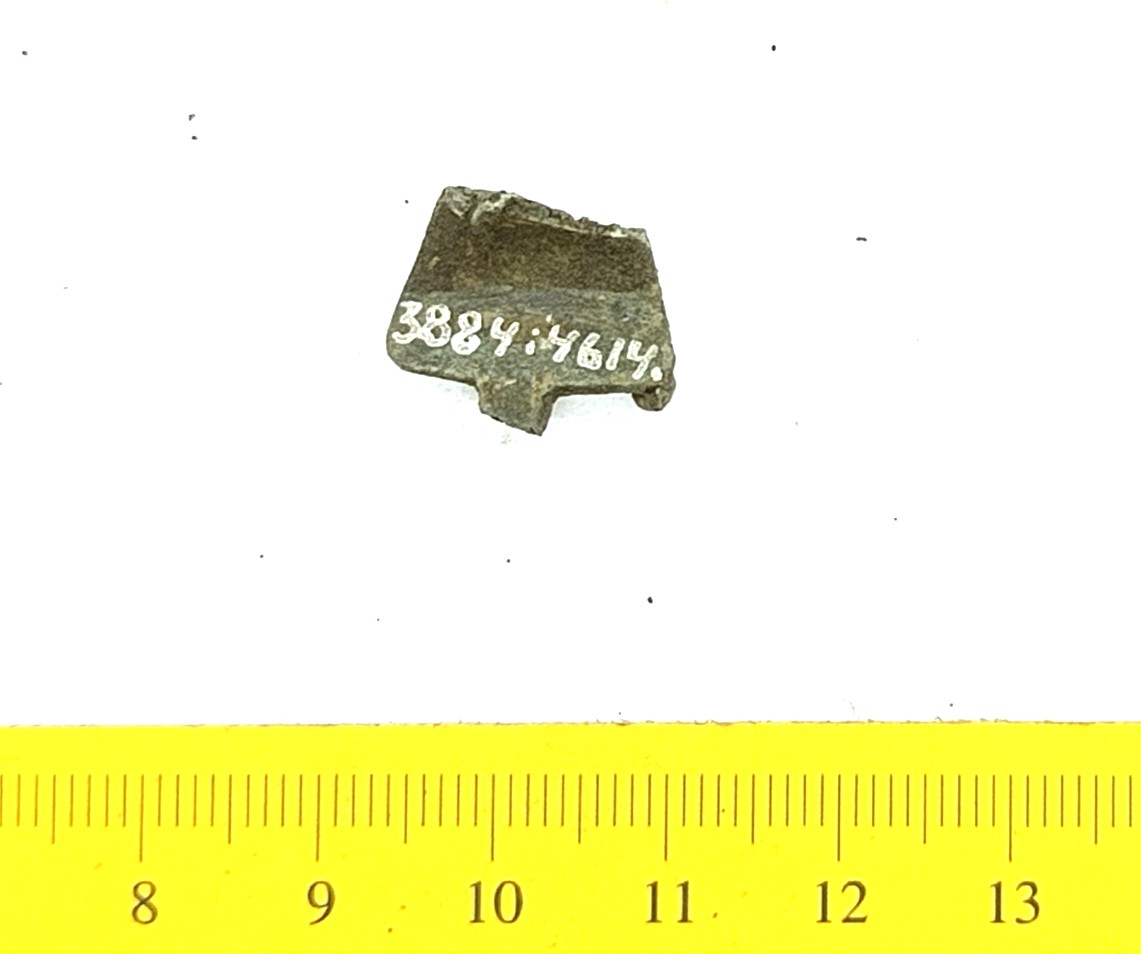
Penannular brooch, copper alloy. The loop has grooved thicker middle parts transversely grooved. Similar brooches are often found in 13th-14th-century inhumation graves and only seldom in stone graves with cremations. In Karja, such brooch was registered in an inhumation dated to the second half of the 13th century (Mägi 2002, Pl. 125: 1–2), but in Siksälä, South-East Estonia, they also occur in 14th-century graves (Valk et al 2014).
Literature:
Mägi, M. 2002. At the crossroads of space and time: graves, changing society and ideology on Saaremaa (Ösel), 9th–13th centuries AD. Tallinn.
Valk, H., Ratas, J., Laul, S. 2014. Siksälä kalme II. Matuste ja leidude kataloog. Tartu Ülikool: Tartu.
Century:
13-14
Discovery code:
AI 3884: 5198
Viltina
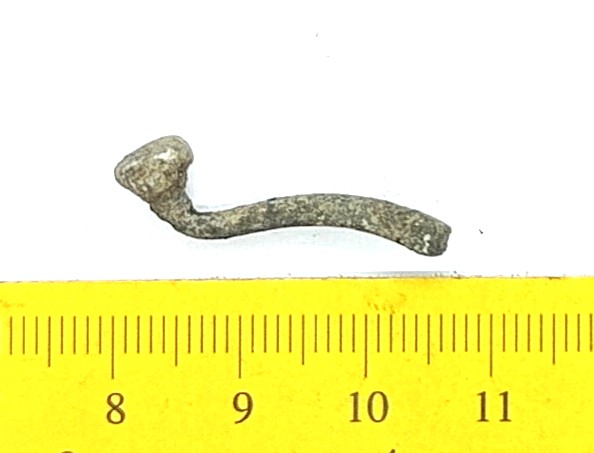
Penannular brooch with knob-shaped terminals, copper alloy.
Century:
13
Discovery code:
AI 3884: 5314
Penannular brooch with knob-shaped terminals, copper alloy. With a rhomb-shaped cross-section. Such brooches have been found in stone graves with cremations, where they can belong to the late 12th century. They are more widespread in inhumation graves or found as stray-finds. In Siksälä Cemetery, SE-Estonia, such brooches are dated, depending on the shape of the ring and pin, to the 13th-15th centuries (Valk & Laul 2014, 102-103).
Literature:
Valk, H. & Laul, S. 2014. Siksälä kalme I: Muistis ja Ajalugu. Tartu ülikool, Ajaloo ja arheoloogia instituut, Tallinn.
Century:
13
Discovery code:
AI 3884: 5314

