
Database
Viltina
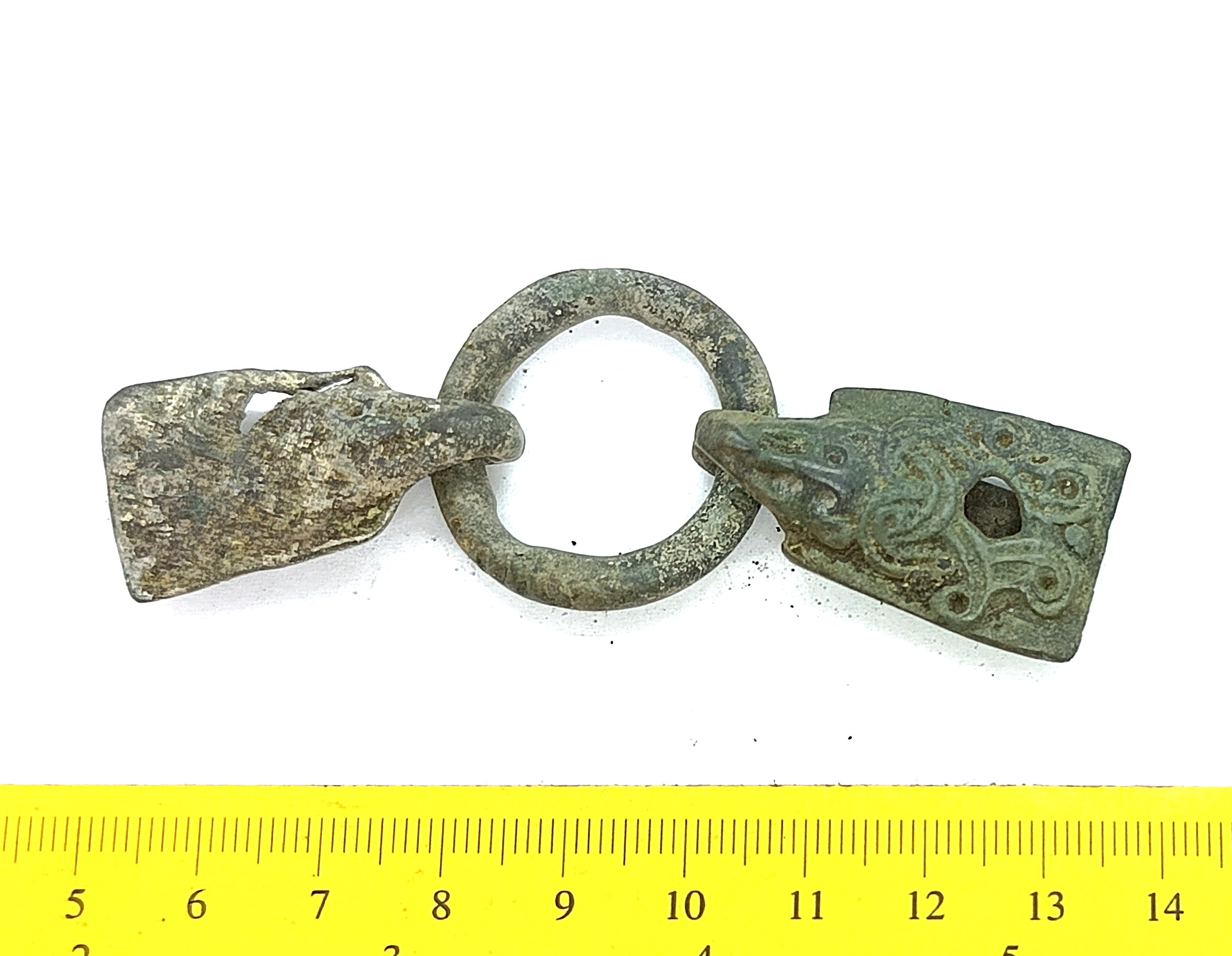
Belt divider consisting of a simple ring with two joining mounts, copper alloy.
Century:
10-11
Discovery code:
AI 3884: 4509
Belt divider consisting of a simple ring with two joining mounts, copper alloy. The mounts are decorated with a stylised Urnes-style ornament. Joining mounts of this shape are known from 10th–11th century find complexes in Gotland, especially from the Kopparsvik cemetery (e.g., Thunmark-Nylén 1995, figs. 43, 137, 138, 210, 376, 380, 387, 395). Burial complexes from Saaremaa and of the Livs with similar strap ends are also dated to the 10th–11th century (Mägi 2002, pl. 13; Zariņa 2006, 236).
Literature:
Mägi, M. 2002. At the crossroads of space and time: graves, changing society and ideology on Saaremaa (Ösel), 9th–13th centuries AD. Tallinn.
Zariņa, A. 2006. Salaspils Laukskolas kapulauks 10.–13. gadsimts. Latvijas Vēstures Institūta Apgāds, Rīga.
Century:
10-11
Discovery code:
AI 3884: 4509
Viltina
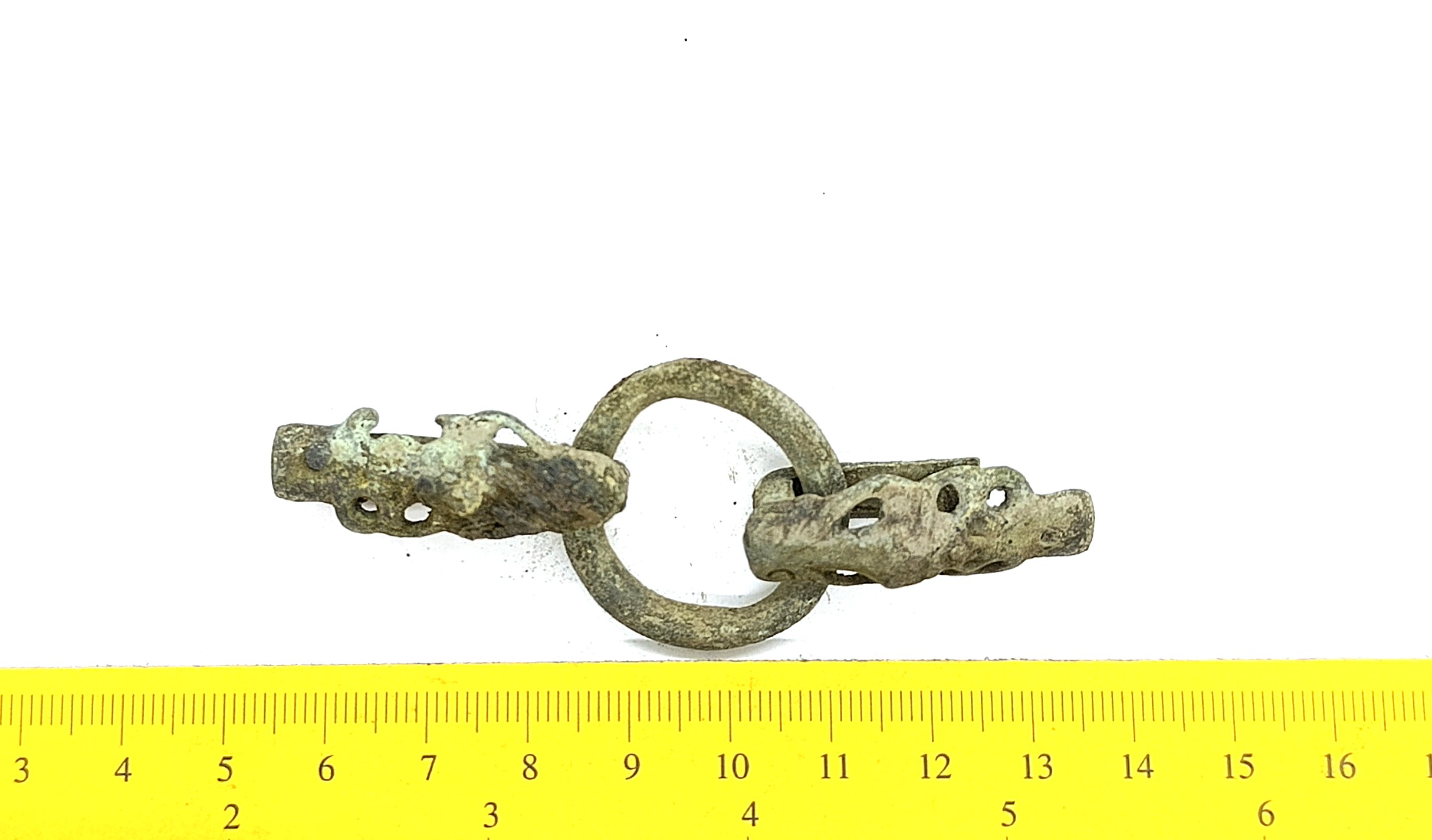
One-part round belt distributor with joining mounts, copper alloy.
Century:
11-12
Discovery code:
AI 3884: 4777
One-part round belt distributor with joining mounts, copper alloy. The mounts are shaped as animal heads and designed in the Urnes style. Such belt mounts were widespread in the coastal areas of Estonia, Latvia and Finland (Jets 2012, 166-178). They mainly belong to the 11th–12th centuries, although they may have appeared already in the late 10th century. Individual strap ends of this type have also been found in 13th-century inhumation burials, but in these cases they are probably older objects than the rest of the grave goods (e.g., Mandel 2017, 39, Pl. X).
Literature:
Jets, I. 2012. Scandinavian Late Viking Age art styles as a part of the visual display of warriors in 11th century Estonia. – Estonian Journal of Archaeology, 16: 2, 118–139.
Mandel, M. 2017. Maidla muinaskalmistu saladused. Eesti Ajaloomuuseum, Tallinn.
Century:
11-12
Discovery code:
AI 3884: 4777
Viltina
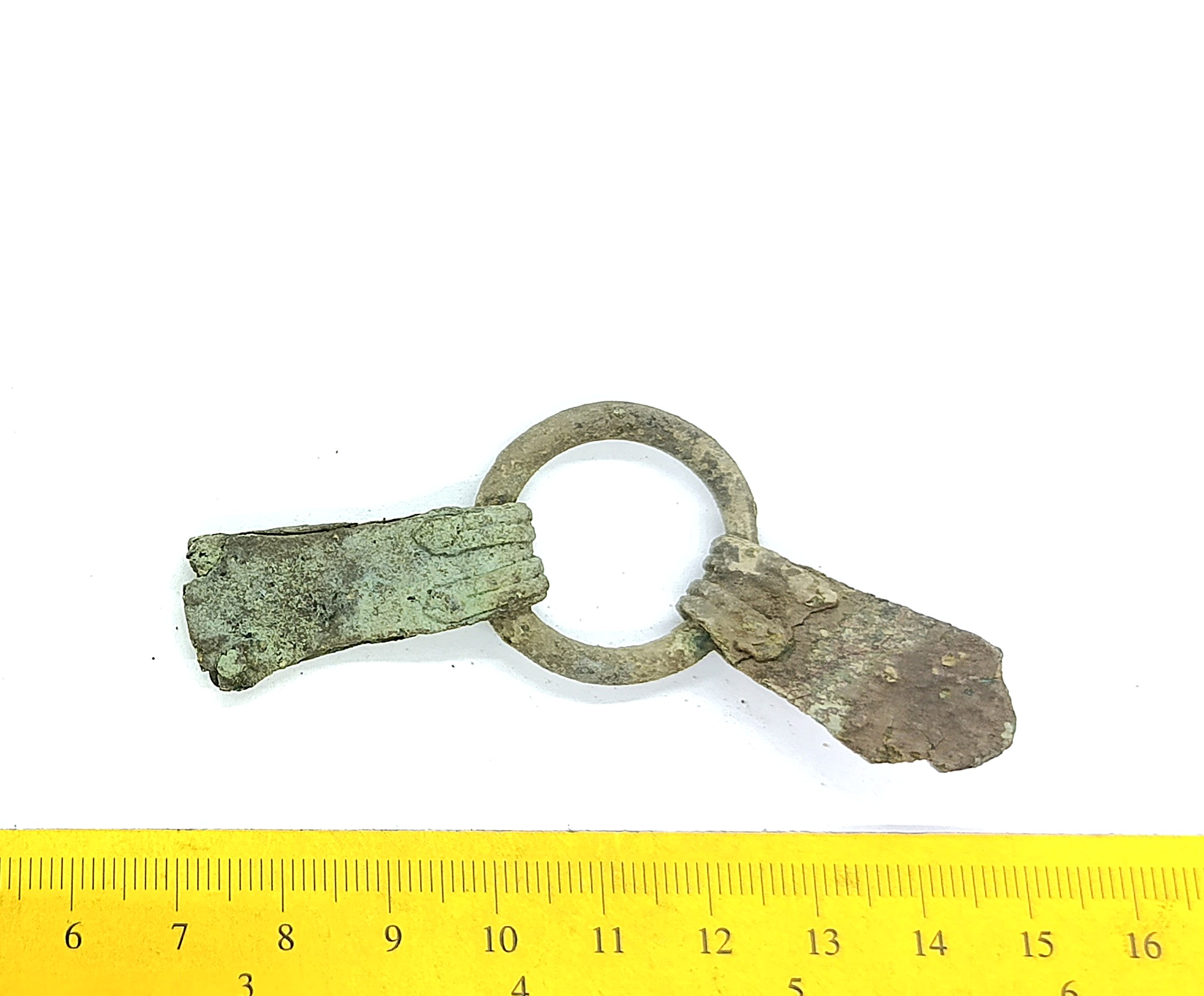
Belt ring with two flat joining mounts decorated with bronze strips, copper alloy.
Century:
12
Discovery code:
AI 3884: 4828
Belt ring with two flat joining mounts decorated with bronze strips, copper alloy. Such strap ends occur together with belt fittings dated to the 12th–13th centuries, for example with two-part women’s buckles. Such dividers with joining mounts normally no longer occur in 13th-century inhumation burials.
Century:
12
Discovery code:
AI 3884: 4828
Viltina
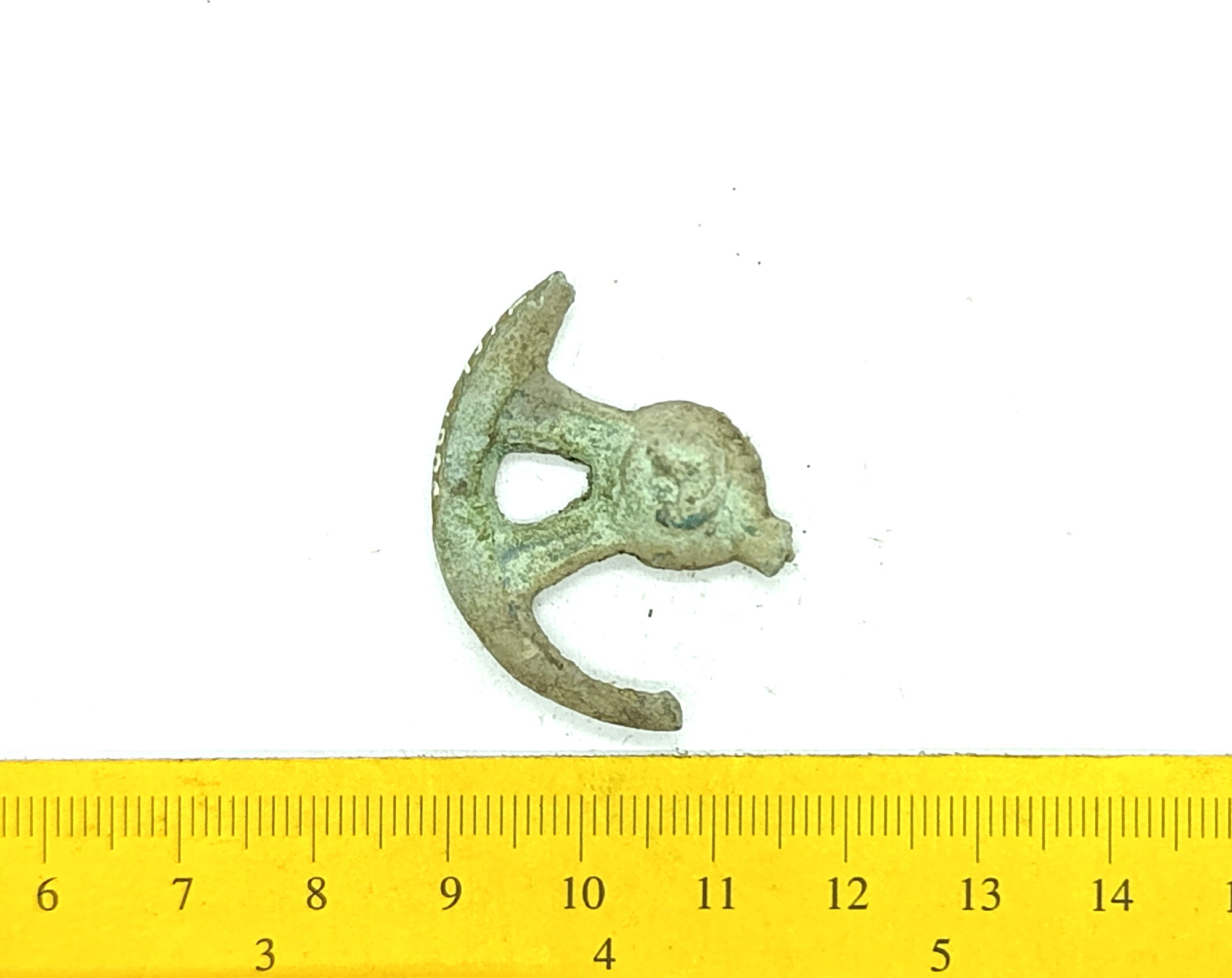
Fragment of a round belt divider, copper alloy.
Century:
10-11
Discovery code:
AI 3884: 4992
Fragment of a round belt divider, copper alloy. Since dividers with a round central part are characteristic of the 10th–11th centuries (e.g., Thunmark-Nylén 1998, figs. 210, 236, 396; Zariņa 2006, 236), this object can probably also be dated to the same period.
Literature:
Thunmark-Nylén, L. 1995. Die Wikingerzeit Gotlands I. Abbildungen der Grabfunde. Stockholm.
Zariņa, A. 2006. Salaspils Laukskolas kapulauks 10.–13. gadsimts. Latvijas Vēstures Institūta Apgāds, Rīga.
Century:
10-11
Discovery code:
AI 3884: 4992
Viltina
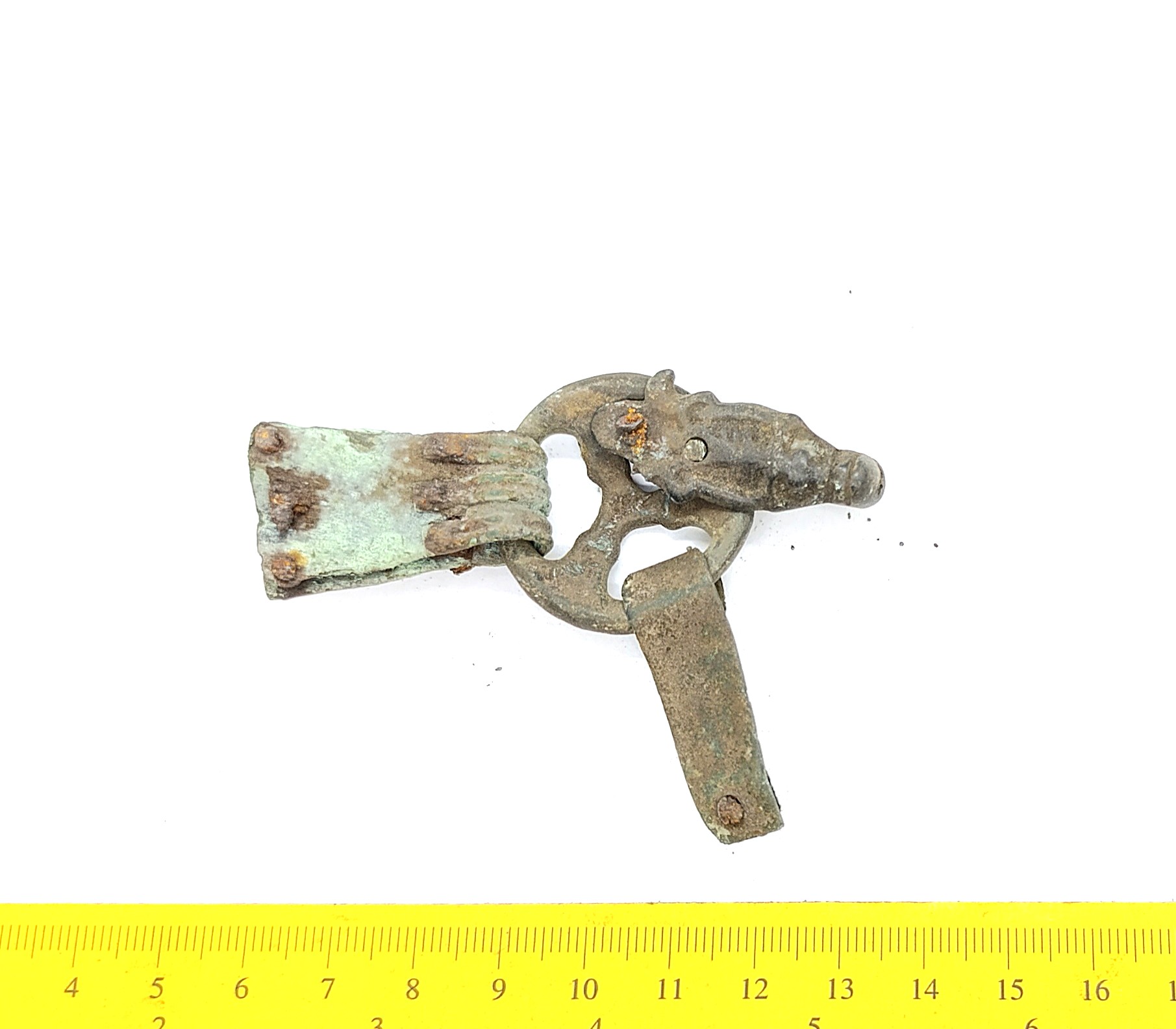
Two-part round strap divider with a protruding element, copper alloy.
Century:
12
Discovery code:
AI 3884: 5194
Two-part round strap divider with a protruding element, copper alloy. Single such strap dividers have been falso found in mainland Estonia (e.g., Selirand 1974, Pl. XIX: 7). Flat strap ends with a bronze strip date it to the 12th century. They normally no longer occur in 13th-century inhumation burials.
Literature:
Selirand, J. 1974. Eestlaste matmiskombed varafeodaalsete suhete tärkamise perioodil (11.–13. sajand). Tallinn.
Century:
12
Discovery code:
AI 3884: 5194
Viltina
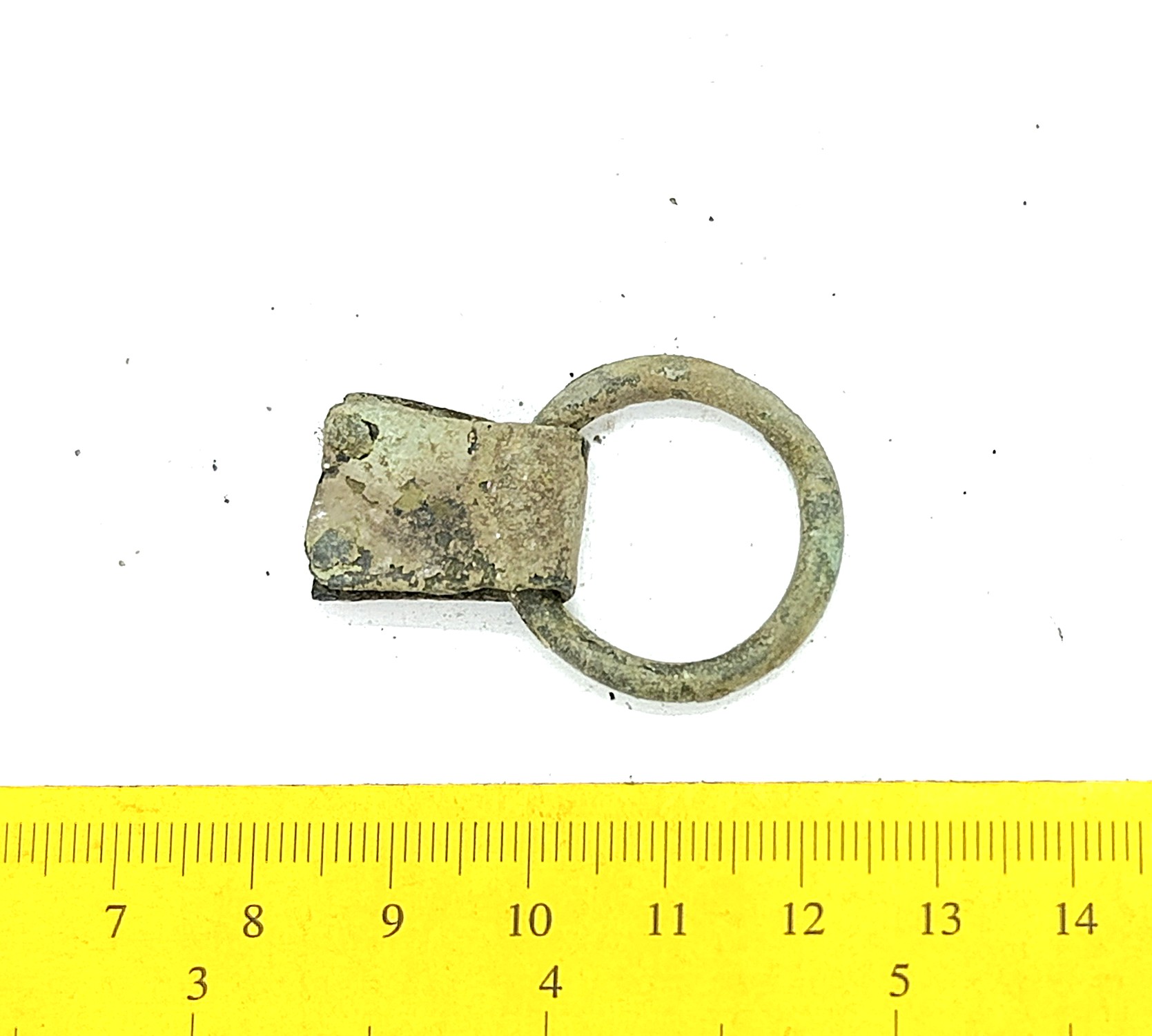
Belt divider with belt mount, copper alloy.
Century:
10-12
Discovery code:
AI 3884: 5304
Century:
10-12
Discovery code:
AI 3884: 5304
Viltina
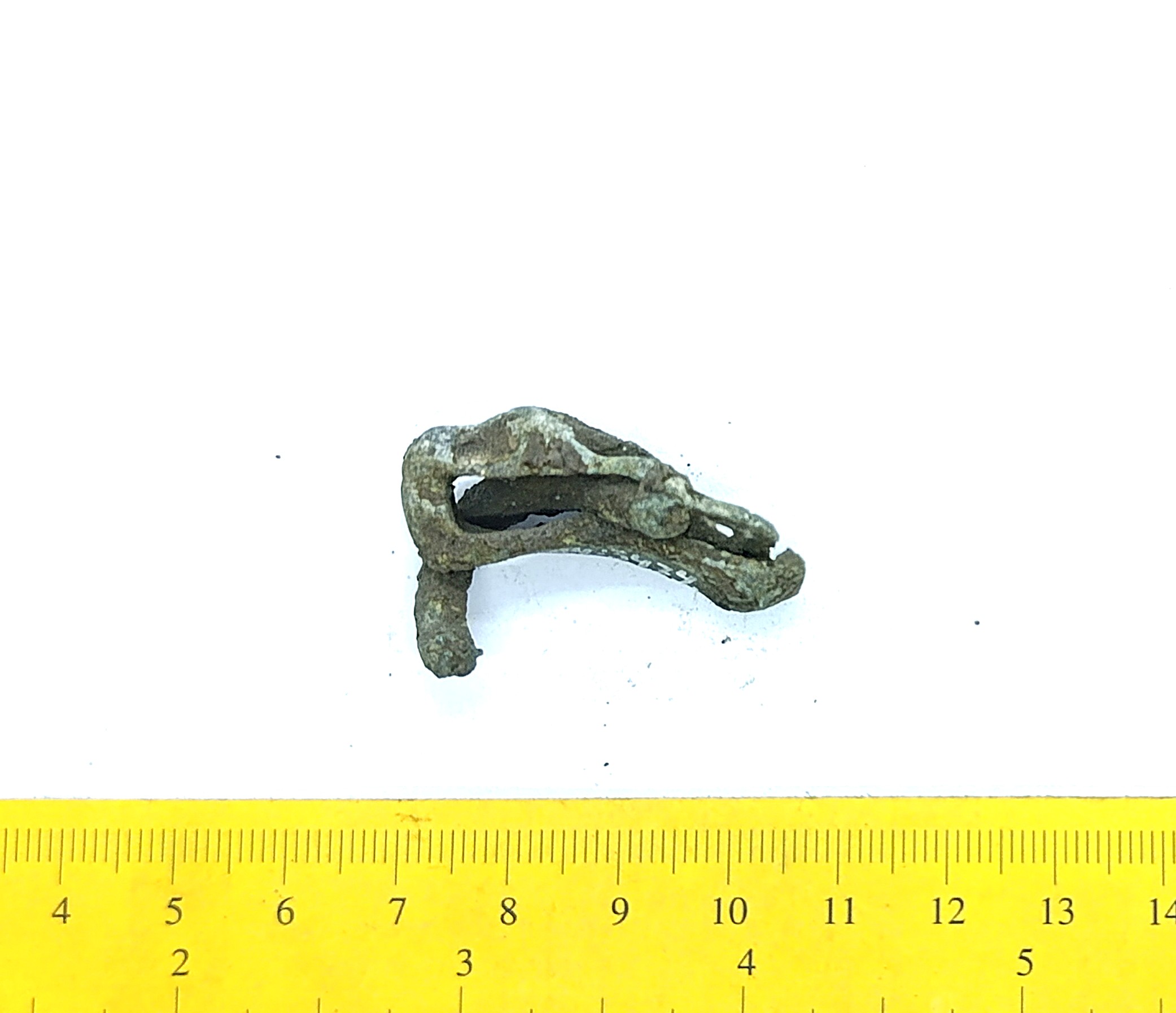
Belt mount with stylized animal head, copper alloy.
Century:
11-12
Discovery code:
AI 3884: 3474
Belt mount with stylized animal head, copper alloy. Such belt mounts were widespread in the coastal areas of Estonia, Latvia and Finland (Jets 2012, 166-178). Most of them date to the 11th-12th centuries, but the earliest ones may have appeared as early as in the late 10th century. Some similar belt mounts have been found in 13th-century inhumation graves, but there they are probably older than the rest of grave goods (e. g. Mandel 2017, 39, tahv. X).
Literature:
Jets, I. 2012. Scandinavian Late Viking Age art styles as a part of the visual display of warriors in 11th century Estonia. – Estonian Journal of Archaeology, 16: 2, 118–139.
Mandel, M. 2017. Maidla muinaskalmistu saladused. Eesti Ajaloomuuseum, Tallinn.
Century:
11-12
Discovery code:
AI 3884: 3474
Viltina
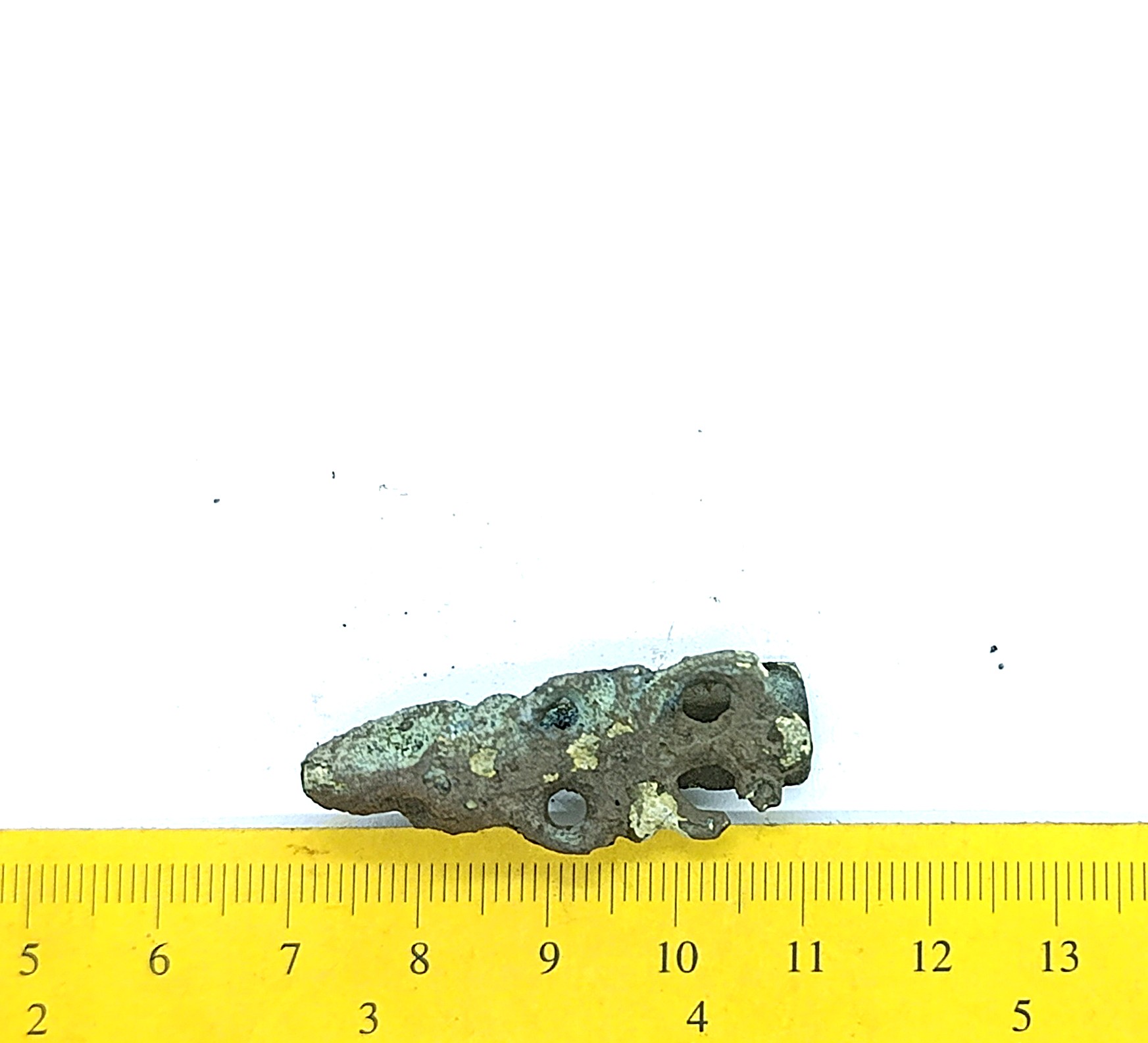
Belt mount with stylized animal head, copper alloy.
Century:
11-12
Discovery code:
AI 3884: 3480
Belt mount with stylized animal head, copper alloy. Such belt mounts were widespread in the coastal areas of Estonia, Latvia and Finland (Jets 2012, 166-178). Most of them date to the 11th-12th centuries, but the earliest ones may have appeared as early as in the late 10th century. Some similar belt mounts have been found in 13th-century inhumation graves, but there they are probably older than the rest of grave goods (e. g. Mandel 2017, 39, tahv. X).
Literature:
Jets, I. 2012. Scandinavian Late Viking Age art styles as a part of the visual display of warriors in 11th century Estonia. – Estonian Journal of Archaeology, 16: 2, 118–139.
Mandel, M. 2017. Maidla muinaskalmistu saladused. Eesti Ajaloomuuseum, Tallinn.
Century:
11-12
Discovery code:
AI 3884: 3480
Viltina
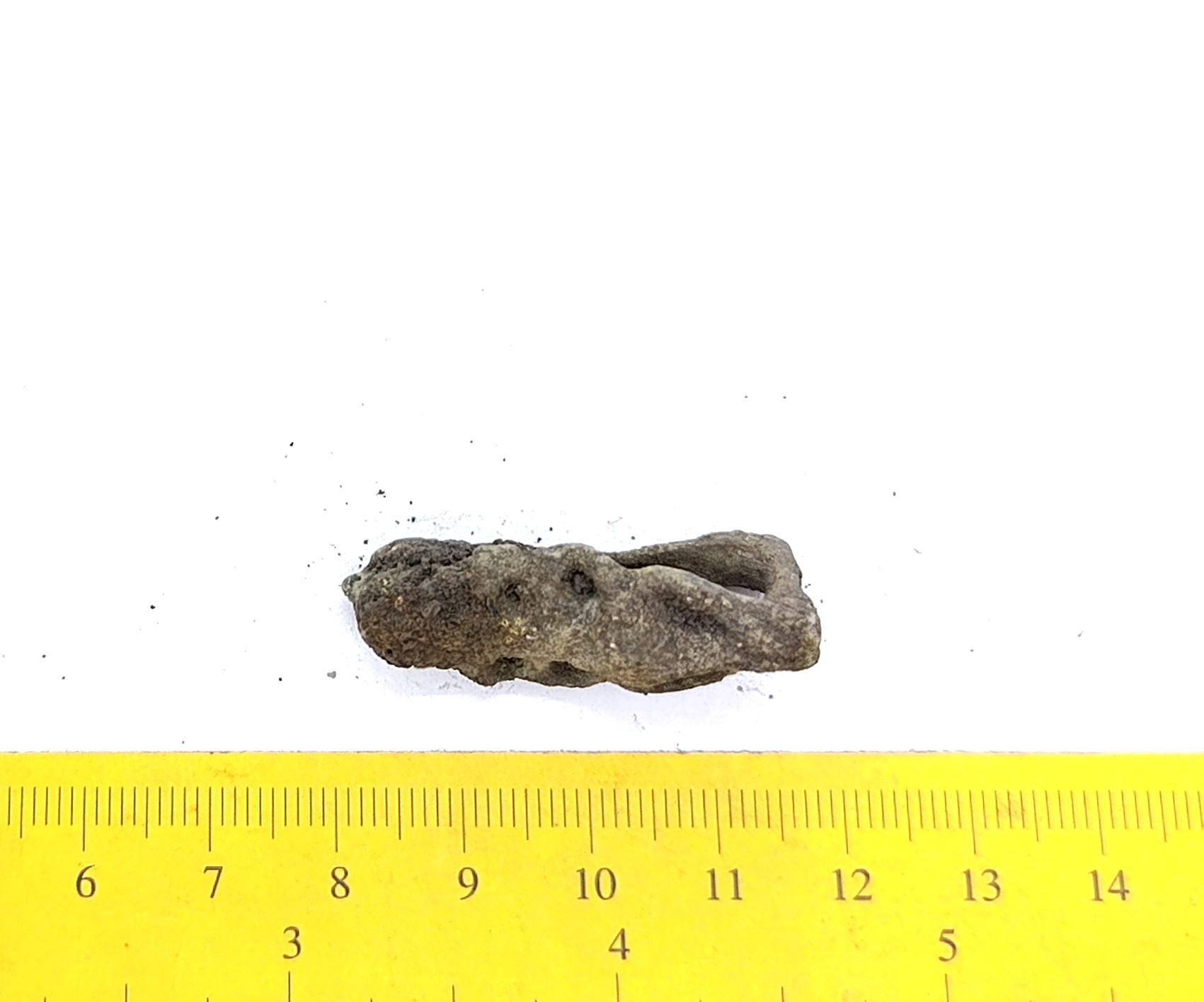
Belt mount with stylized animal head, copper alloy.
Century:
11-12
Discovery code:
AI 3884: 4830
Belt mount with stylized animal head, copper alloy. Such belt mounts were widespread in the coastal areas of Estonia, Latvia and Finland (Jets 2012, 166-178). Most of them date to the 11th-12th centuries, but the earliest ones may have appeared as early as in the late 10th century. Some similar belt mounts have been found in 13th-century inhumation graves, but there they are probably older than the rest of grave goods (e. g. Mandel 2017, 39, tahv. X).
Literature:
Jets, I. 2012. Scandinavian Late Viking Age art styles as a part of the visual display of warriors in 11th century Estonia. – Estonian Journal of Archaeology, 16: 2, 118–139.
Mandel, M. 2017. Maidla muinaskalmistu saladused. Eesti Ajaloomuuseum, Tallinn.
Century:
11-12
Discovery code:
AI 3884: 4830

