
Database
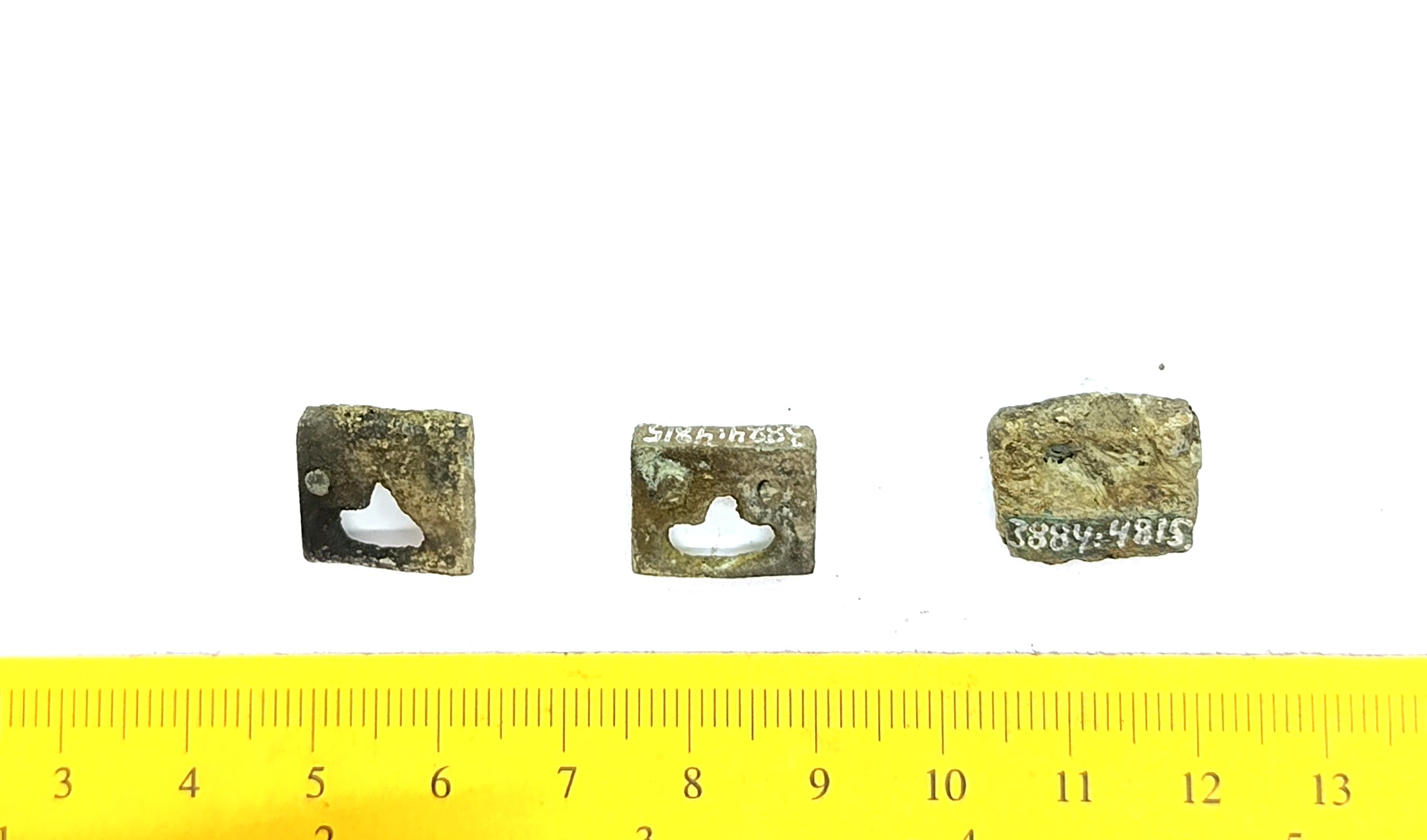
Square belt mounts, 3, copper alloy. This form is unusual in Saaremaa and the surrounding region. Somewhat similar perforated belt mounts were widespread among the Mordvins and Mari in present-day Russia in the second half of the 10th century (Murascheva 2000, 45–46, Appendix 3).
Literature:
Мурашева, В. В. 2000. Древнерусские ременные наборные украшения (X–XIII вв.). Москва.
Century:
10-11
Discovery code:
AI 3884: 4815
Century:
10-13
Discovery code:
AI 3884: 47
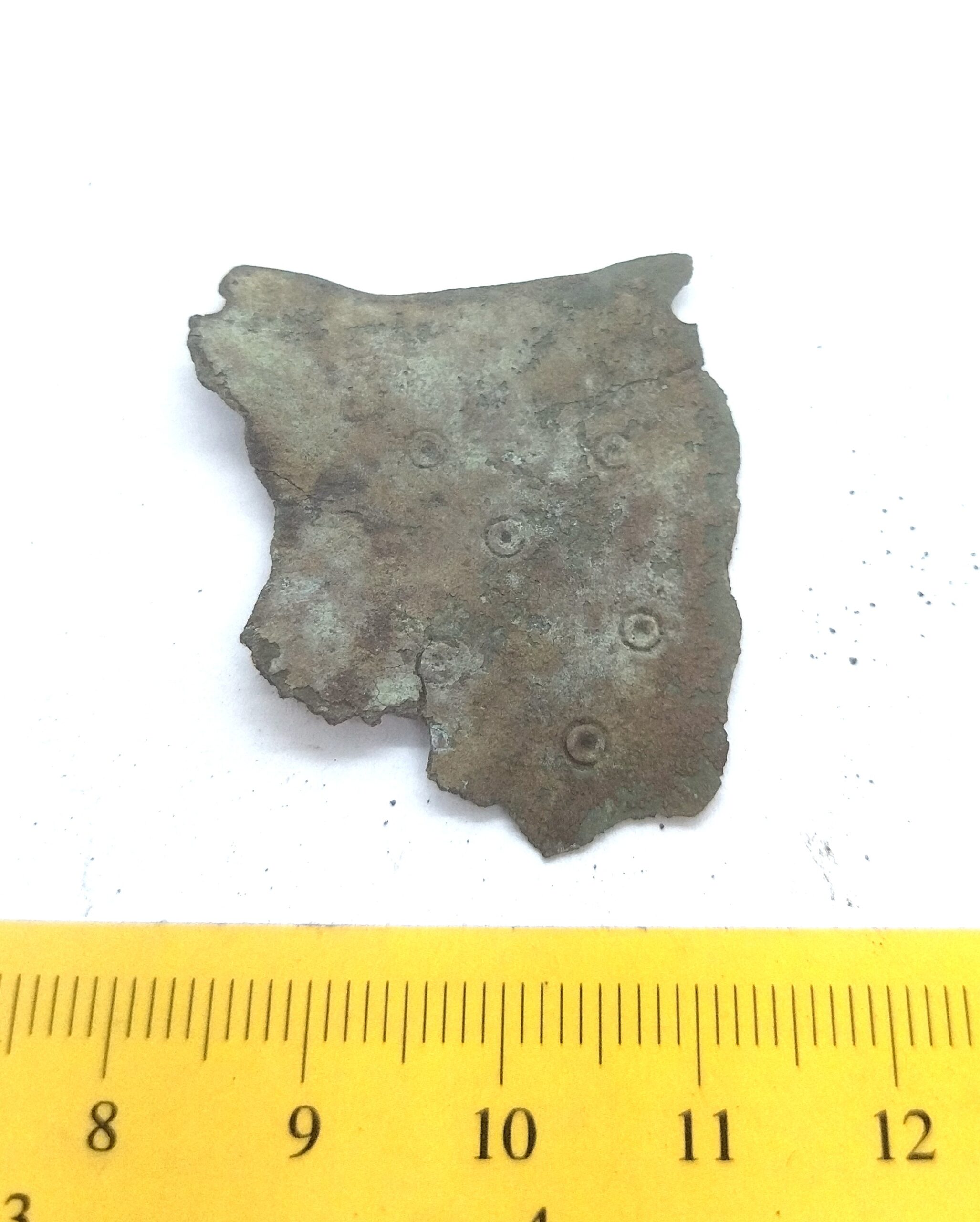
Knife sheath plating, copper alloy. The knife sheath is decorated with bronze plating and has a special extension. Similar, but narrower knife sheaths were widespread in Livic areas in Latvia (Spirģis 2008, 192–194). Knife sheaths with extension are in Saaremaa found mainly in early-13th-century female inhumation graves, but seldom also in stone graves (Randvere kalme, Mägi 2002, Pl. 40: 1). The Saaremaa-type knife sheaths were probably used from thelate 12th century to the mid-13th century.
Literature:
Mägi, M. 2002. At the Crossroads of Space and Time. Graves, Changing Society and Ideology on Saaremaa (Ösel), 9th–13th centuries AD. (CCC papers, 6.) Estonian Academy of Sciences, Institute of History, Tallinn / Gotland University College, Centre for Baltic Studies, Gotland.
Spirģis, R. 2008. Bruņrupuču saktas ar krūšu važiņrotām un lībiešu kultūras attīstība Daugavas lejtecē 10.–13. gadsimtā. Latvijas Vēstures Institūta Apgāds, Rīga.
Century:
13
Discovery code:
AI 3884: 560
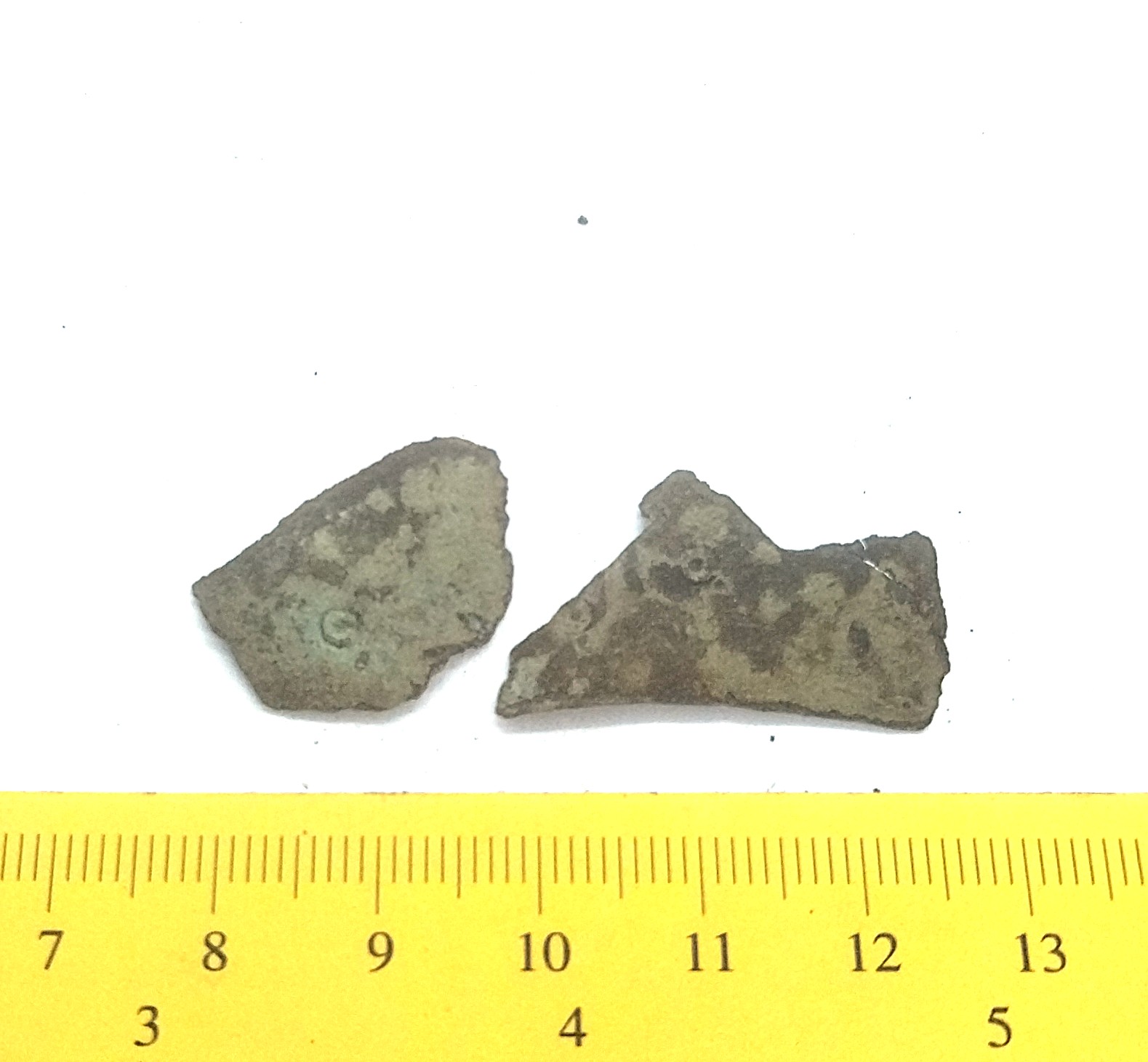
Knife sheath plaiting, copper alloy. The knife sheath is decorated with bronze plating and has a special extension. Similar, but narrower knife sheaths were widespread in Livic areas in Latvia (Spirģis 2008, 192–194). Knife sheaths with extension are in Saaremaa found mainly in early-13th-century female inhumation graves, but seldom also in stone graves (Randvere kalme, Mägi 2002, Pl. 40: 1). The Saaremaa-type knife sheaths were probably used from thelate 12th century to the mid-13th century.
Literature:
Mägi, M. 2002. At the Crossroads of Space and Time. Graves, Changing Society and Ideology on Saaremaa (Ösel), 9th–13th centuries AD. (CCC papers, 6.) Estonian Academy of Sciences, Institute of History, Tallinn / Gotland University College, Centre for Baltic Studies, Gotland.
Spirģis, R. 2008. Bruņrupuču saktas ar krūšu važiņrotām un lībiešu kultūras attīstība Daugavas lejtecē 10.–13. gadsimtā. Latvijas Vēstures Institūta Apgāds, Rīga.
Century:
13
Discovery code:
AI 3884: 563
Viltina
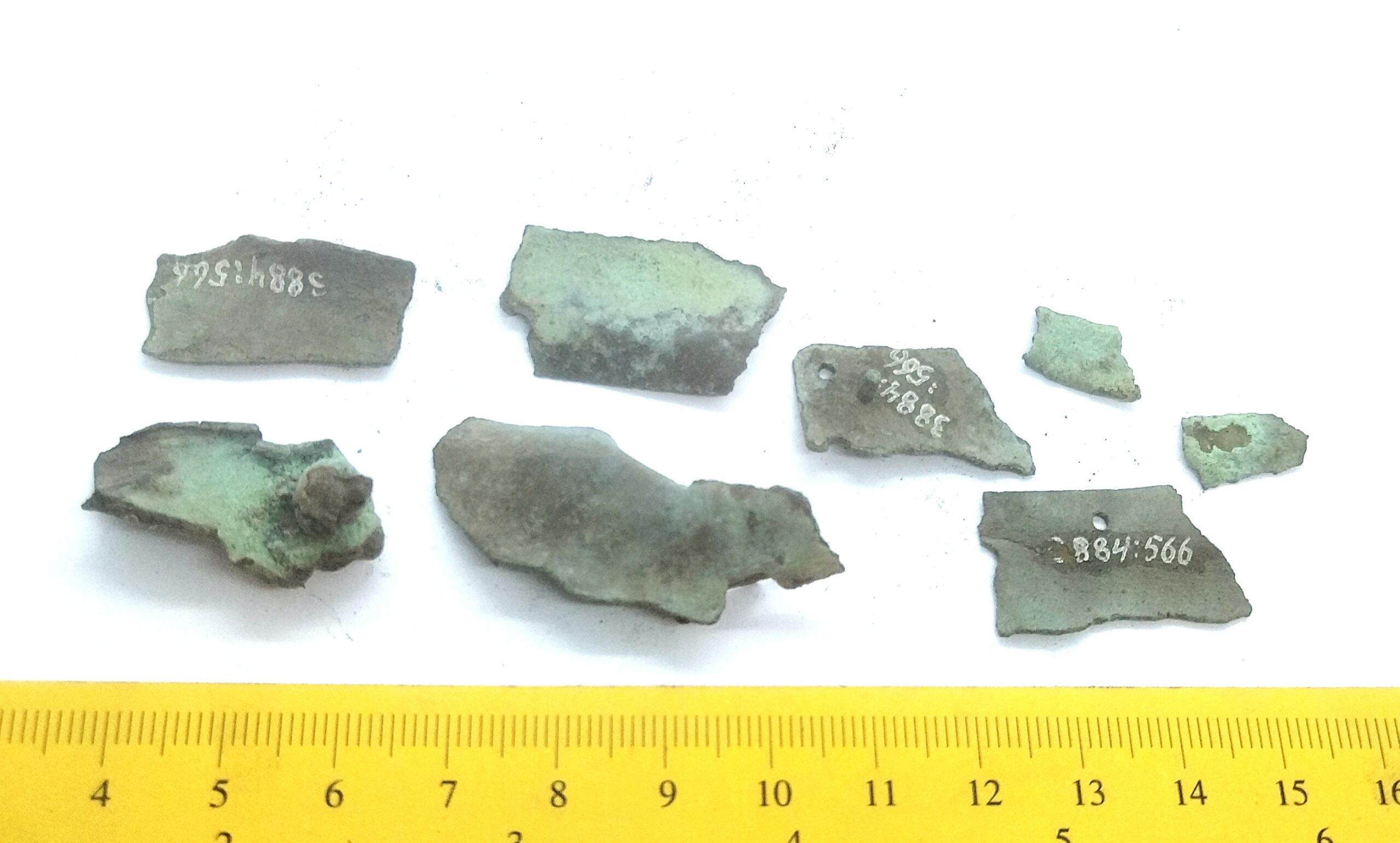
Fragments of knife sheath plating, copper alloy.
Century:
13
Discovery code:
AI 3884: 566
Fragments of knife sheath plating, copper alloy. The knife sheath is decorated with bronze plating and has a special extension. Similar, but narrower knife sheaths were widespread in Livic areas in Latvia (Spirģis 2008, 192–194). Knife sheaths with extension are in Saaremaa found mainly in early-13th-century female inhumation graves, but seldom also in stone graves (Randvere kalme, Mägi 2002, Pl. 40: 1). The Saaremaa-type knife sheaths were probably used from thelate 12th century to the mid-13th century.
Literature:
Mägi, M. 2002. At the Crossroads of Space and Time. Graves, Changing Society and Ideology on Saaremaa (Ösel), 9th–13th centuries AD. (CCC papers, 6.) Estonian Academy of Sciences, Institute of History, Tallinn / Gotland University College, Centre for Baltic Studies, Gotland.
Spirģis, R. 2008. Bruņrupuču saktas ar krūšu važiņrotām un lībiešu kultūras attīstība Daugavas lejtecē 10.–13. gadsimtā. Latvijas Vēstures Institūta Apgāds, Rīga.
Century:
13
Discovery code:
AI 3884: 566
Viltina
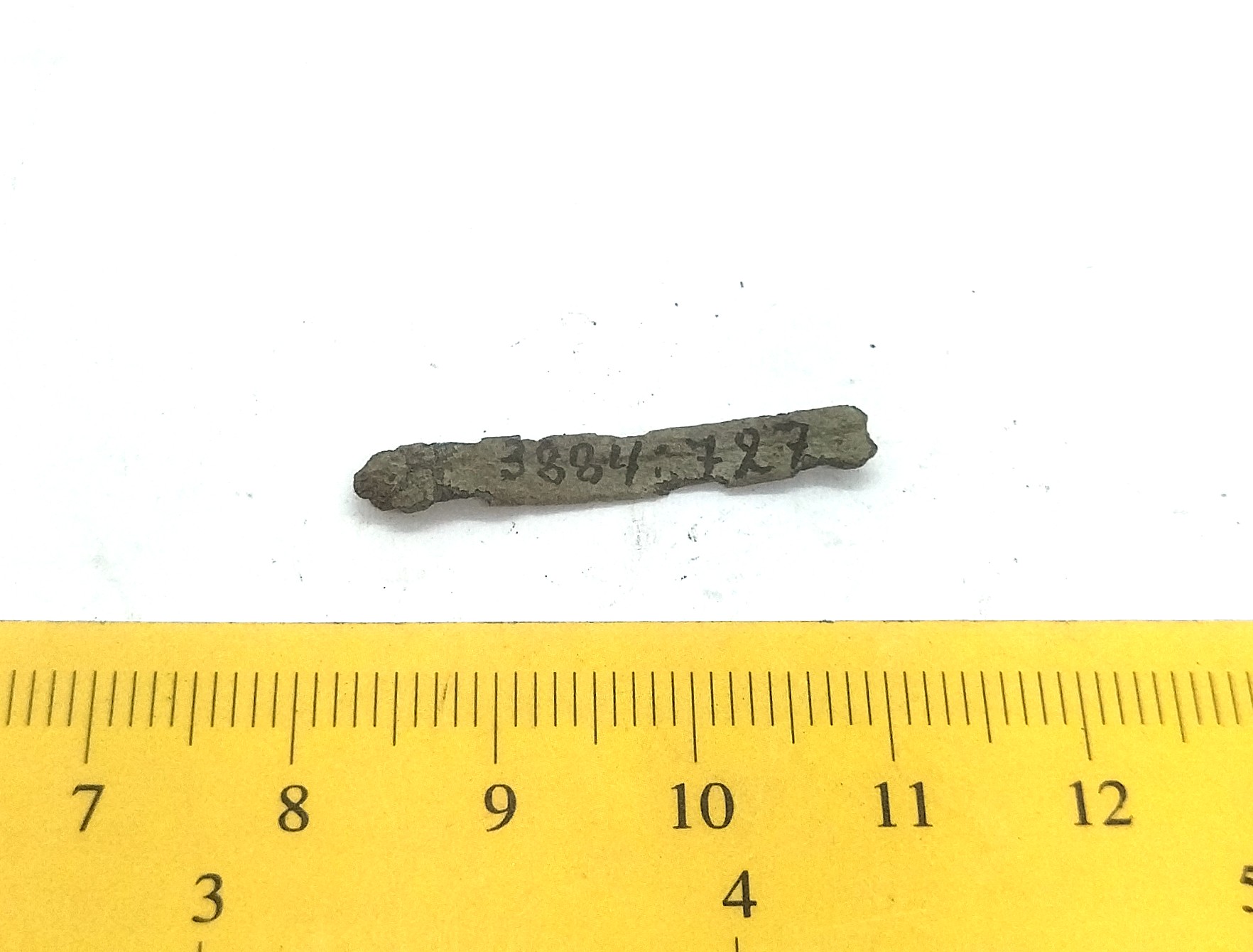
Strip belonging to a knife sheath, copper alloy.
Century:
13
Discovery code:
AI 3884: 727
Strip belonging to a knife sheath, copper alloy. The knife sheath is decorated with bronze plating and has a special extension. Similar, but narrower knife sheaths were widespread in Livic areas in Latvia (Spirģis 2008, 192–194). Knife sheaths with extension are in Saaremaa found mainly in early-13th-century female inhumation graves, but seldom also in stone graves (Randvere kalme, Mägi 2002, Pl. 40: 1). The Saaremaa-type knife sheaths were probably used from thelate 12th century to the mid-13th century.
Literature:
Mägi, M. 2002. At the Crossroads of Space and Time. Graves, Changing Society and Ideology on Saaremaa (Ösel), 9th–13th centuries AD. (CCC papers, 6.) Estonian Academy of Sciences, Institute of History, Tallinn / Gotland University College, Centre for Baltic Studies, Gotland.
Spirģis, R. 2008. Bruņrupuču saktas ar krūšu važiņrotām un lībiešu kultūras attīstība Daugavas lejtecē 10.–13. gadsimtā. Latvijas Vēstures Institūta Apgāds, Rīga.
Century:
13
Discovery code:
AI 3884: 727
Viltina
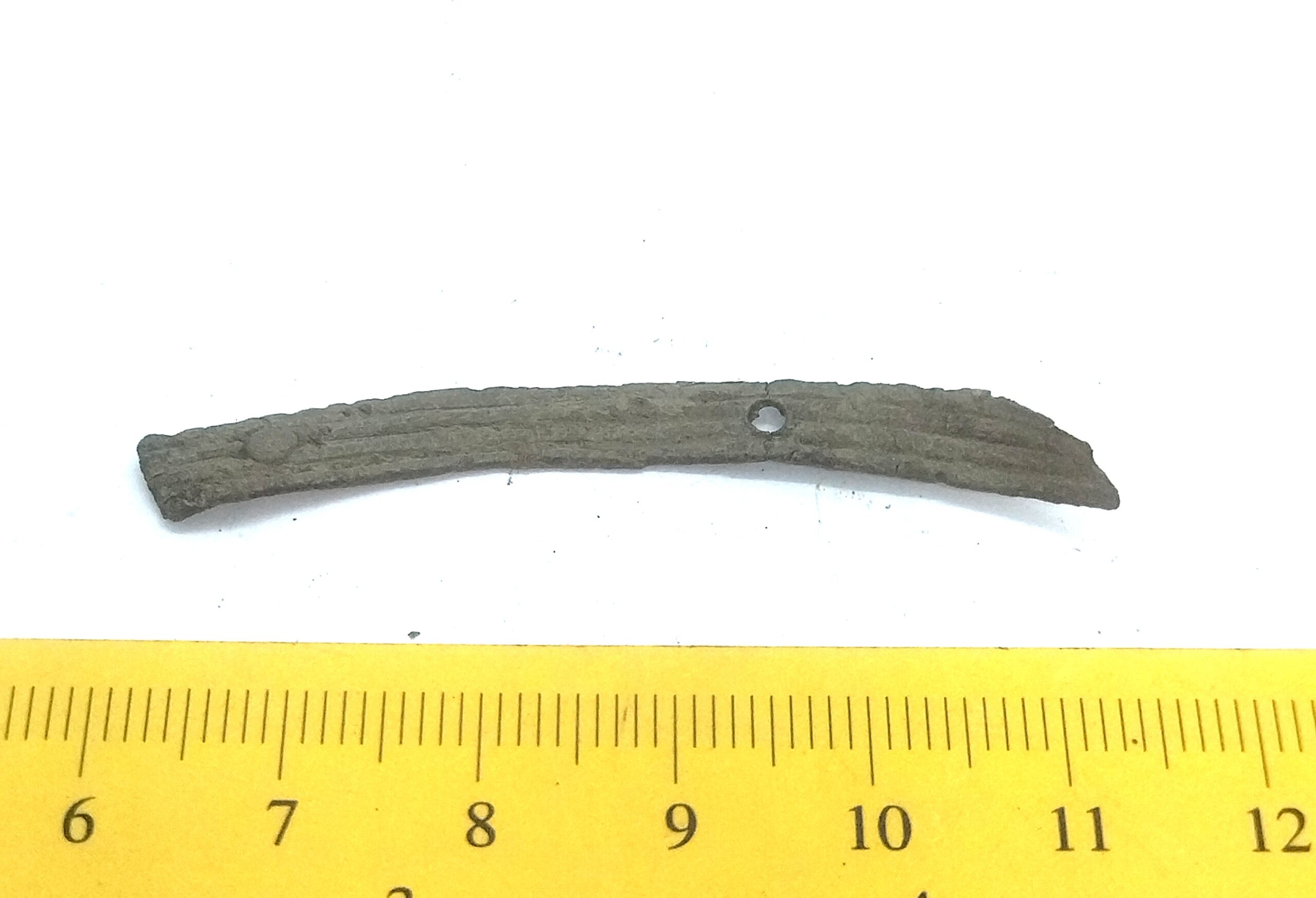
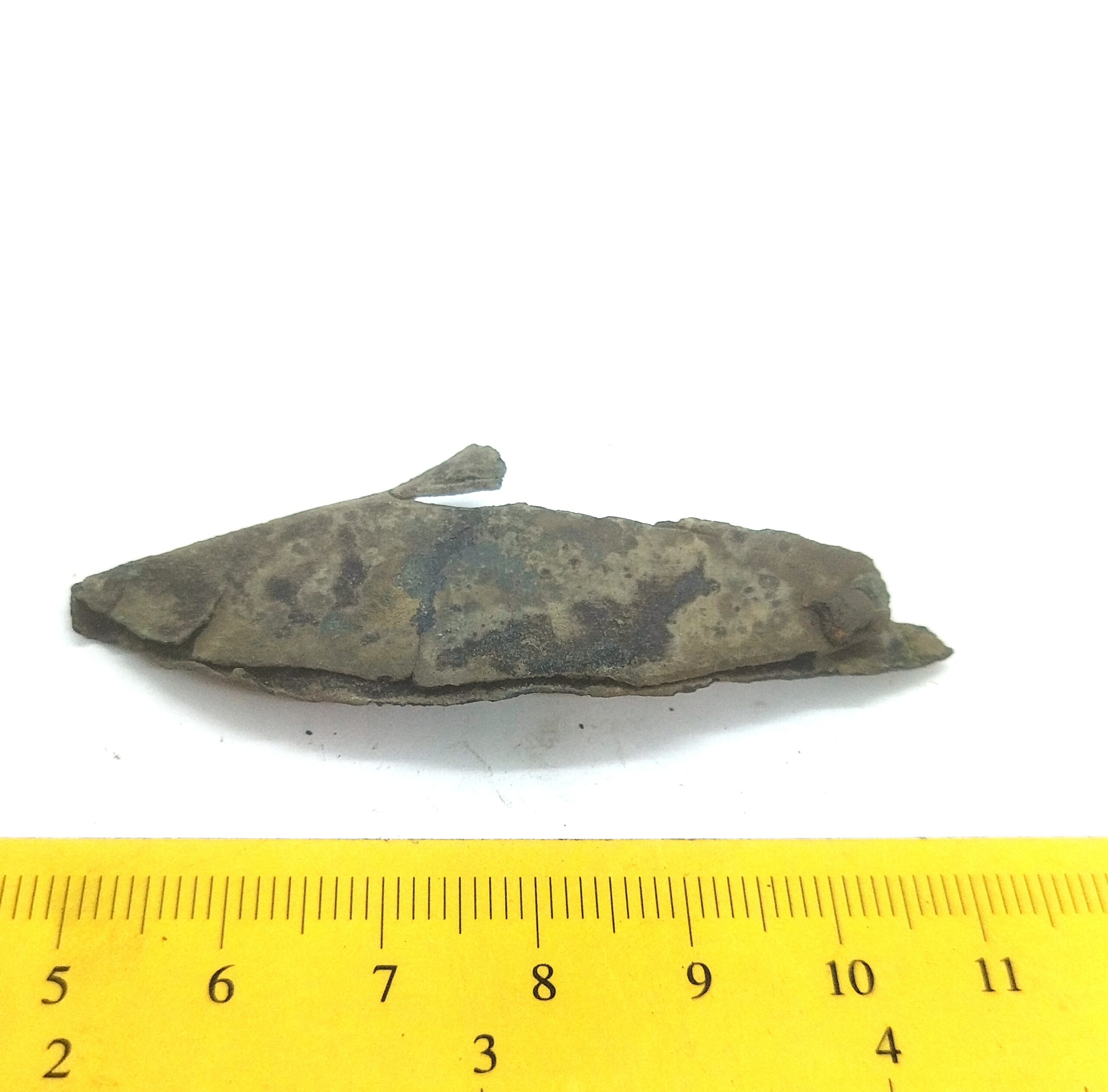
Edging of a knife sheath, copper alloy.
Century:
12-13
Discovery code:
AI 3884: 744
Century:
12-13
Discovery code:
AI 3884: 744
Viltina
The tip of a knife sheath, copper alloy.
Century:
10-13
Discovery code:
AI 3884: 843
Century:
10-13
Discovery code:
AI 3884: 843
Viltina
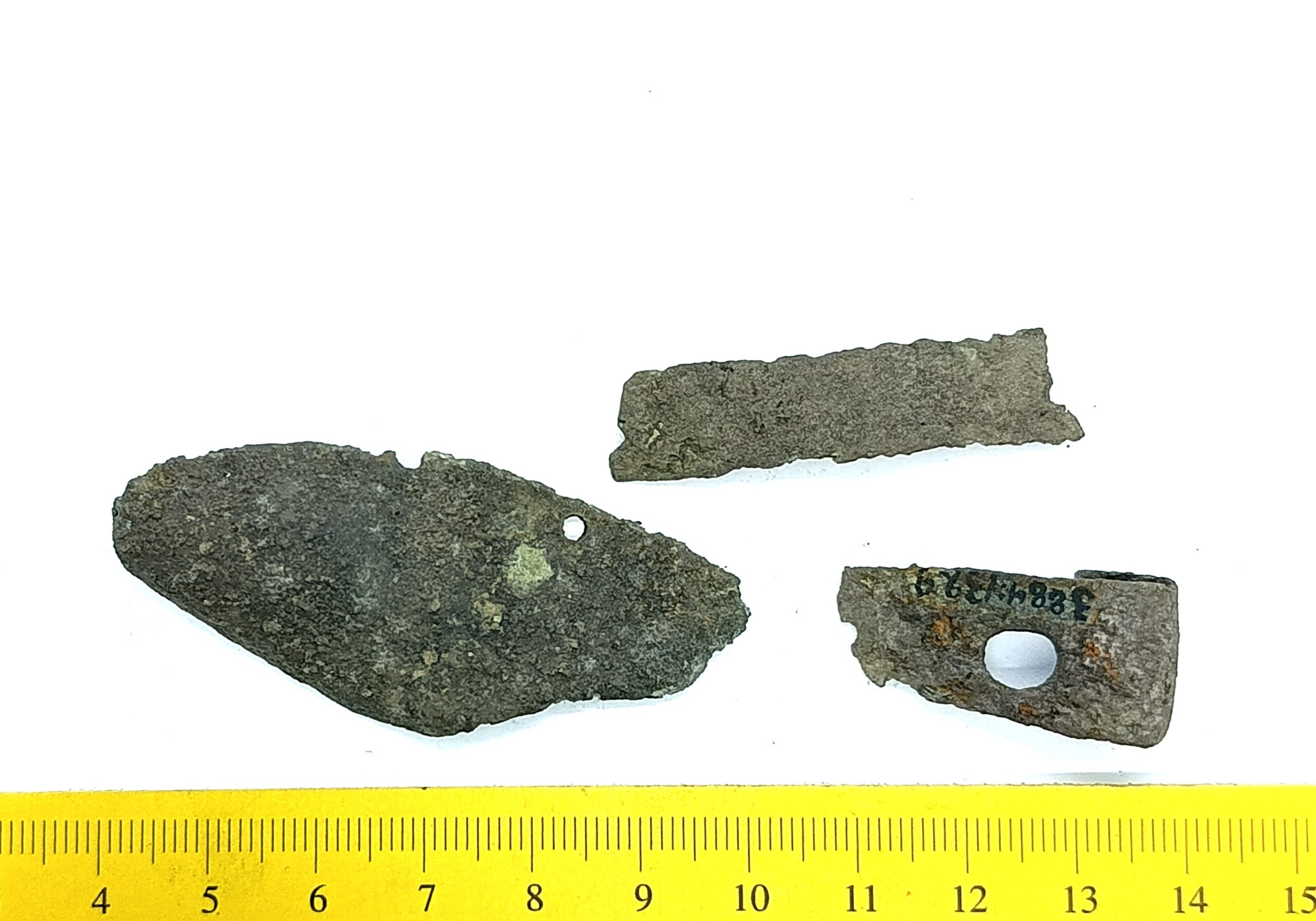
The tip of a knife sheath, copper alloy.
Century:
10-13
Discovery code:
AI 3884: 1329
Century:
10-13
Discovery code:
AI 3884: 1329

