
Database
Viltina
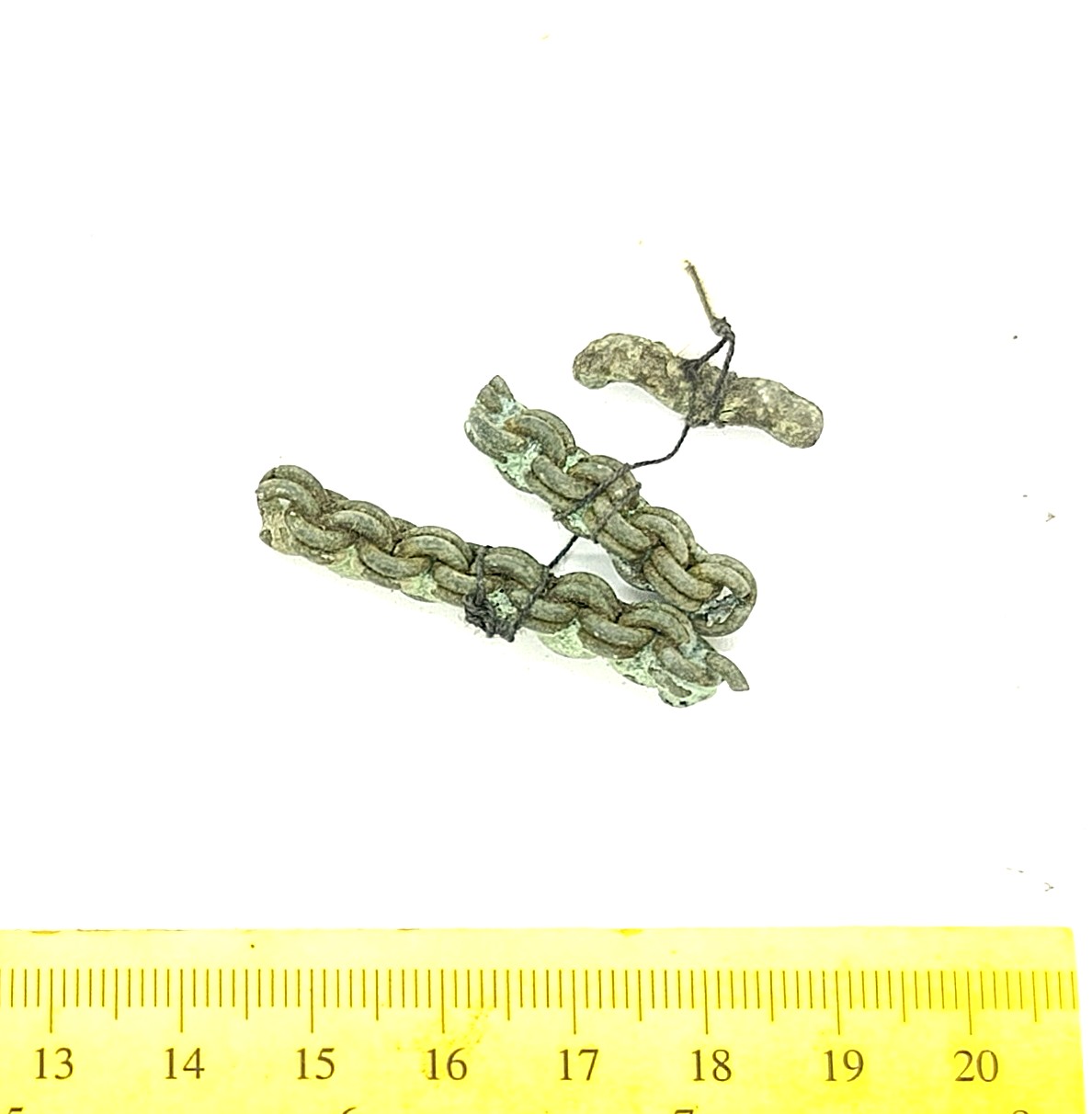
Chain fragments with spirals, copper alloy.
Century:
10-13
Discovery code:
AI 3884: 5582
Century:
10-13
Discovery code:
AI 3884: 5582
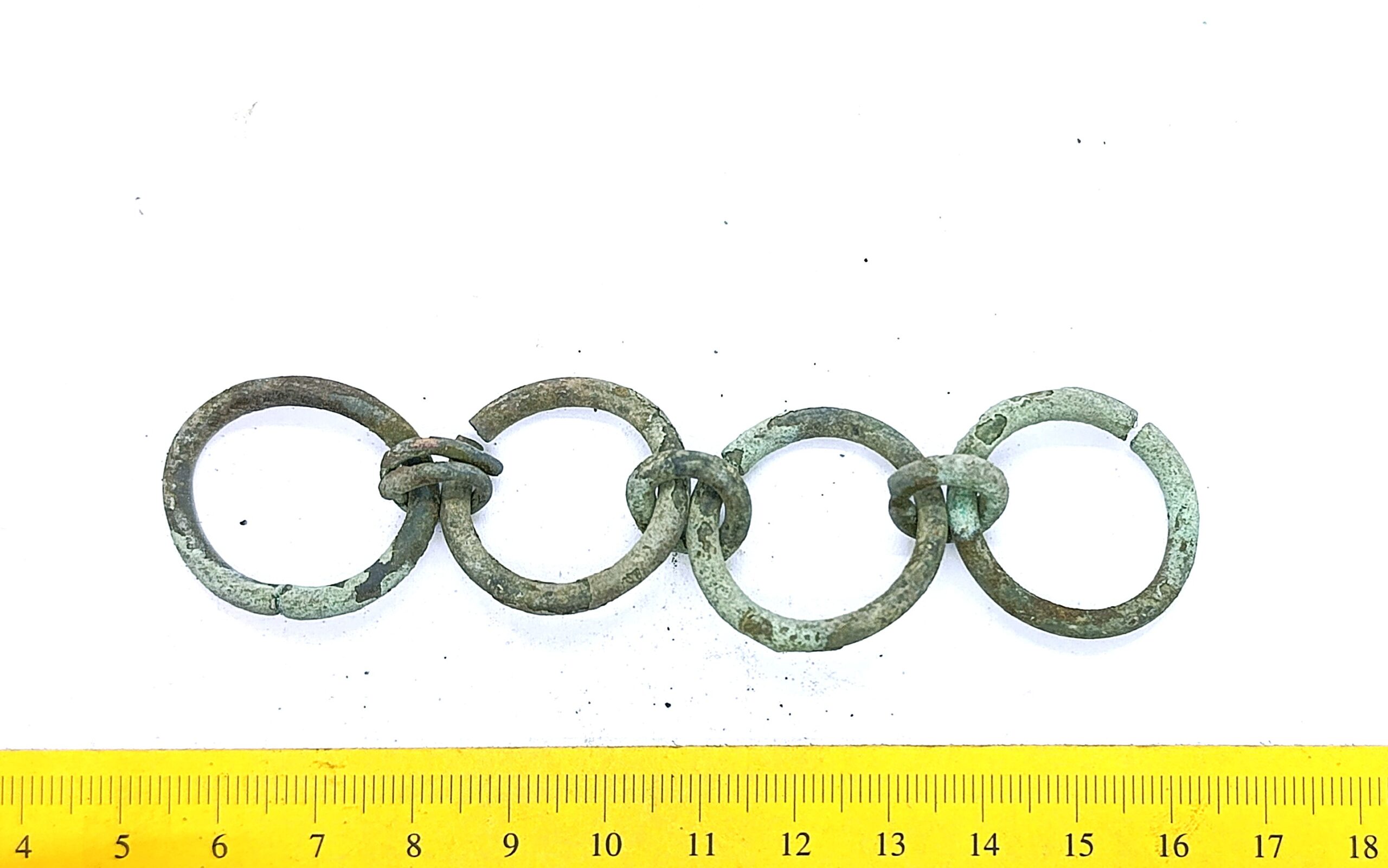
 Belt-chain, copper alloy. The links of this belt-chain measure ~2 cm across and are held together by bronze links. Similar belt chains have been found in many Saaremaa inhumation burials dating to the 13th century, e.g. in Valjala (Mägi et al., 2019). Parts of belt-chains have also been found in stone graves with cremation burials where they can date to the 12th century.
Literature:
Mägi, M.; Malve, M. & Toome, T. 2019. Early Christian burials at Valjala churchyard, Saaremaa. – Archaeological Fieldwork in Estonia 2018, 93−118.
Century:
12-13
Discovery code:
AI 3884: 3529
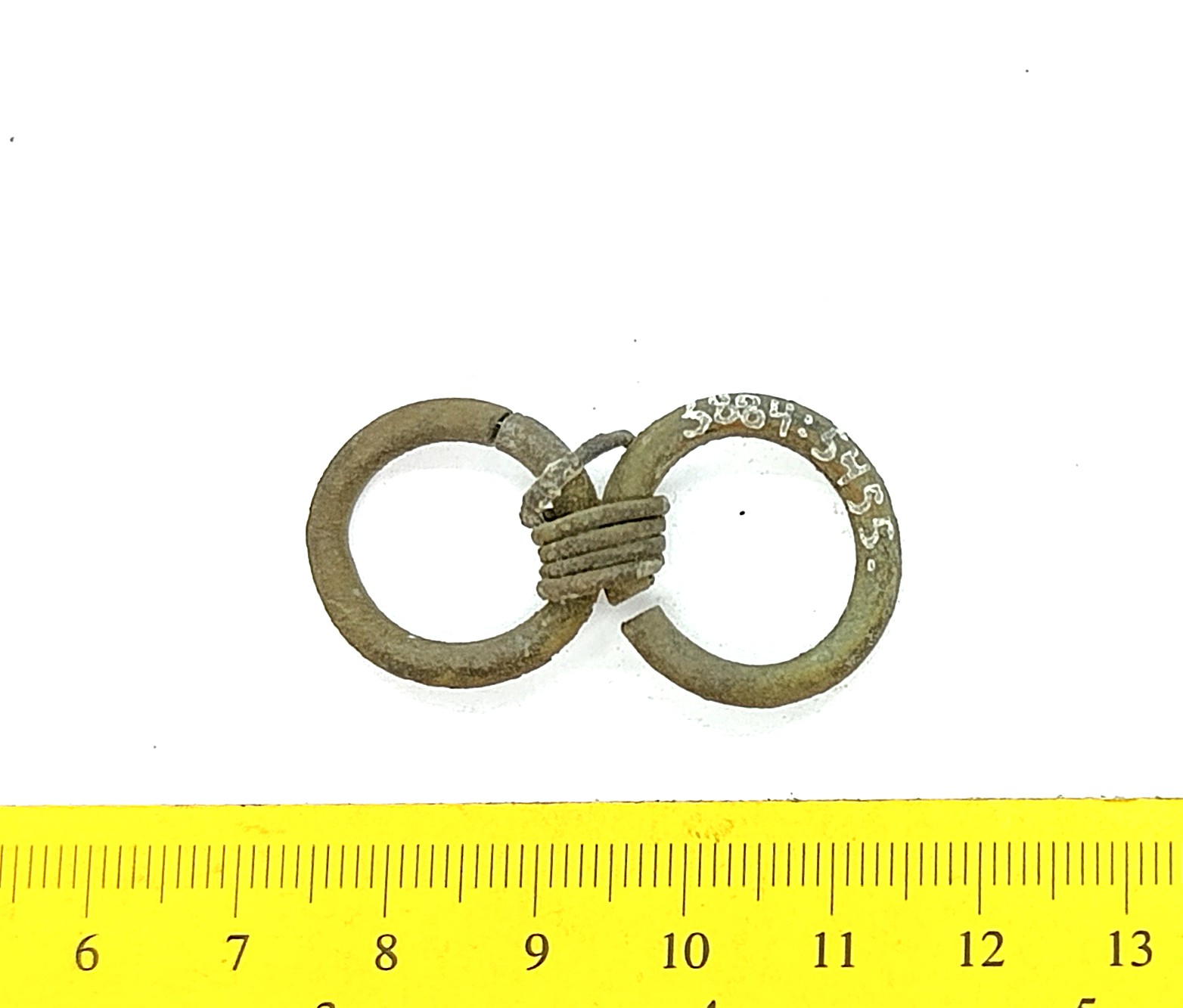
 Belt-chain, copper alloy. The links of this belt-chain measure ~2 cm across and are held together by bronze links. Similar belt chains have been found in many Saaremaa inhumation burials dating to the 13th century, e.g. in Valjala (Mägi et al., 2019). Parts of belt-chains have also been found in stone graves with cremation burials where they can date to the 12th century.
Literature:
Mägi, M.; Malve, M. & Toome, T. 2019. Early Christian burials at Valjala churchyard, Saaremaa. – Archaeological Fieldwork in Estonia 2018, 93−118.
Century:
12-13
Discovery code:
AI 3884: 5455

 Belt-chain, copper alloy. The links of this belt-chain measure ~2 cm across and are held together by bronze links. Similar belt chains have been found in many Saaremaa inhumation burials dating to the 13th century, e.g. in Valjala (Mägi et al., 2019). Parts of belt-chains have also been found in stone graves with cremation burials where they can date to the 12th century.
Literature:
Mägi, M.; Malve, M. & Toome, T. 2019. Early Christian burials at Valjala churchyard, Saaremaa. – Archaeological Fieldwork in Estonia 2018, 93−118.
Century:
12-13
Discovery code:
AI 3884: 5463
Muhu
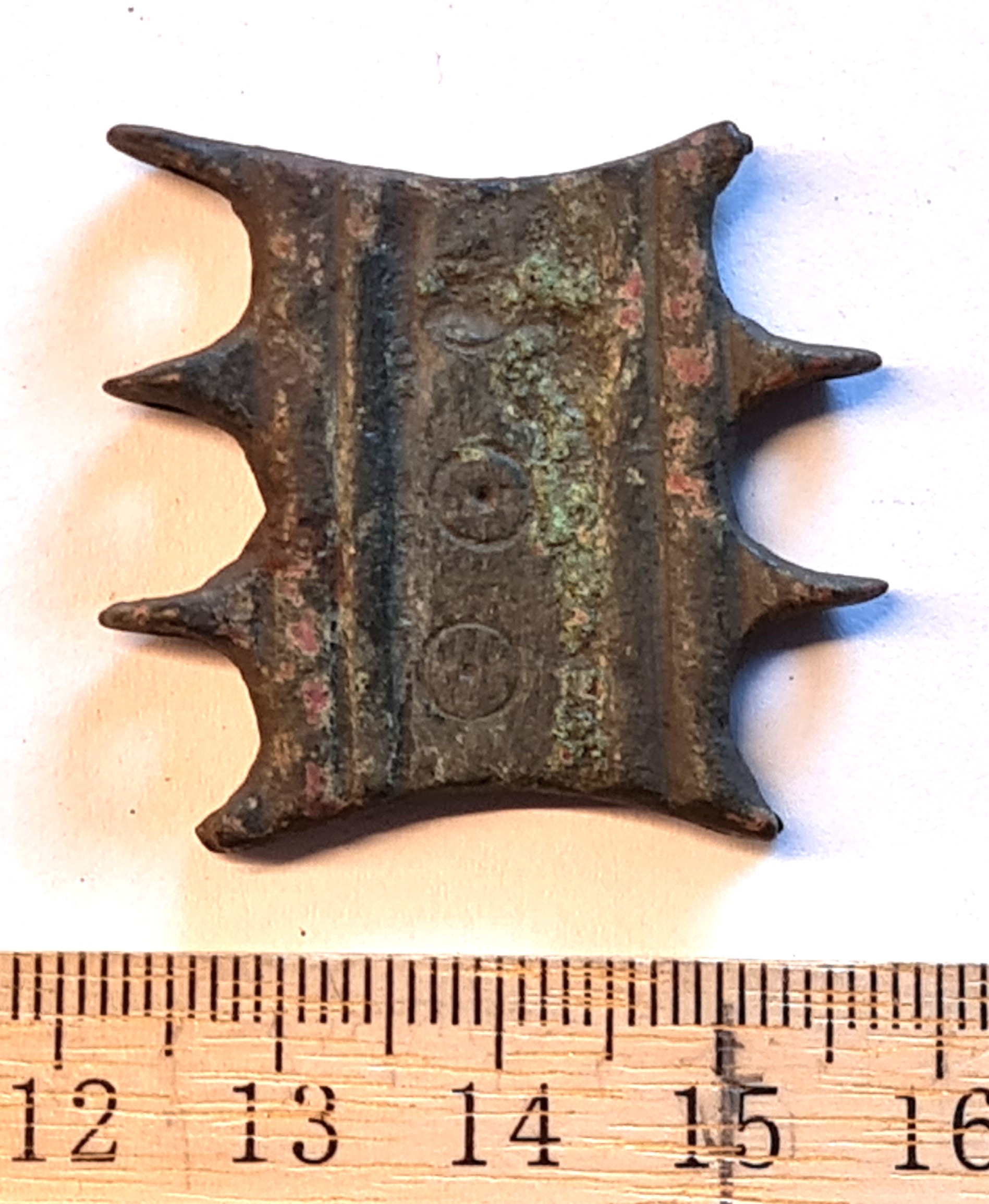
Chain distributer, copper alloy. From the 9th-13th centuries.
Century:
9-13
Discovery code:
SM 10973:1
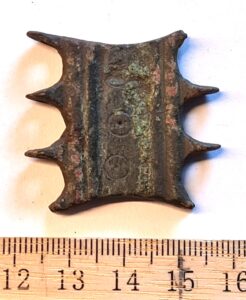
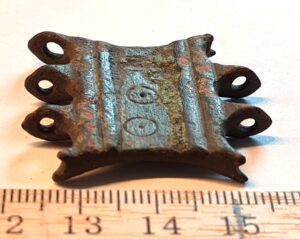
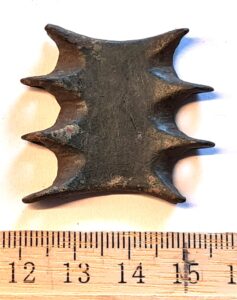
Chain distributer, copper alloy. From the 9th-13th century. Quadrangular chain distributors with protrusions are a typical component of the breast chains placed in the 13th-century inhumation burials of Estonian women, but they are also abundantly found in earlier stone graves and as stray finds. They have been discovered throughout areas inhabited by Baltic Finnic peoples, as well as elsewhere, for example in Semigallia. (Spirģis 2008, 168–170).
Literature:
Spirģis, R. 2008. Bruņrupuču saktas ar krūšu važiņrotām un lībiešu kultūras attīstība Daugavas lejtecē 10.-13. gadsimtā. Latvijas Vēstures Institūta apgāds, Rīga.
Century:
9-13
Discovery code:
SM 10973:1
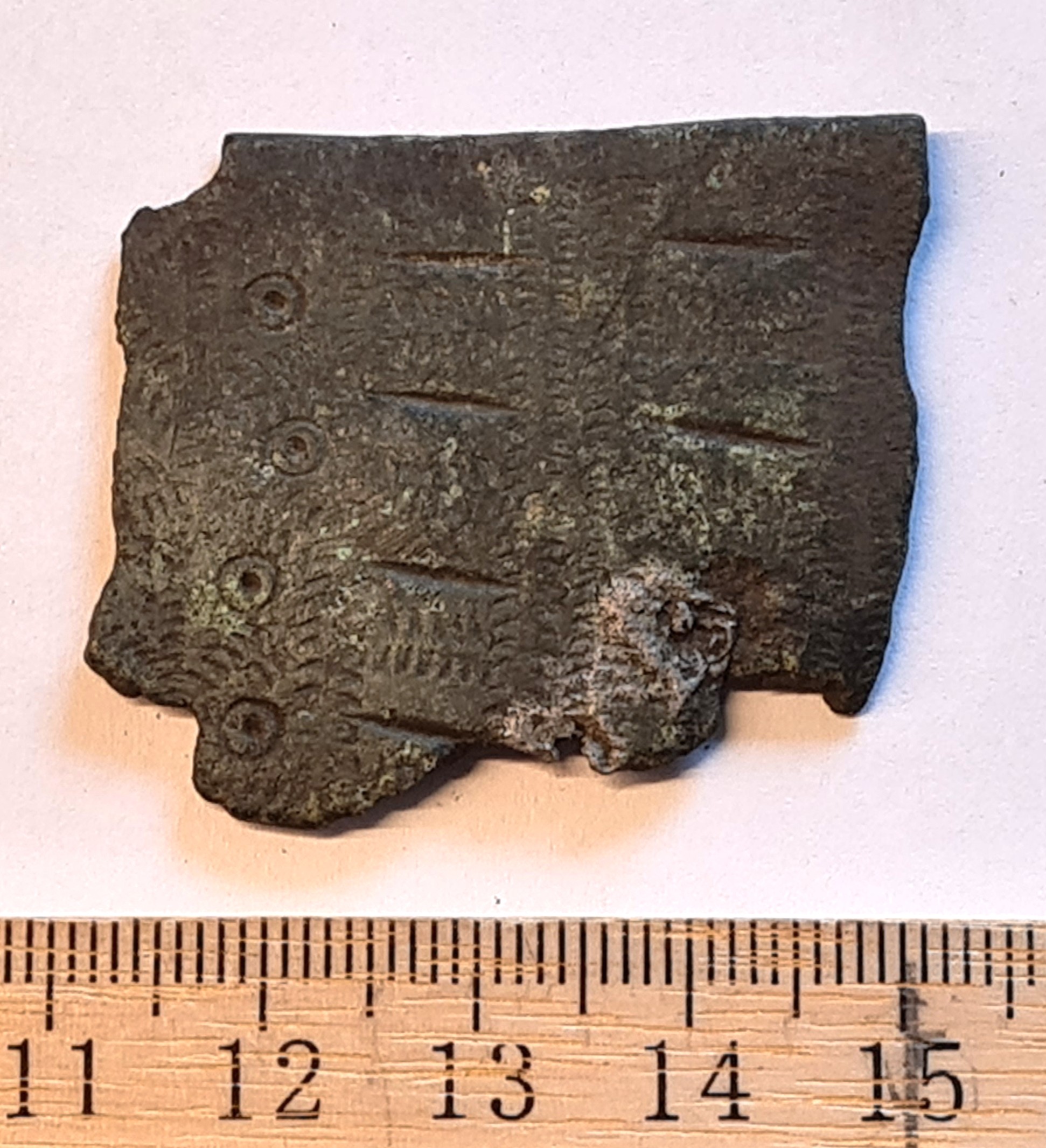
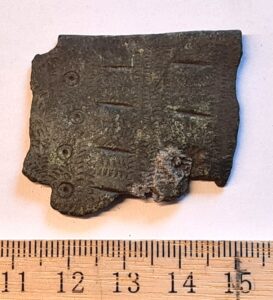
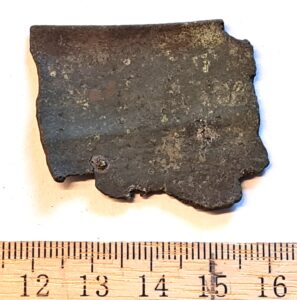
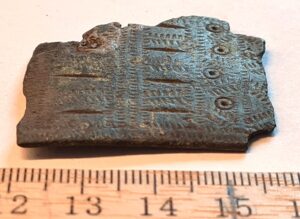
Bracelet fragment, copper alloy. From so called Saaremaa type bracelet with widening ends. They are found in stone graves, where they can be dated from the second half of the 10th century to the 12th century. They no longer occur in the inhumation burials of the late 12th and 13th centuries (Mägi 2002, 105-106).
Literature:
Mägi, M. 2002. At the crossroads of space and time: graves, changing society and ideology on Saaremaa (Ösel), 9th–13th centuries AD. Tallinn.
Century:
10-12
Discovery code:
SM 10973:2
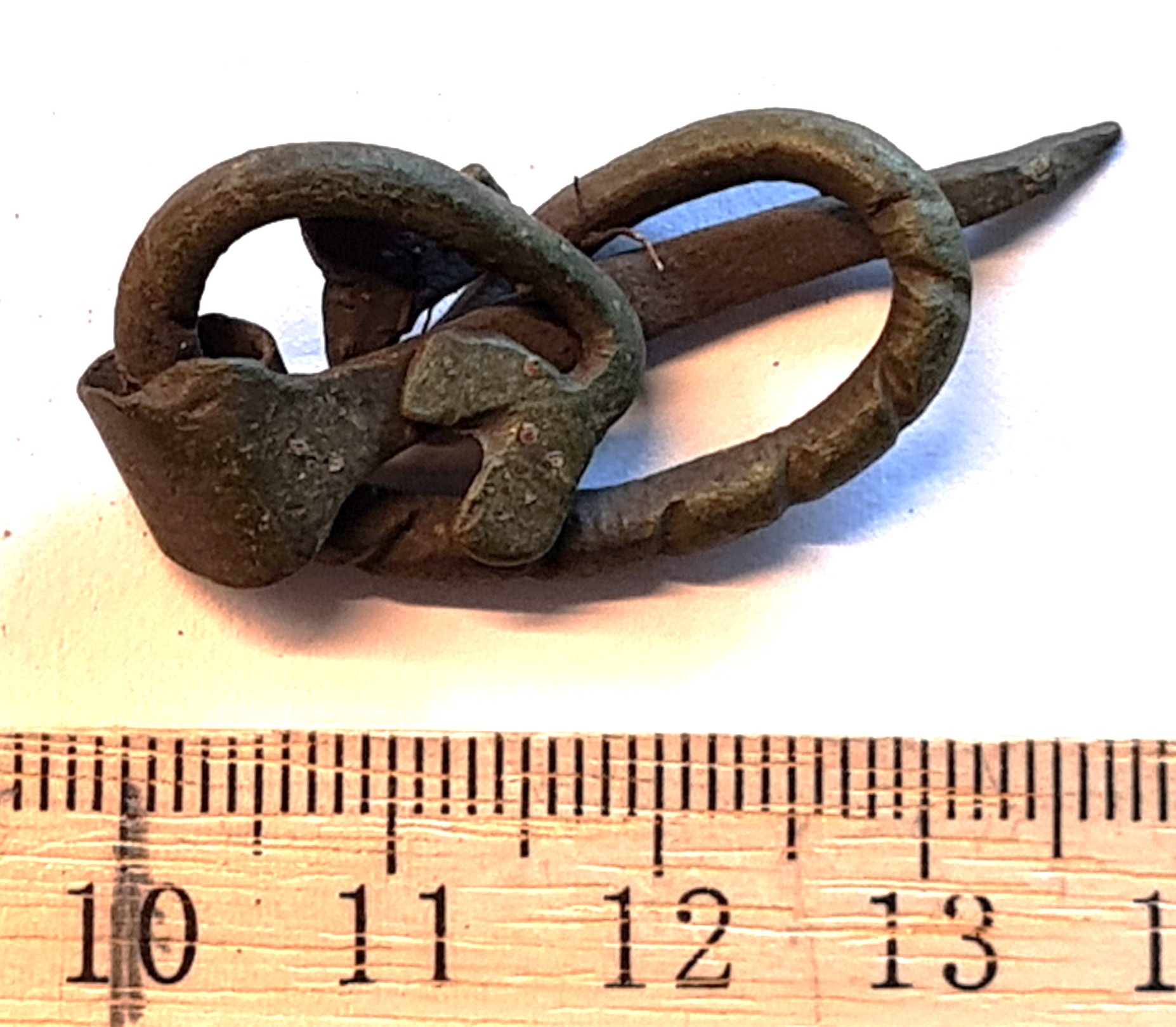
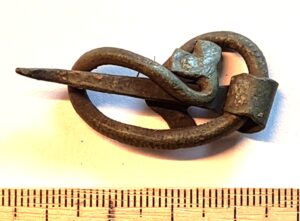
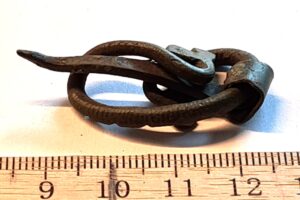
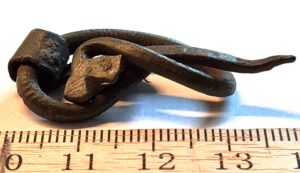
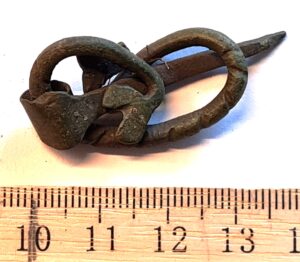
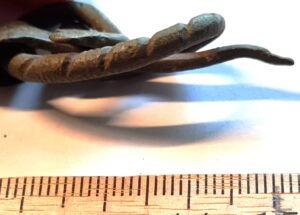
Penannular brooch, copper alloy. With stylised lily-shaped terminals, a pin with a widening foot, and the central part of the bow grooved on the upper side. Twisted together. In Siksälä, a somewhat similar example is known from burials CCXLIV and CCXLIX, which are dated to the 14th century, primarily its first half (Valk et al 2014, 158, 272). Quite similar ones are also known from Courland, from the Laukmuiža cemetery at Dundaga, where the burials are dated to the late 13th or early 14th century(e.g. Muižnieks & Žeiere 2021, drawing 7:3, 7).
Literature:
Valk, H., Ratas, J., Laul, S. 2014. Siksälä kalme II. Matuste ja leidude kataloog. Tartu Ülikool: Tartu.;Muižnieks, V. & Žeiere, I. 2021. Dundagas Laukmuižas 13. – 14. gadsimta senkapi. The 13th-14th Century Cemetery of Dundagas Laukmuiža. – Latvias nacionālā vēstures muzeja raksti nr. 30. Arheoloģija. Rīga.
Century:
13-14
Discovery code:
SM 10973:3
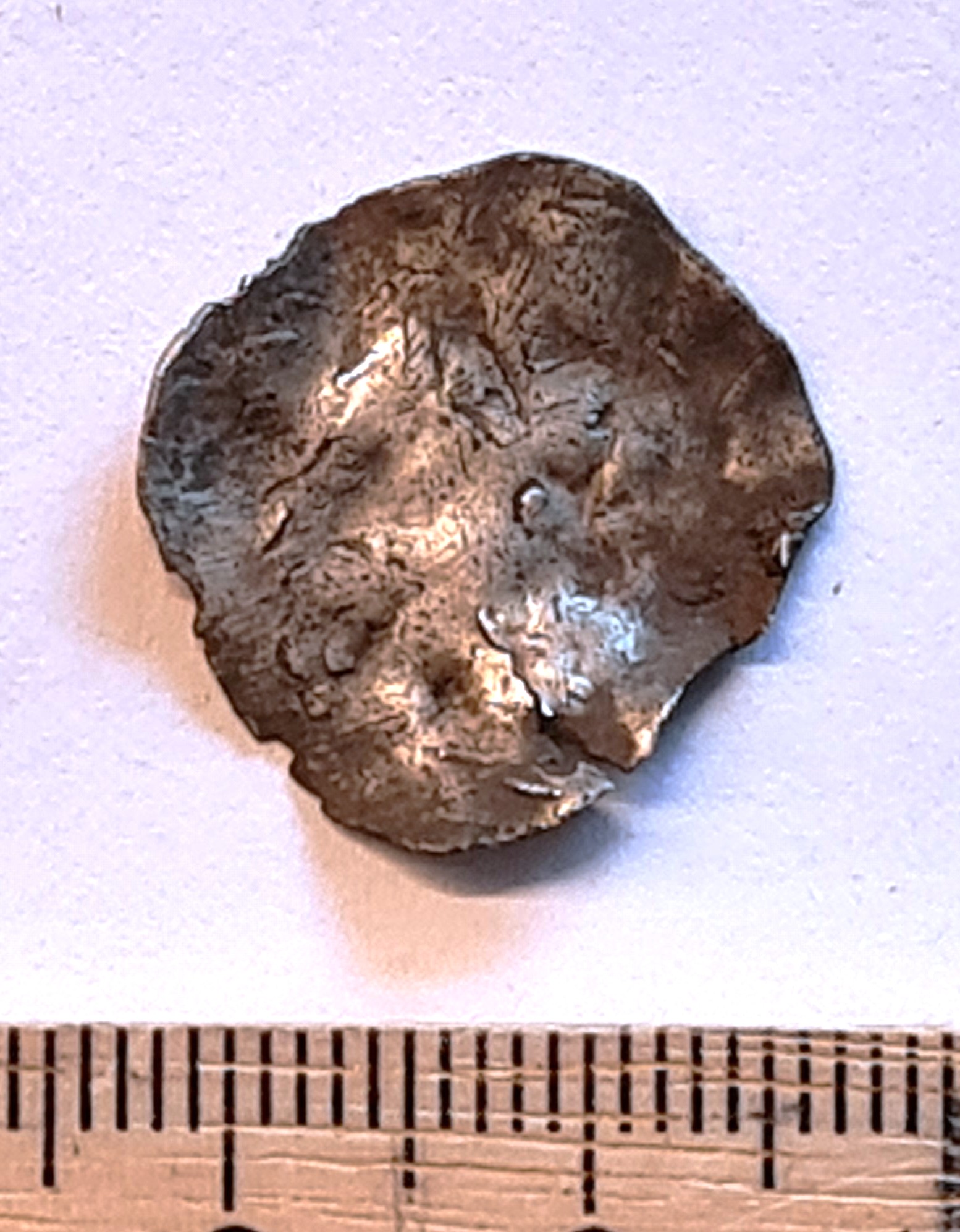
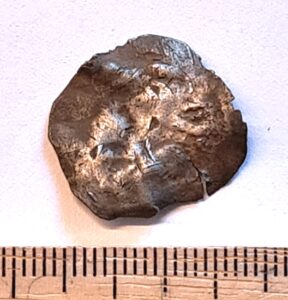
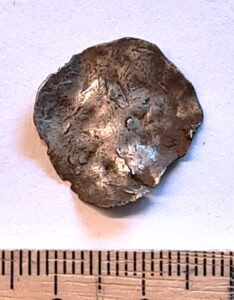
Coin, silver. Very damaged.
Century:
12-17
Discovery code:
SM 10973:4
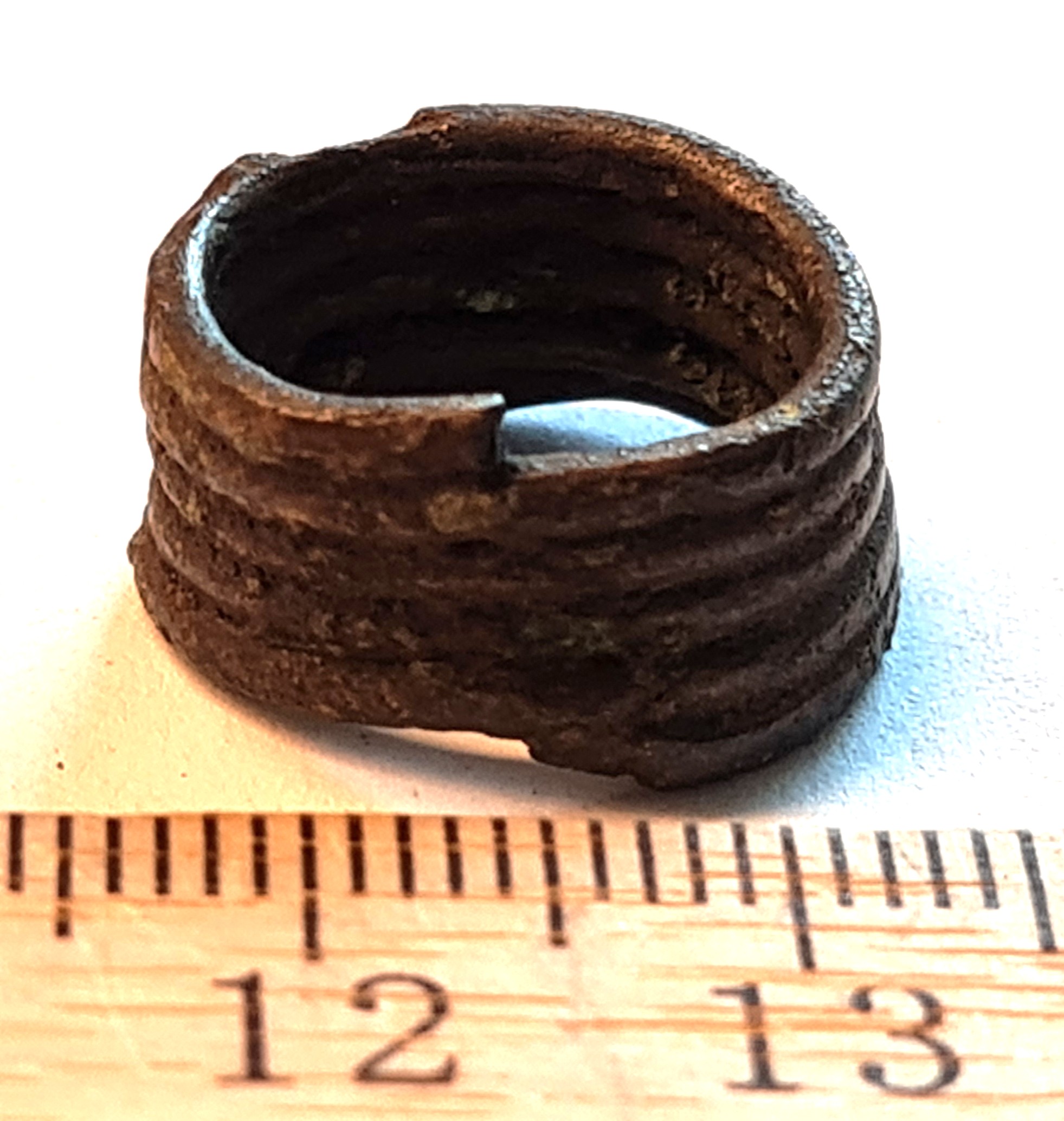
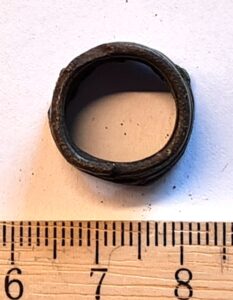
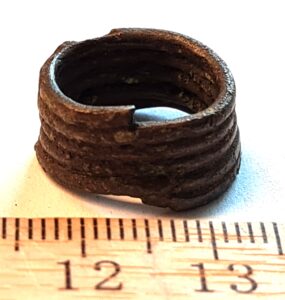
Spiral, copper alloy. Most likely from the 12-13th century.
Century:
12-13
Discovery code:
SM 10973:5

