
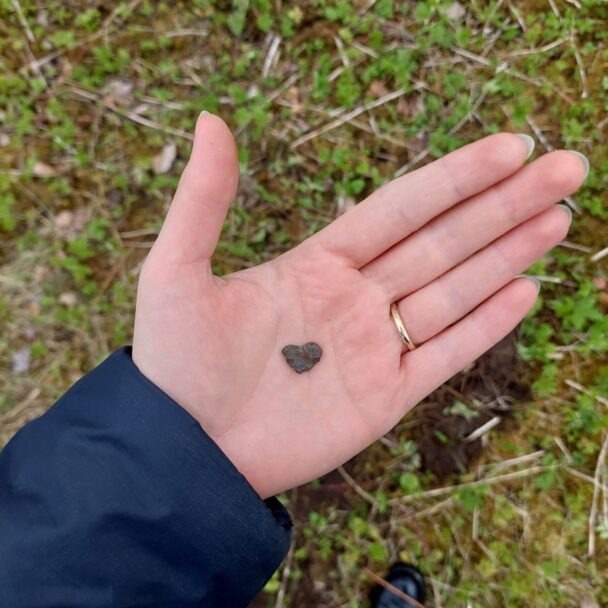
Database
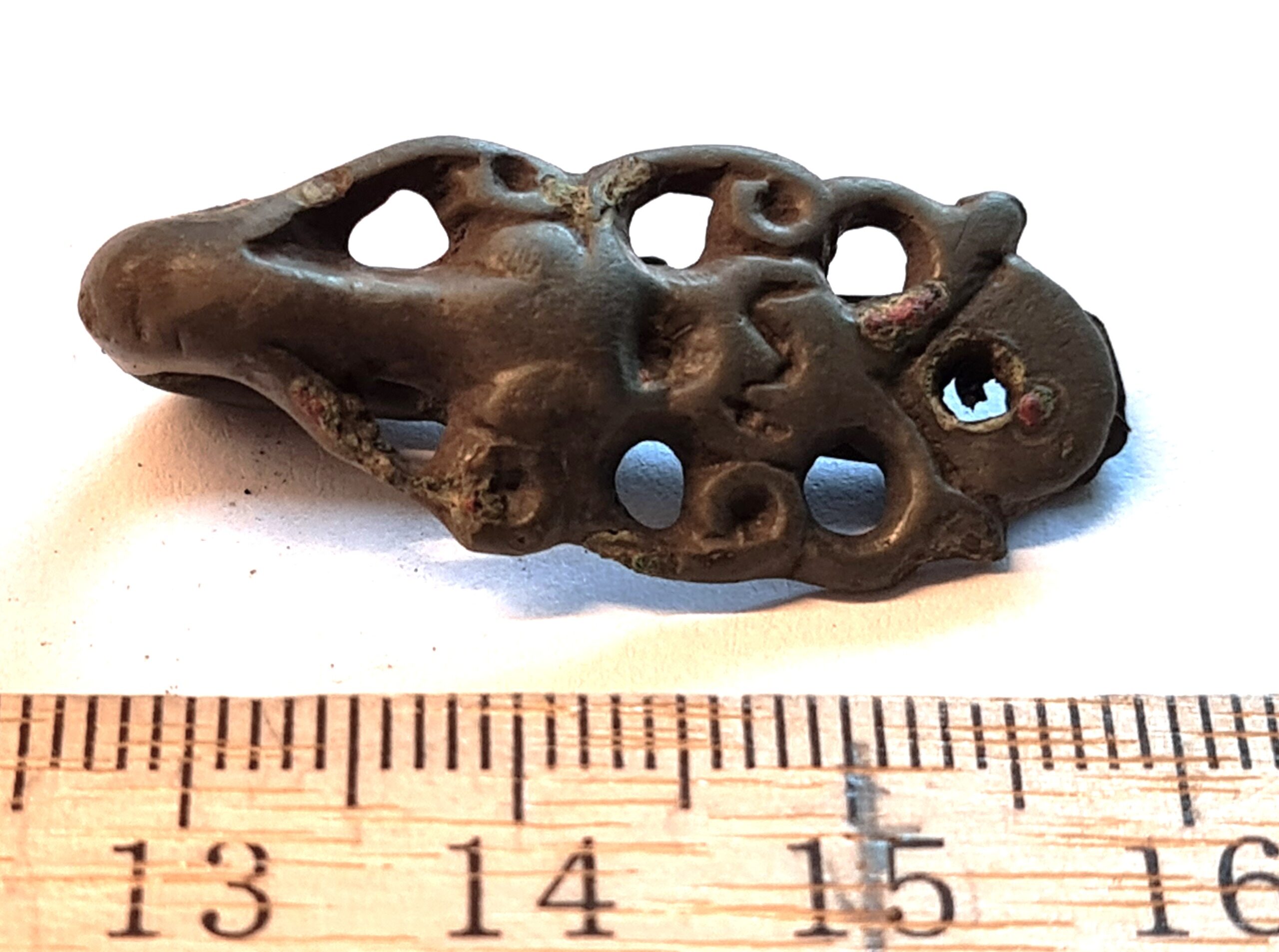
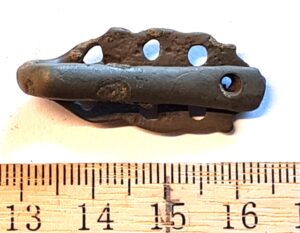
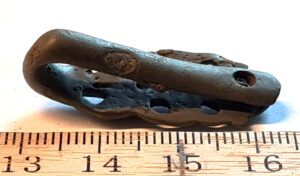
Animal style joining mount, copper alloy. Such examples are very widespread in the material from the coastal regions of Estonia, Finland, and Latvia (Jets 2012, 166-178). They belong predominantly to the 11th–12th centuries, although they may have appeared already in the late 10th century. Individual strap-ends of this type have also been found in 13th-century inhumation burials; however, in those contexts they are likely older objects than the rest of the grave goods (nt. Mandel 2017, 39, tahv. X).
Literature:
Jets, I. 2012. Scandinavian Late Viking Age art styles as a part of the visual display of warriors in 11th century Estonia. – Estonian Journal of Archaeology, 16: 2, 118–139.;Mandel, M. 2017. Maidla muinaskalmistu saladused. Eesti Ajaloomuuseum, Tallinn.
Century:
11-12
Discovery code:
SM 10973:7
Muhu
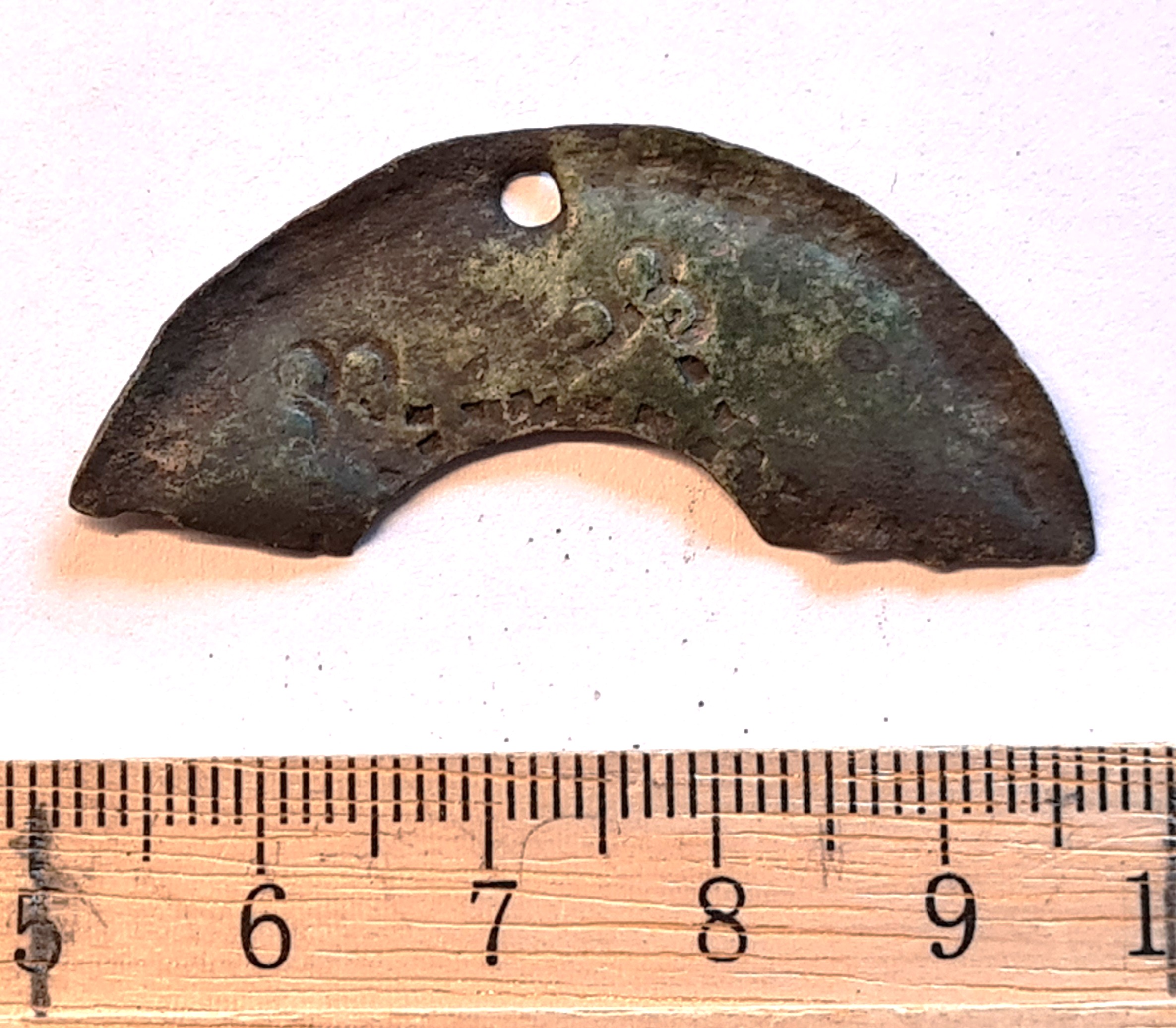
Fragment of brooch (or pendant?), copper alloy.
Century:
13
Discovery code:
SM 10973:10
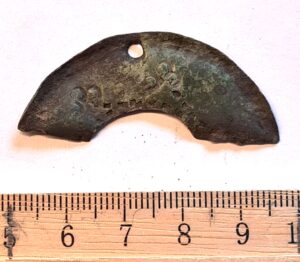
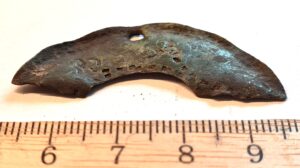
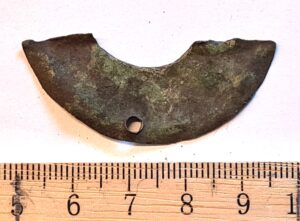
Fragment of brooch (or pendant?), copper alloy. Perhaps from a ring brooch of the 13th century (Kirme 1986, draw. 45-46).
Literature:
Kirme, K. 1986. Eesti sõled. Tallinn
Century:
13
Discovery code:
SM 10973:10

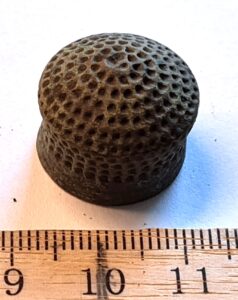

Thimble, copper alloy.
Century:
15-18
Discovery code:
SM 10973:12

Muhu
Needle of penannular brooch, copper alloy.
Century:
13-16
Discovery code:
SM 10973:13

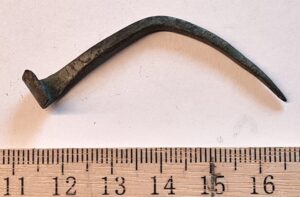

Needle of penannular brooch, copper alloy. The transition to the foot is smooth; therefore, it is probably Late Medieval or Early Modern in date.
Century:
13-16
Discovery code:
SM 10973:13

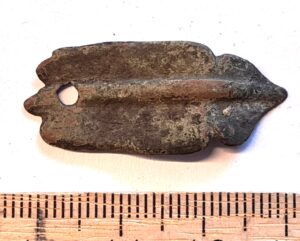

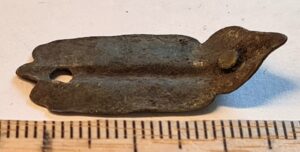
Mount, copper alloy. Medieval or Early Modern.
Century:
13-16
Discovery code:
SM 10973:14

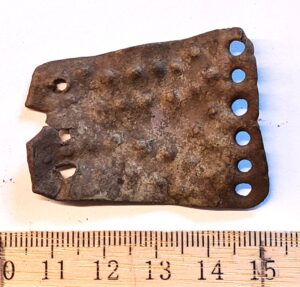


Mount, copper alloy. Trapezoidal in shape, decorated with an ornament of repoussé bosses. On the narrower side there are three round perforations, and on the wider side six. The mount may have originated, for example, from a headdress or from decorative mounts, but the repoussé ornamentation points primarily to a medieval date.
Century:
13-14
Discovery code:
SM 10973:15

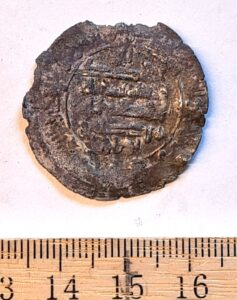

Coin, Arabian silver.
Century:
8-10
Discovery code:
SM 10973:16

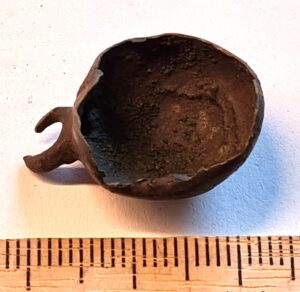
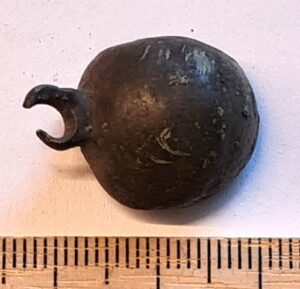
Bell, copper alloy. Fragmentary, circular in form. Probably from the 12th–13th century, although it may also be later.
Century:
12-13
Discovery code:
SM 10973:17


Coin pendant, silver. A Kufic coin with two perforations, apparently having formed part of a necklace of coins or another type of ornament.
Century:
8-10
Discovery code:
SM 10973:18

