
Database
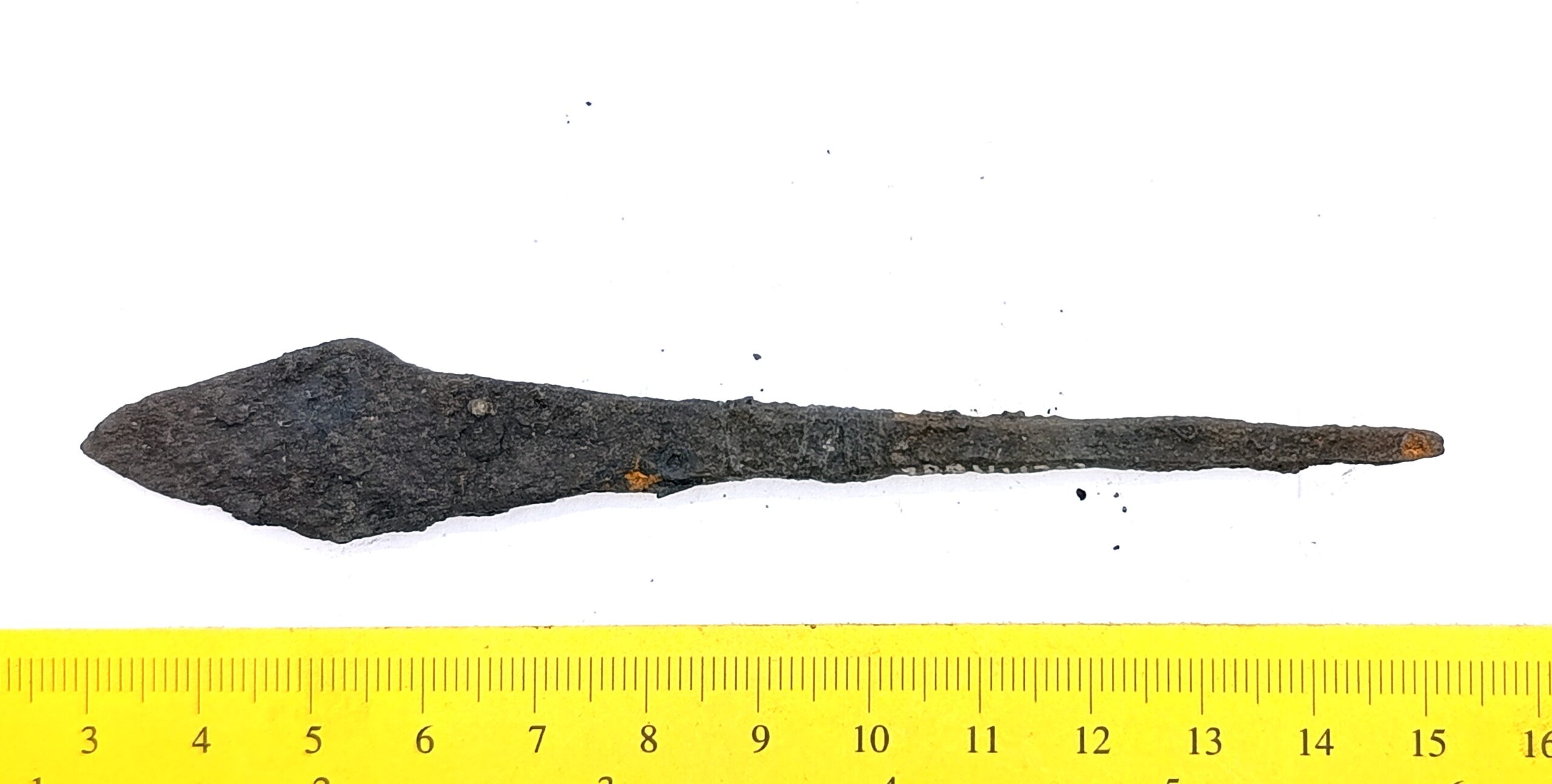
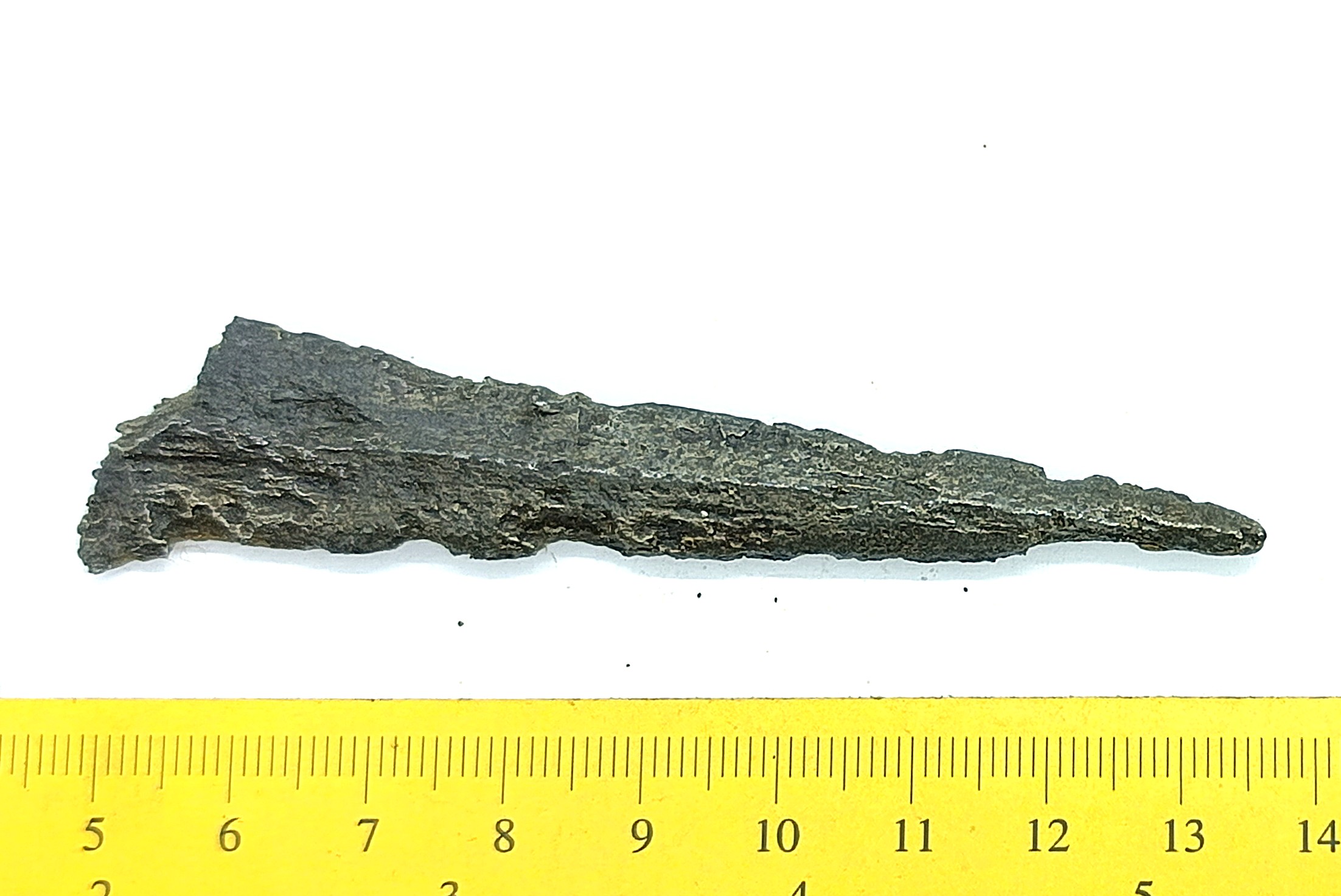
 Arrowhead, iron. Arrowheads of this type have been found in stone graves with cremations in western Estonia, as well as in Finland. At the Maidla grave, they have been dated to the 11th–12th century (Mandel 2017, 74, plate XXVI).
Literature:
Mandel, M. 2017. Maidla muinaskalmistu saladused. Eesti Ajaloomuuseum, Tallinn.
Century:
11-12
Discovery code:
AI 3884: 1703
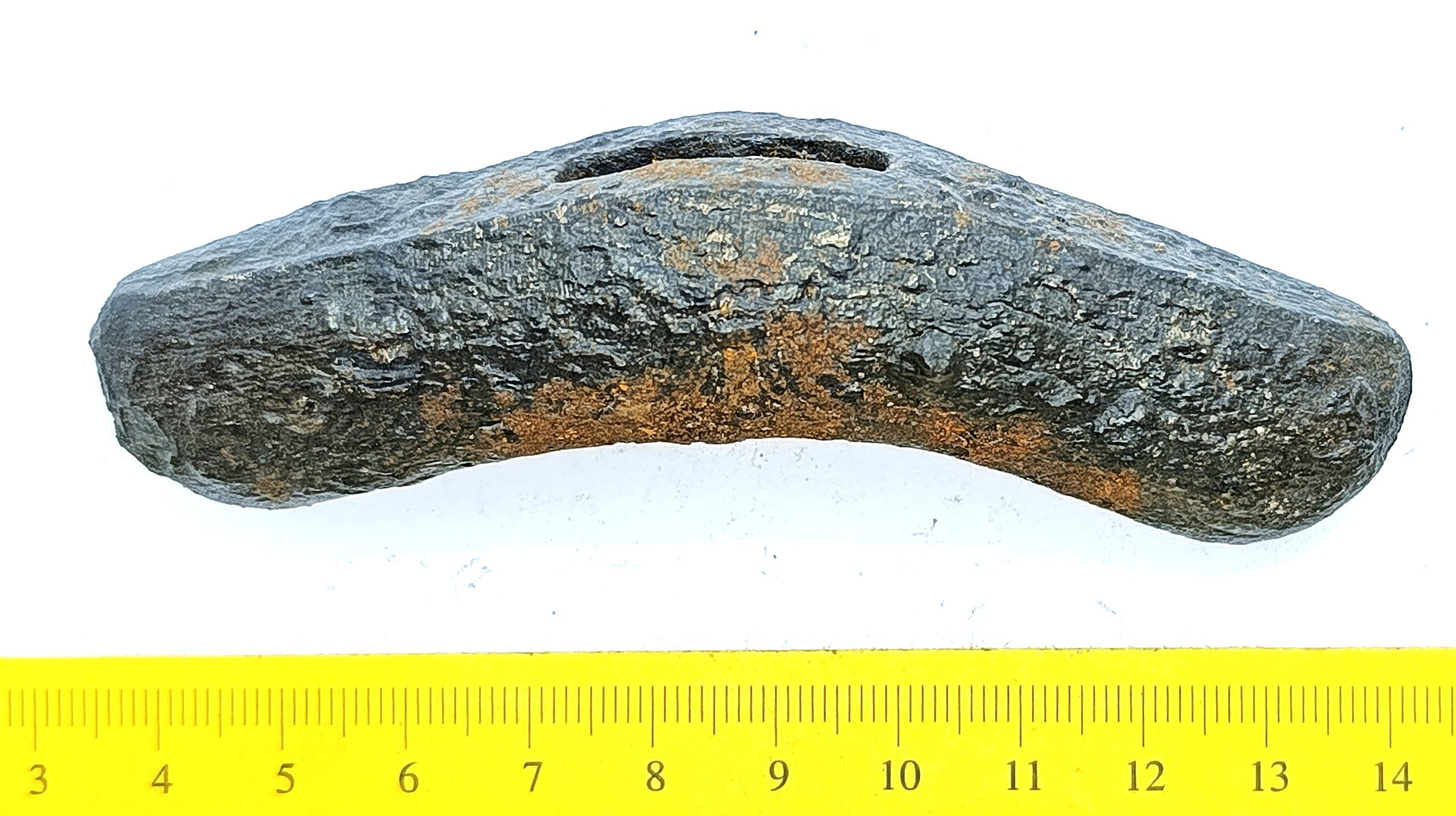
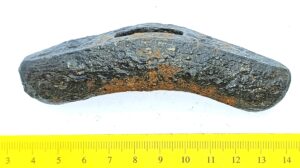
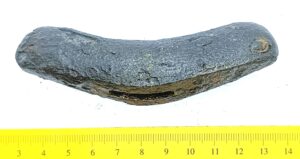
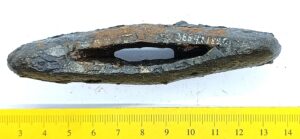 Hilt guard, iron. Petersen’s Z type, which is dated to the turn of the 10th–11th centuries or the early 11th century (Petersen, 1919, 175–177; Moilanen, 2015, 259). Swords of this type have been widespread along the eastern coasts of the Baltic Sea. In Latvia, such swords were widespread mainly in the areas inhabited by Livs, and are dated approximately 950-1050 AD (Tomsons 2018, 73-77).
Literature:
Petersen, J. 1919. De norske vikingesverd. En typologisk-kronologisk studie over vikingetidens vaaben. (Videnskapsselskapets Skrifter II. Hist. – Filos. klasse 1.) Kristiania.
Moilanen, M. 2015. Marks of Fire, Value and Faith. Swords with Ferrous Inlays in Finland during the Late Iron Age (ca. 700–1200 AD). Suomen Keskiajan Arkeologian Seura: Turku.
Tomsons, A. 2018. Zobeni Latvijas teritorijā no 7. līdz 16. gadsimtam. Latvijas nacionālā vēstures muzeja raksti nr. 27. Rīga.
Century:
10-11
Discovery code:
AI 3884: 1820
Century:
11-13
Discovery code:
AI 3884: 1979
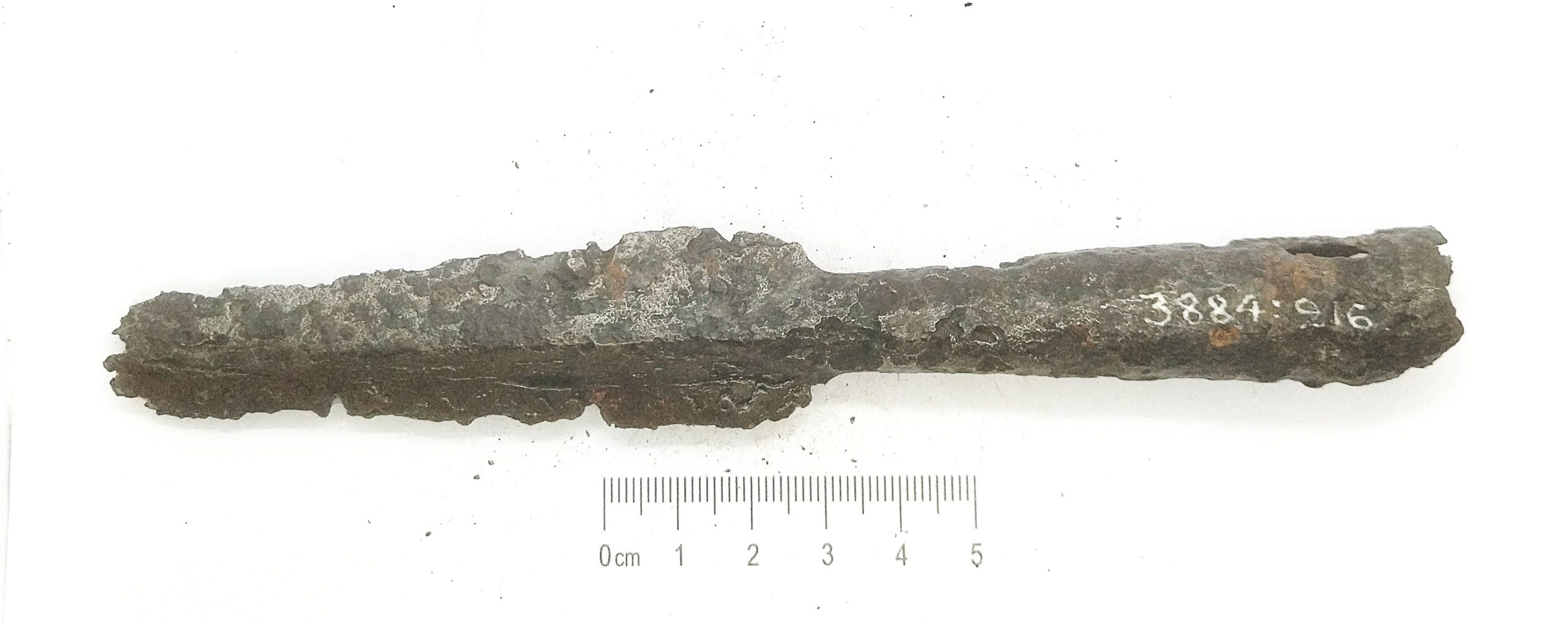
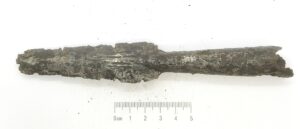
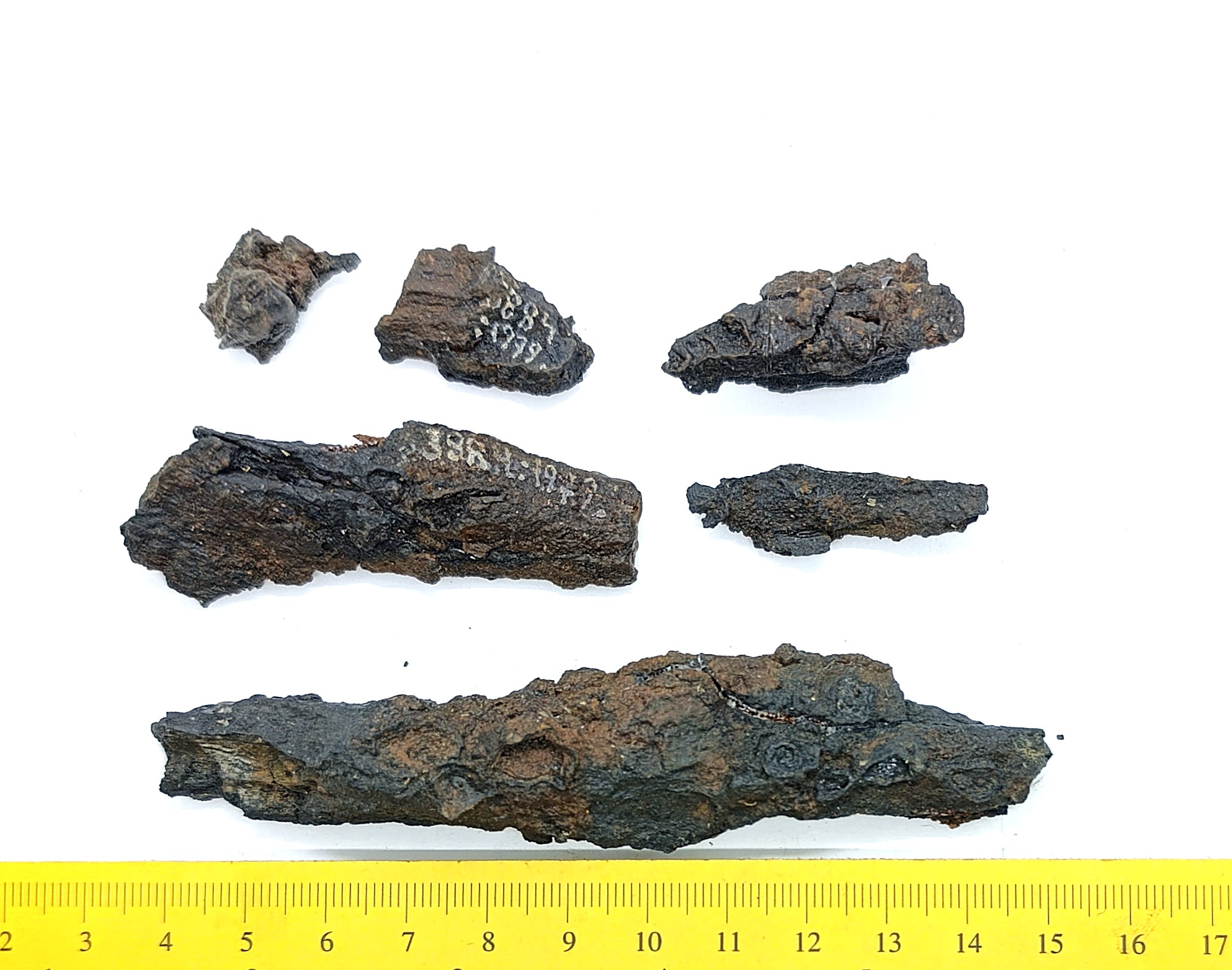
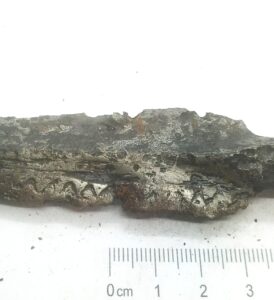 Spearhead, iron. With a leaf-shaped blade bearing zigzag-line pseudo-pattern-welding. Probably a further development of Petersen type G spearheads with curved blade edges. Such spearheads are abundant in stone graves in Saaremaa, sometimes also in probable complexes (e.g. in Käku cemetery, Mägi 2002, Pl. 14:6). In Latvia they were widespread mainly in the Livonian area and occasionally also in Courland, and they are dated primarily to the 11th century, possibly also to the first half of the 12th century (Atgāzis 2019, 55–57; Zariņa 2006, figs. 157–158, 174, 203).
Literature:
Mägi, M. 2002. At the Crossroads of Space and Time. Graves, Changing Society and Ideology on Saaremaa (Ösel), 9th–13th centuries AD. Tallinn: Ajaloo Instituut, Tallinn/Center of Baltic Studies, Gotland. Loe kogu teost: siin. Arheoloogiliste leidude joonised on leitavad: siin
Zariņa, A. 2006. Salaspils Laukskolas kapulauks 10.–13. gadsimts. Rīga: Latvijas Vēstures Institūta Apgāds.
Atgāzis, M. 2019. Tuvcīņas ieroči Latvijā 10.–13. gadsimtā. Latvijas vēstures institūta apgāds. Rīga.
Century:
11-12
Discovery code:
AI 3884: 216
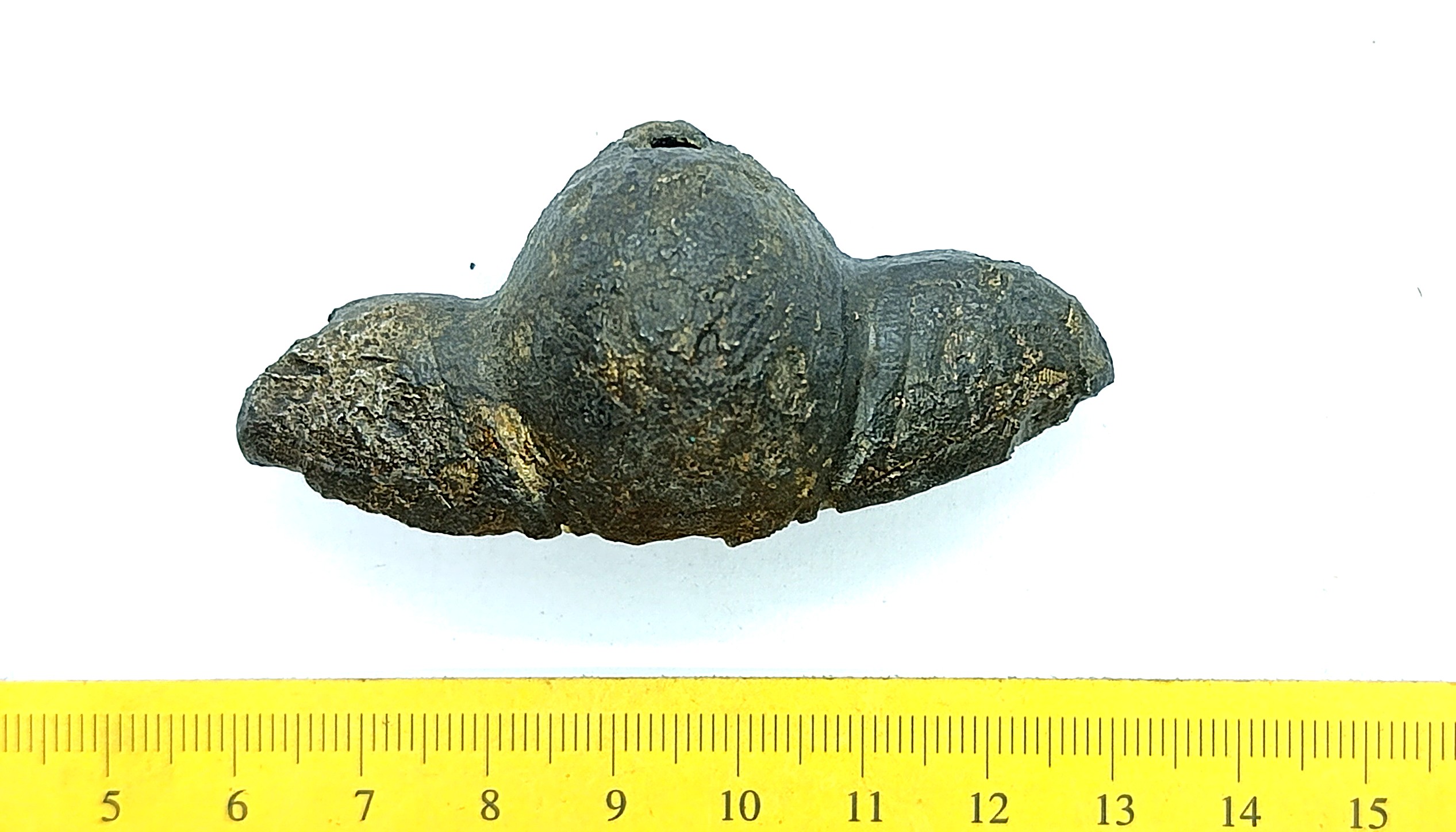
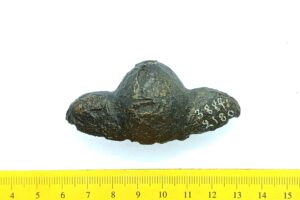
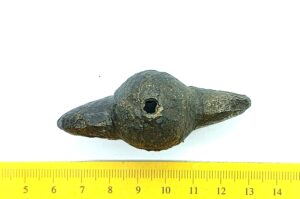
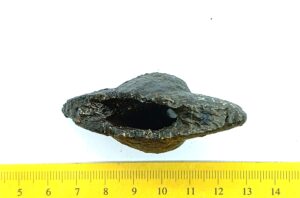 Pommel, iron with silver inlay. Petersen´s Type S sword which is dated to the 10th–11th centuries (Petersen 1919, 142–153). Such sword hilts are in Latvia found mainly in Livic areas and dated to the second half of the 11th century, or to the beginning of the 12th century (Tomsons 2018, 57−58).
Literature:
Petersen, J. 1919. De Norske Vikingesverd: en typologisk-kronologisk studie over vikingetidens vaaben. Kristiana.
Tomsons, A. 2018. Zobeni Latvijas teritorijā no 7. līdz 16. gadsimtam. Latvijas nacionālā vēstures muzeja raksti nr. 27. Rīga.
Century:
11
Discovery code:
AI 3884: 2180
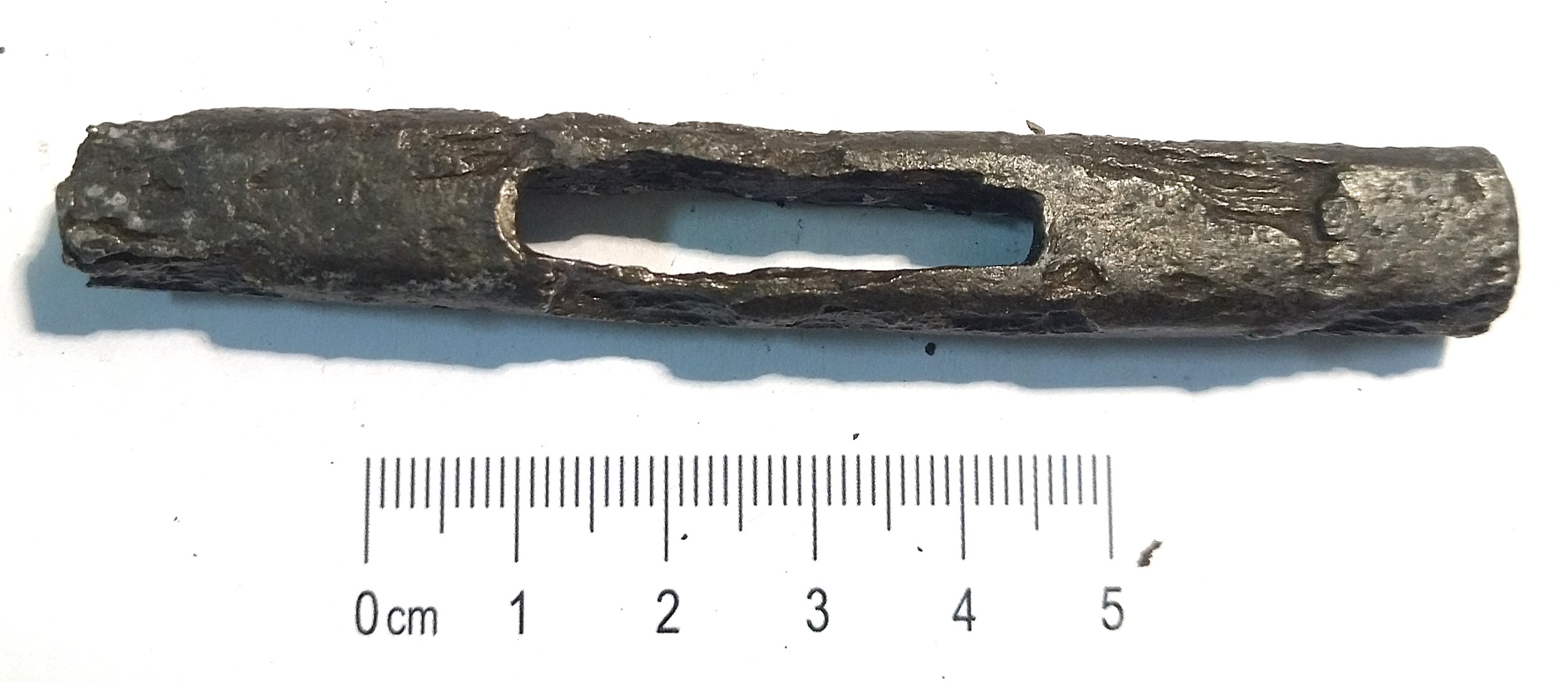
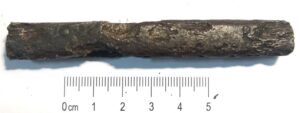
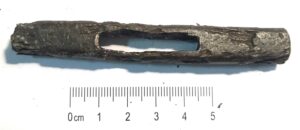 Hilt guard, iron. Long straight guards in Latvia are dated, according to the shape of the pommel, from the second half of the 12th century to the end of the 13th century, sometimes to even later period (Tomsons 2018, 109-115).
Literature:
Tomsons, A. 2018. Zobeni Latvijas teritorijā no 7. līdz 16. gadsimtam. Latvijas nacionālā vēstures muzeja raksti nr. 27. Rīga.
Century:
12-13
Discovery code:
AI 3884: 219
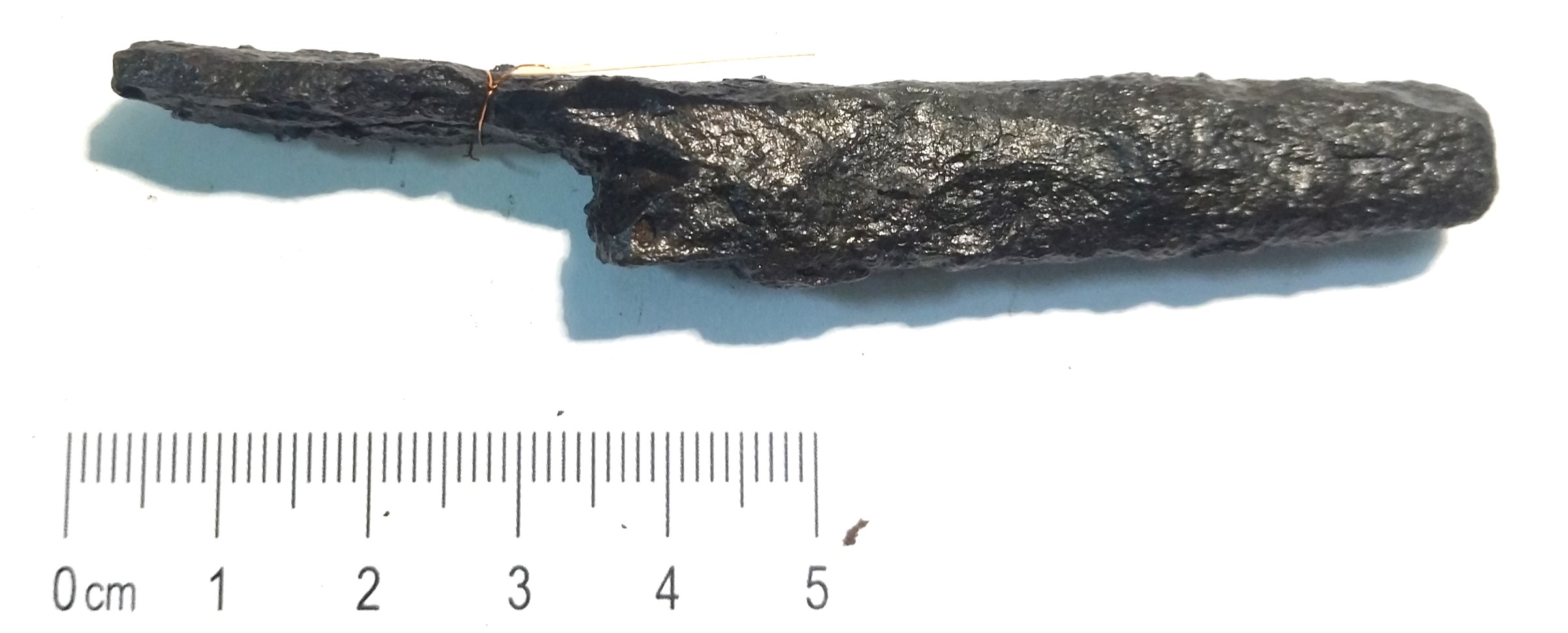
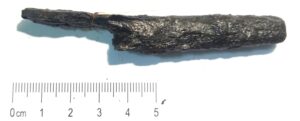
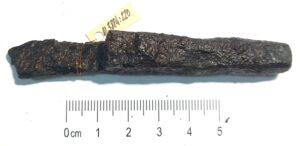 Hilt guard, iron. Broken in half. Long straight guards were in Latvia dated, according to the shape of pommel, from the second half of the 12th century to the end of the 13th century, sometimes to even later period (Tomsons 2018, 109-115).
Literature:
Tomsons, A. 2018. Zobeni Latvijas teritorijā no 7. līdz 16. gadsimtam. Latvijas nacionālā vēstures muzeja raksti nr. 27. Rīga.
Century:
12-13
Discovery code:
AI 3884: 220
Century:
11-13
Discovery code:
AI 3884: 2262
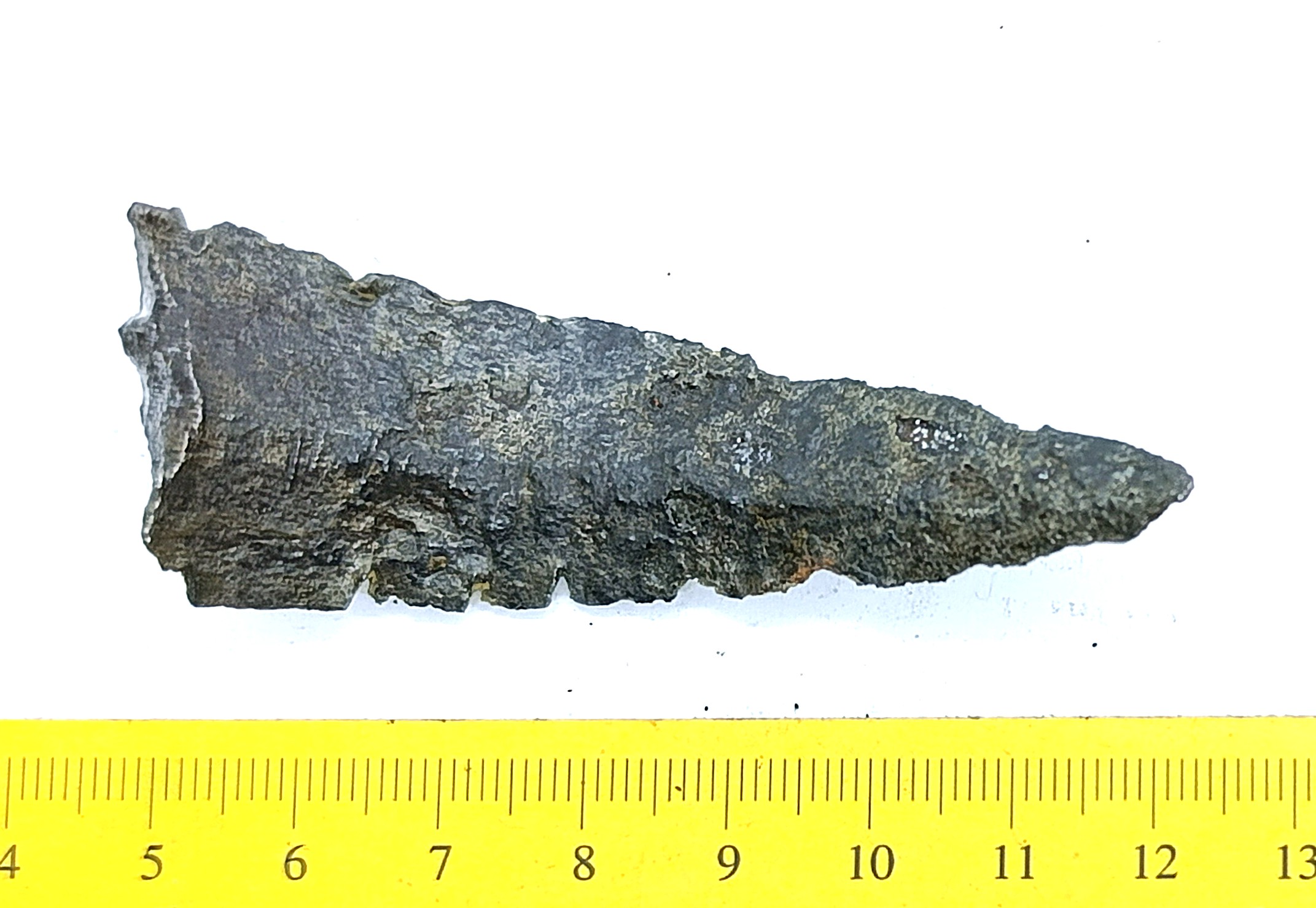
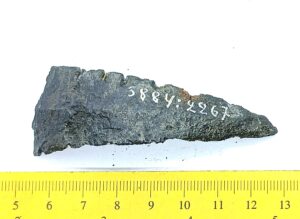
Century:
11-13
Discovery code:
AI 3884: 2267

