
Database
Viltina
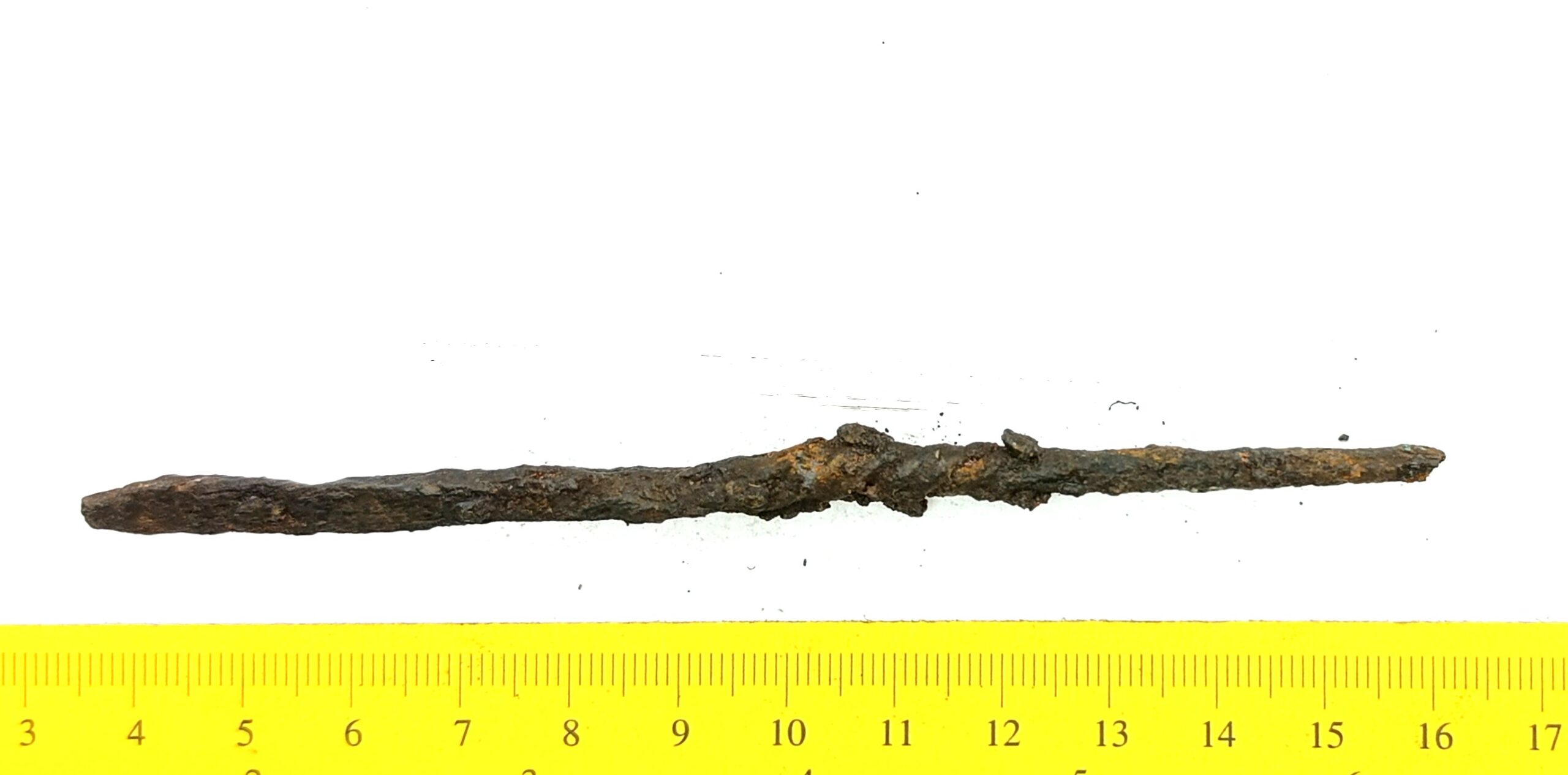
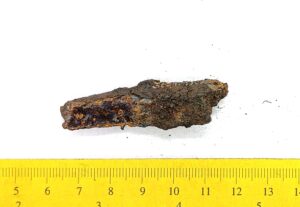
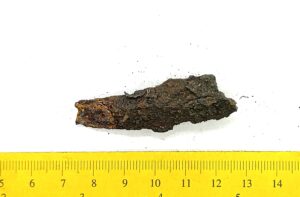
Tordeeritud kaelaga viskeodaots, raud.
Century:
12-13
Discovery code:
AI 3884: 4975
 Tordeeritud kaelaga viskeodaots, raud. Saaremaal ja Ranniku-Eestis laialt levinud relvatüüp, mida on leitud Valjala, Pöide ja Muhu maalinnadelt ning kivikalmetest, aga ka Pada 13. sajandi laibamatustest Põhja-Eestis.
Century:
12-13
Discovery code:
AI 3884: 4975
Century:
11-13
Discovery code:
AI 3884: 4982
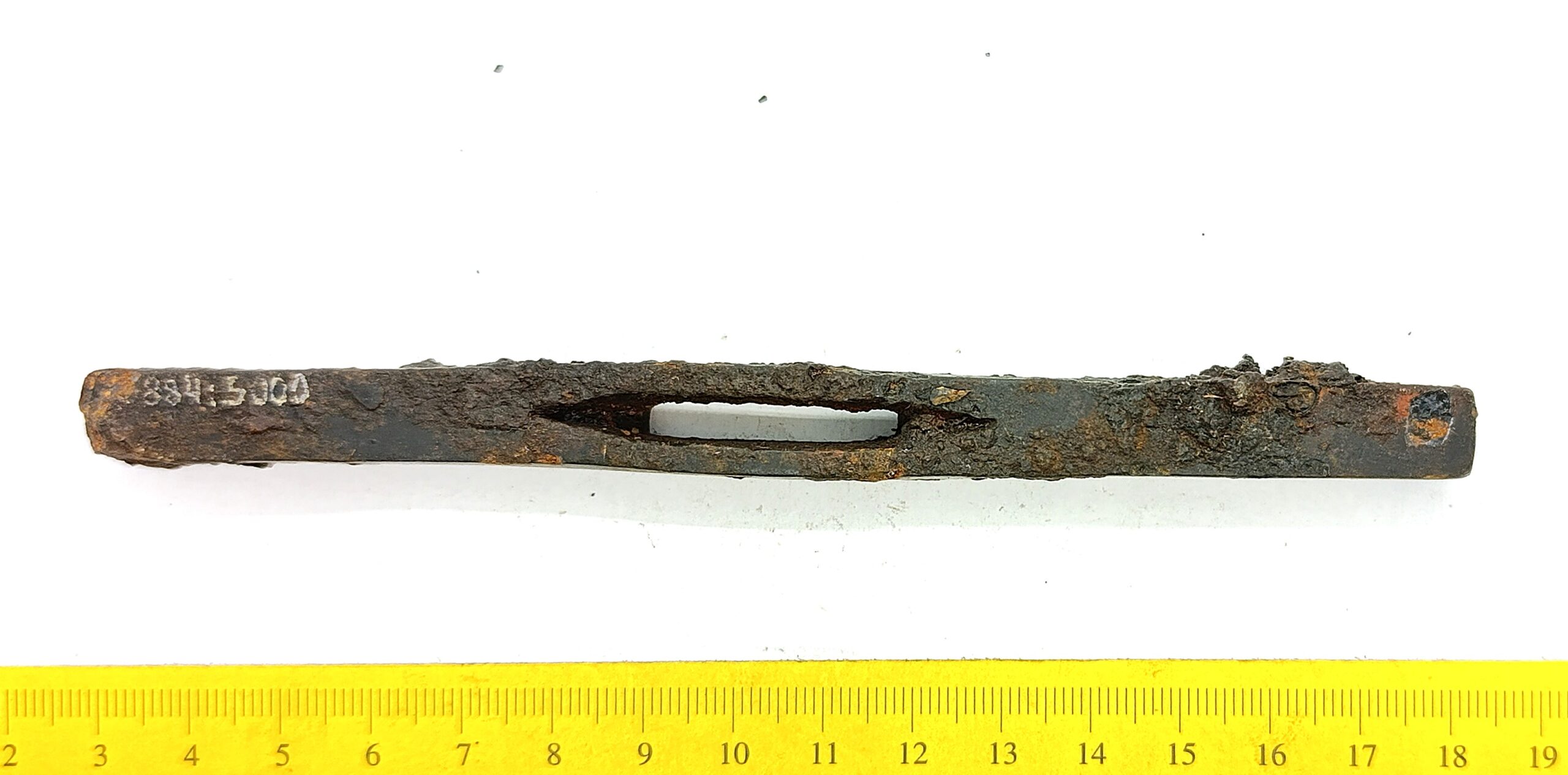
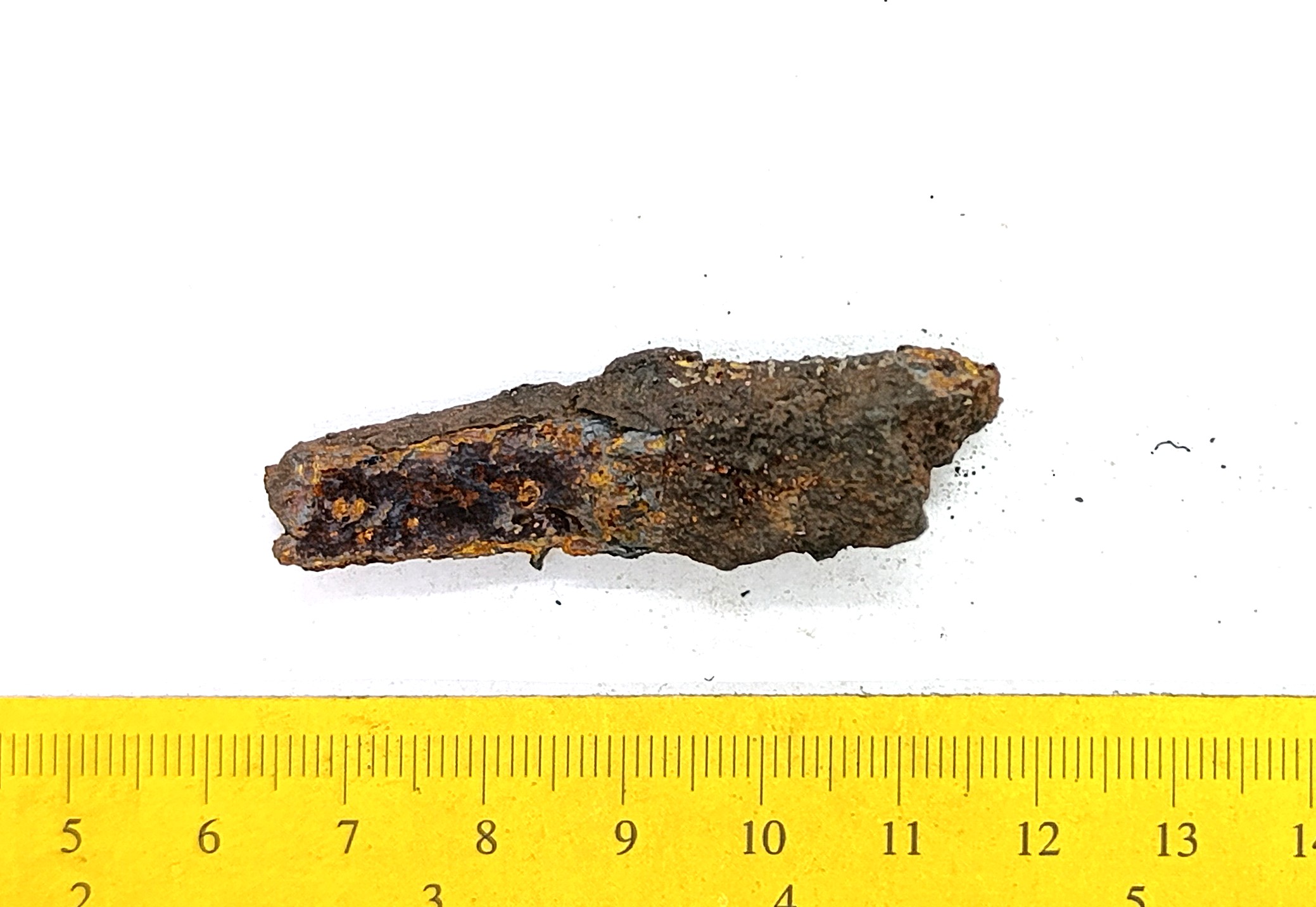
 Hilt guard, iron. Long straight guards in Latvia are dated, according to the shape of the pommel, from the second half of the 12th century to the end of the 13th century, sometimes to even later period (Tomsons 2018, 109-115).
Literature:
Tomsons, A. 2018. Zobeni Latvijas teritorijā no 7. līdz 16. gadsimtam. Latvijas nacionālā vēstures muzeja raksti nr. 27. Rīga.
Century:
12-13
Discovery code:
AI 3884: 5000
Century:
11-13
Discovery code:
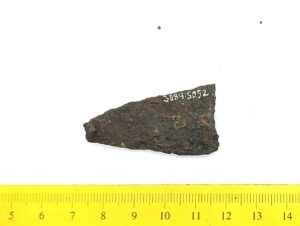
AI 3884: 5052
Century:
11-13
Discovery code:
AI 3884: 5092
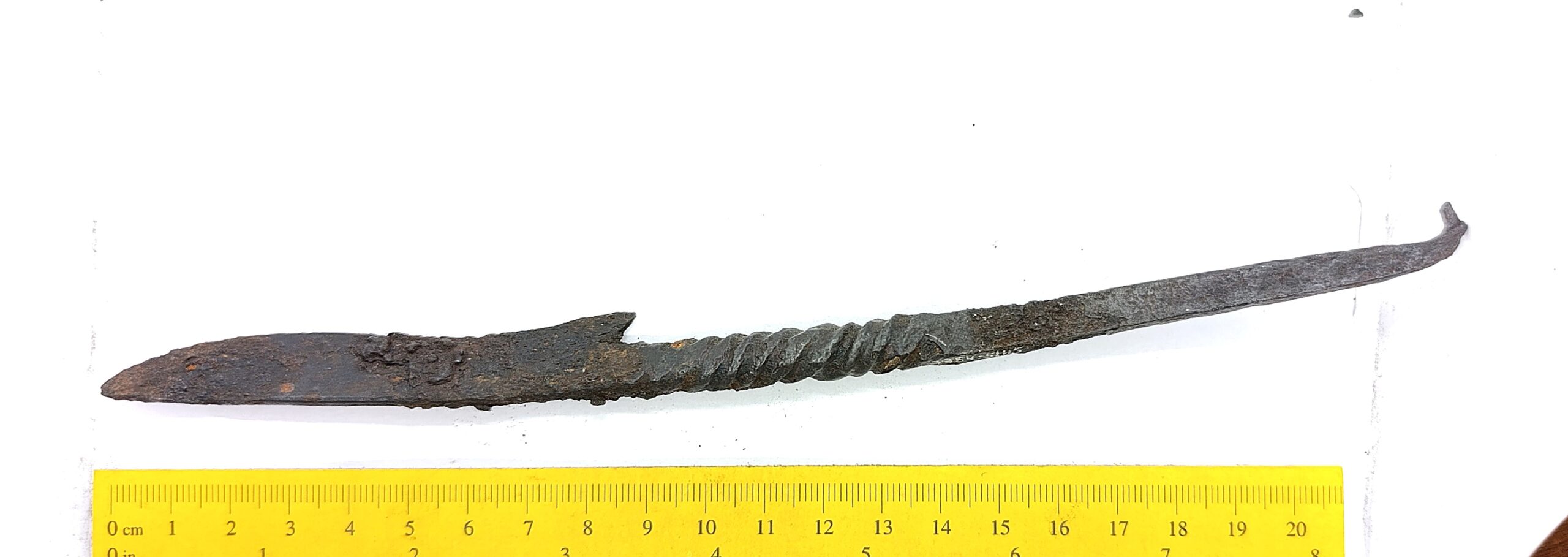
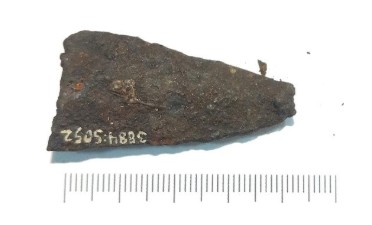
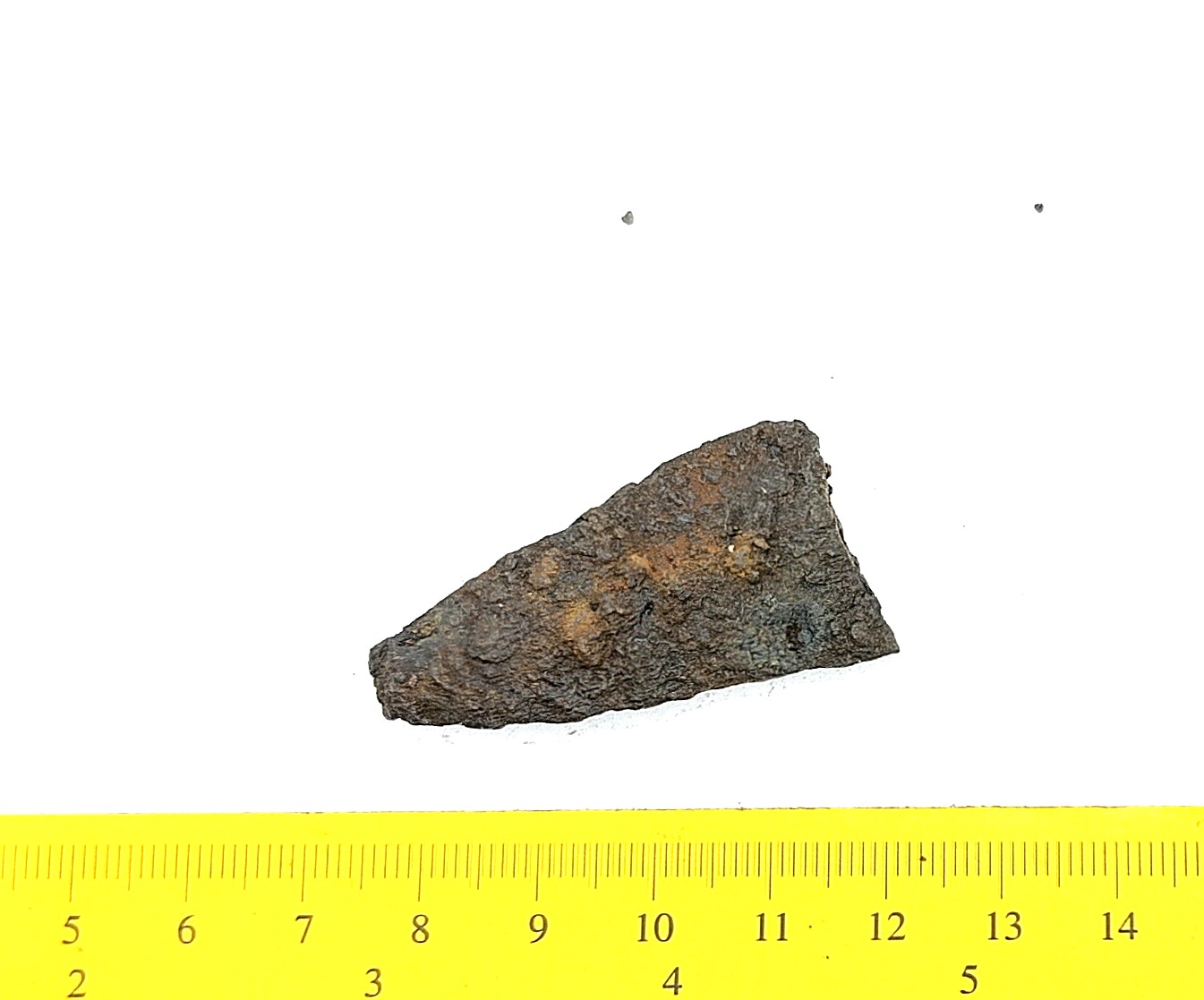
Javelin head, iron. With a knife-shaped blade, and a twisted neck section. Such javelin heads were especially characteristic for Saaremaa and coastal Estonia, but they are also found in surrounding areas. Although it has been suggested that such javelin heads came into use already at the end of the 11th century (Peets & Valt 2011), they nevertheless seem to be associated rather with the second half of the 12th century and the 13th century (Mandel 2017, 73). Among other contexts, they occur in 13th-century inhumation burials, for example at Pada in northern Estonia.
Literature:
Peets, J. & Valt, J. 2011. Ühest rauaaja lõpu relvast Saarmaal, mandri-Eestis ja naaberpiirkondades. – Saaremaa Muuseum, kaheaastaraamat 2009–2010 (3–29). Saaremaa Muuseum, Kuressaare.
Mandel, M. 2017. Maidla muinaskalmistu saladused. Eesti Ajaloomuuseum, Tallinn.
Century:
12-13
Discovery code:
AI 3884: 5145
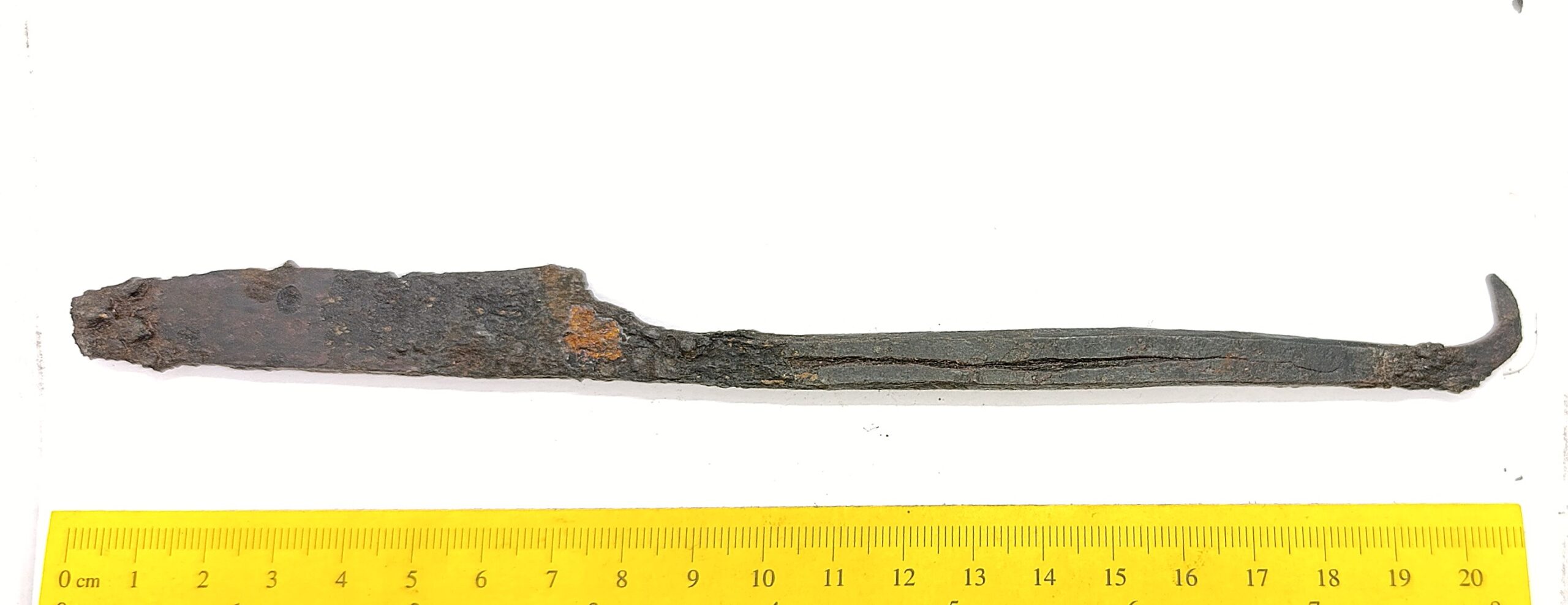
Javelin head, iron. With a knife-shaped blade, an untwisted neck section, and a tang. Such javelin heads were especially characteristic for Saaremaa and coastal Estonia during the 12th–13th centuries, but they are also found in surrounding areas. Although it has been suggested that such javelin heads came into use already at the end of the 11th century (Peets & Valt 2011), they nevertheless seem to be associated rather with the second half of the 12th century and the 13th century (Mandel 2017, 73). Among other contexts, they occur in 13th-century inhumation burials.
Literature:
Peets, J. & Valt, J. 2011. Ühest rauaaja lõpu relvast Saarmaal, mandri-Eestis ja naaberpiirkondades. – Saaremaa Muuseum, kaheaastaraamat 2009–2010 (3–29). Saaremaa Muuseum, Kuressaare.
Mandel, M. 2017. Maidla muinaskalmistu saladused. Eesti Ajaloomuuseum, Tallinn.
Century:
12-13
Discovery code:
AI 3884: 5194
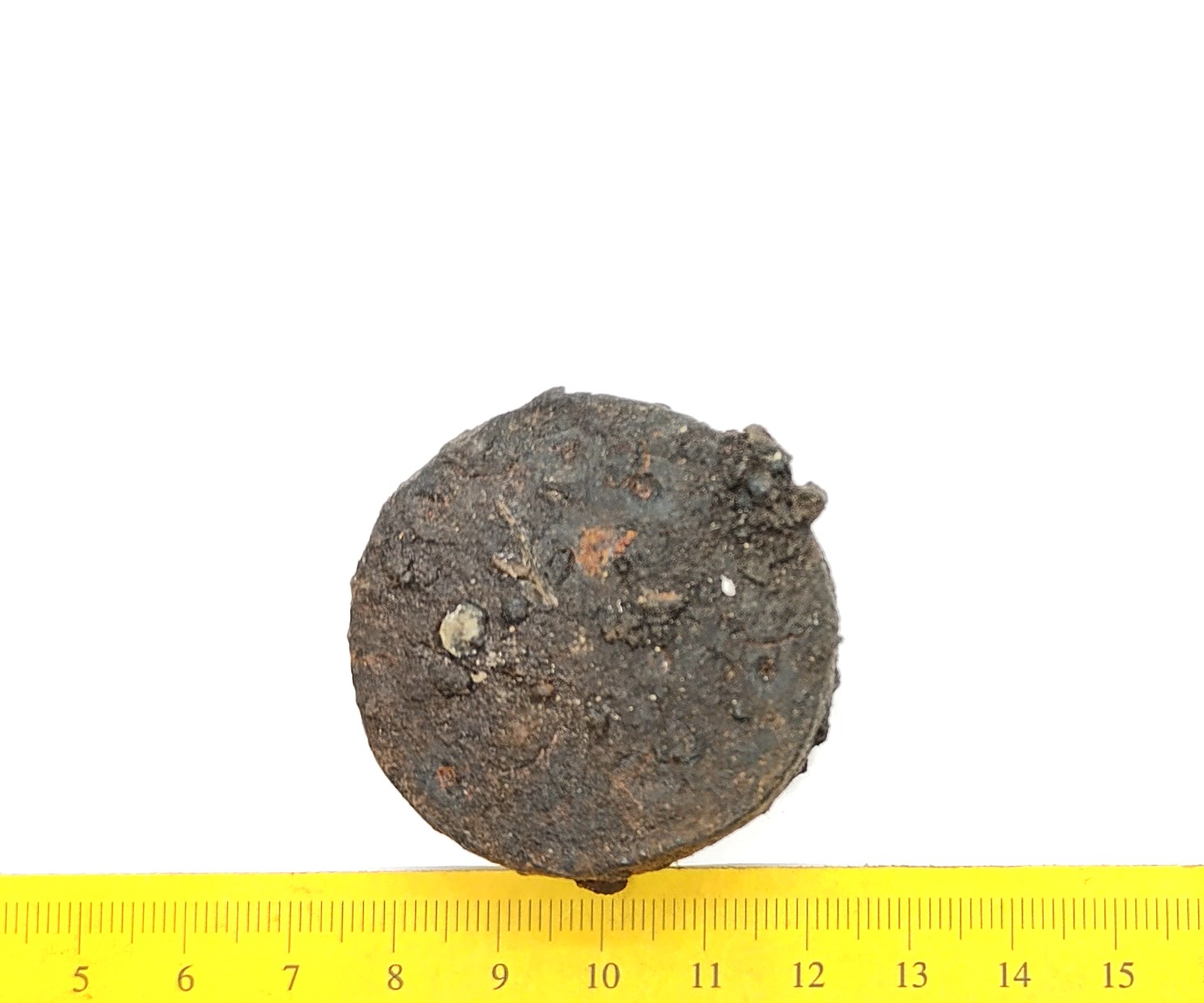
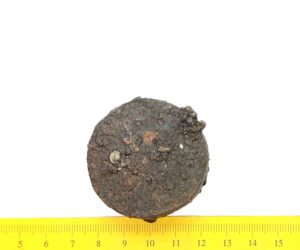
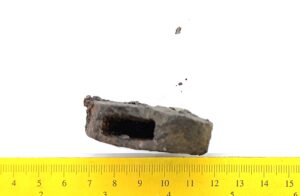 Disk-shaped pommel, iron. Such pommels can be dated mainly to the second half of the 12th century and to the whole 13th century in Latvia and likely also in Saaremaa. In western Europe, pommels with a similar shape are known from earlier periods. Whilst disk-shaped pommels found in Latvia and Estonia have been linked to the Crusades, many have been found in local burials including stone graves with cremations in Saaremaa and inhumation burials in Latvia. One such pommel has also been found from Mārtiņsala fort located in the lower reaches of the river Daugava (Mägi 2002, 87; Tomsons 2012, 148−152).
Literature:
Mägi, M. 2002. At the Crossroads of Space and Time. Graves, Changing Society and Ideology on Saaremaa (Ösel), 9th–13th centuries AD. (CCC papers, 6.) Estonian Academy of Sciences, Institute of History, Tallinn / Gotland University College, Centre for Baltic Studies, Gotland.
Tomsons, A. 2018. Zobeni Latvijas teritorijā no 7. līdz 16. gadsimtam. (Latvijas Nacionālā Vēstures Muzeja raksti, 27.) Latvijas Nacionālais vēstures muzejs, Rīga.
Century:
12-13
Discovery code:
AI 3884: 5233
Viltina
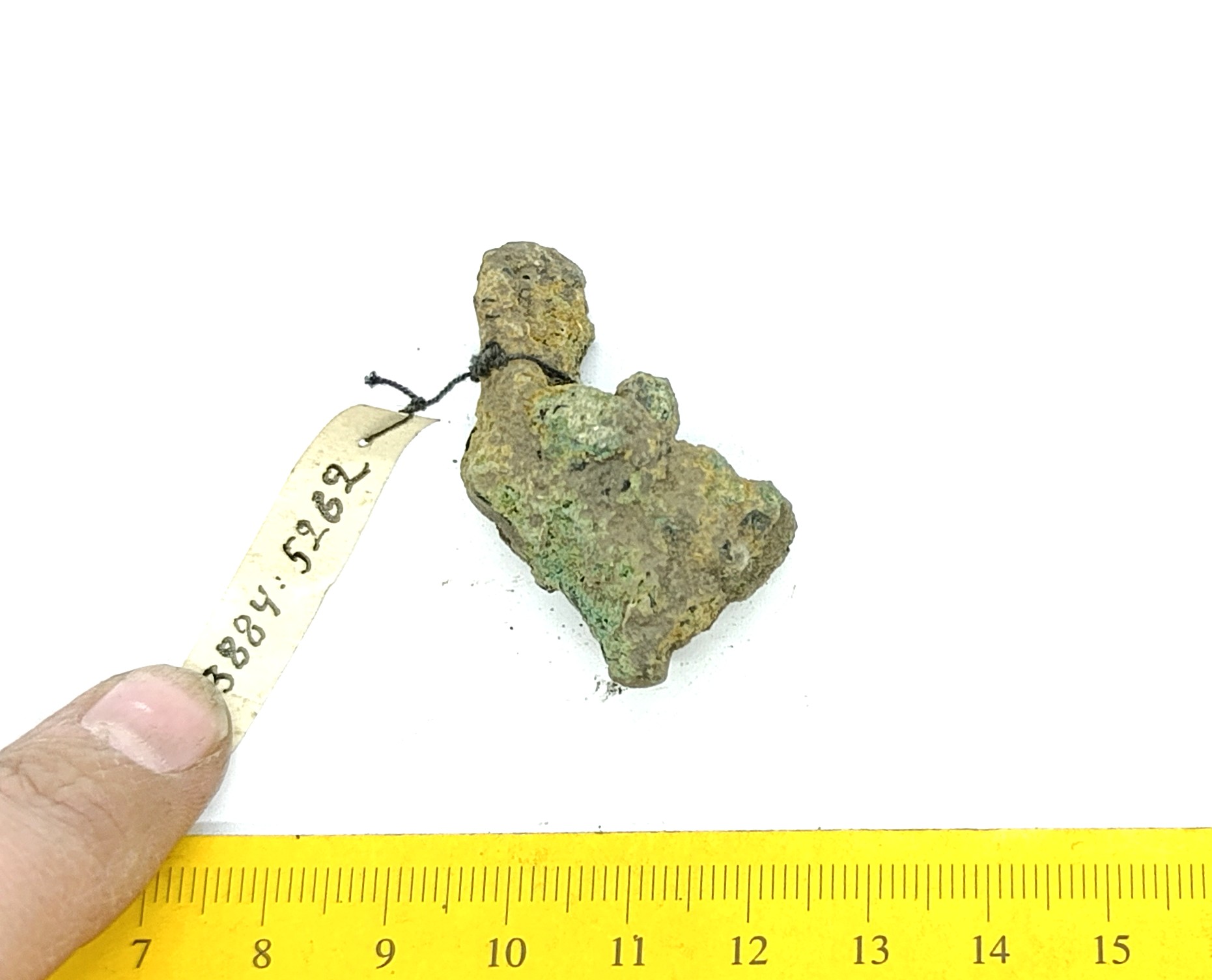
Sword scabbard end fragment, copper alloy. Probably from a chape type of the 12th–13th century (see, for example, Kazakevičius 1998).
Century:
12-13
Discovery code:
AI 3884: 5262
 Mõõgatupe otsiku katke, vasesulam. Tõenäoliselt mõnest 12.-13. sajandi otsikutüübist (vt näiteks Kazakevičius 1998).
Literature:
Kazakevičius, V. 1998. Iš vėlyvojo geležies amžiaus baltų ginklų istorijos (kalavijų makštų galų apkalai). – Lietuvos Arceologija, 15, 287-332.
Century:
12-13
Discovery code:
AI 3884: 5262

