
Database
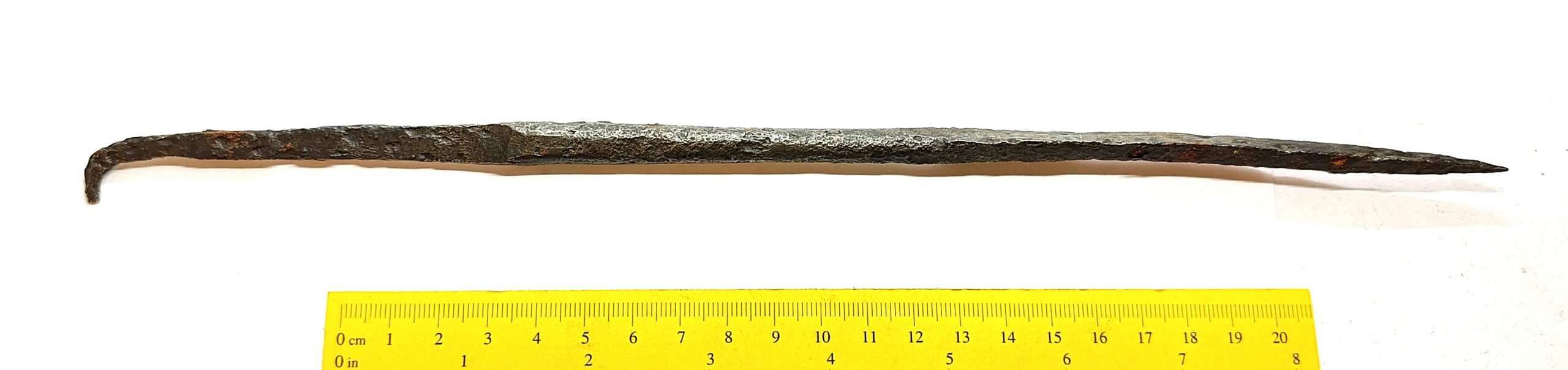
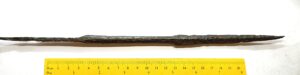
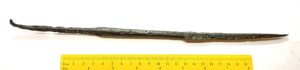 Javelin head, iron. With a long neck and a narrow blade. Brūzis type B2, which can be dated to the 13th–14th centuries, although some variants of this type extend up to the 16th century (Brūzis 2016, 124–125, 281). In this case, it is most likely a 13th-century spearhead.
Literature:
Brūzis, R. 2016. Tuvcīņas ieroči Latvijā 14.–16. gadsimtā. – Rīga: Latvijas vēstures institūta apgāds.
Century:
13
Discovery code:
AI 3884: 5382
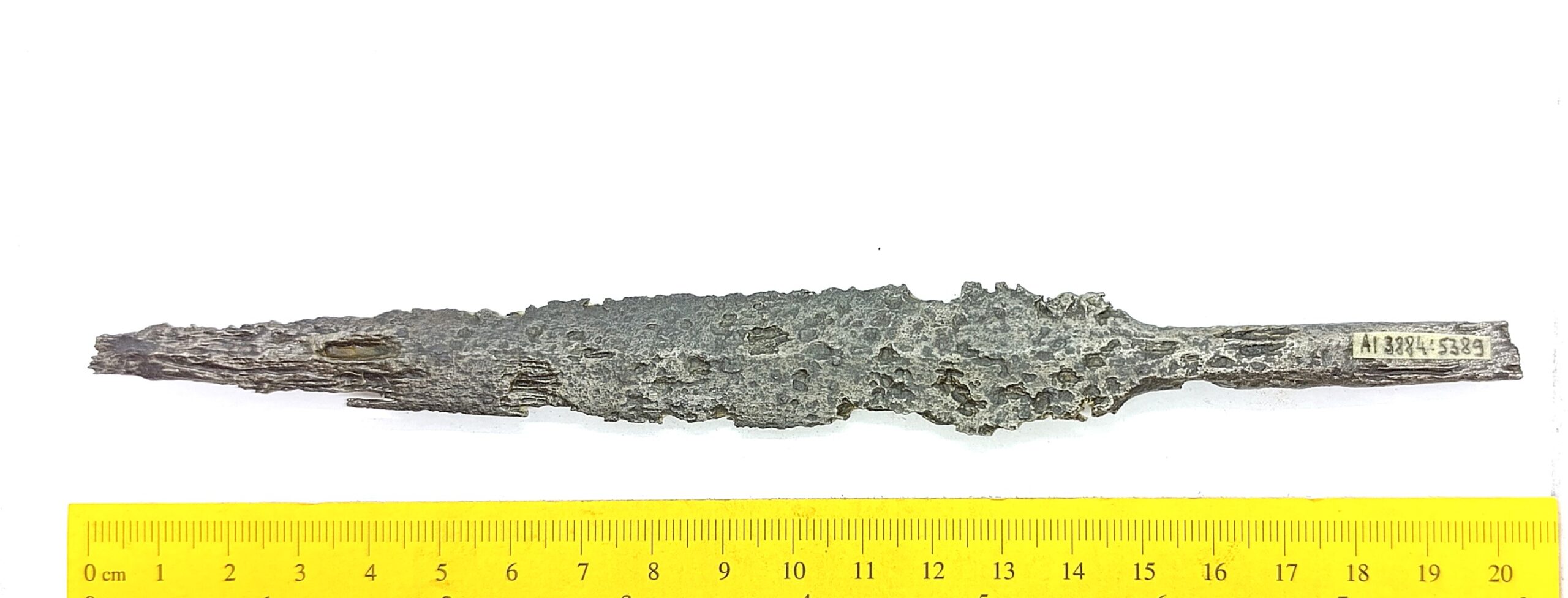
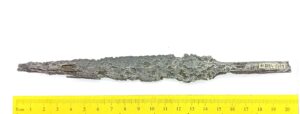
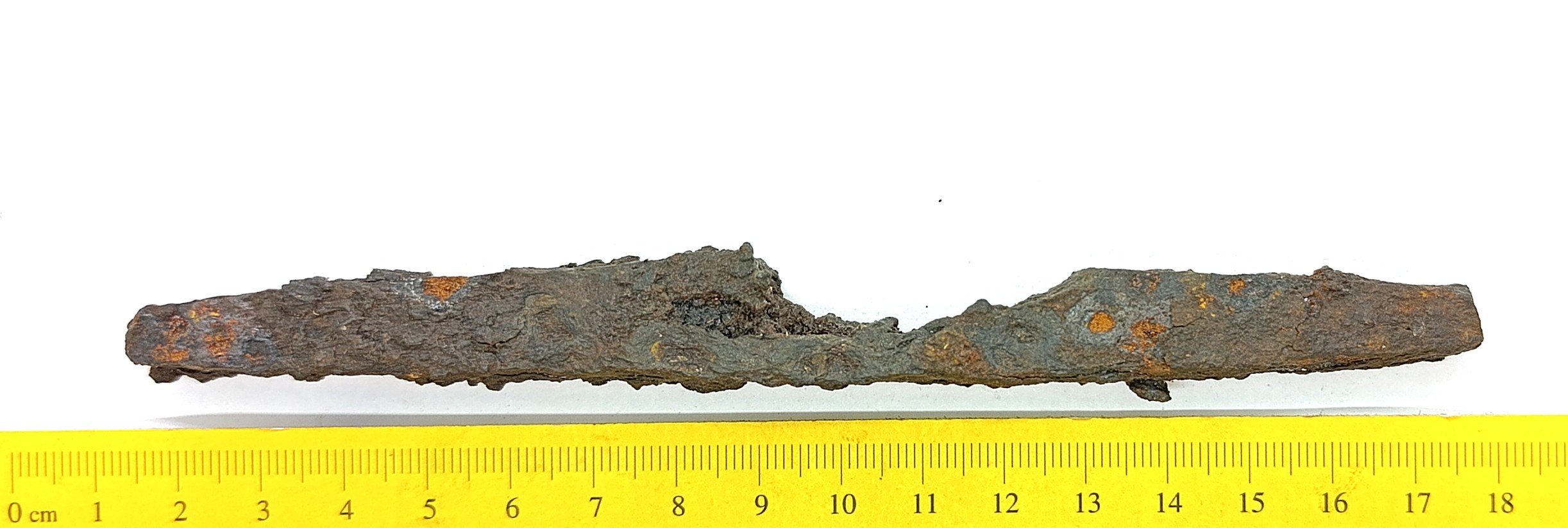
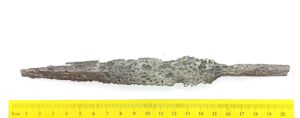 Tanged javelin head, iron. The neck is twisted. Similar javelin heads have been found in Saaremaa both in stone graves with cremation burials (e.g. the Rahu grave; Mägi 2002, Pl. 76:1, 83:4) and at hillforts (Pöide). Similar javelin heads in Latvia have been classified by Brūzis as type B1 and dated mainly to the 14th century (Brūzis 2016, 120, 280), although based on the find contexts a dating to the 13th century cannot be excluded. Judging by the find context and blade shape, it most likely belongs to the very end of the 12th century or to the 13th century.
Literature:
Mägi, M. 2002. At the Crossroads of Space and Time. Graves, Changing Society and Ideology on Saaremaa (Ösel), 9th–13th centuries AD. Tallinn: Ajaloo Instituut, Tallinn/Center of Baltic Studies, Gotland.
Brūzis, R. 2016. Tuvcīņas ieroči Latvijā 14.–16. gadsimtā. – Rīga: Latvijas vēstures institūta apgāds.
Century:
13
Discovery code:
AI 3884: 5389
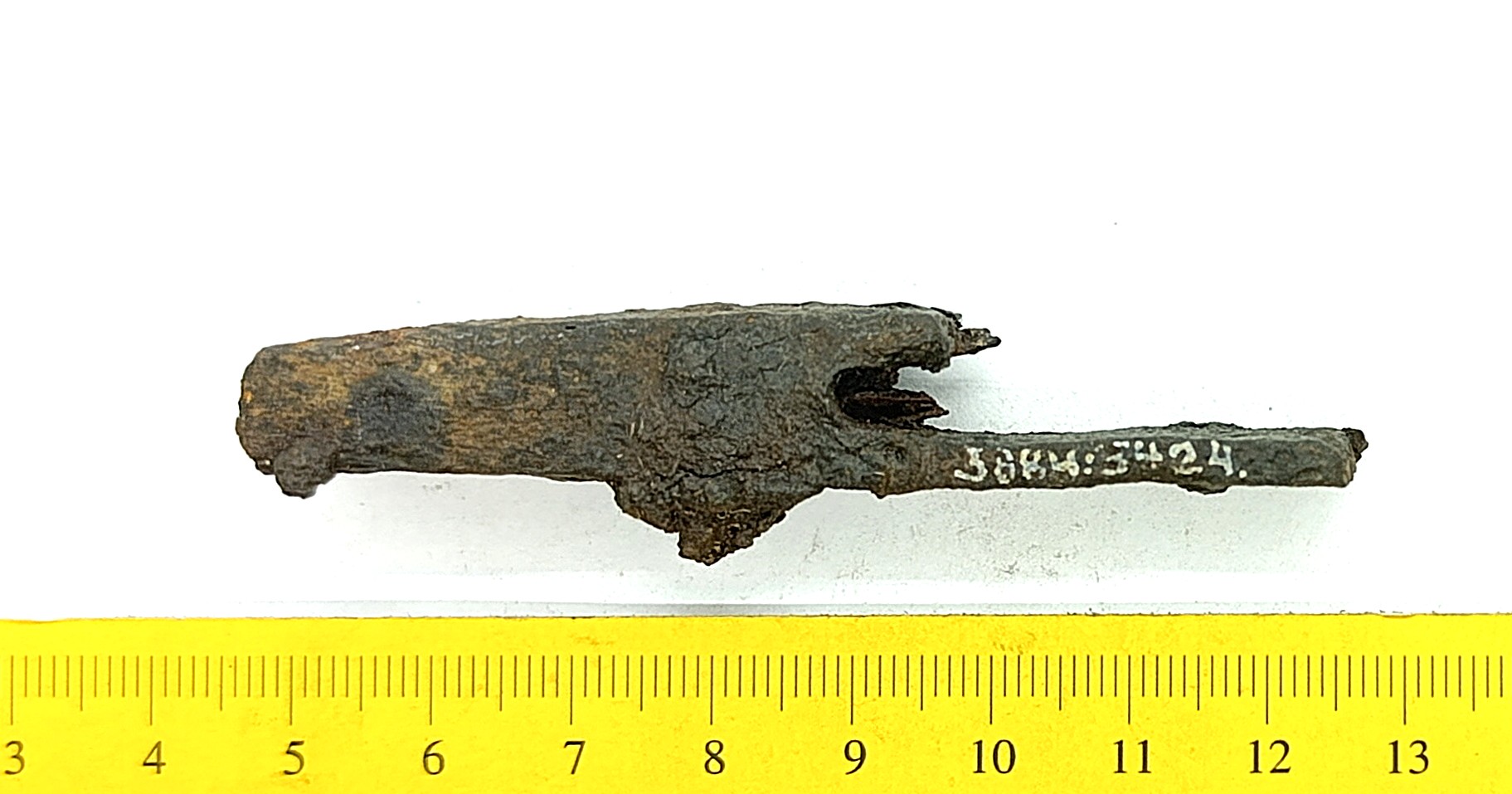
 Hilt guard, iron. Long straight guards in Latvia are dated, according to the shape of the pommel, from the second half of the 12th century to the end of the 13th century, sometimes to even later period (Tomsons 2018, 109-115).
Literature:
Tomsons, A. 2018. Zobeni Latvijas teritorijā no 7. līdz 16. gadsimtam. Latvijas nacionālā vēstures muzeja raksti nr. 27. Rīga.
Century:
12-13
Discovery code:
AI 3884: 5395
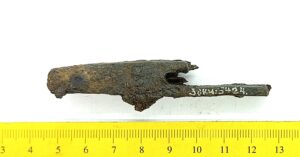 Hilt guard, iron. Broken in half. Long, straight guards were widespread during the second half of the 12th century, in the 13th century and later (e.g. Tomsons 2018, 109-132). Occur with different pommels.
Literature:
Tomsons, A. 2018. Zobeni Latvijas teritorijā no 7. līdz 16. gadsimtam. Latvijas nacionālā vēstures muzeja raksti nr. 27. Rīga.
Century:
12-13
Discovery code:
AI 3884: 5424
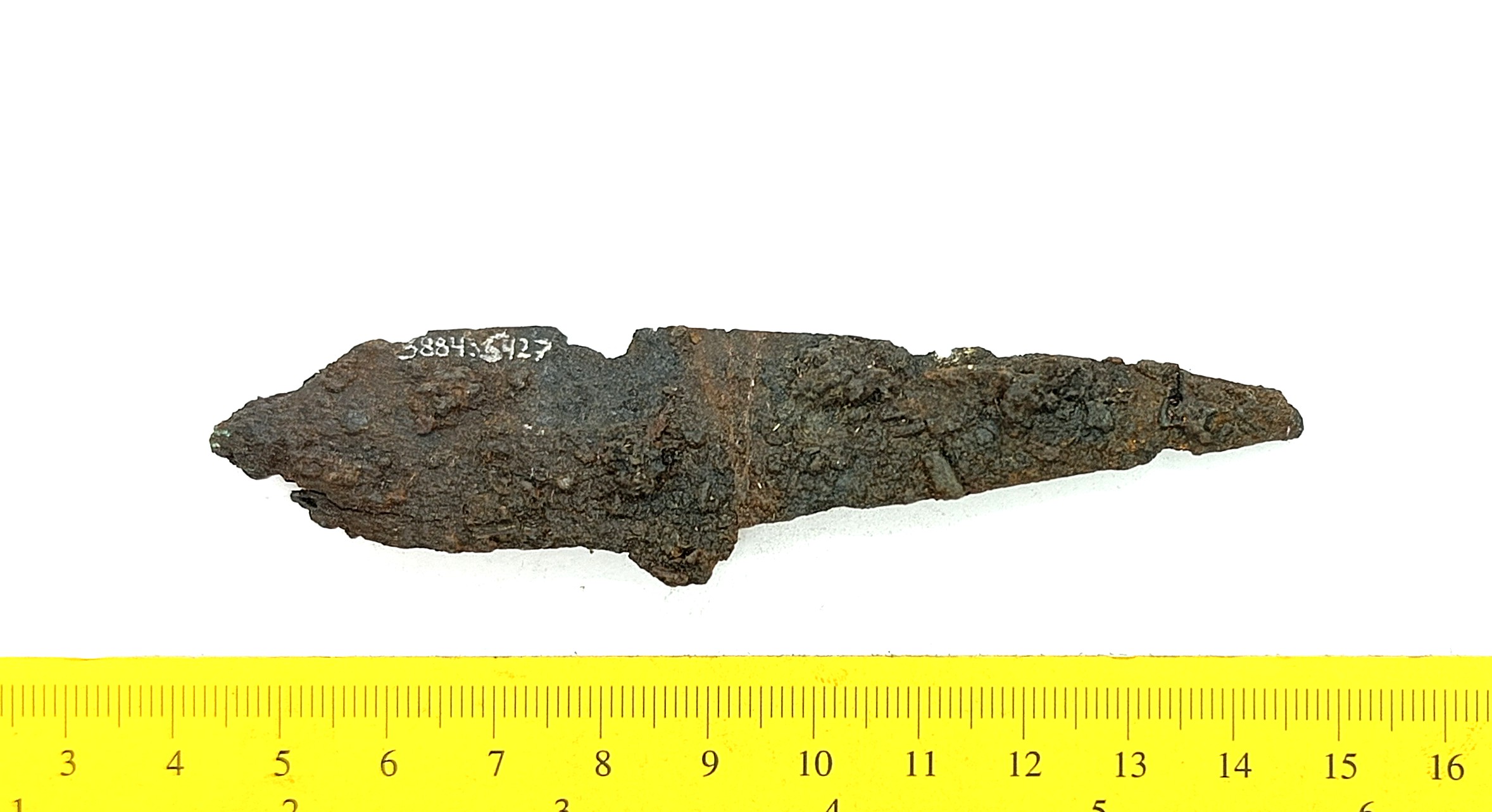
 Spearhead’s leaf-shaped blade, iron. Such spearheads were probably a further development of Petersen type G spearheads with curved blade edges. Such spearheads are abundant in stone graves in Saaremaa, sometimes also in probable complexes (e.g. in Käku cemetery, Mägi 2002, Pl. 14:6). In Latvia they were widespread mainly in the Livonian area and occasionally also in Courland, and they are dated primarily to the 11th century, possibly also to the first half of the 12th century (Atgāzis 2019, 55–57; Zariņa 2006, figs. 157–158, 174, 203).
Literature:
Mägi, M. 2002. At the Crossroads of Space and Time. Graves, Changing Society and Ideology on Saaremaa (Ösel), 9th–13th centuries AD. Tallinn: Ajaloo Instituut, Tallinn/Center of Baltic Studies, Gotland. Loe kogu teost: siin. Arheoloogiliste leidude joonised on leitavad: siin
Zariņa, A. 2006. Salaspils Laukskolas kapulauks 10.–13. gadsimts. Rīga: Latvijas Vēstures Institūta Apgāds.
Atgāzis, M. 2019. Tuvcīņas ieroči Latvijā 10.–13. gadsimtā. Latvijas vēstures institūta apgāds. Rīga.
Century:
11-12
Discovery code:
AI 3884: 5427
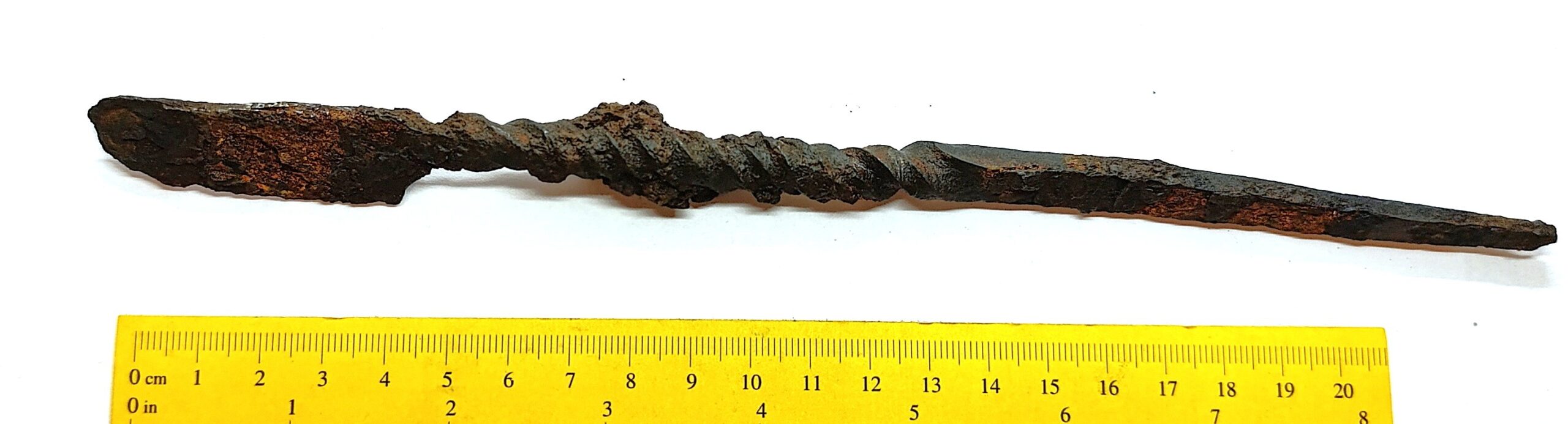
Javelin head, iron. With a knife-shaped blade, and a twisted neck section. Such javelin heads were especially characteristic for Saaremaa and coastal Estonia, but they are also found in surrounding areas. Although it has been suggested that such javelin heads came into use already at the end of the 11th century (Peets & Valt 2011), they nevertheless seem to be associated rather with the second half of the 12th century and the 13th century (Mandel 2017, 73). Among other contexts, they occur in 13th-century inhumation burials, for example at Pada in northern Estonia.
Literature:
Peets, J. & Valt, J. 2011. Ühest rauaaja lõpu relvast Saarmaal, mandri-Eestis ja naaberpiirkondades. – Saaremaa Muuseum, kaheaastaraamat 2009–2010 (3–29). Saaremaa Muuseum, Kuressaare.
Mandel, M. 2017. Maidla muinaskalmistu saladused. Eesti Ajaloomuuseum, Tallinn.
Century:
12-13
Discovery code:
AI 3884: 5443
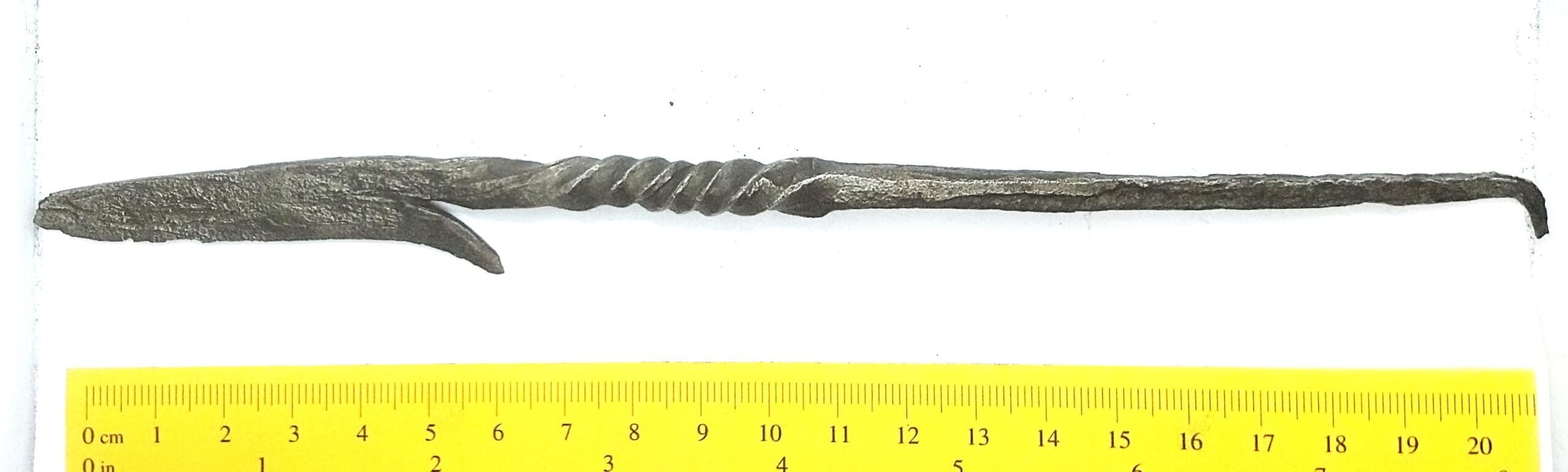
Javelin head, iron. With a knife-shaped blade, a twisted neck section, and a tang. Such javelin heads were especially characteristic for Saaremaa and coastal Estonia during the 12th–13th centuries, but they are also found in surrounding areas. Although it has been suggested that such javelin heads came into use already at the end of the 11th century (Peets & Valt 2011), they nevertheless seem to be associated rather with the second half of the 12th century and the 13th century (Mandel 2017, 73). Among other contexts, they occur in 13th-century inhumation burials.
Literature:
Peets, J. & Valt, J. 2011. Ühest rauaaja lõpu relvast Saarmaal, mandri-Eestis ja naaberpiirkondades. – Saaremaa Muuseum, kaheaastaraamat 2009–2010 (3–29). Saaremaa Muuseum, Kuressaare.
Mandel, M. 2017. Maidla muinaskalmistu saladused. Eesti Ajaloomuuseum, Tallinn.
Century:
12-13
Discovery code:
AI 3884: 546
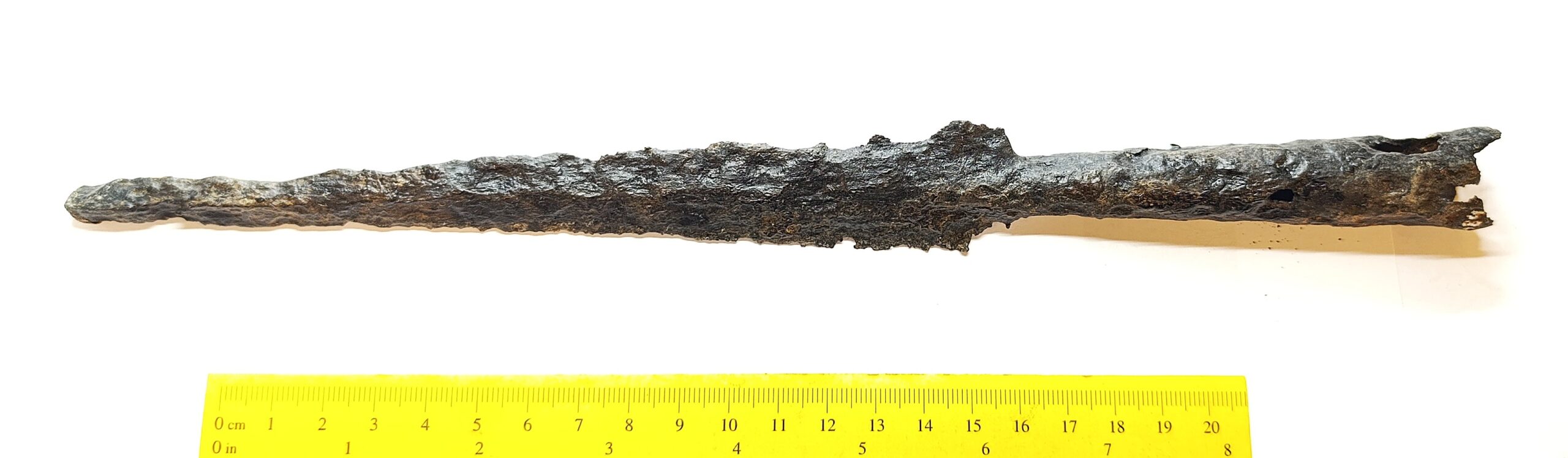
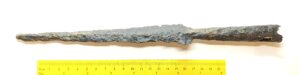 Spearhead, iron. With a long, slender, almost triangular blade. Such spearheads were widespread in stone graves with cremation burials in Saaremaa and western Estonia, where they were previously dated to a longer period (e.g. Mägi 2002, Pl. 41:4, 68:1), but more recently to the second half of the 12th century and the first half of the 13th century (Mandel 2017, 73). Although such spearheads have not been classified as a separate type in Latvia, they are likewise dated in Livonian burials in the lower reaches of the Daugava River to the second half of the 12th century and the first half of the 13th century (Zariņa 2006, 172, burials 429–430; see also Atgāzis 2019, 51–55).
Literature:
Mägi, M. 2002. At the Crossroads of Space and Time. Graves, Changing Society and Ideology on Saaremaa (Ösel), 9th–13th Centuries AD. (CCC Papers, 6.) Tallinn.
Zariņa, A. 2006. Salaspils Laukskolas kapulauks 10.–13. gadsimts. Rīga: Latvijas Vēstures Institūta Apgāds.
Mandel, M. 2017. Maidla muinaskalmistu saladused. Eesti Ajaloomuuseum, Tallinn.
Atgāzis, M. 2019. Tuvcīņas ieroči Latvijā 10.–13. gadsimtā. Latvijas vēstures institūta apgāds. Rīga.
Century:
12-13
Discovery code:
AI 3884: 5484
Century:
11-13
Discovery code:
AI 3884: 5485

