
Database
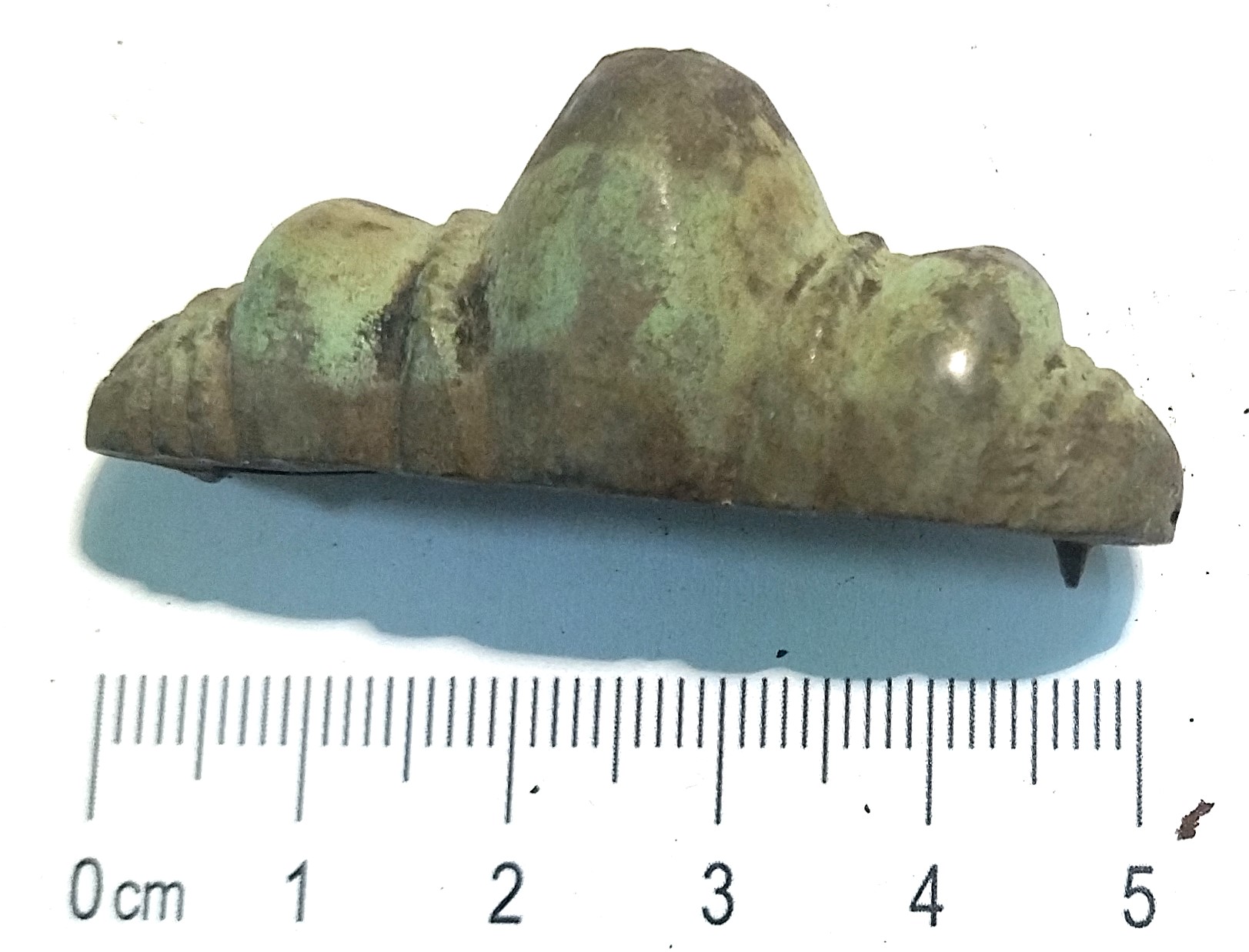
 Pommel, copper alloy. The later variant of Petersen´s Type T swords, which normally is made of iron. Petersen and several ohter researchers date the T-type sword hilts to the second half of the 10th until the beginning of the 11th century (Moilanen 2015, 253). In the lands east of the Baltic Sea, such hilts were also widespread in the 11th-12th centuries, according to some scholars even as late as in the 13th century (Tomsons 2018, 59, 80-94). They are mainly represented by fragmentary finds in cremation burials, as well as at archaeological sites that have been destroyed or not properly analysed (Kazakevičius 1997, 123; Tomsons 2018, 142). In Estonia, they can mainly be dated to the 11th-12th centuries.
Literature:
Kazakevičius, V. 1997. On One Type of Baltic Sword of the Viking Period. – Archaeologica Baltica, 2, 117–132.
Moilanen, M. 2015. Marks of Fire, Value and Faith. Swords with Ferrous Inlays in Finland during the Late Iron Age (ca. 700–1200 AD). Suomen Keskiajan Arkeologian Seura: Turku.
Tomsons, A. 2018. Zobeni Latvijas teritorijā no 7. līdz 16. gadsimtam. (Latvijas Nacionālā Vēstures Muzeja raksti, 27.) Latvijas Nacionālais vēstures muzejs, Rīga.
Century:
11-12
Discovery code:
AI 3884: 549
Viltina
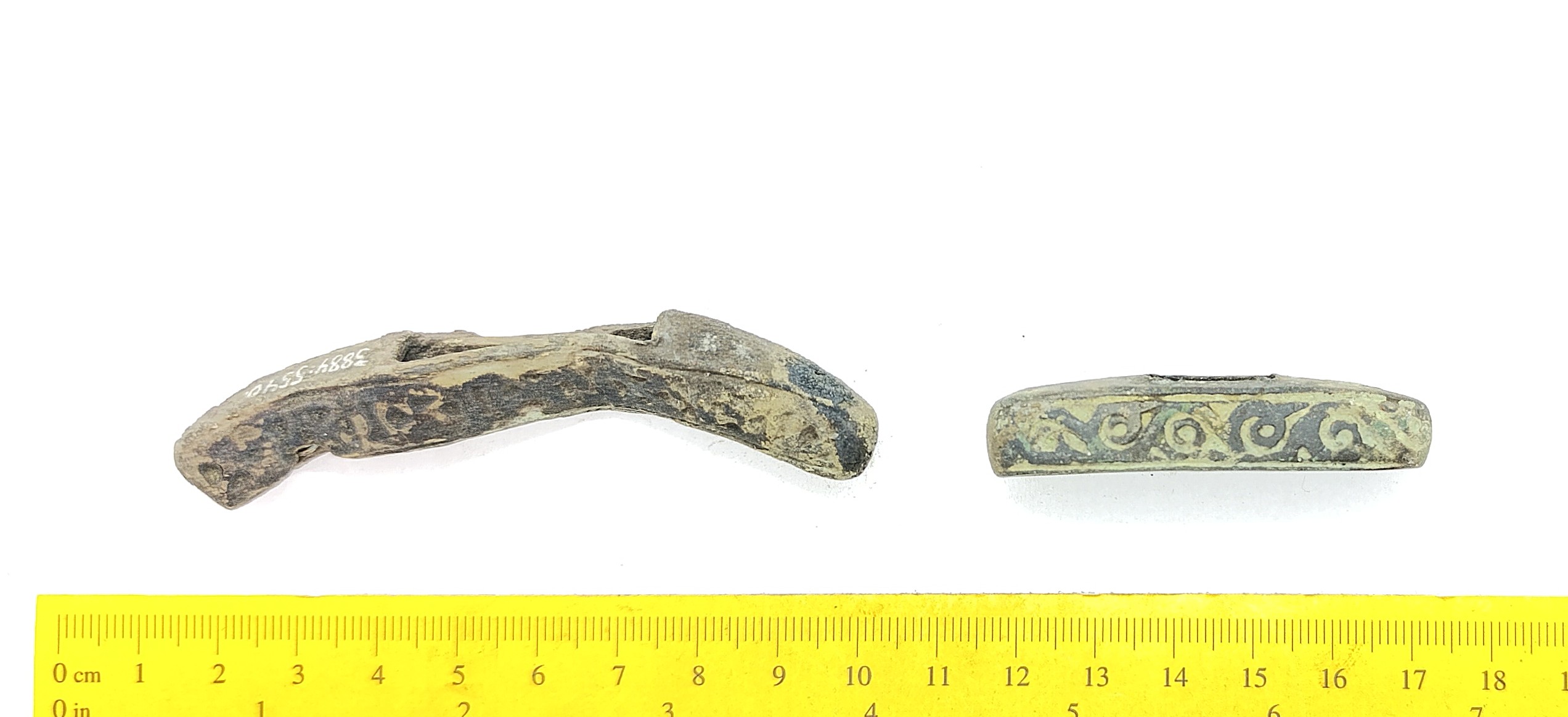
The lower part of sword pommel and guard of hilt, copper alloy.
Century:
12-13
Discovery code:
AI 3884: 5540
 The lower part of sword pommel and guard of hilt, copper alloy. The guard of hilt is partly melted. Mati Mandel has called such copper alloy sword hilts the Couronian Type hilts. In Estonia, they date to the 12th century or the early 13th century (Mandel 2017, 71, Pl. XX: AM 1123: 55; 580: 4024). The sword hilt parts are decorated with plant motifs.
Literature:
Mandel, M. 2017. Maidla muinaskalmistu saladused. Eesti Ajaloomuuseum, Tallinn.
Century:
12-13
Discovery code:
AI 3884: 5540
Century:
11-13
Discovery code:
AI 3884: 5592
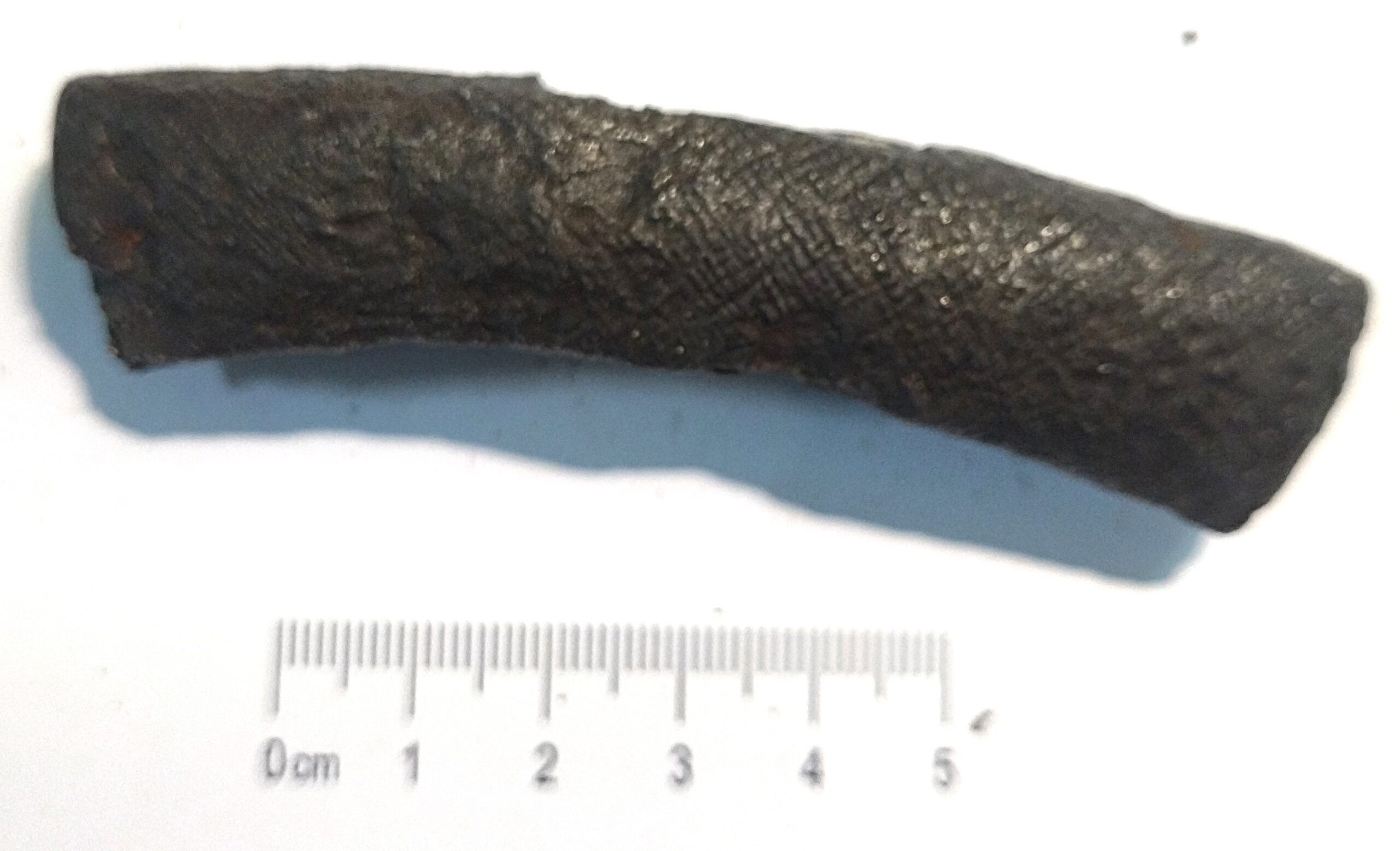
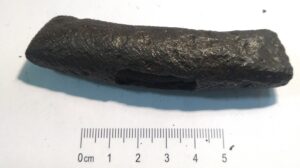 Hilt guard, iron, with silver inlay. Petersen’s T-type, decorated with Urnes style. Petersen and several other researchers date the T-type to the second half of the 10th century or the beginning of the 11th century (Moilanen 2015, 253). In the eastern coasts of the Baltic Sea, similar sword hilts have, however, also been used later (Tomsons 2018, 59, 80-94). The Urnes Style was widespread 1010-1130 AD (Jets 2013, 91-97), which dates the hilt guard most likely to the 11th century.
Literature:
Jets, I. 2013. Lahingu maod. Skandinaavia 9.-11. sajandi sajandi kunstistiilid Eesti arheoloogilistel leidudel. Tallinn: Tallinna Ülikooli Kirjastus.
Moilanen, M. 2015. Marks of Fire, Value and Faith. Swords with Ferrous Inlays in Finland during the Late Iron Age (ca. 700–1200 AD). Suomen Keskiajan Arkeologian Seura: Turku.
Tomsons, A. 2018. Zobeni Latvijas teritorijā no 7. līdz 16. gadsimtam. Latvijas nacionālā vēstures muzeja raksti nr. 27. Rīga.
Century:
11
Discovery code:
AI 3884: 584
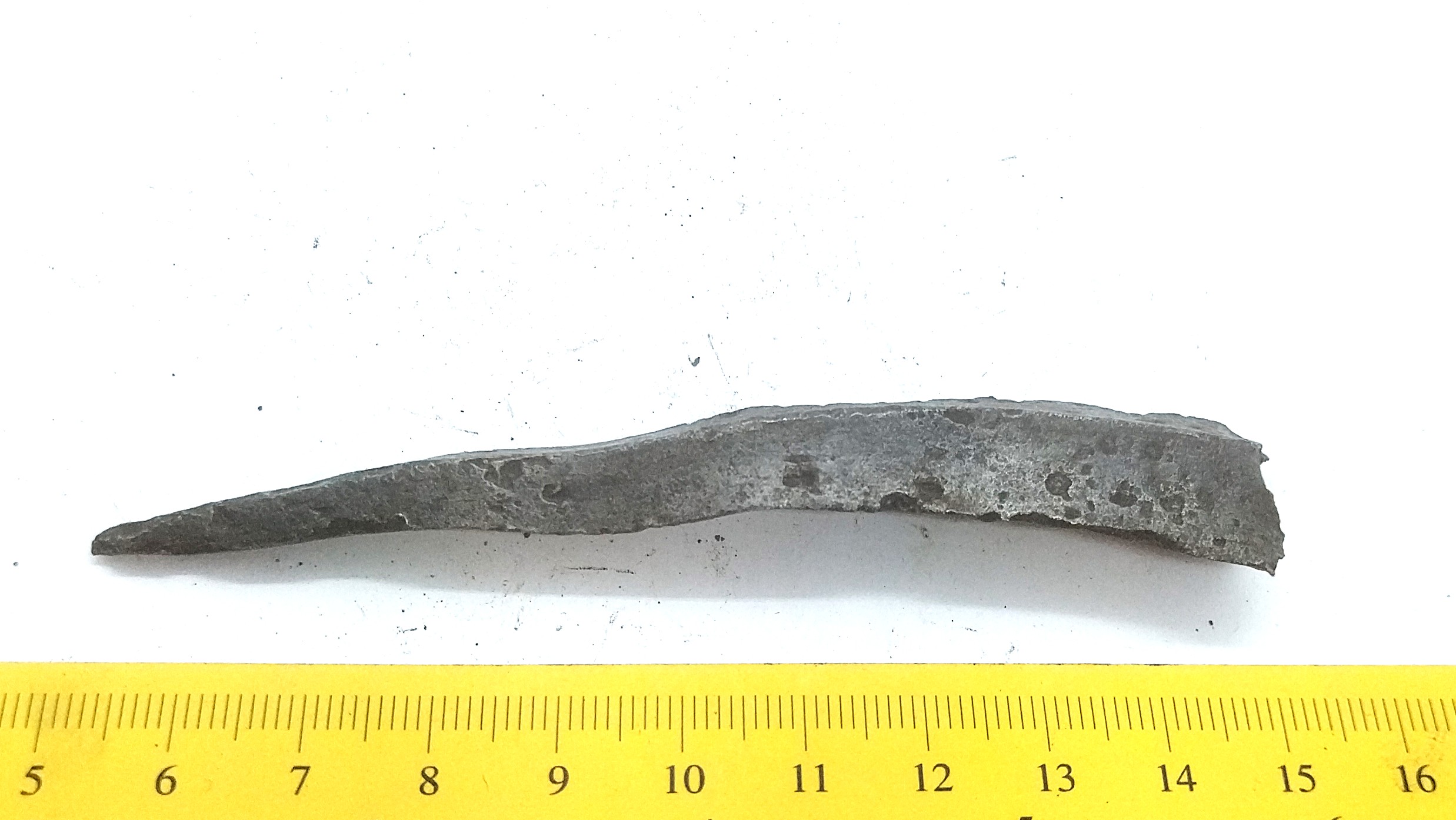
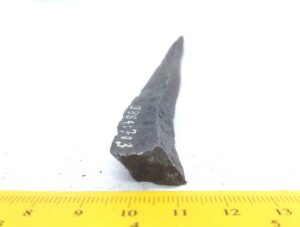
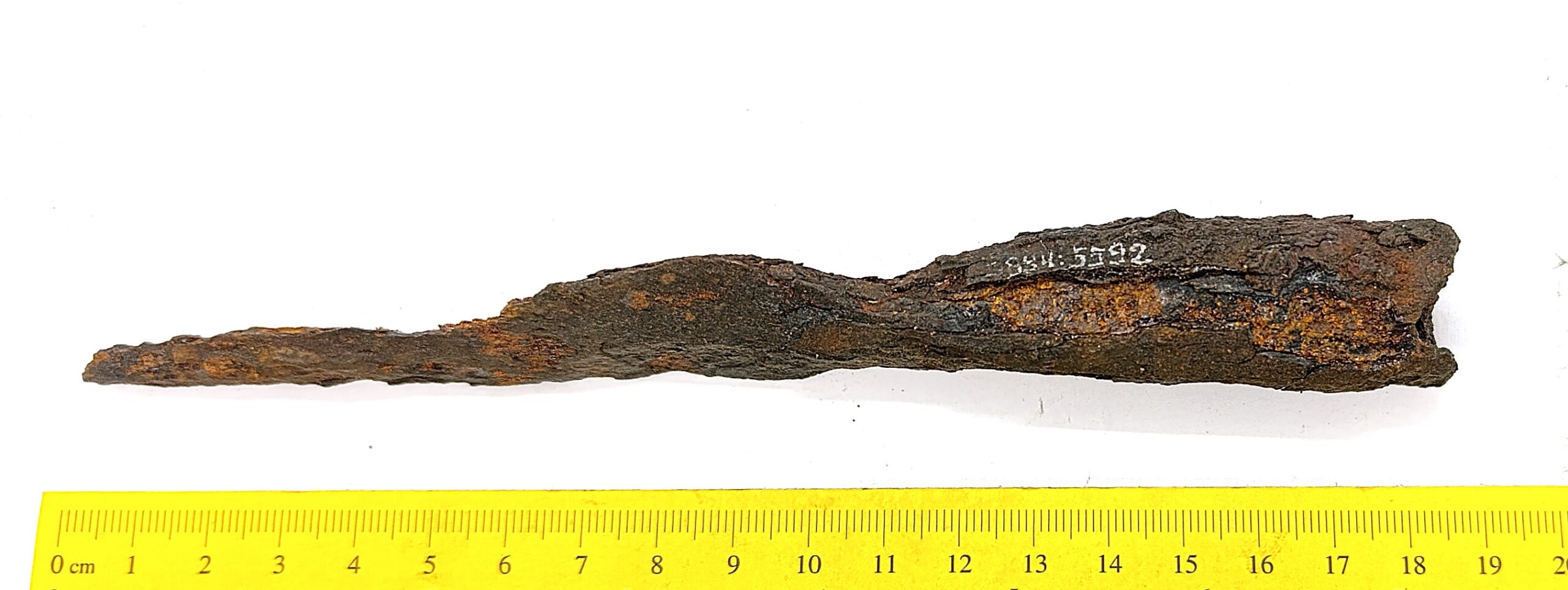
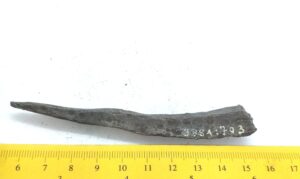 Spearhead fragment, iron. The end of the blade.
Century:
11-13
Discovery code:
AI 3884: 703
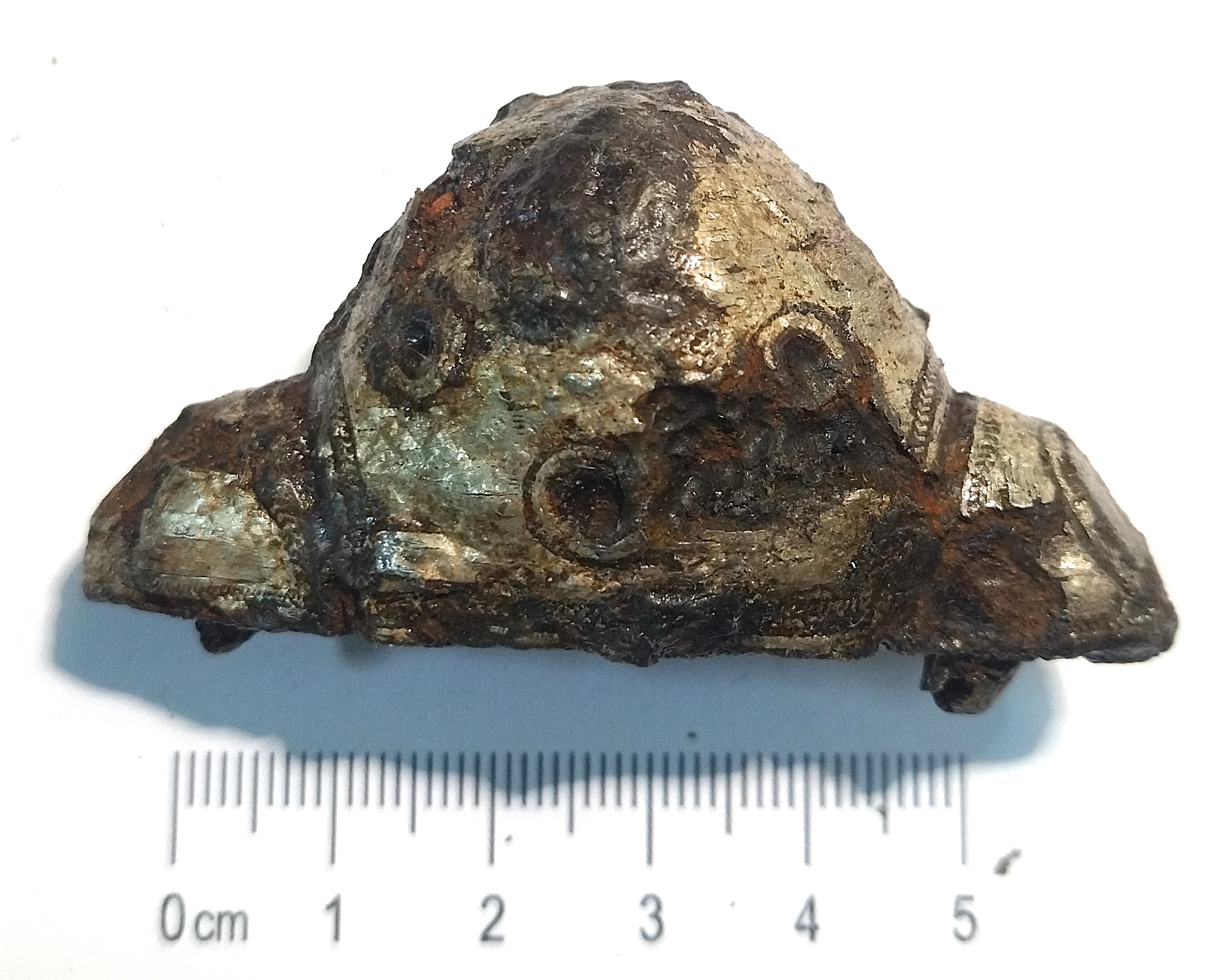
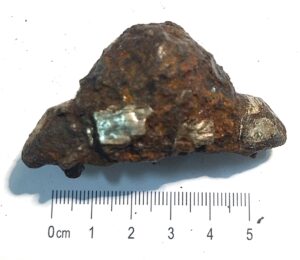
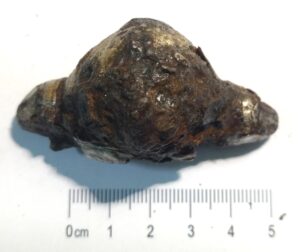 Pommel, iron with silver inlay. Petersen´s Type S sword which is dated to the 10th–11th centuries (Petersen 1919, 142–153). Such sword hilts are in Latvia found mainly in Livic areas and dated to the second half of the 11th century, or to the beginning of the 12th century (Tomsons 2018, 57−58). Decorated with concentric circles. Sword parts with similar ornaments have been found elsewhere in Estonia and are also known from Latvia and Lithuania (Jets, 2013, 110), where they are dated mainly to the 10th-11th centuries, sometimes also to the beginning of the 12th century (Tomsons 2018, 60-61).
Literature:
Petersen, J. 1919. De Norske Vikingesverd: en typologisk-kronologisk studie over vikingetidens vaaben. Kristiana.
Jets, I. 2013. Lahingu maod. Skandinaavia 9.-11. sajandi sajandi kunstistiilid Eesti arheoloogilistel leidudel. Tallinn: Tallinna Ülikooli Kirjastus.
Tomsons, A. 2018. Zobeni Latvijas teritorijā no 7. līdz 16. gadsimtam. Latvijas nacionālā vēstures muzeja raksti nr. 27. Rīga.
Century:
10-11
Discovery code:
AI 3884: 755
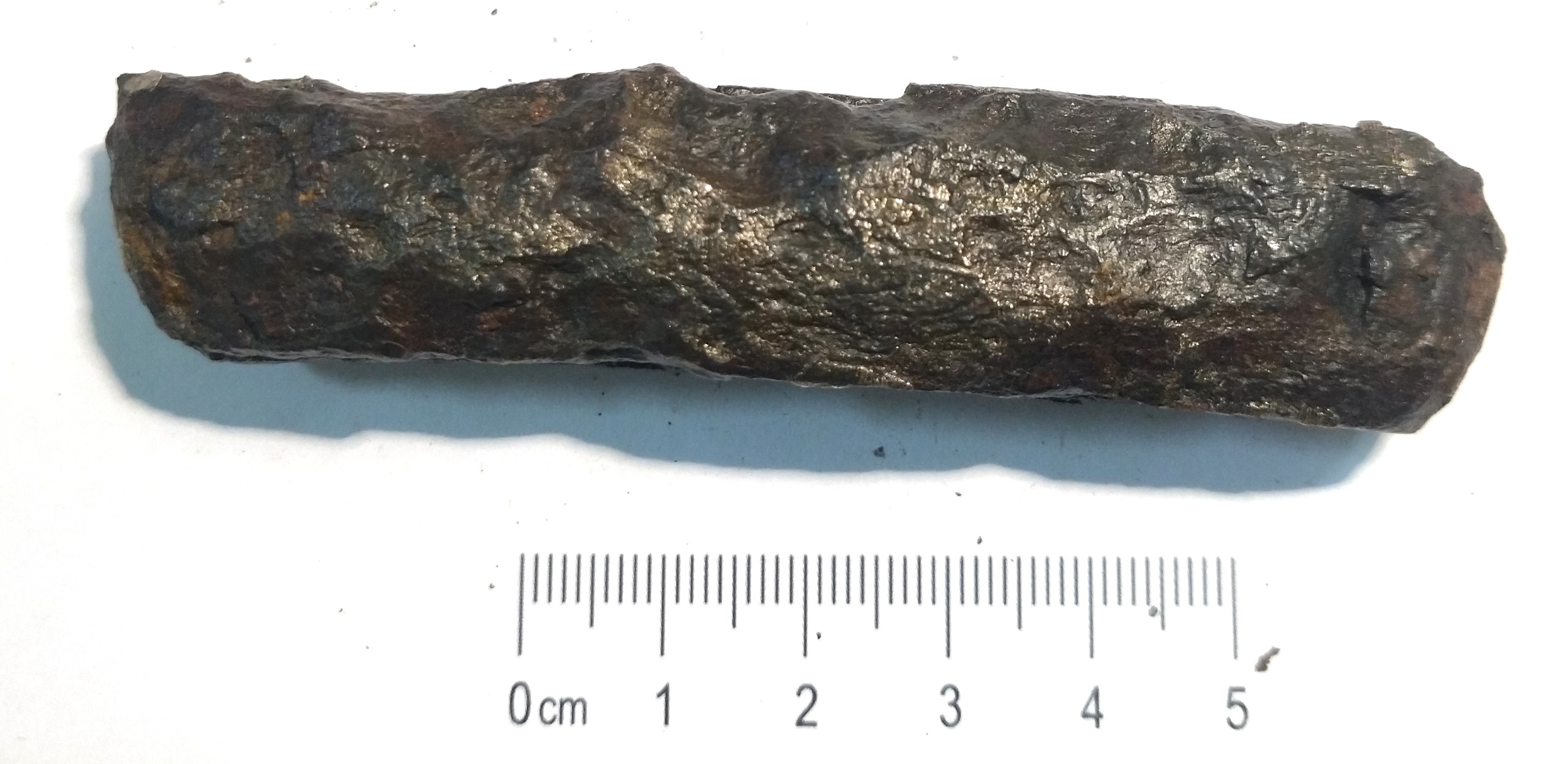
 Hilt guard, iron, with silver inlay. Petersen’s T-type, decorated with Urnes style. Petersen and several other researchers date the T-type to the second half of the 10th century or the beginning of the 11th century (Moilanen 2015, 253). In the eastern coasts of the Baltic Sea, similar sword hilts have, however, also been used later (Tomsons 2018, 59, 80-94). The Urnes Style was widespread 1010-1130 AD (Jets 2013, 91-97), which dates the hilt guard most likely to the 11th century.
Literature:
Jets, I. 2013. Lahingu maod. Skandinaavia 9.-11. sajandi sajandi kunstistiilid Eesti arheoloogilistel leidudel. Tallinn: Tallinna Ülikooli Kirjastus.
Moilanen, M. 2015. Marks of Fire, Value and Faith. Swords with Ferrous Inlays in Finland during the Late Iron Age (ca. 700–1200 AD). Suomen Keskiajan Arkeologian Seura: Turku.
Tomsons, A. 2018. Zobeni Latvijas teritorijā no 7. līdz 16. gadsimtam. Latvijas nacionālā vēstures muzeja raksti nr. 27. Rīga.
Century:
11
Discovery code:
AI 3884: 778
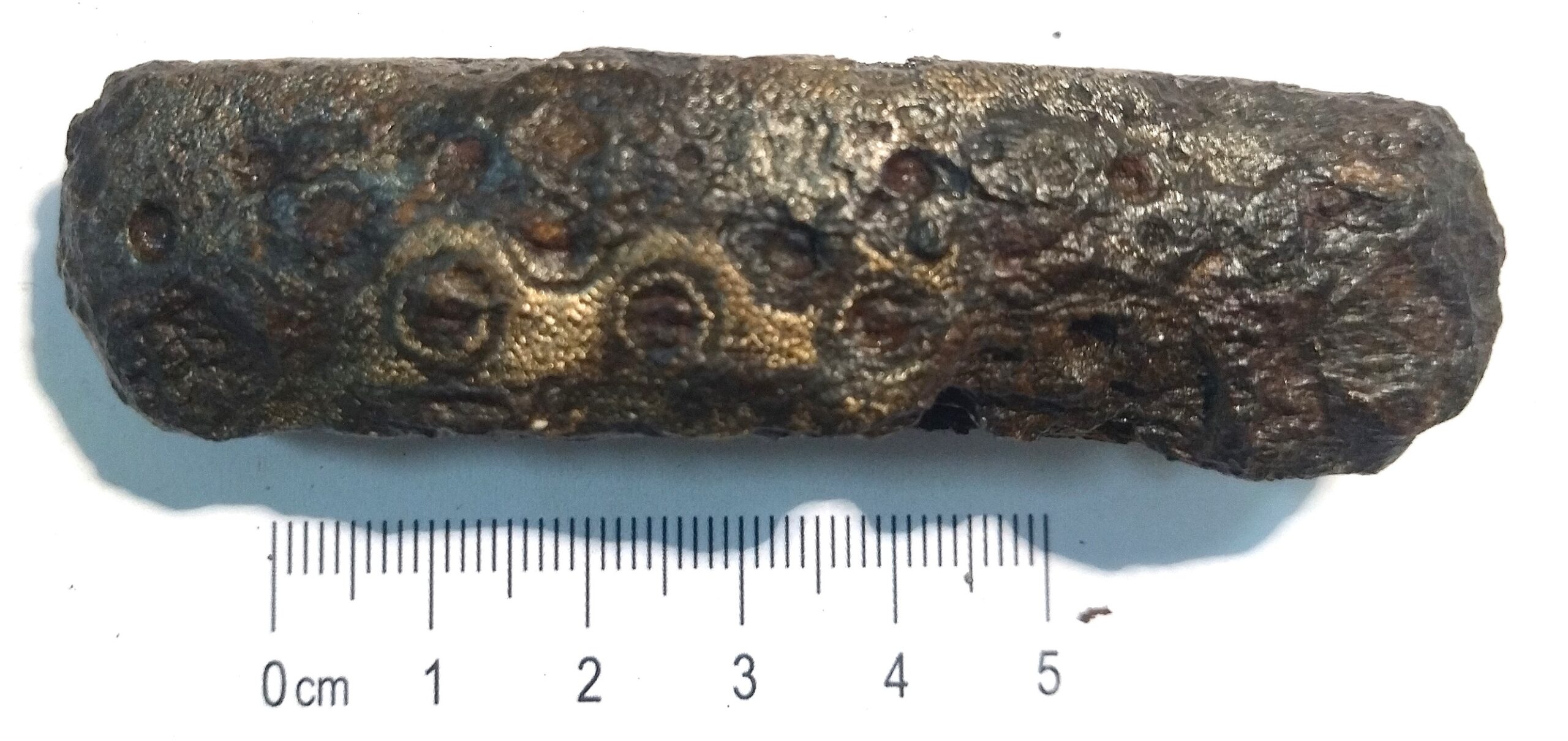
Viltina
The lower part of sword pommel, iron, with silver inlay.
Century:
10-11
Discovery code:
AI 3884: 780
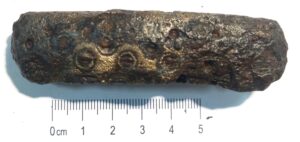
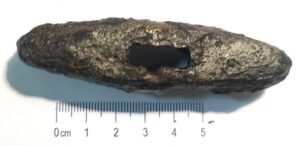
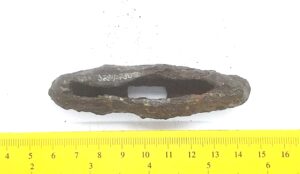 The lower part of sword pommel, iron, with silver inlay. Probably belongs to Petersen’s T-type, decorated with concentric circles. Sword parts with similar ornaments have been found elsewhere in Estonia and are also known from Latvia and Lithuania (Jets, 2013, 110). In Latvia, as elsewhere, they are dated mainly to the 10th-11th centuries, sometimes also to the beginning of the 12th century (Tomsons 2018, 60-61).
Literature:
Jets, I. 2013. Lahingu maod. Skandinaavia 9.-11. sajandi sajandi kunstistiilid Eesti arheoloogilistel leidudel. Tallinn: Tallinna Ülikooli Kirjastus.
Tomsons, A. 2018. Zobeni Latvijas teritorijā no 7. līdz 16. gadsimtam. Latvijas nacionālā vēstures muzeja raksti nr. 27. Rīga.
Century:
10-11
Discovery code:
AI 3884: 780
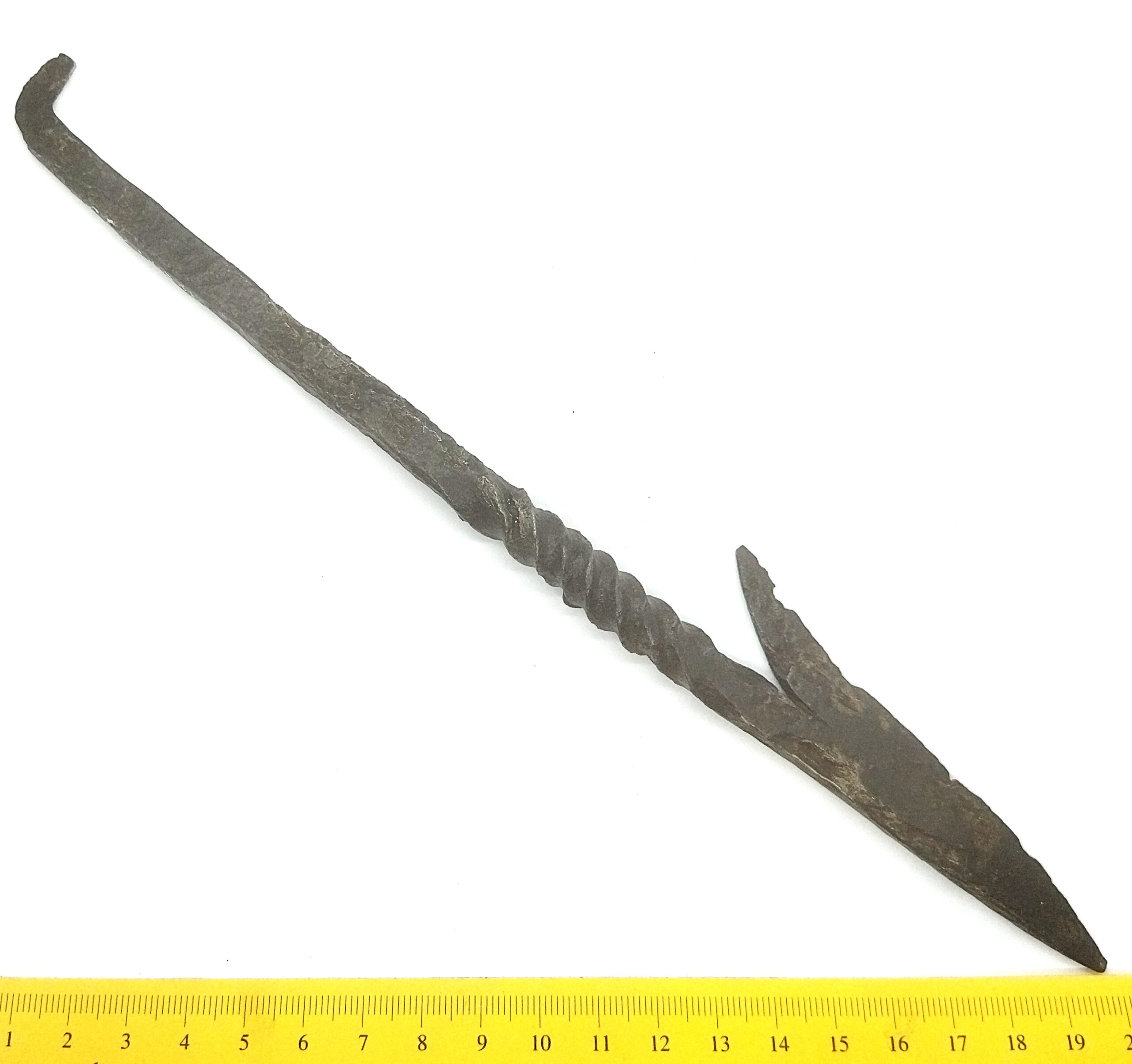
Javelin head, iron. With a knife-shaped blade, a twisted neck section, and a tang. Such javelin heads were especially characteristic for Saaremaa and coastal Estonia during the 12th–13th centuries, but they are also found in surrounding areas. Although it has been suggested that such javelin heads came into use already at the end of the 11th century (Peets & Valt 2011), they nevertheless seem to be associated rather with the second half of the 12th century and the 13th century (Mandel 2017, 73). Among other contexts, they occur in 13th-century inhumation burials.
Literature:
Peets, J. & Valt, J. 2011. Ühest rauaaja lõpu relvast Saarmaal, mandri-Eestis ja naaberpiirkondades. – Saaremaa Muuseum, kaheaastaraamat 2009–2010 (3–29). Saaremaa Muuseum, Kuressaare.
Mandel, M. 2017. Maidla muinaskalmistu saladused. Eesti Ajaloomuuseum, Tallinn.
Century:
12-13
Discovery code:
AI 3884: 793

