
Database
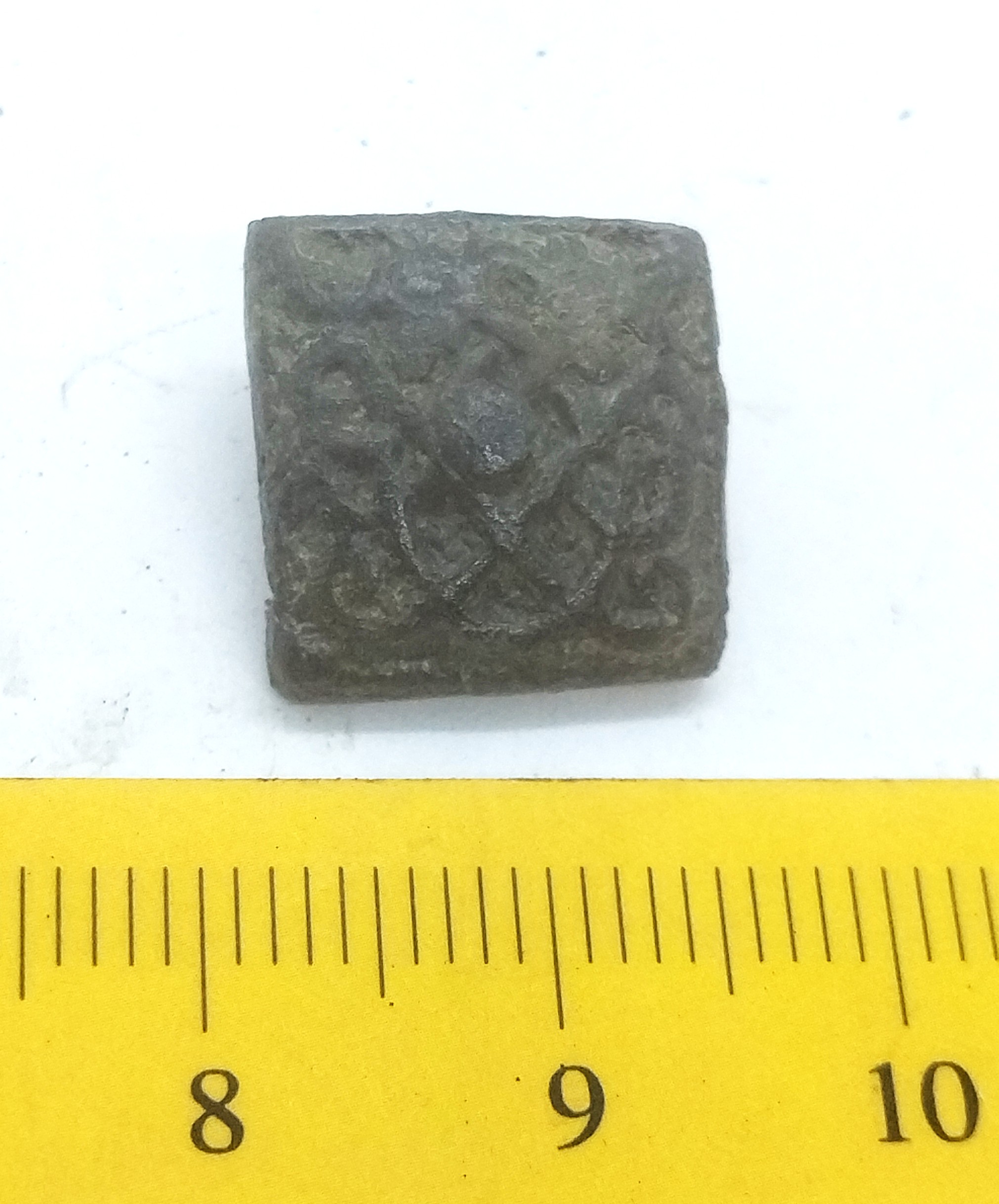
Square belt mounts, 2, copper alloy. Decorated in the Urnes style. Some similar examples have been found on Gotland (Thunmark-Nylén 1998, plate 140: 28c; Jets 2013, 160). Based on the Urnes style it could be dated to the second half of the 11th century to the beginning of 12th century (Jets, 2013).
Literature:
Jets, I. 2013. Lahingu maod. Skandinaavia 9.-11. sajandi sajandi kunstistiilid Eesti arheoloogilistel leidudel. Tallinn: Tallinna Ülikooli Kirjastus.
Thunmark-Nylén, L. 1998. Die Wikingerzeit Gotlands II, Typentafeln. Stockholm: Kungl.Vitterhets Historie och Antikvitets Akademien.
Century:
11-12
Discovery code:
AI 3884: 850
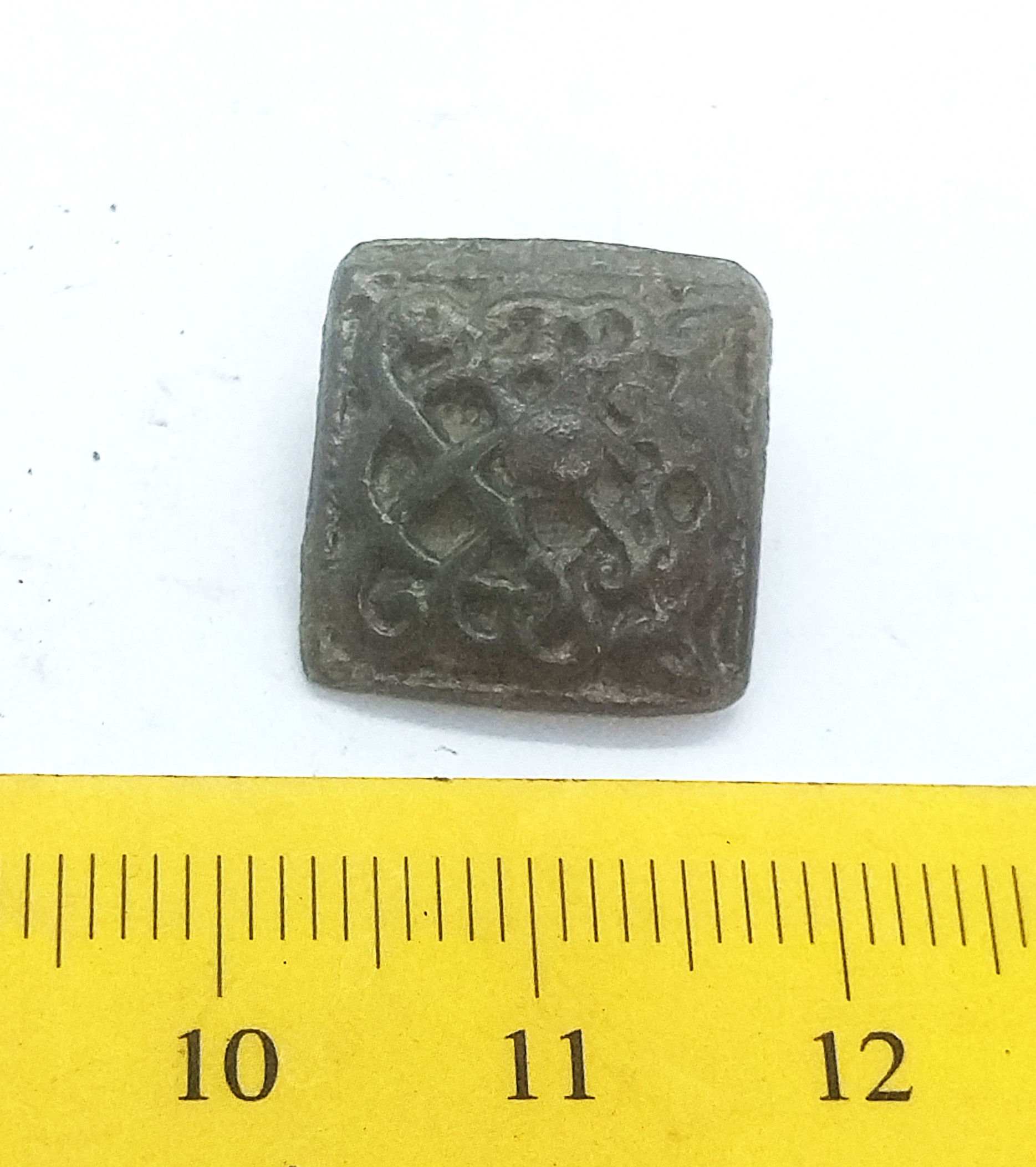
Square belt mounts, 2, copper alloy. Decorated in the Urnes style. Some similar examples have been found on Gotland (Thunmark-Nylén 1998, plate 140: 28c; Jets 2013, 160). Based on the Urnes style it could be dated to the second half of the 11th century to the beginning of 12th century (Jets, 2013).
Literature:
Jets, I. 2013. Lahingu maod. Skandinaavia 9.-11. sajandi sajandi kunstistiilid Eesti arheoloogilistel leidudel. Tallinn: Tallinna Ülikooli Kirjastus.
Thunmark-Nylén, L. 1998. Die Wikingerzeit Gotlands II, Typentafeln. Stockholm: Kungl.Vitterhets Historie och Antikvitets Akademien.
Century:
11-12
Discovery code:
AI 3884: 853
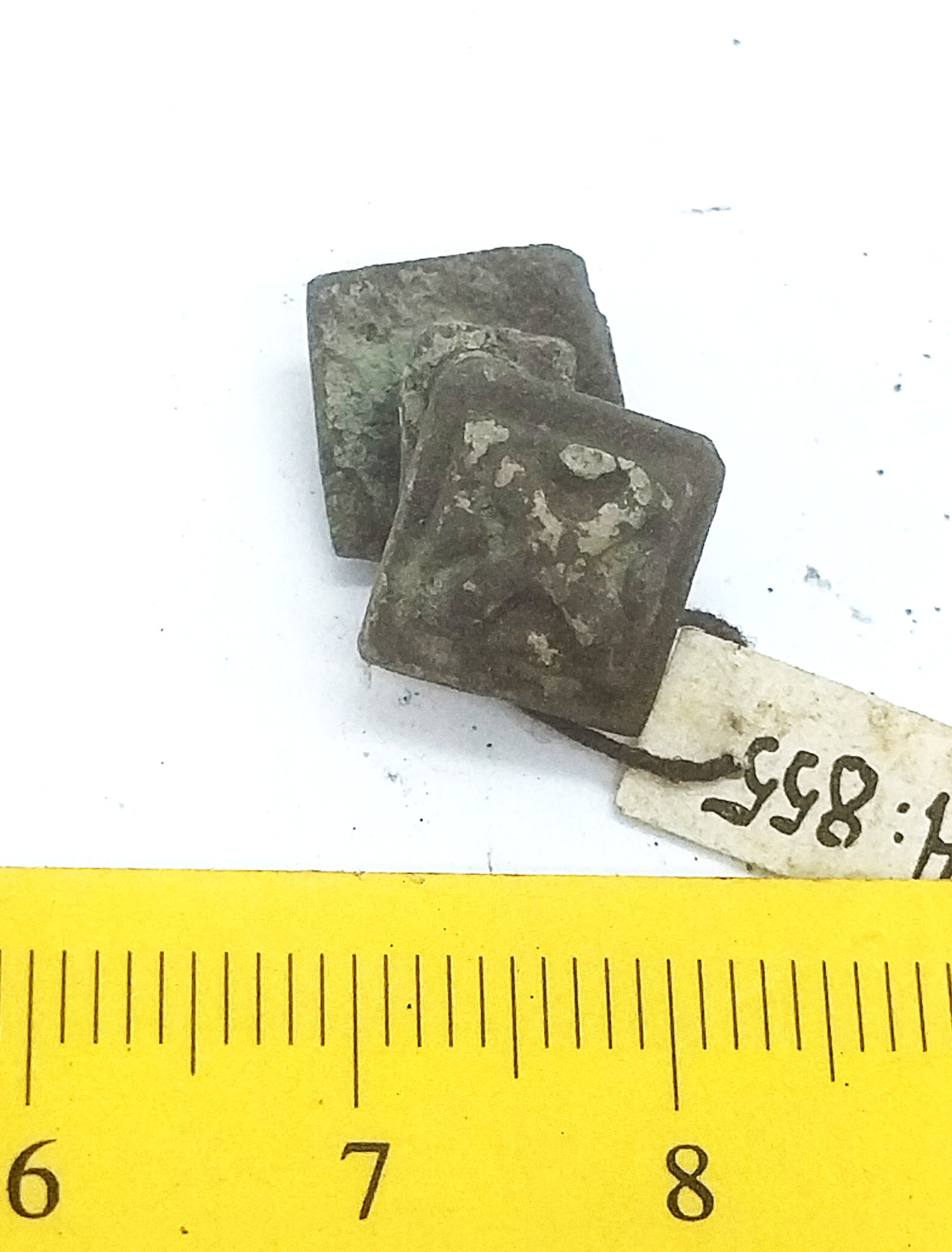
Belt mounts, 2, copper alloy. Square-shaped mounts with cross-motifs are very widespread in Estonian stone graves with cremations (Mägi 2002, 96-99; Mandel 2017, 83, tahv XLII).They have been often found together with Gotland-Baltic type buckles and animal style joining mounts (e g Lehtsalo-Hilander 1982, 154).
Literature:
Lehtsalo-Hilander, P.-L. 1982. Luistari II: The Artefacts. SMYA 82: 2. Helsinki.
Mägi, M. 2002. At the crossroads of space and time: graves, changing society and ideology on Saaremaa (Ösel), 9th–13th centuries AD. Tallinn.
Mandel, M. 2017. Maidla muinaskalmistu saladused. Eesti Ajaloomuuseum, Tallinn.
Century:
11-12
Discovery code:
AI 3884: 855
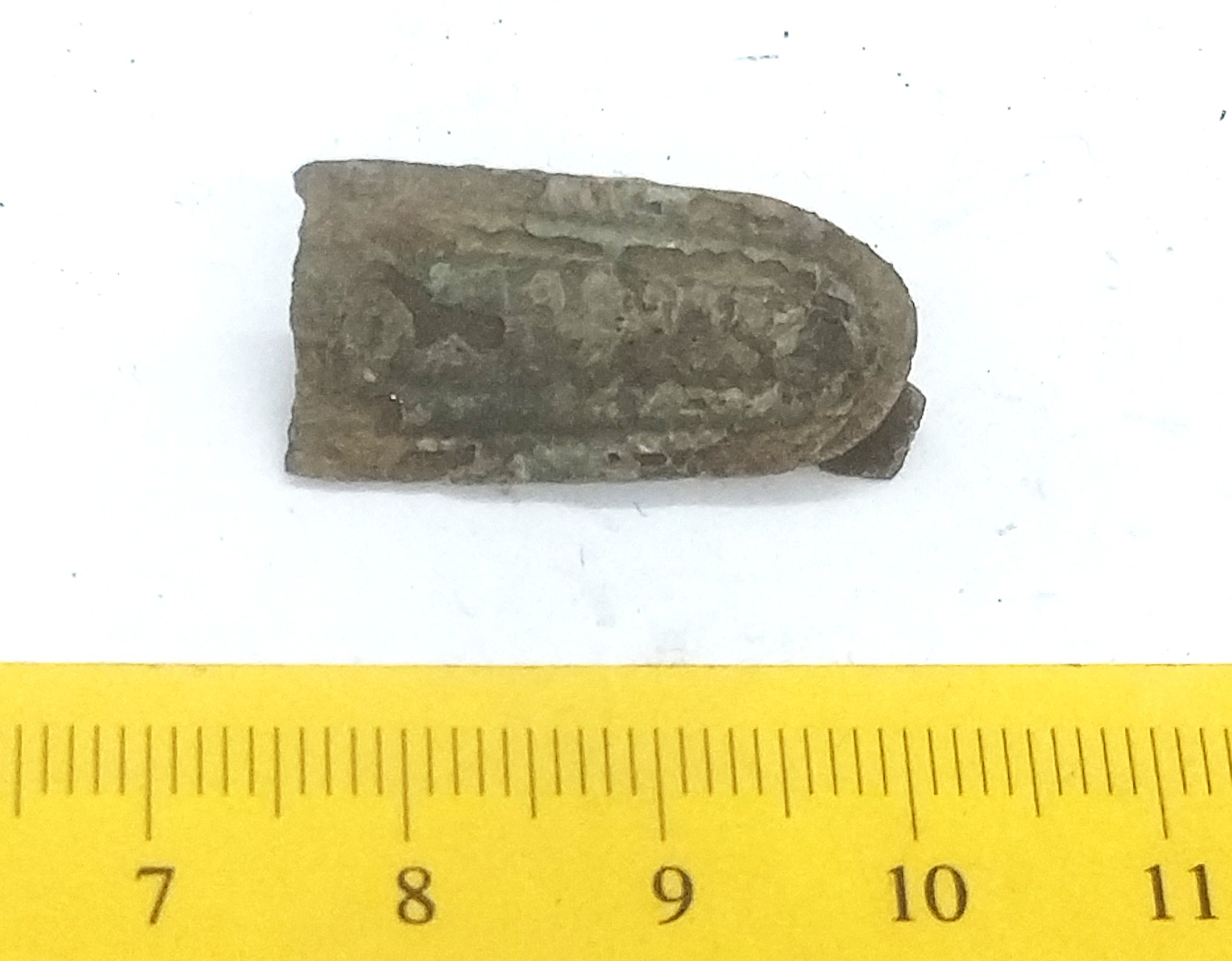
Century:
10-13
Discovery code:
AI 3884: 857
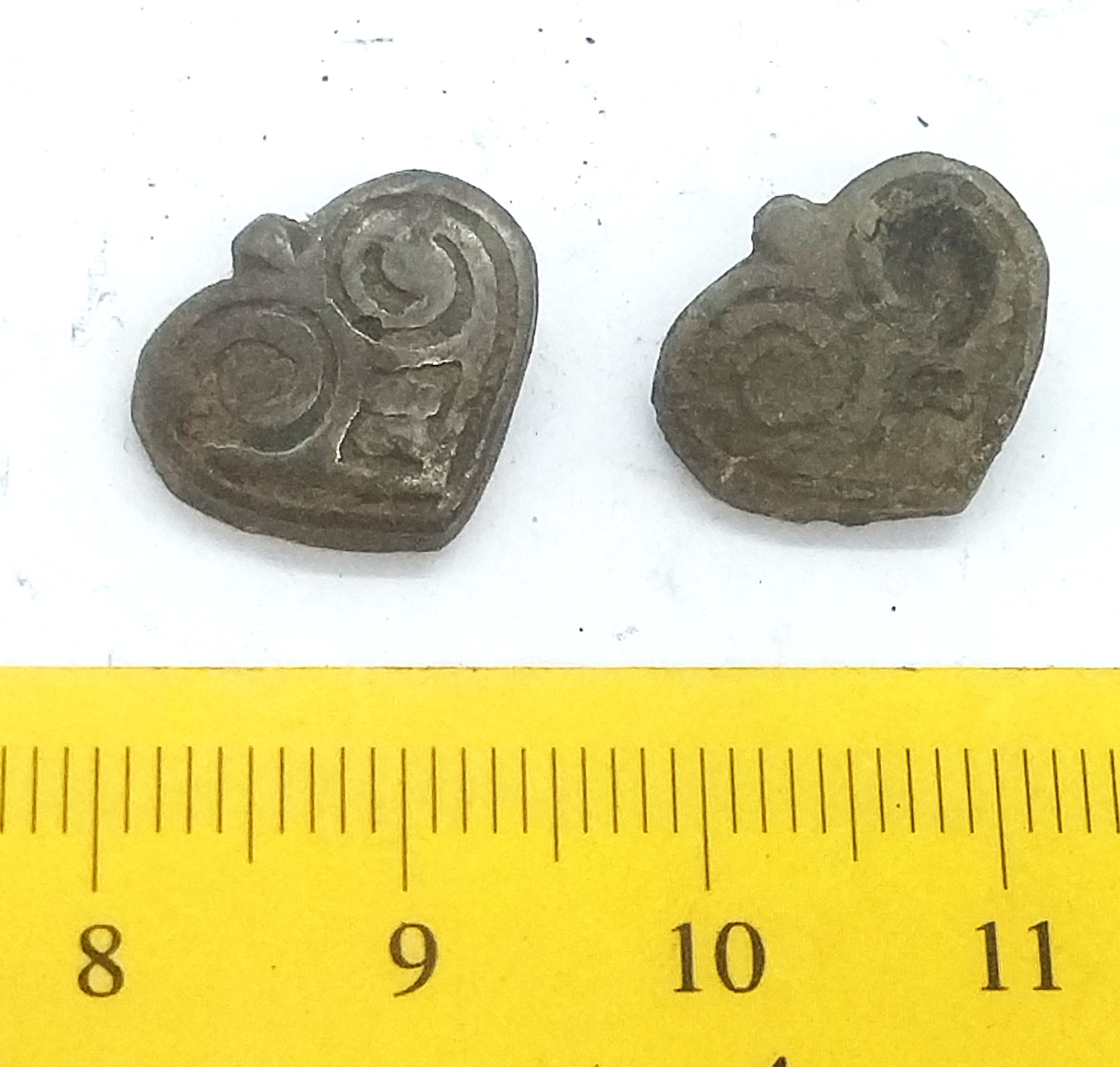
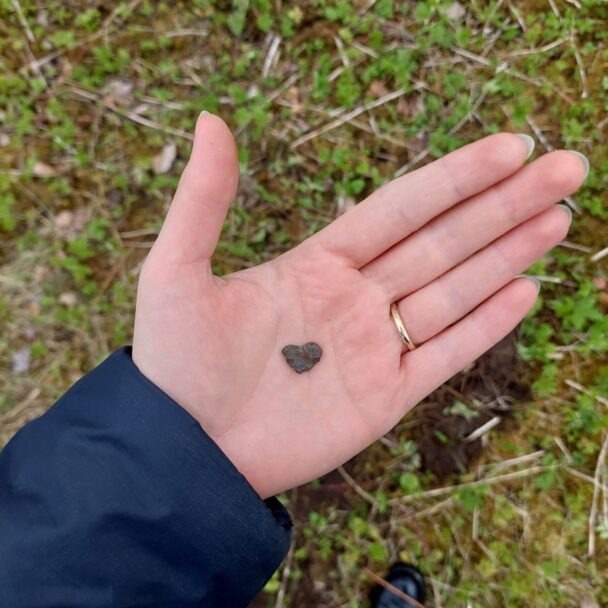
Belt mounts, 2, copper alloy. Heart-shaped cast belt mounts have been found, in addition to Saaremaa and mainland Estonia, in Finland, in Livic areas in Latvia, and in Gotland (e. g. Lehtosalo-Hilander 1982, 152-154; Thunmark-Nylén 1995, Fig. 62, 63, 79, 83; Mägi 2002, tahv. 30; Zariņa 2006, 206; Mandel 2017, 83). They are frequently found in graves that can be dated to the 11th-12th centuries.
Literature:
Lehtosalo-Hilander, P.-L. 1982. Luistari II: The Artefacts. SMYA 82: 2. Helsinki.
Thunmark-Nylén, L. 1995. Die Wikingerzeit Gotlands I. Abbildungen der Grabfunde. Stockholm.
Mägi, M. 2002. At the Crossroads of Space and Time. Graves, Changing Society and Ideology on Saaremaa (Ösel), 9th–13th Centuries AD. (CCC papers, 6.) Visby University Colleague, Institute of History, Tallinn.
Zariņa, A. 2006. Salaspils Laukskolas kapulauks 10.–13. gadsimts. Rīga: Latvijas Vēstures Institūta Apgāds.
Mandel, M. 2017. Maidla muinaskalmistu saladused. Eesti Ajaloomuuseum, Tallinn.
Century:
11-12
Discovery code:
AI 3884: 859
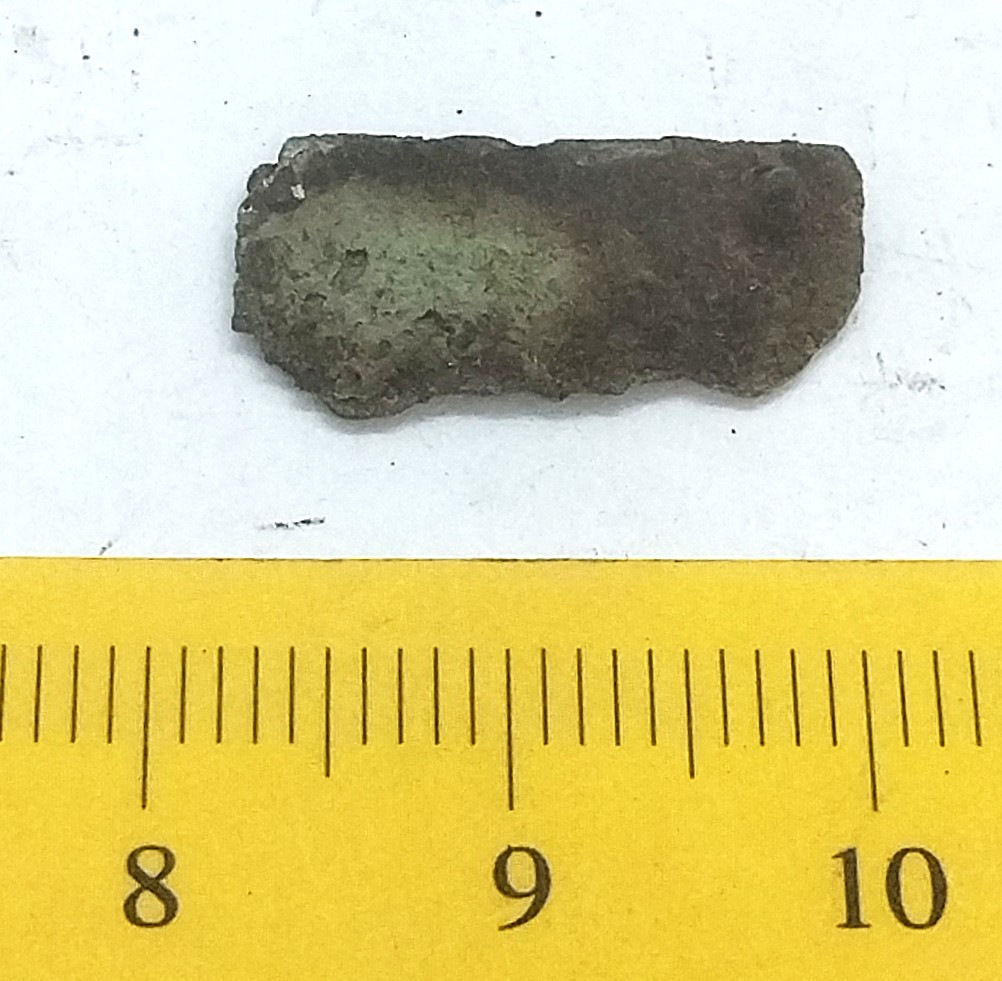
Century:
10-13
Discovery code:
AI 3884: 879
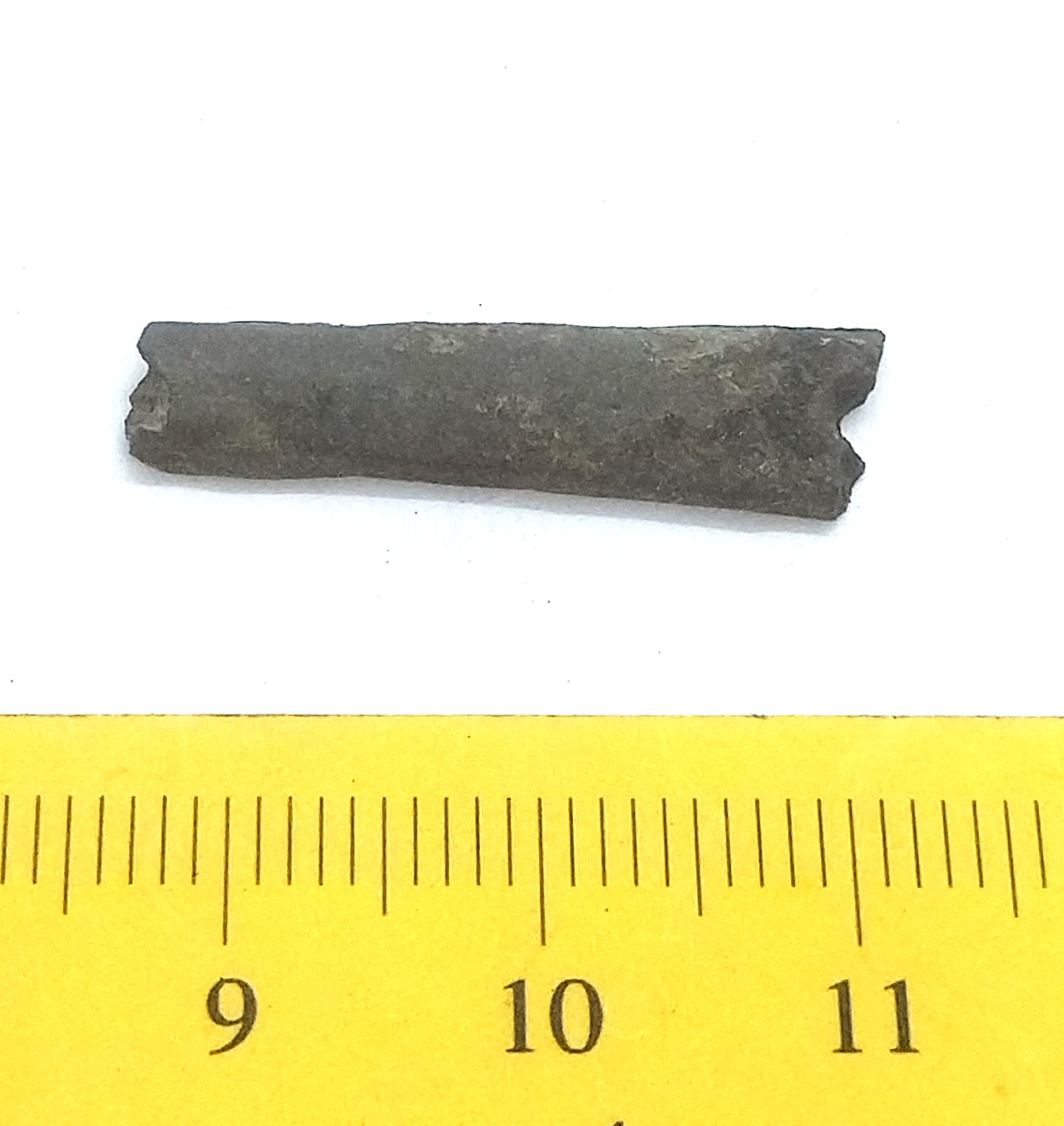
Century:
10-13
Discovery code:
AI 3884: 881
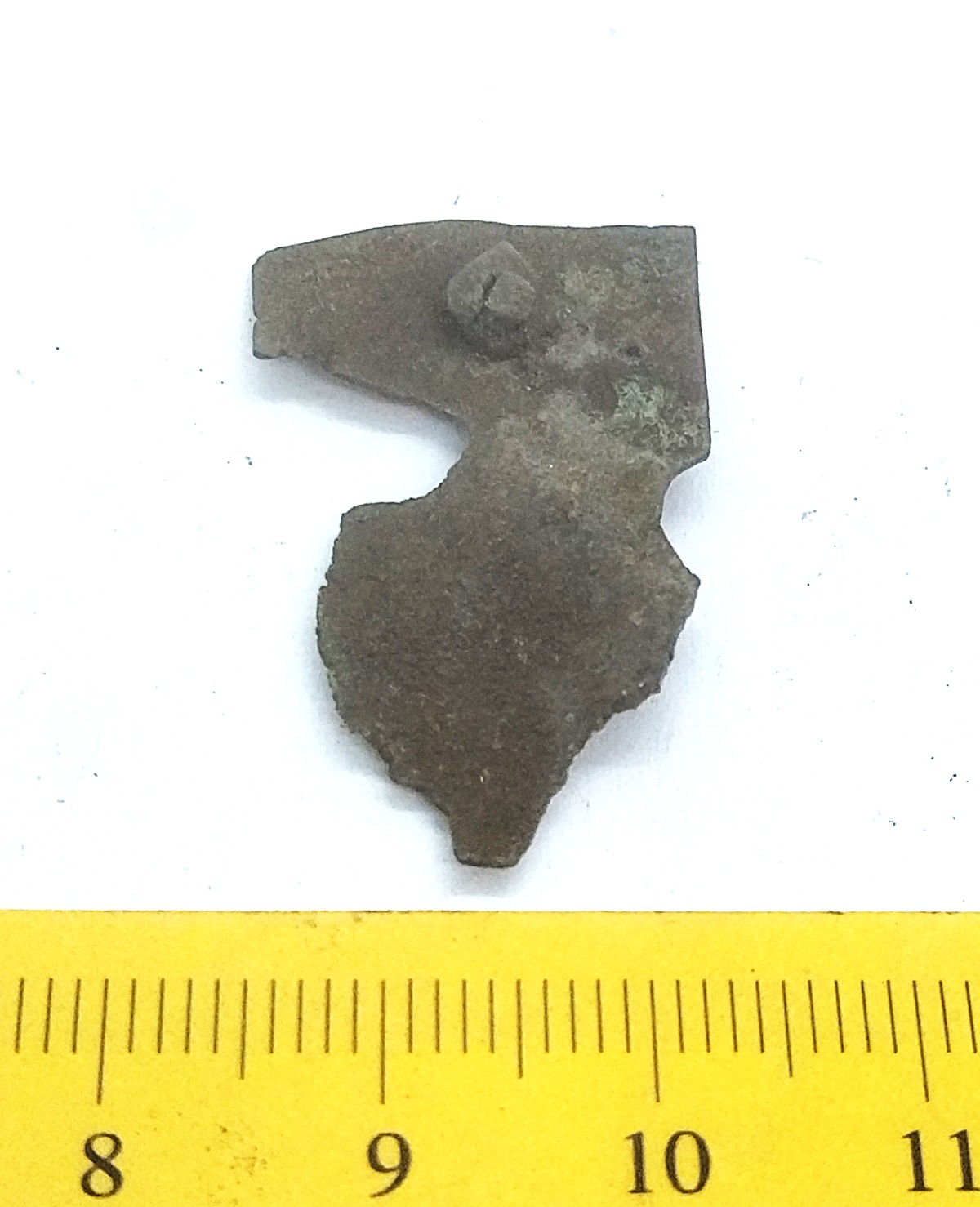
Century:
10-13
Discovery code:
AI 3884: 964
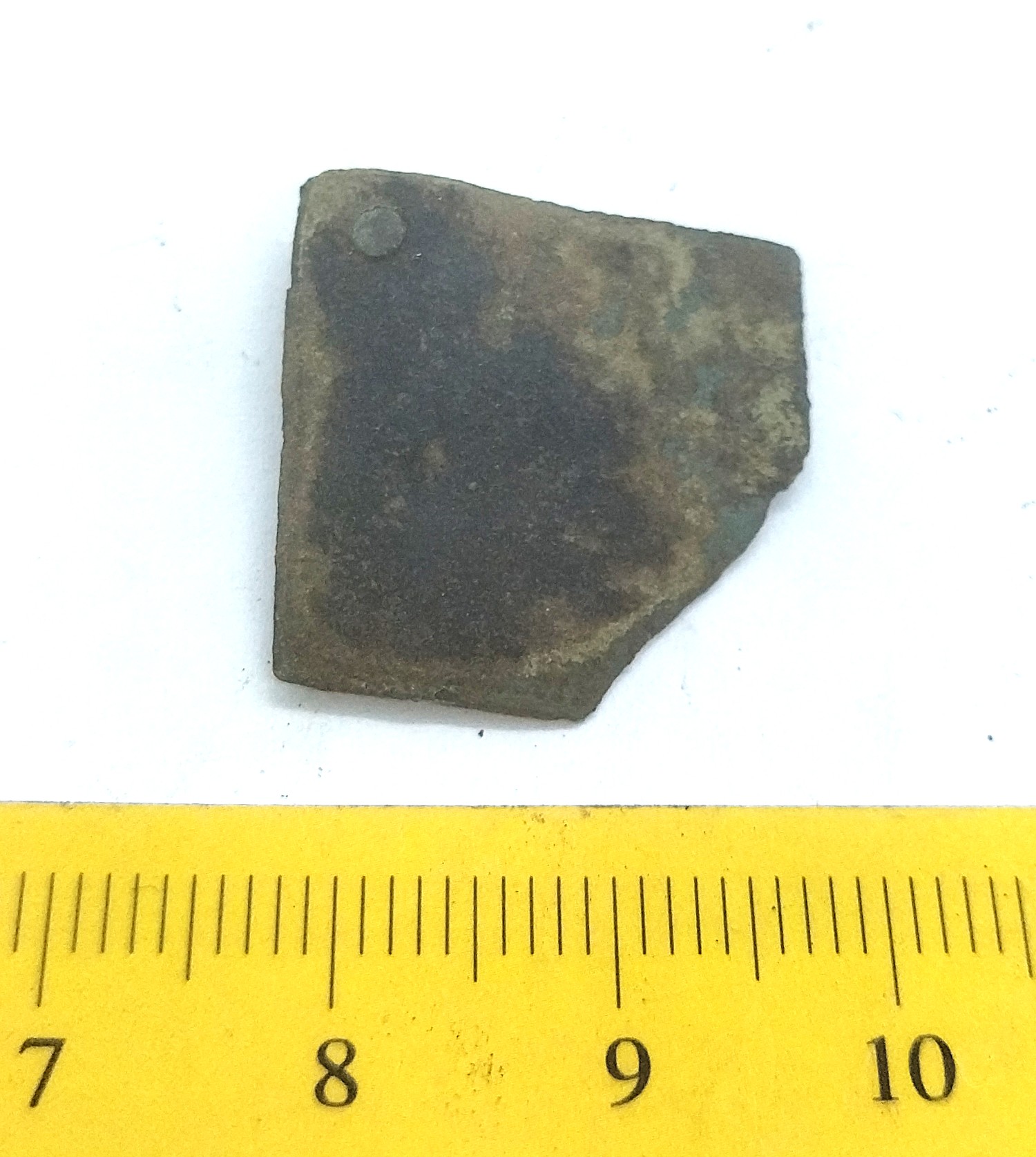
Square belt mount, copper alloy. These belt mounts were widespread over a long time.
Century:
10-13
Discovery code:
AI 3884: 969

