
Database
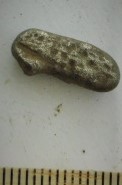
Ure
Melted piece of silver.
Century:
3-5
Discovery code:
SM 10862:2
Century:
3-5
Discovery code:
SM 10862:2
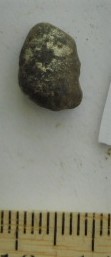
Ure
Melted piece of silver.
Century:
3-5
Discovery code:
SM 10862:3
Century:
3-5
Discovery code:
SM 10862:3
Ure
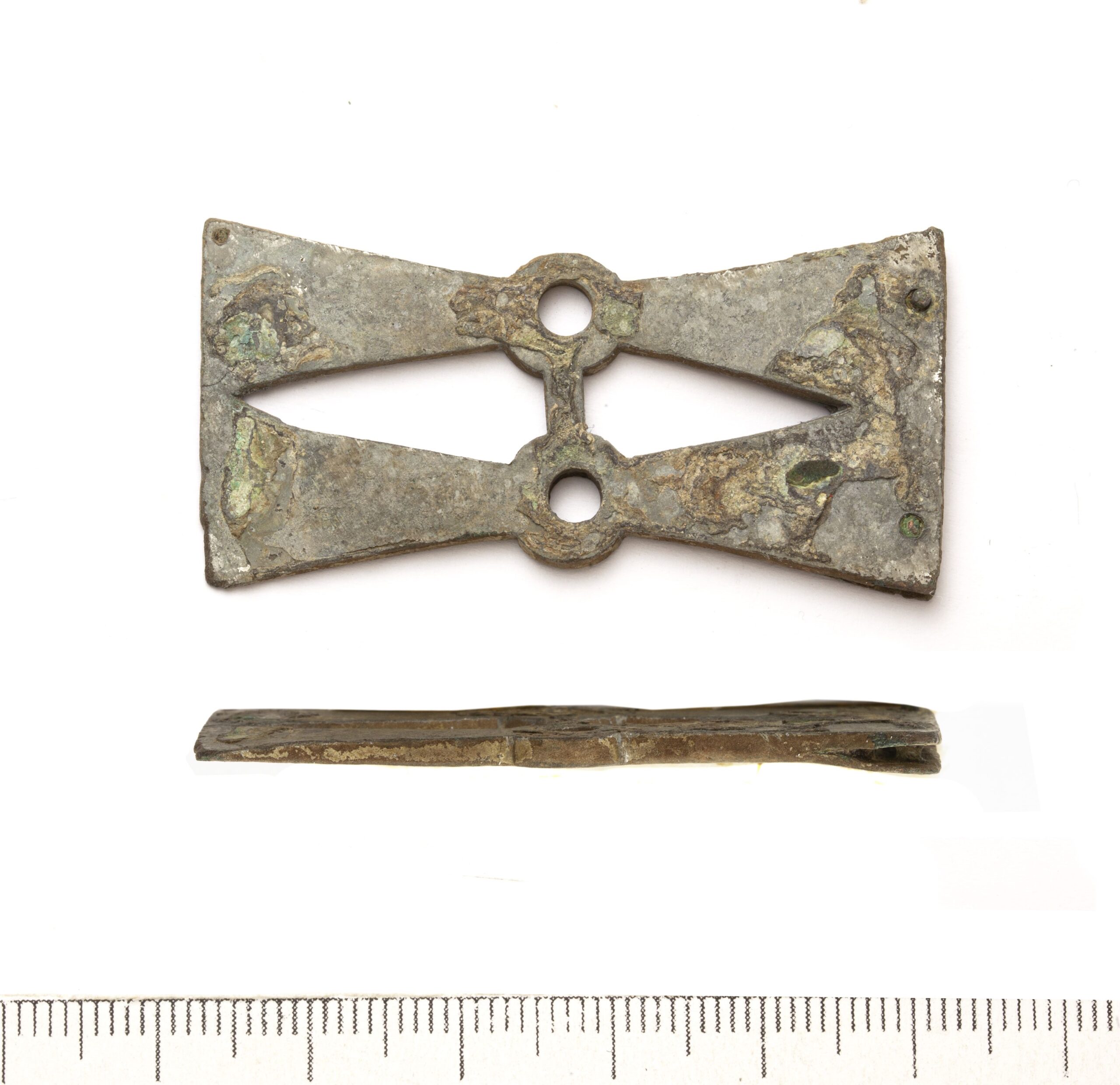
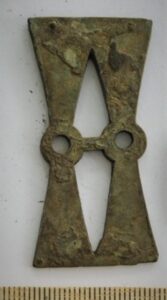
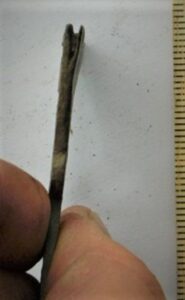
Double-propeller-shaped mount, bronze. The upper part has been plated with silver. From one end it has been attached to a 2-mm-thick strap.
Century:
3-4
Discovery code:
SM 10862:4
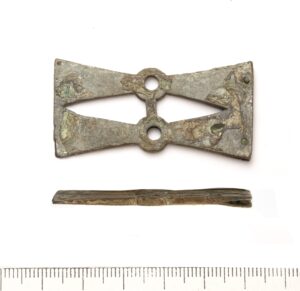
First photo: Jaana Ratas.
Parallels:
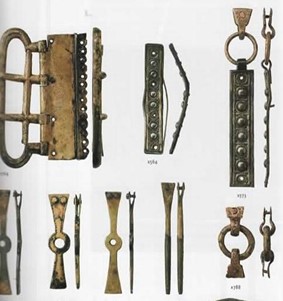
Mounts of sword belt from the weapon sacrifice Ejsbølgård D (Andersen 2003, 251, fig. 8. Photo Hadersel Museum/ Steen Hendriksen).

Reconstructed belt from Nydam fyretree boat (Jørgensen & Petersen 2003, 267, fig. 8; photo National Museum/ John Lee).
Double-propeller-shaped mount, bronze. The upper part has been plated with silver. From one end it has been attached to a 2-mm-thick strap.
See also Ure finds SM10862: 1, 33, 90, 117.
Such propeller-shaped fittings that hanged from a belt are normally considered Germanic, but were clearly influenced by Roman fashion. They decorate so-called ‘officers belts’ found near the pinetree-boat at Nydam sacrificial place in Denmark. Very similar belt ornaments, plated with silver and gold, are known from Ejsbølgård sacrifice, e. g. weapon offering D, dated 250-300 AD (Andersen 2003, 251-253).
Sword-belts decorated with propeller-shaped fittings have been also found in other sacrificial places, e.g. Skedemosse on the island of Öland (Monikander 2010, 46) and in South-Scandinavian elite graves, e. g. in a chamber grave at Lilla Jored (Sweden), Lærkenfeld (Denmark), or Sætrang (Norway) (Rau 2014).
In the Eastern Baltic, propeller-shaped mounts have been recorded so far in two sites: Kambja in Southern Estonia and Lejas-Kleperis in Northern Latvia (Moora 1929, pl. XXX: 14; 1938, 477). Five specimens are recorded in Ure. As suggested by the parallels mentioned above, they may originate from the same belt as the mount SM10862:9. The propeller-shaped mounts in Ure represent two different sizes, possibly indicating two sacrificed belts.
Belts decorated with propeller-shaped silver or silver-plated fittings are considered to belong to the commanders of the armies.
Literature:
Andersen, H. Chr. H. 2003. Nye undersøgelser i Ejsbøl mose. – Sejrens triumf. Norden i skyggen af det romerske imperium. Ed. by L. Jørgensen, B. Storgaard & L. Gebauer Thomsen. København, 246–256.
Jørgensen, E. & Petersen, P. V. 2003. Nydam mose – nye fund og iagttagelser. – Sejrens triumf. Norden i skyggen af det romerske imperium. Ed. by L. Jørgensen, B. Storgaard & L. Gebauer Thomsen. København, 258–294.
Monikander, A. 2010. Våld och vatten. Våtmarkskult vid Skedemosse under järnåldern. – Stockholms Studies in Archaeology, 52. Stockholm. Read the article: here.
Moora, H. 1929. Die Eisenzeit in Lettland: bis etwa 500. N. Chr. Tafeln zum I. Teil. Tartu-Dorpat.
Moora, H. 1938. Die Eisenzeit in Lettland: bis etwa 500. N. Chr. II. Teil : Analyse. Tartu.
Mägi, M. 2021. Scandinavian chieftains in Saaremaa? Archaeological investigations in Ure, a probable Roman Period sacrificial place. – Archaeological Fieldwork in Estonia 2020, 73-90. Read the article: here.
Rau, A. 2014. Spätkaiserzeitlich-frühvölkerwanderungszeitliche Kammergräber der Sætrang-Lilla Jored-Gruppe. – Kammergräber im Barbaricum. Zu Einflüssen und Übergangsphänomenen von der vorrömischen Eisenzeit bis in die Völkerwanderungszeit. Ed. by N. Lau & A. Abegg-Wigg. Wachholtz, 145-166. Read the article: here.
Century:
3-4
Discovery code:
SM 10862:4
Ure
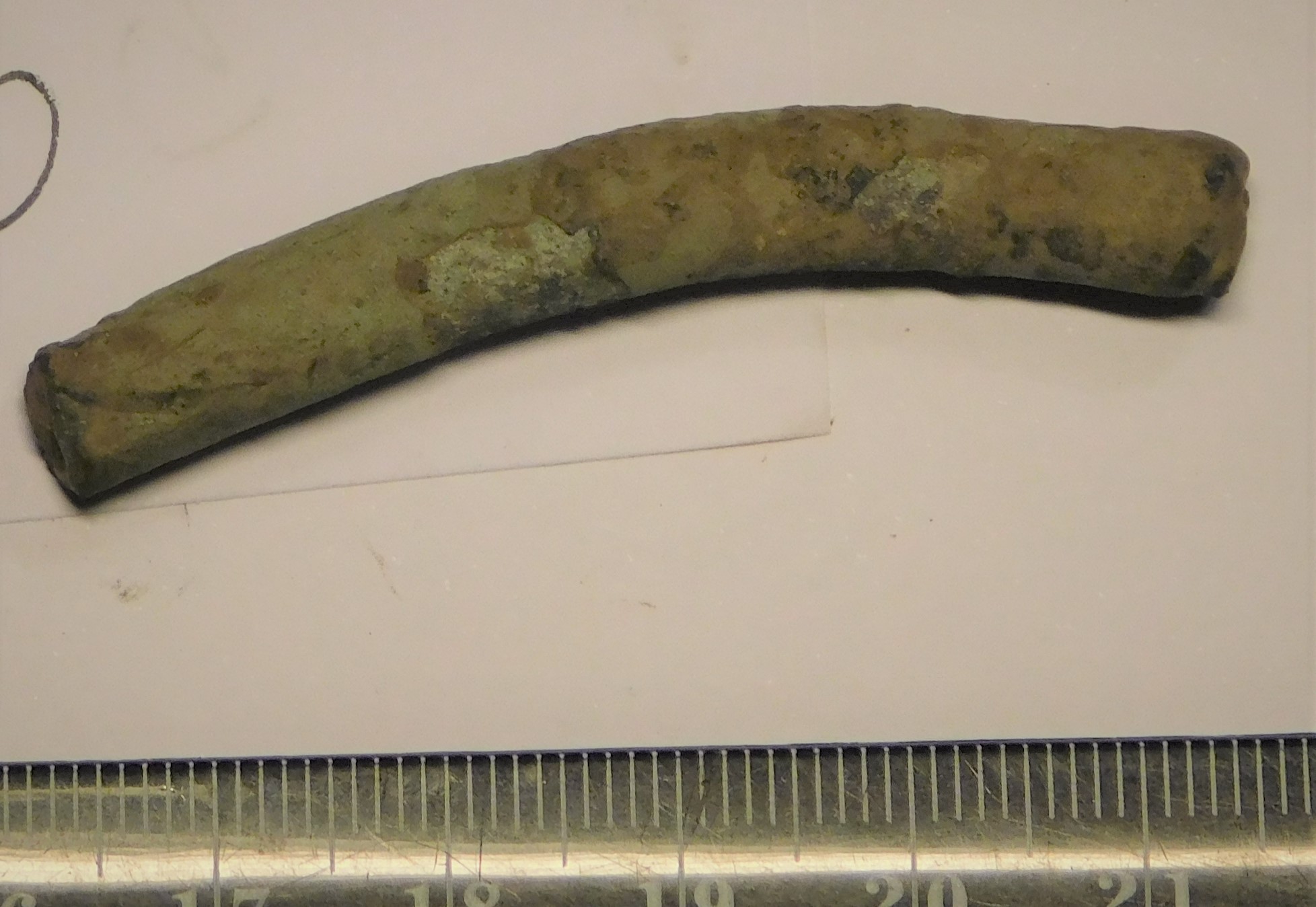
Fragment of nick ring, bronze. Circular cross-section and from one side covered with diagonal filing.
Century:
3-5
Discovery code:
10862:5
Century:
3-5
Discovery code:
10862:5
Ure
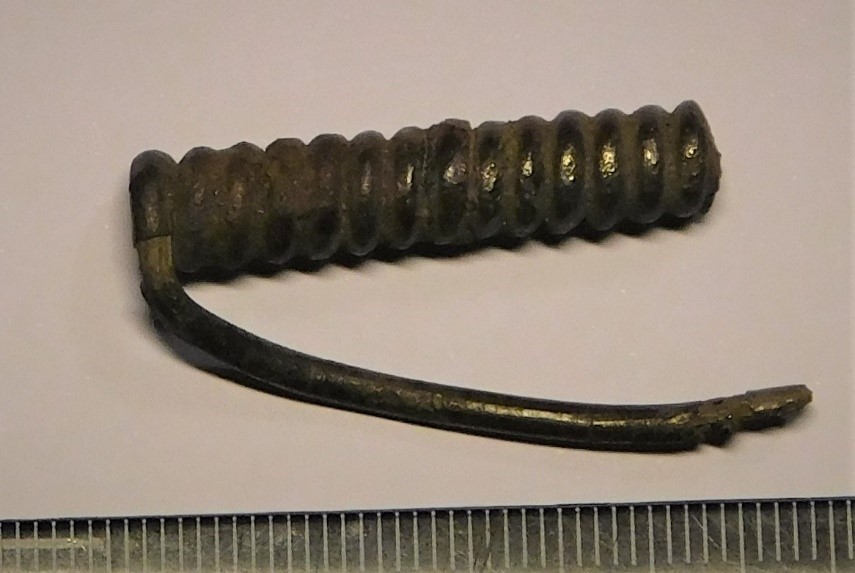
Crossbow brooch fragment, silver. A spiral coil wound around an iron rod with the fragment of a spring cord. The silver spring cord cross-section is otherwise rounded, but flattens out at the end of the cover – it must have been attached to an arch.
Century:
3-5
Discovery code:
SM 10862:6
Century:
3-5
Discovery code:
SM 10862:6
Ure
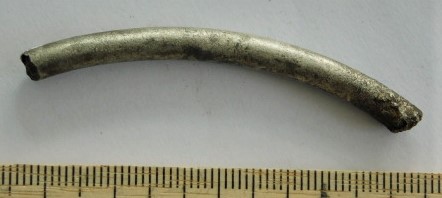
Neck ring fragment, silver. Circular cross-section, without decoration.
Century:
3-5
Discovery code:
10862:7
Century:
3-5
Discovery code:
10862:7
Ure
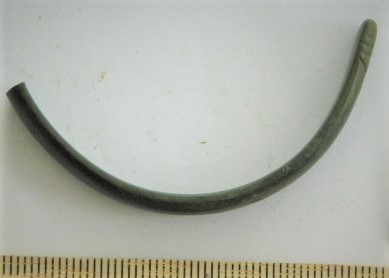
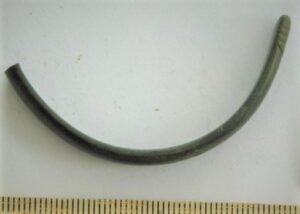
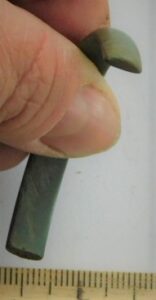
Bracelet fragment, bronze. Flat-convex cross-section, with equal width. The preserved end is decorated with four cross tripes, next to which are two dashes forming a triangle and three circles that in turn are arranged in a triangle. Bracelets of this type were commin the Roman Iron Age Saaremaa and surroundings.
Century:
1-5
Discovery code:
SM 10862:8

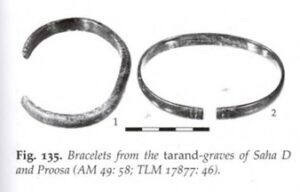
A bracelet similar to the Ure specimen from Roman Iron Age grve in Proosa near Tallinn (Lang 2007, 135:2).
Fragment of bracelet, bronze. Flat-convex cross-section, with equal width. The preserved end is decorated with four cross tripes, next to which are two dashes forming a triangle and three circles that in turn are arranged in a triangle. Bracelets of this type were commin the Roman Iron Age Saaremaa and surroundings (Lang 2007, 212-213).
Literature:
Lang, V. 2007. The Bronze and Early Iron Ages in Estonia. – Estonian Archaeology, 3. Tartu. Read the article: here.
Century:
1-5
Discovery code:
SM 10862:8
Ure
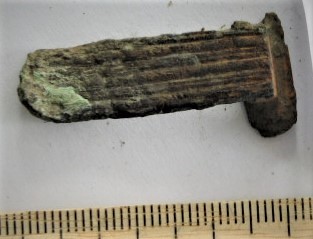
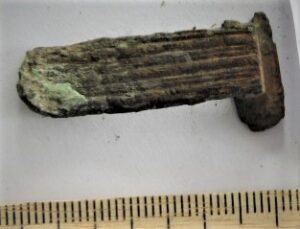
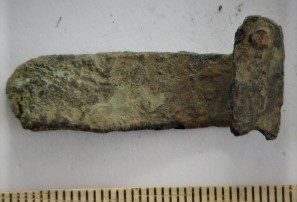
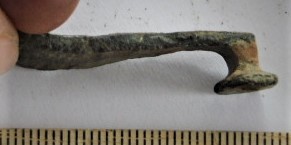
Fragment of artefact, bronze. Higher loop for a belt to pass through. The longer part is decorated with long lines. The tip turns downwards at a perpendicular angle and ends with an oval plate that is situated crosswise to the rest of the artefact. On both parts of the plate, there has been a small bronze rivet, and one of these is snapped. It has been attached to either a wooden or leather object, e. g. a belt or a sword scabbard.
Century:
3-4
Discovery code:
SM 10862:9
 ‘
‘ 
Parallels:
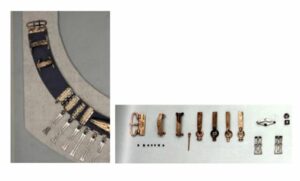
Similar mounts on the officer belts from Nydam (Jørgensen & Petersen 2003, 267, figs. 8, 9, fragments; photo National Museum/ John Lee).
Fragment of artefact, bronze. Higher loop for a belt to pass through. The longer part is decorated with long lines. The tip turns downwards at a perpendicular angle and ends with an oval plate that is situated crosswise to the rest of the artefact. On both parts of the plate, there has been a small bronze rivet, and one of these is snapped. It has been attached to either a wooden or leather object, e. g. a belt or a sword scabbard. Possibly from the same belt or from one of the belts from which Ure propeller-shaped fittings come (Jørgensen & Petersen 2003, 267).
Literature:
Jørgensen, E. & Petersen, P. V. 2003. Nydam mose – nye fund og iagttagelser. – Sejrens triumf. Norden i skyggen af det romerske imperium. Ed. by L. Jørgensen, B. Storgaard & L. Gebauer Thomsen. København, 258–294.
Century:
3-4
Discovery code:
SM 10862:9
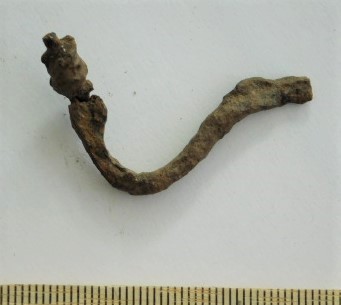
Ure
Crossbow brooch fragment,, iron. The curved part of the arc and fragment of the spiral axis. The cross-section of the arc is quadrilateral, but on the bottom part aka on the foot it is at the beginning flat and wider from the side (perhaps there was a backward-leaning needle store there?).
Century:
3-5
Discovery code:
SM 10862:10
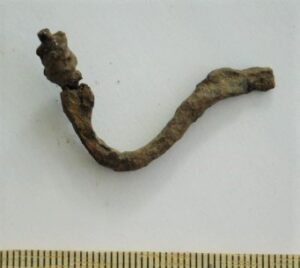

Fragment of crossbow brooch, iron. The curved part of the arc and fragment of the spiral axis. The cross-section of the arc is quadrilateral, but on the bottom part aka on the foot it is at the beginning flat and wider from the side (perhaps there was a backward-leaning needle store there?).
Literature:
Rohtla, M.-L. 2005. Crossbow fibula as a reflection of social status and relations. – Culture and Material Culture. Interarchaeologia, 1. Ed. by V. Lang. Tartu – Riga – Vilnius, 121–145.
Century:
3-5
Discovery code:
SM 10862:10

