
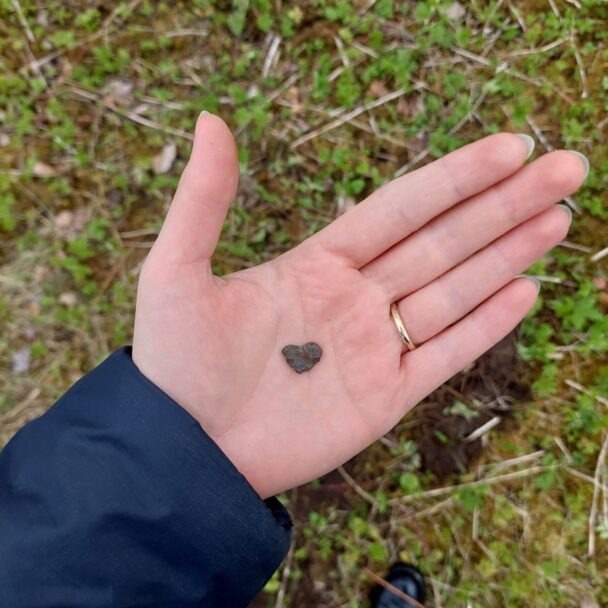
Database
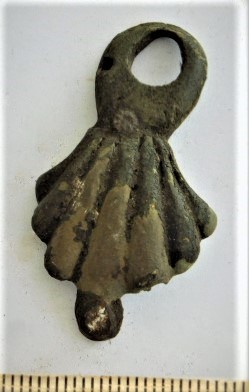
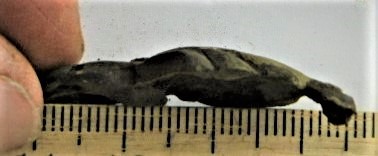
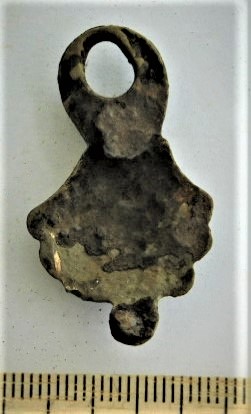
Dress fitting, shell-shaped, bronze.
Century:
15-16
Discovery code:
SM 10863:53
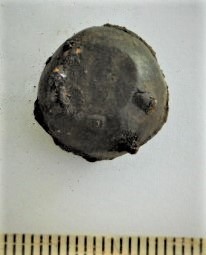
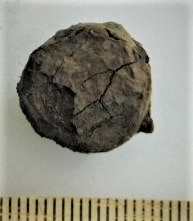
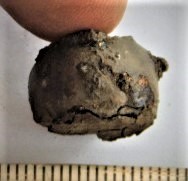
Spheric weight. Iron and bronze (?)
Literature:
Berga, T. 2017. The distribution and chronology of traiding equipment in present-day Latvia in the tenth to thirteenth centuries. – Archaeologia Baltica, 24, 59-77.
Century:
10-12
Discovery code:
SM 10863:54
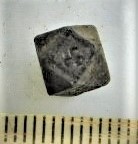
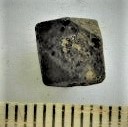
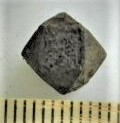
Octagonal weight, bronze. Such weights can mainly be dated to 850-1000 AD.
Literature:
Gustin, I. 2004. Mellan gåva och marknad. Handel, tillit och materiell Kultur under vikingatid. – Lund Studies in Medieval Archaeology, 34. Malmö, Almqvist & Wiksell, 100-107.
Century:
9-10
Discovery code:
SM 10863:55
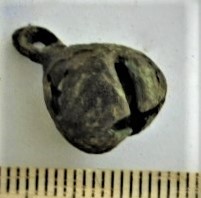
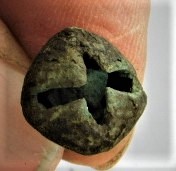
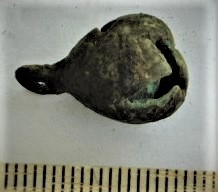
Bell, bronze.
Century:
9-13
Discovery code:
SM 10863:56
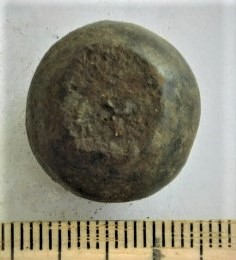
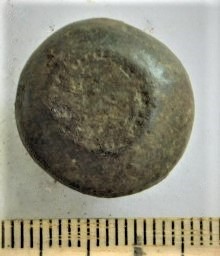
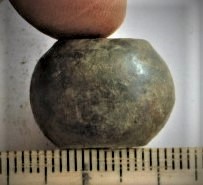
Spheric weight, bronze and iron. Such weights are dated to the late 10th and to the 11th century (Berga 2017).
Literature:
Berga, T. 2017. The distribution and chronology of traiding equipment in present-day Latvia in the tenth to thirteenth centuries. – Archaeologia Baltica, 24, 59-77.
Century:
10-11
Discovery code:
SM 10863:57
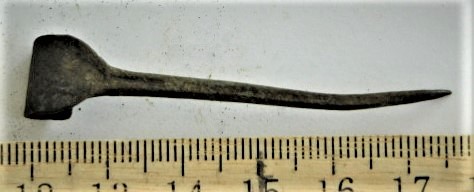
Mullutu
Pin of a penannular brooch, copper alloy.
Century:
11-15
Discovery code:
SM 10863:58
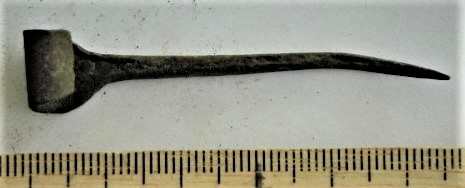
Pin of a penannular brooch, copper alloy.
Century:
11-15
Discovery code:
SM 10863:58
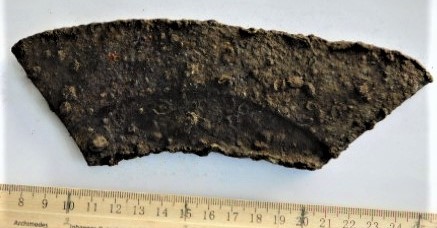
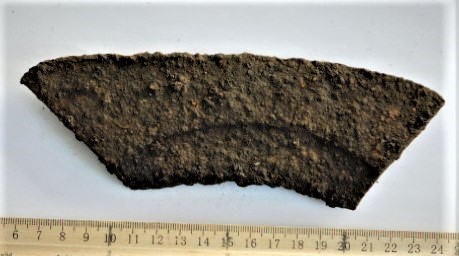
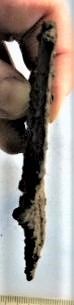
Iron axe, M-type, later variant.
Literature:
Atgāzis, M. 1997. Āvas cirvji Latvijā. – Arheoloģija un Etnogrāfija, XIX. Rīga: Latvijas Vēstures Institūta apgāds, 53-63.
Century:
12-13
Discovery code:
SM 10863:60
Mullutu
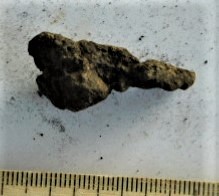
Fragment of an iron artefact.
Century:
0
Discovery code:
SM 10863:61
Century:
0
Discovery code:
SM 10863:61
Mullutu
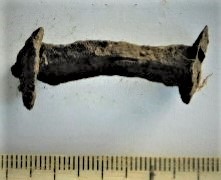
Boat rivet, iron.
Century:
7-15
Discovery code:
SM 10863:62
Century:
7-15
Discovery code:
SM 10863:62

