
Database
Viltina
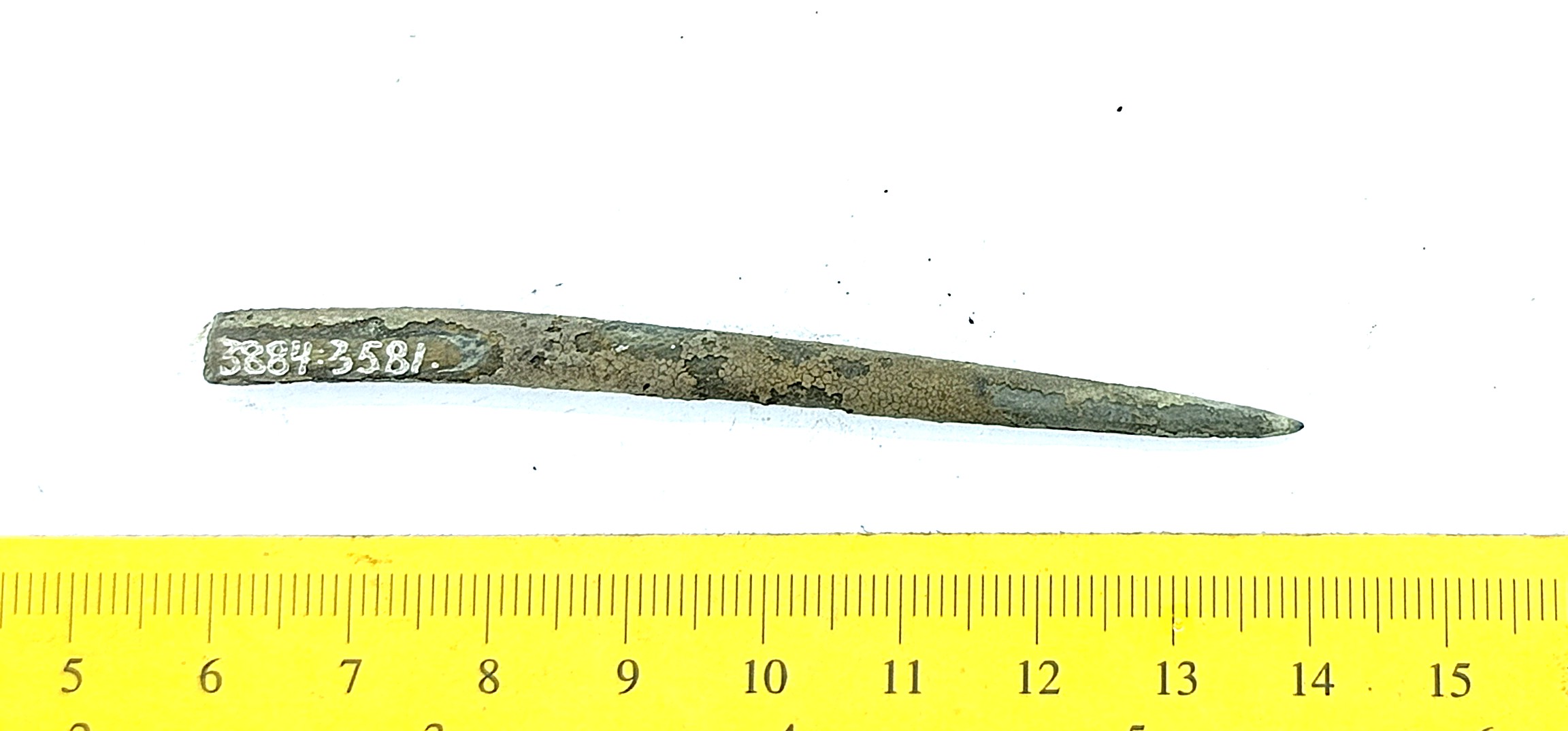
Pin shaft? Copper alloy.
Century:
12-13
Discovery code:
AI 3884: 3581
Century:
12-13
Discovery code:
AI 3884: 3581
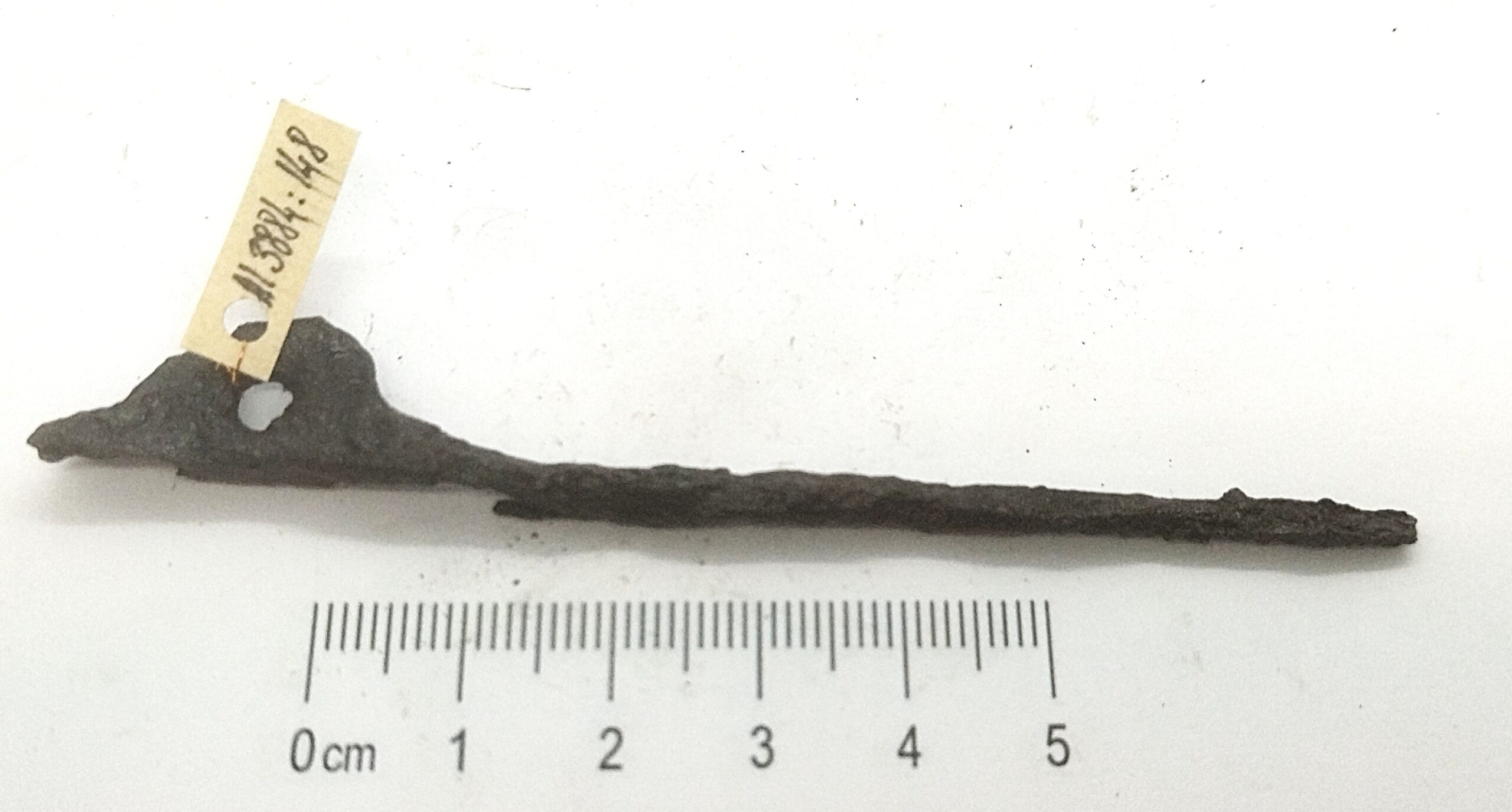
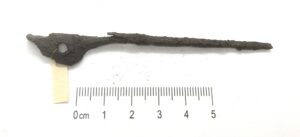 Pin shaft, iron. According to the loop shape from the end of the 12th century or from the 13th century. A copper alloy head was most likely fixed to the shaft.
Century:
12-13
Discovery code:
AI 3884: 148
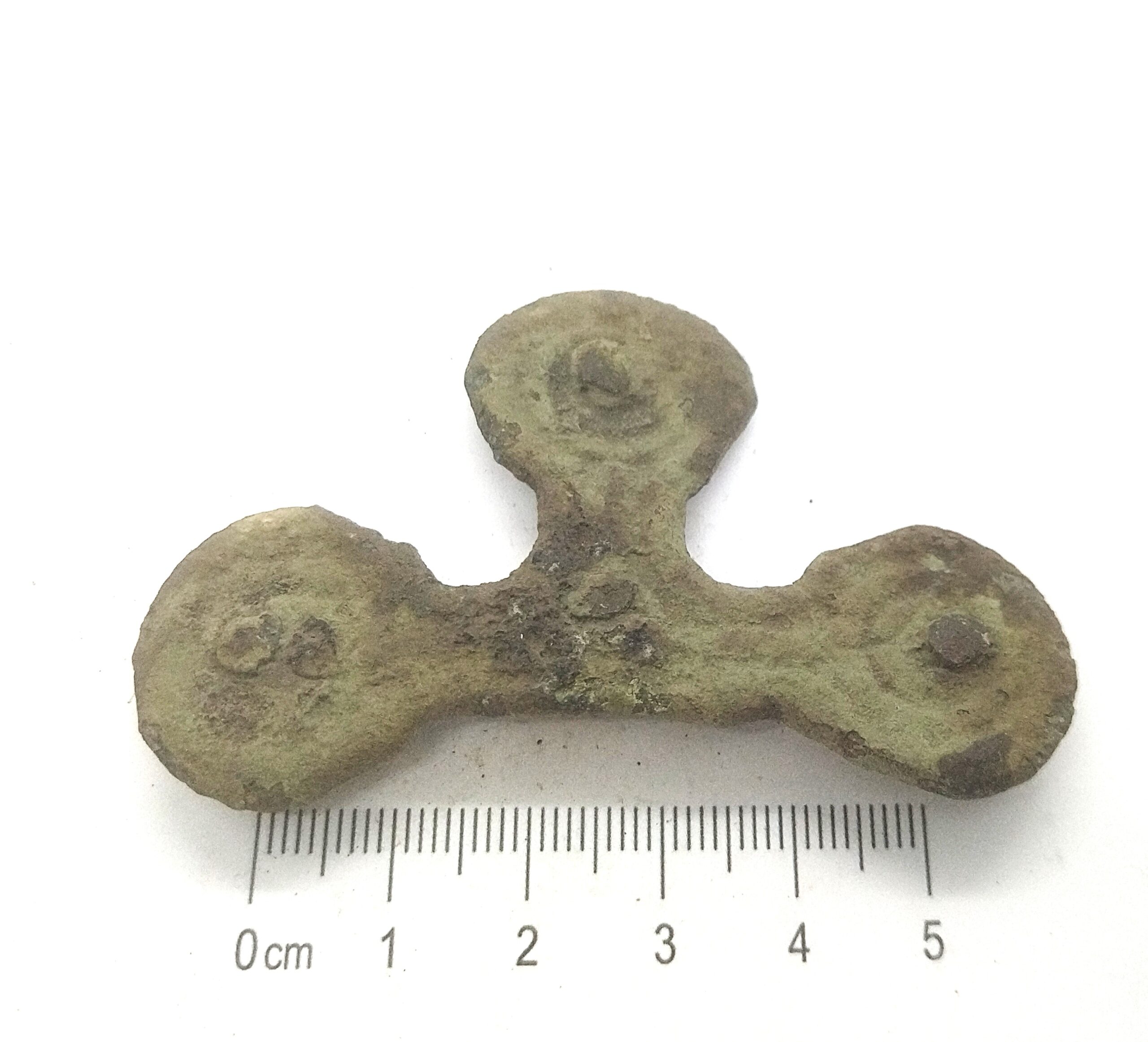


 Pin, copper alloy. The flat ends of the cross are decorated with concentric circle lines, the circles are connected with the central part by parallel lines. The heads of such pins are often covered with silver plating. This pin has been re-used as a mount, with a rivet placed behind each end. The lower part of the pin has been cut or broken off. Cross-head pins were widespread in Latvia as early as in the 7th century, but the appearance of this specific shape can be dated to the 10th century, or to the late 9th century in the earliest (Jērums 2014, 95-96; Vaska, 2019, 153 – 154).
Literature:
Jērums, N. 2014. Krustadatas Latvijā – Arheoloģija un Etnogrāfija, XXVIII. Rīga: Latvijas Vēstures Institūta apgāds, 56-123.
Vaska, B. 2019. Rotas un ornaments Latvijā no bronzas laikmeta līdz 13. gadsimtam. Latvijas Nacionālais vēstures muzejs. Rīga.
Century:
10-11
Discovery code:
AI 3884: 153
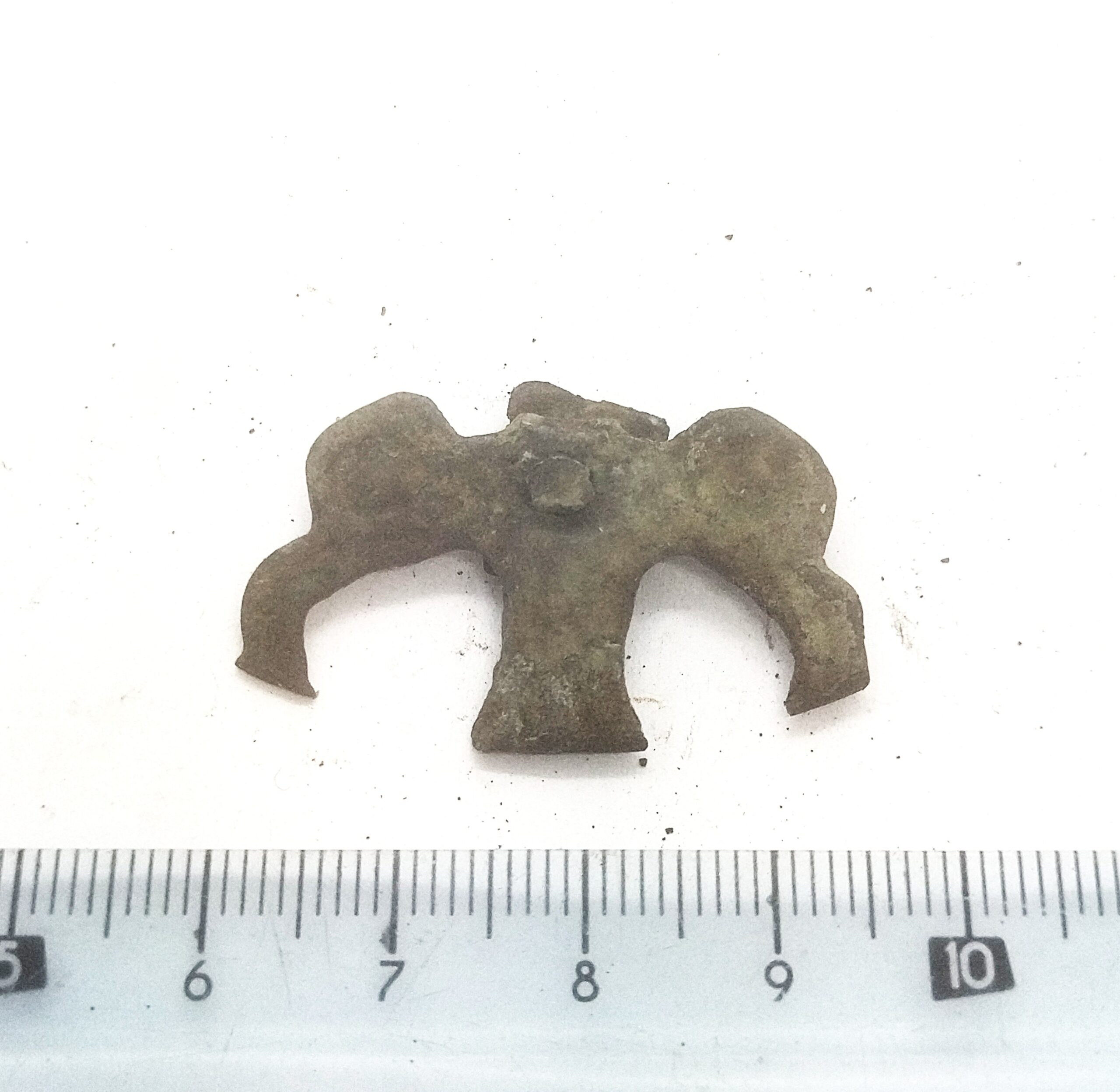
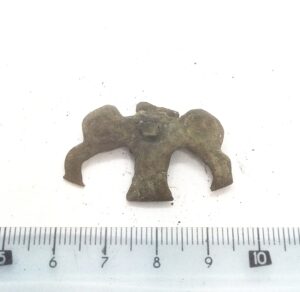
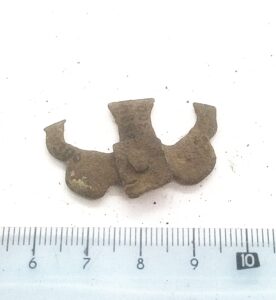
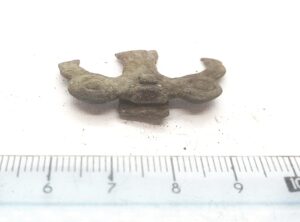 Dress pin, copper alloy. Fragment of a flat double cross-headed pin with connected terminals. A rivet attached to the fragment suggests that the head had probably been connected with a separate shaft. From the second half of the 12th, or the first halfof the 13th century.
Century:
12-13
Discovery code:
AI 3884: 300
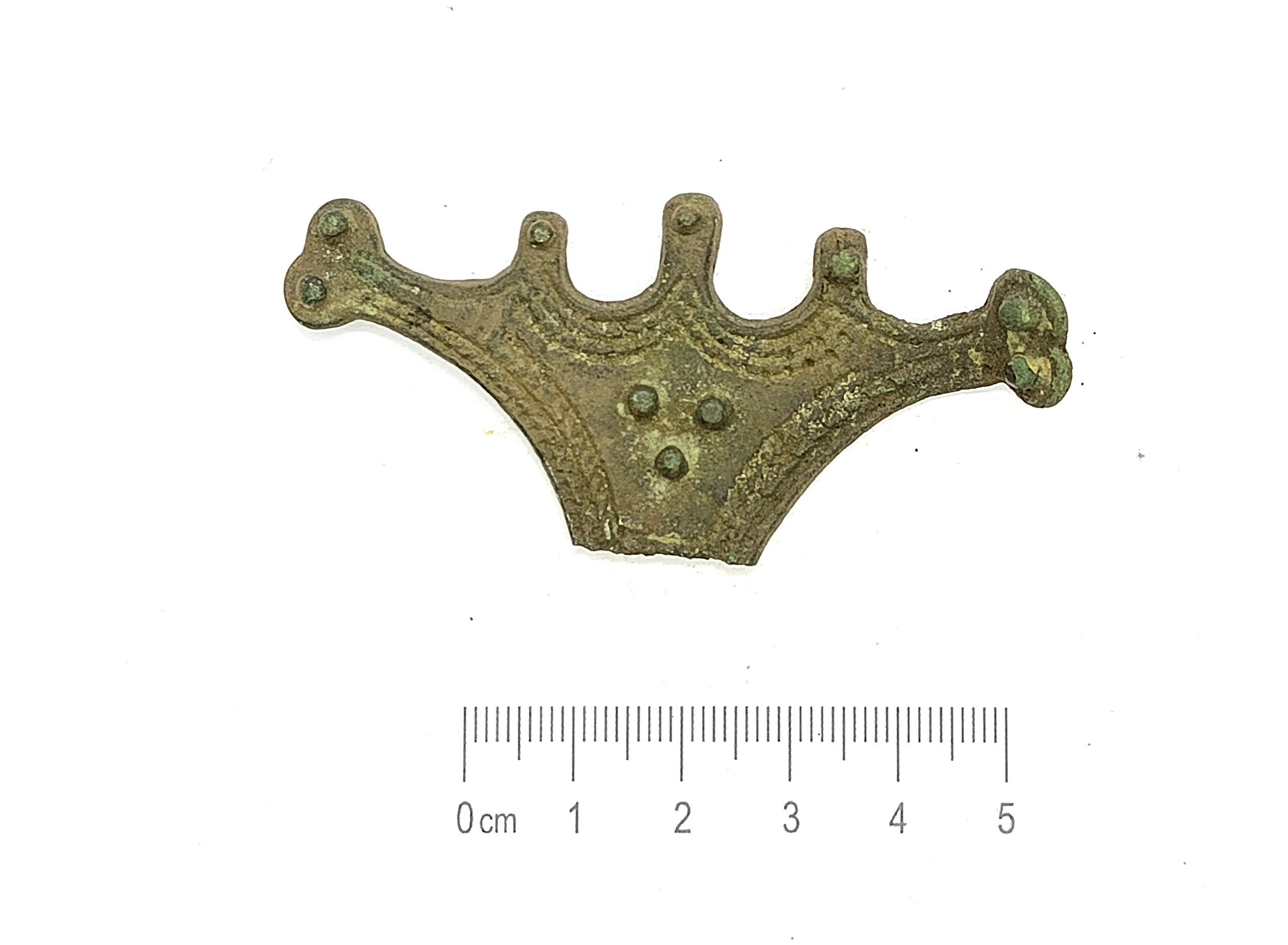
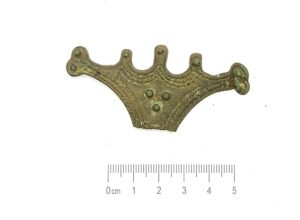
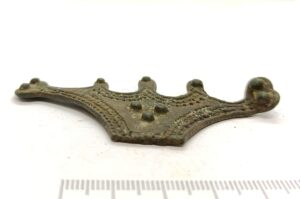
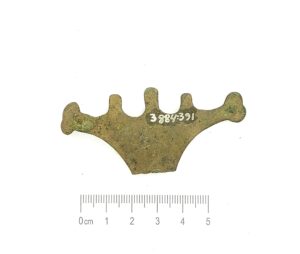 Dress pin, copper alloy. Triangular-headed, with three tabs along the upper edge. Most of similar pins have been found in stone graves with cremations in Saaremaa, sometimes also in West-Estonia (Mägi 2002, 104). Pins with precisely the same shape do not occur in inhumations dated after the very beginning of the 13th century.
Literature:
Mägi, M. 2002. At the Crossroads of Space and Time. Graves, Changing Society and Ideology on Saaremaa (Ösel), 9th–13th Centuries AD. (CCC Papers, 6.) Tallinn.
Century:
12
Discovery code:
AI 3884: 391

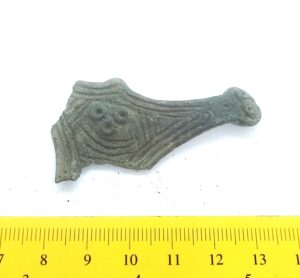
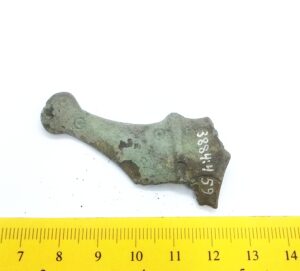
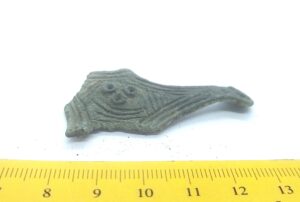
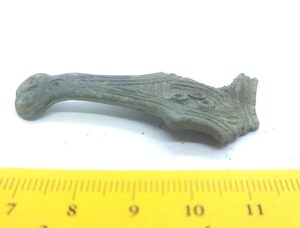 Dress pin, copper alloy. Triangular-headed, with typical plait decoration. The majority of such pins have been found in stone graves with cremations in Saaremaa, sometimes also in West-Estonia (Mägi 2002, 104). They do not occur in inhumation graves after the very beginning of the 13th century. Some such pins are also known from the Livic area in Latvia, where they probably mark graves of Saaremaa women (e.g. Zariņa 2006, Pl. 209: 2).
Literature:
Mägi, M. 2002. At the Crossroads of Space and Time. Graves, Changing Society and Ideology on Saaremaa (Ösel), 9th–13th Centuries AD. (CCC Papers, 6.) Tallinn.
Zariņa, A. 2006. Salaspils Laukskolas kapulauks 10.–13. gadsimts. Rīga: Latvijas Vēstures Institūta Apgāds.
Century:
11-12
Discovery code:
AI 3884: 459
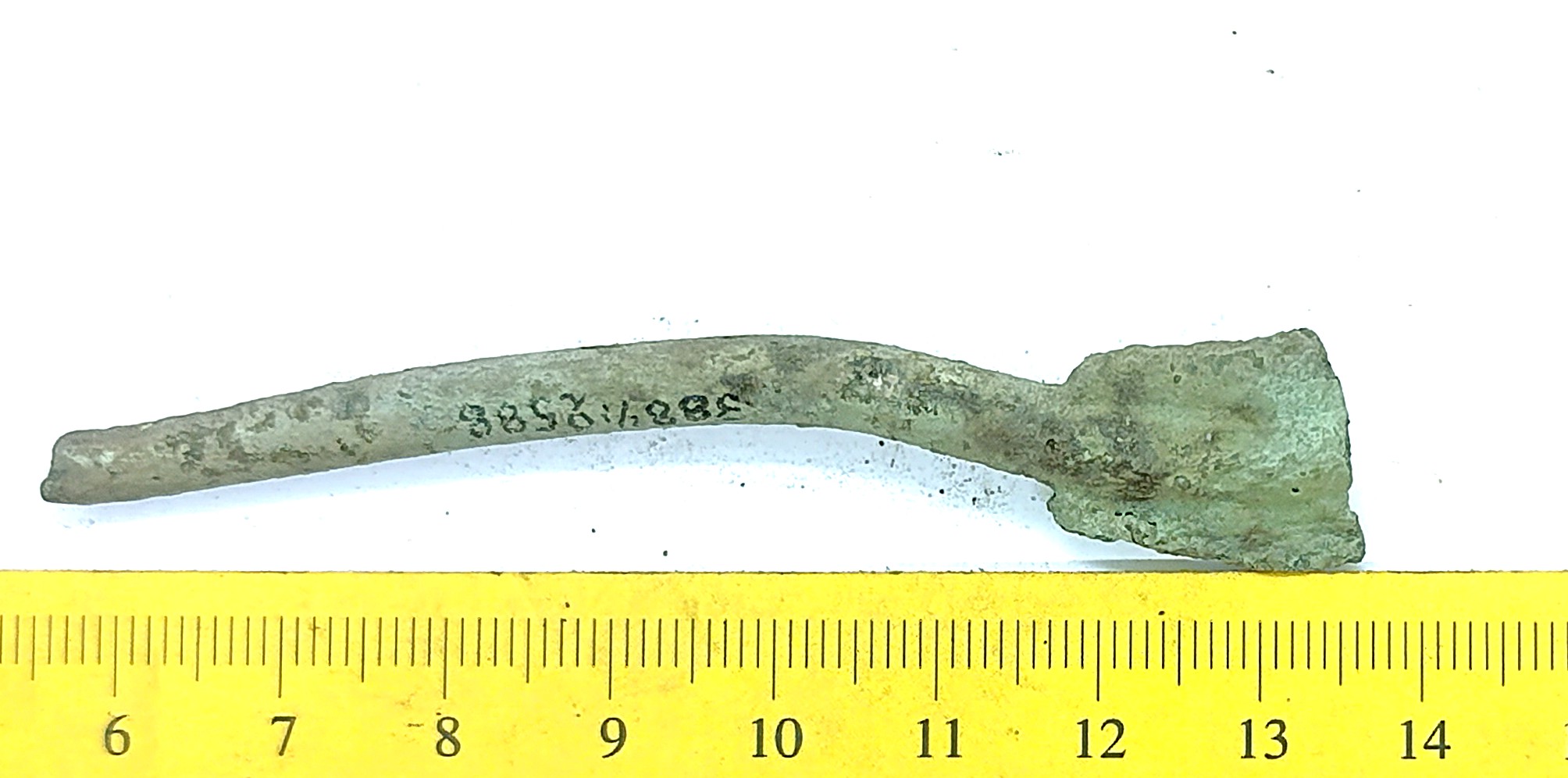
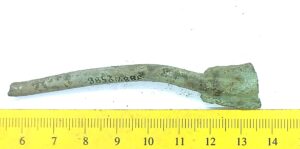
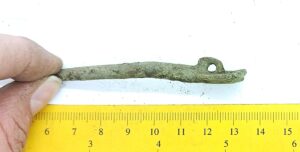
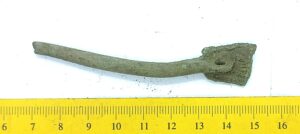 Dress pin, copper alloy. Most of such pins have been found in stone graves with cremations in Saaremaa, sometimes also in West-Estonia (Mägi 2002, 104). They do not occur in inhumation graves after the very beginning of the 13th century. Some such pins are also known from the Livic area in Latvia, where they probably mark graves of Saaremaa women (e.g. Zariņa 2006, Pl. 209: 2).
Literature:
Mägi, M. 2002. At the Crossroads of Space and Time. Graves, Changing Society and Ideology on Saaremaa (Ösel), 9th–13th Centuries AD. (CCC Papers, 6.) Tallinn.
Zariņa, A. 2006. Salaspils Laukskolas kapulauks 10.–13. gadsimts. Rīga: Latvijas Vēstures Institūta Apgāds.
Century:
11-12
Discovery code:
AI 3884: 2588
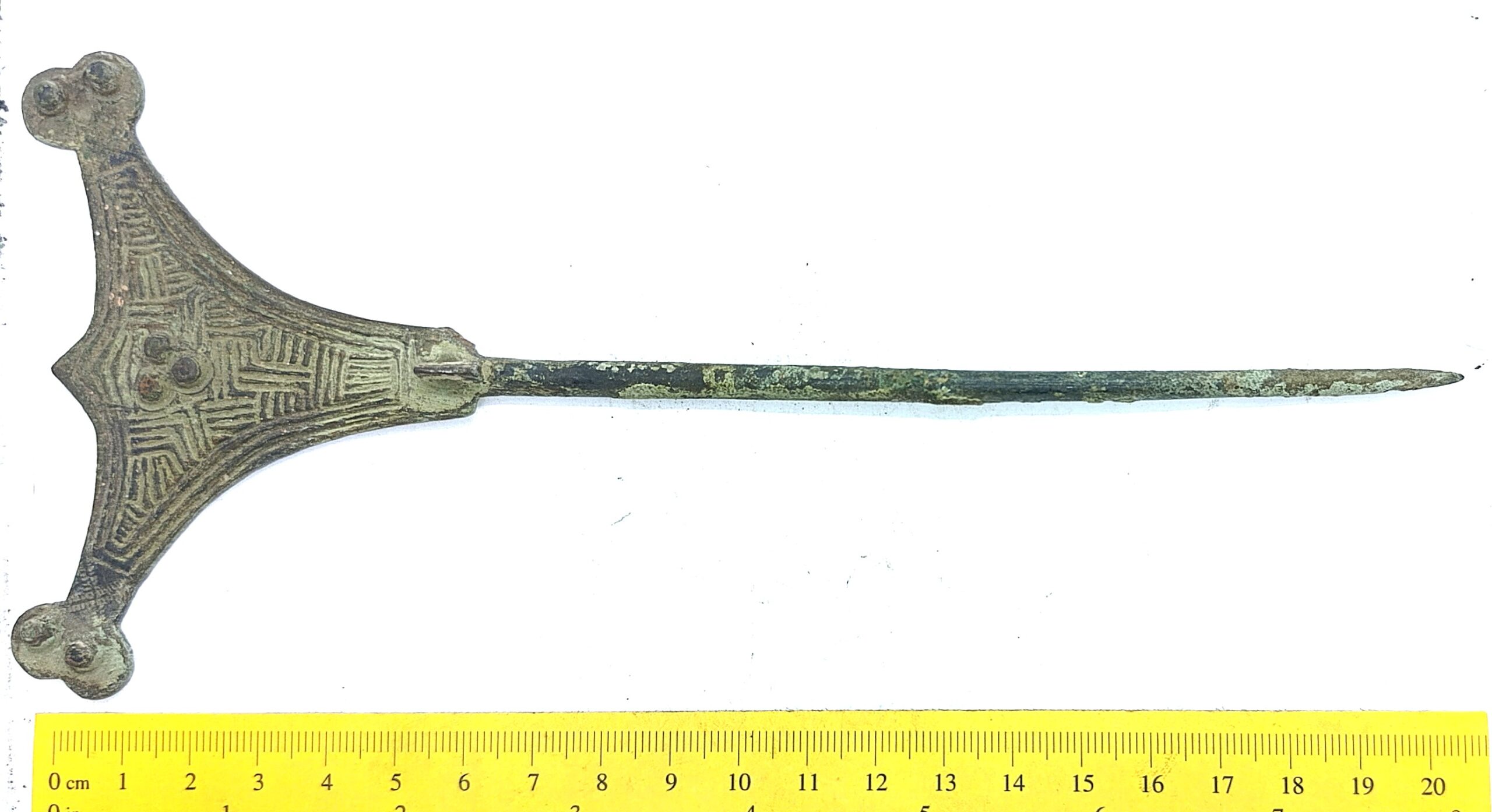
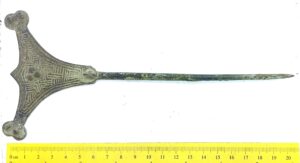
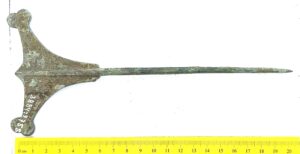
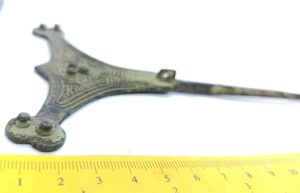 Dress pin, copper alloy. Triangular-headed, with typical plait decoration. The majority of such pins have been found in stone graves with cremations in Saaremaa, sometimes also in West-Estonia (Mägi 2002, 104). They do not occur in inhumation graves after the very beginning of the 13th century. Some such pins are also known from the Livic area in Latvia, where they probably mark graves of Saaremaa women (e.g. Zariņa 2006, Pl. 209: 2).
Literature:
Mägi, M. 2002. At the Crossroads of Space and Time. Graves, Changing Society and Ideology on Saaremaa (Ösel), 9th–13th Centuries AD. (CCC Papers, 6.) Tallinn.
Zariņa, A. 2006. Salaspils Laukskolas kapulauks 10.–13. gadsimts. Rīga: Latvijas Vēstures Institūta Apgāds.
Century:
11-12
Discovery code:
AI 3884: 2755
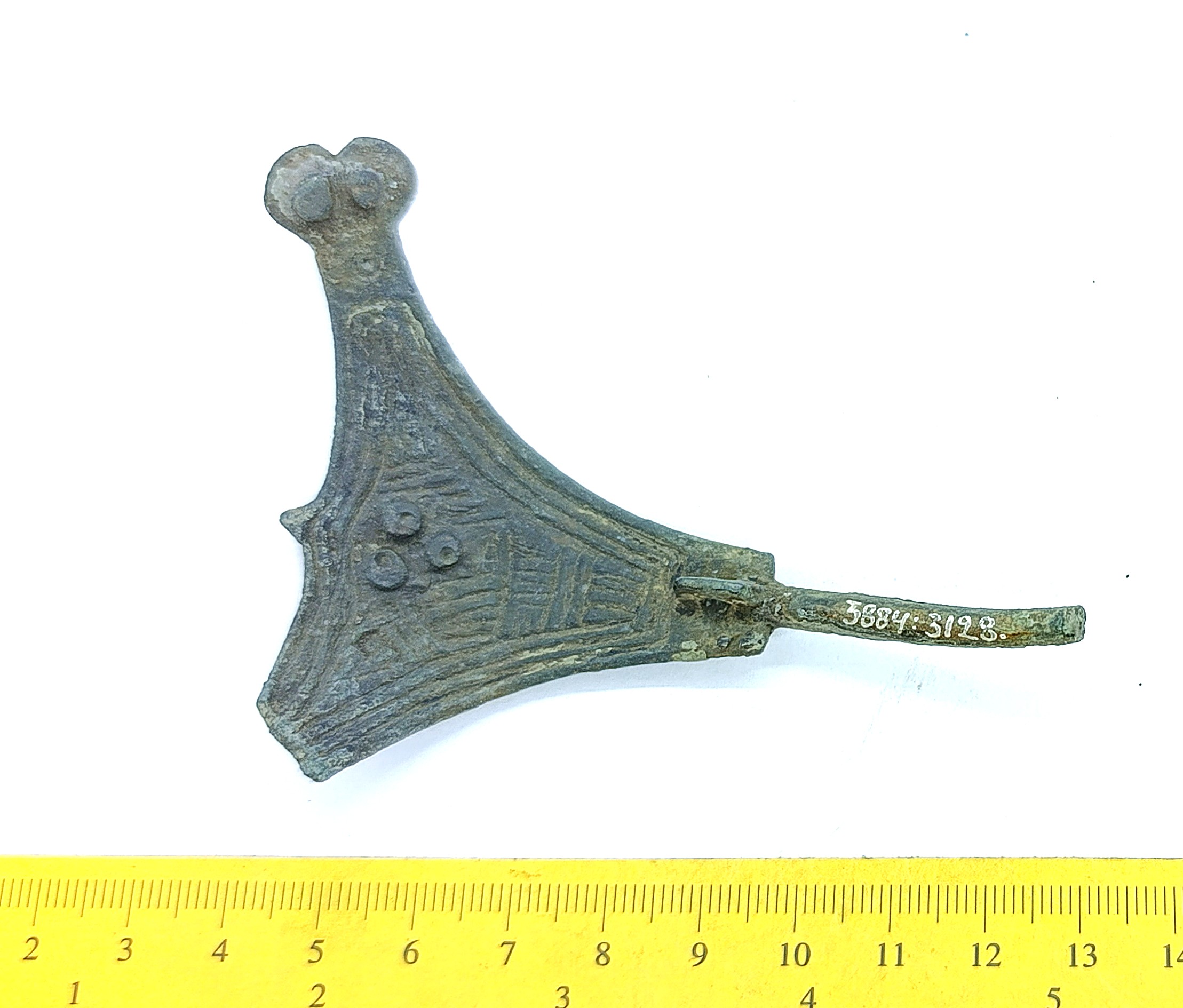
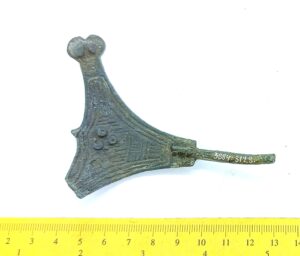
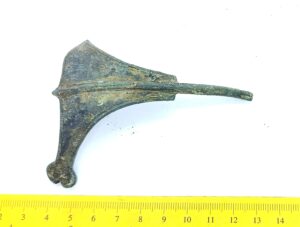
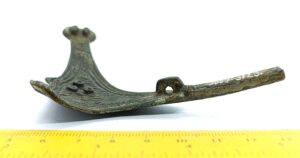 Dress pin, copper alloy. Triangular-headed, with typical plait decoration. The majority of such pins have been found in stone graves with cremations in Saaremaa, sometimes also in West-Estonia (Mägi 2002, 104). They do not occur in inhumation graves after the very beginning of the 13th century. Some such pins are also known from the Livic area in Latvia, where they probably mark graves of Saaremaa women (e.g. Zariņa 2006, Pl. 209: 2).
Literature:
Mägi, M. 2002. At the Crossroads of Space and Time. Graves, Changing Society and Ideology on Saaremaa (Ösel), 9th–13th Centuries AD. (CCC Papers, 6.) Tallinn.
Zariņa, A. 2006. Salaspils Laukskolas kapulauks 10.–13. gadsimts. Rīga: Latvijas Vēstures Institūta Apgāds.
Century:
11-12
Discovery code:
AI 3884: 3128

