
Database

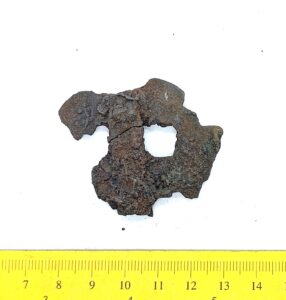
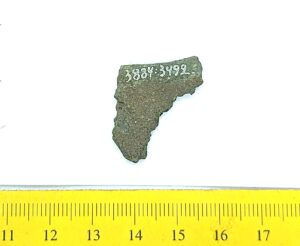
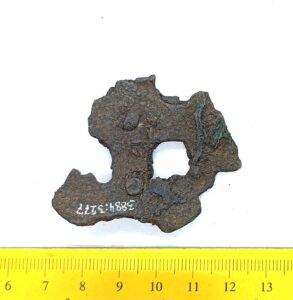 Pin, iron. Fragment of a flat double cross-headed pin with connected terminals.
Century:
12-13
Discovery code:
AI 3884: 3277

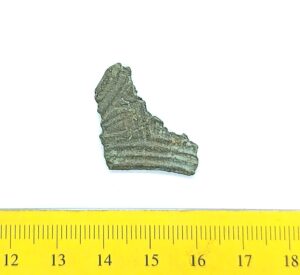
 ress pin, copper alloy. With typical plait decoration, most of such pins have been found in stone graves with cremations in Saaremaa, sometimes also in West-Estonia (Mägi 2002, 104). They do not occur in inhumation graves after the very beginning of the 13th century. Some such pins are also known from the Livic area in Latvia, where they probably mark graves of Saaremaa women (e.g. Zariņa 2006, Pl. 209: 2).
Literature:
Mägi, M. 2002. At the Crossroads of Space and Time. Graves, Changing Society and Ideology on Saaremaa (Ösel), 9th–13th Centuries AD. (CCC Papers, 6.) Tallinn.
Zariņa, A. 2006. Salaspils Laukskolas kapulauks 10.–13. gadsimts. Rīga: Latvijas Vēstures Institūta Apgāds.
Century:
11-12
Discovery code:
AI 3884: 3492
 .
.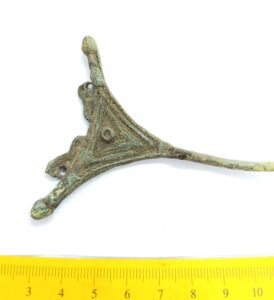
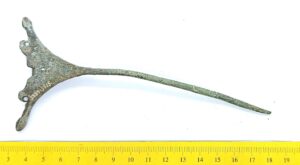
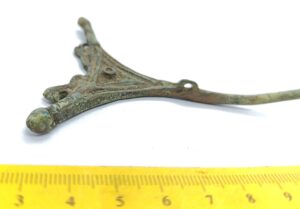
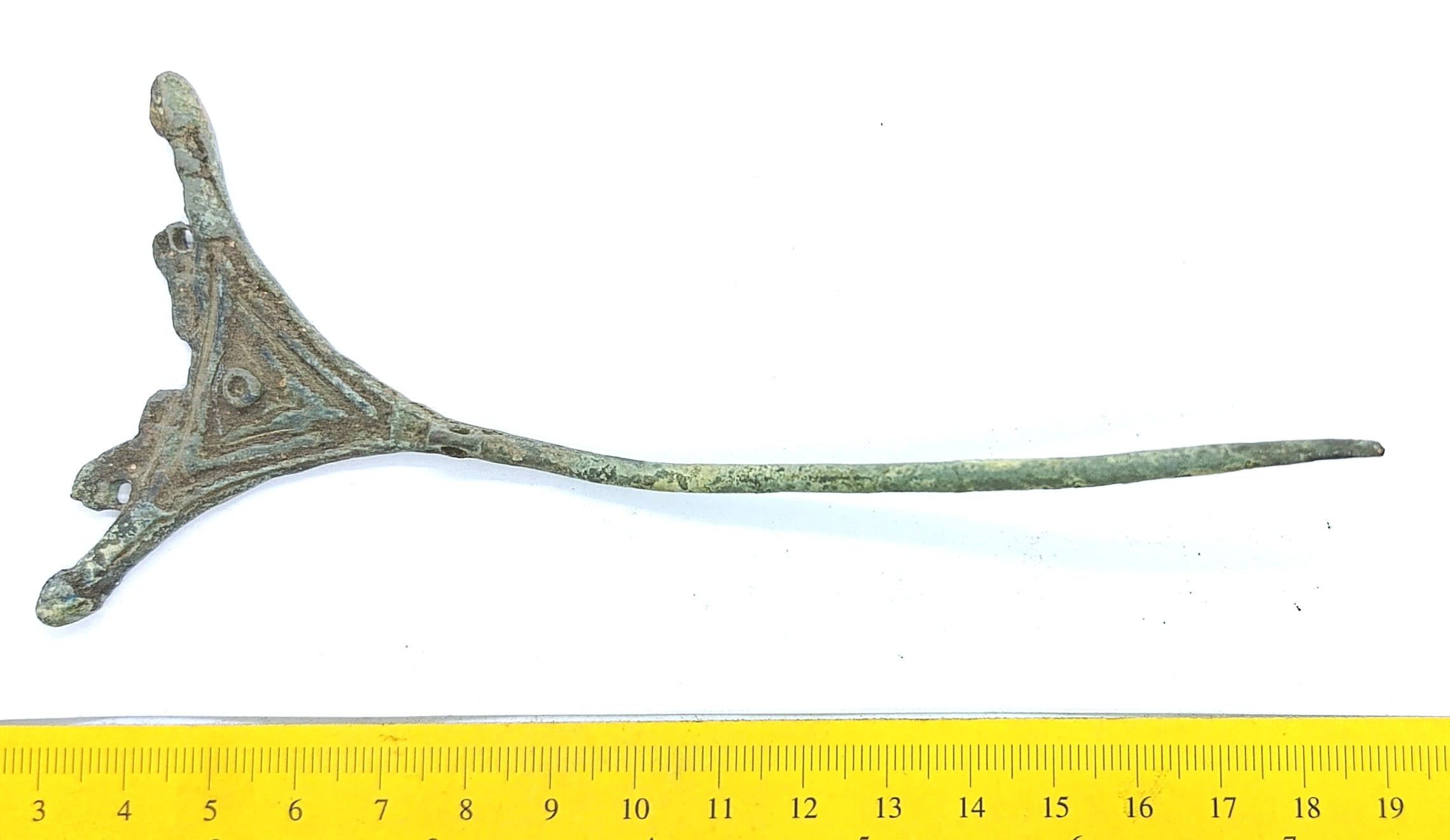
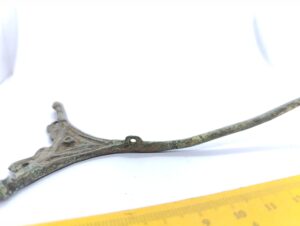 Dress pin, copper alloy Ornament of parallel lines, the upper edge decorated with two animal figures facing opposite directions. Most of similar pins have been found in stone graves with cremations in Saaremaa, sometimes also in West-Estonia (Mägi 2002, 104). Pins with precisely the same shape do not occur in inhumations dated after the very beginning of the 13th century.
Literature:
Mägi, M. 2002. At the Crossroads of Space and Time. Graves, Changing Society and Ideology on Saaremaa (Ösel), 9th–13th Centuries AD. (CCC Papers, 6.) Tallinn.
Century:
11-12
Discovery code:
AI 3884: 3515
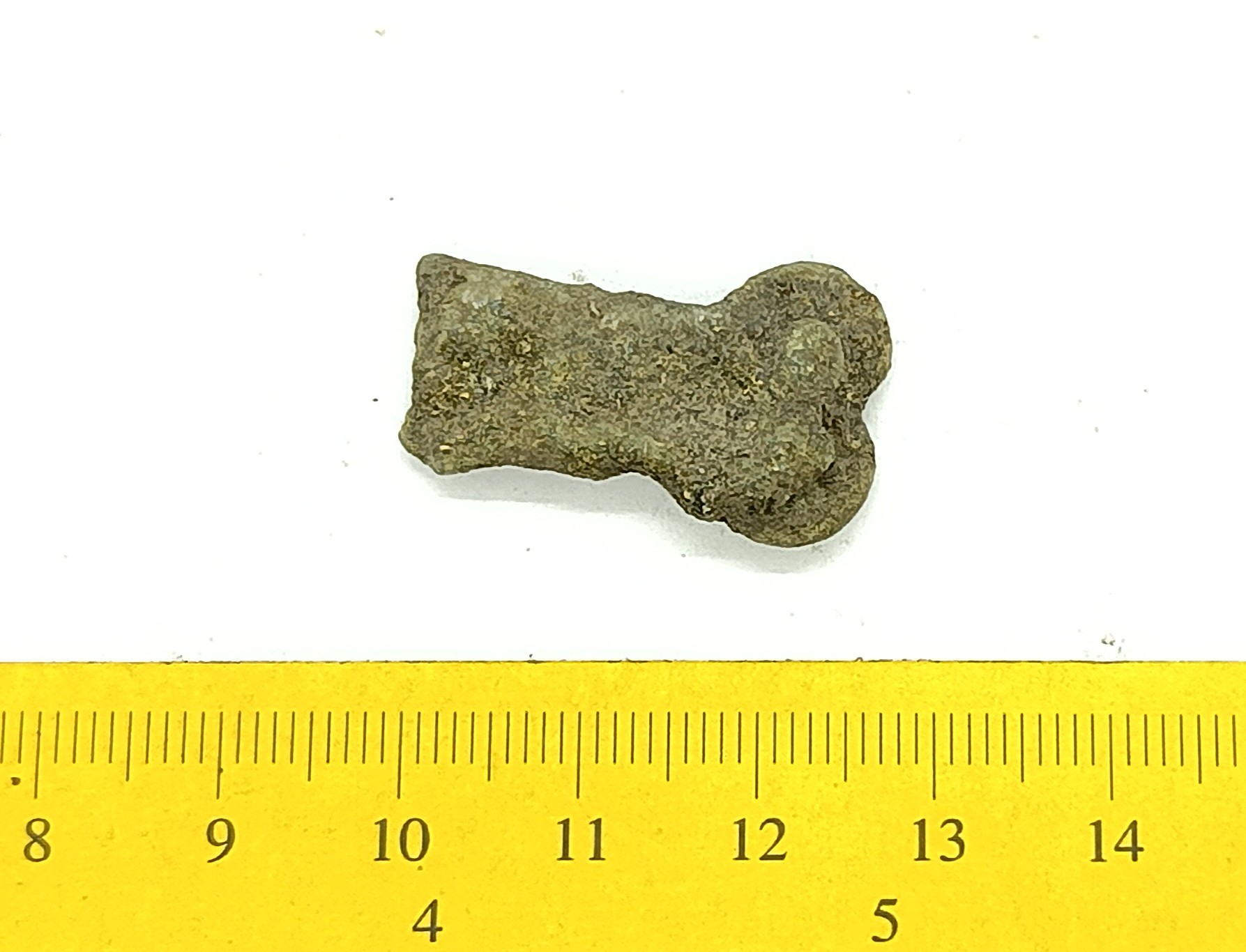
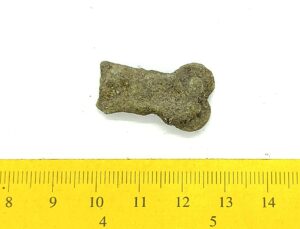
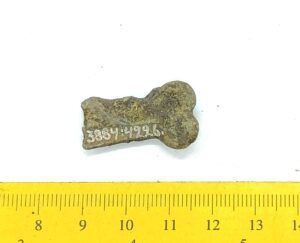
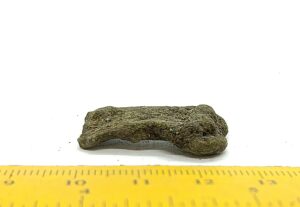 Dress pin, copper alloy. Triangular-headed. The majority of such pins have been found in stone graves with cremations in Saaremaa, sometimes also in West-Estonia (Mägi 2002, 104). They do not occur in inhumation graves after the very beginning of the 13th century. Some such pins are also known from the Livic area in Latvia, where they probably mark graves of Saaremaa women (e.g. Zariņa 2006, Pl. 209: 2).
Literature:
Mägi, M. 2002. At the Crossroads of Space and Time. Graves, Changing Society and Ideology on Saaremaa (Ösel), 9th–13th Centuries AD. (CCC Papers, 6.) Tallinn.
Zariņa, A. 2006. Salaspils Laukskolas kapulauks 10.–13. gadsimts. Rīga: Latvijas Vēstures Institūta Apgāds.
Century:
11-12
Discovery code:
AI 3884: 4226
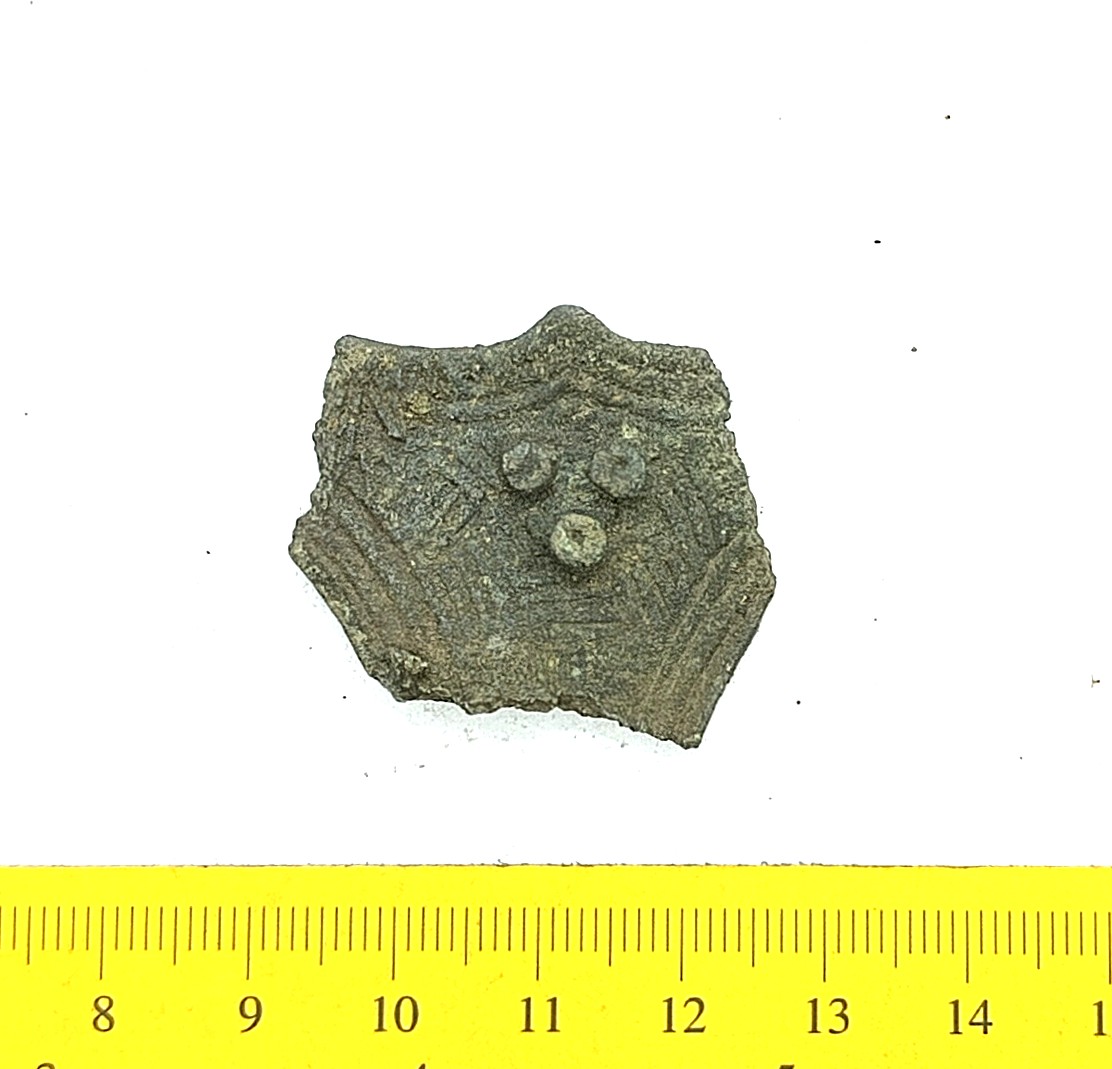
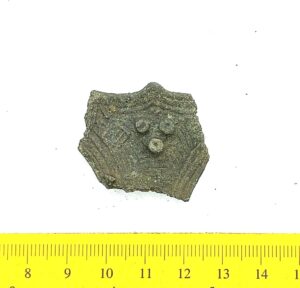
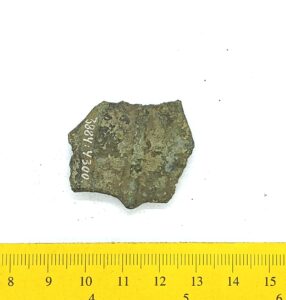
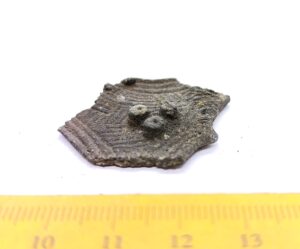 Dress pin, copper alloy. The majority of such pins have been found in stone graves with cremations in Saaremaa, sometimes also in West-Estonia (Mägi 2002, 104). They do not occur in inhumation graves after the very beginning of the 13th century. Some such pins are also known from the Livic area in Latvia, where they probably mark graves of Saaremaa women (e.g. Zariņa 2006, Pl. 209: 2).
Literature:
Mägi, M. 2002. At the Crossroads of Space and Time. Graves, Changing Society and Ideology on Saaremaa (Ösel), 9th–13th Centuries AD. (CCC Papers, 6.) Tallinn.
Zariņa, A. 2006. Salaspils Laukskolas kapulauks 10.–13. gadsimts. Rīga: Latvijas Vēstures Institūta Apgāds.
Century:
11-12
Discovery code:
AI 3884: 4300
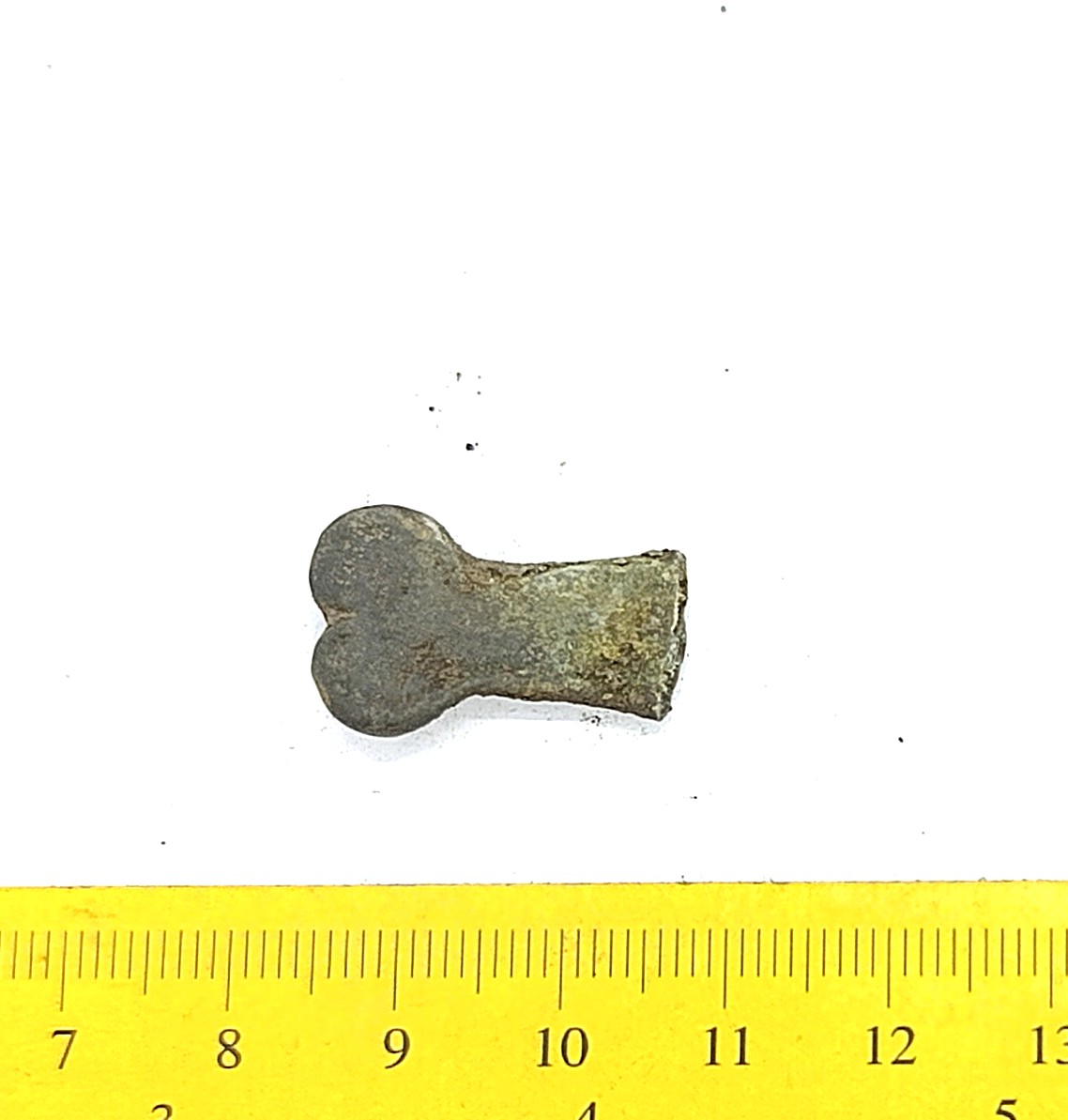
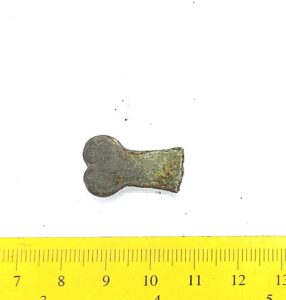
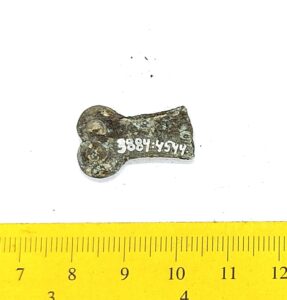 Dress pin, copper alloy. Triangular-headed. The majority of such pins have been found in stone graves with cremations in Saaremaa, sometimes also in West-Estonia (Mägi 2002, 104). They do not occur in inhumation graves after the very beginning of the 13th century. Some such pins are also known from the Livic area in Latvia, where they probably mark graves of Saaremaa women (e.g. Zariņa 2006, Pl. 209: 2).
Literature:
Mägi, M. 2002. At the Crossroads of Space and Time. Graves, Changing Society and Ideology on Saaremaa (Ösel), 9th–13th Centuries AD. (CCC Papers, 6.) Tallinn.
Zariņa, A. 2006. Salaspils Laukskolas kapulauks 10.–13. gadsimts. Rīga: Latvijas Vēstures Institūta Apgāds.
Century:
11-12
Discovery code:
AI 3884: 4544
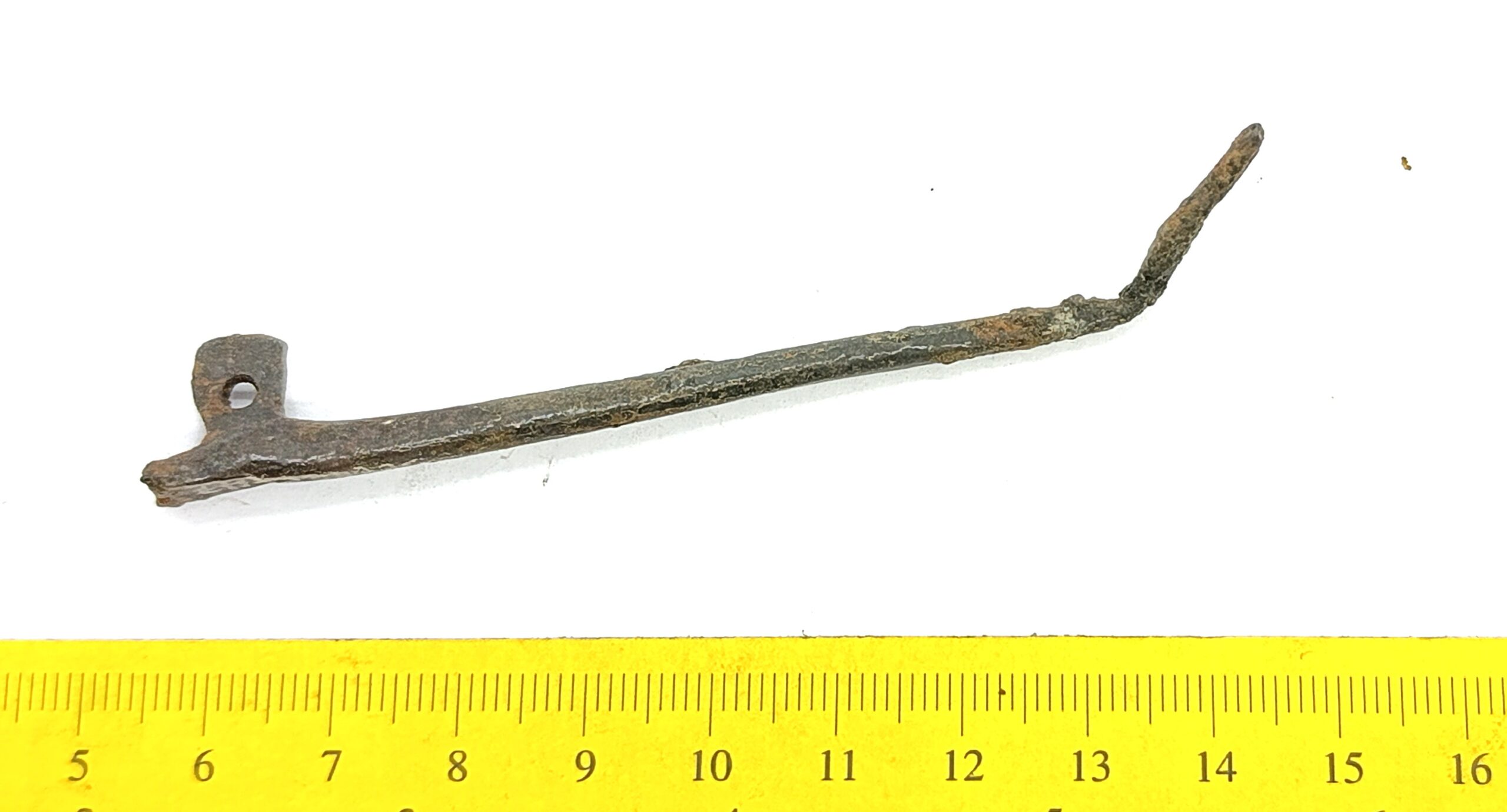
 Pin shaft, copper alloy. According to the shape of the loop from the end of the 12th century or from the 13th century.
Century:
12-13
Discovery code:
AI 3884: 5047
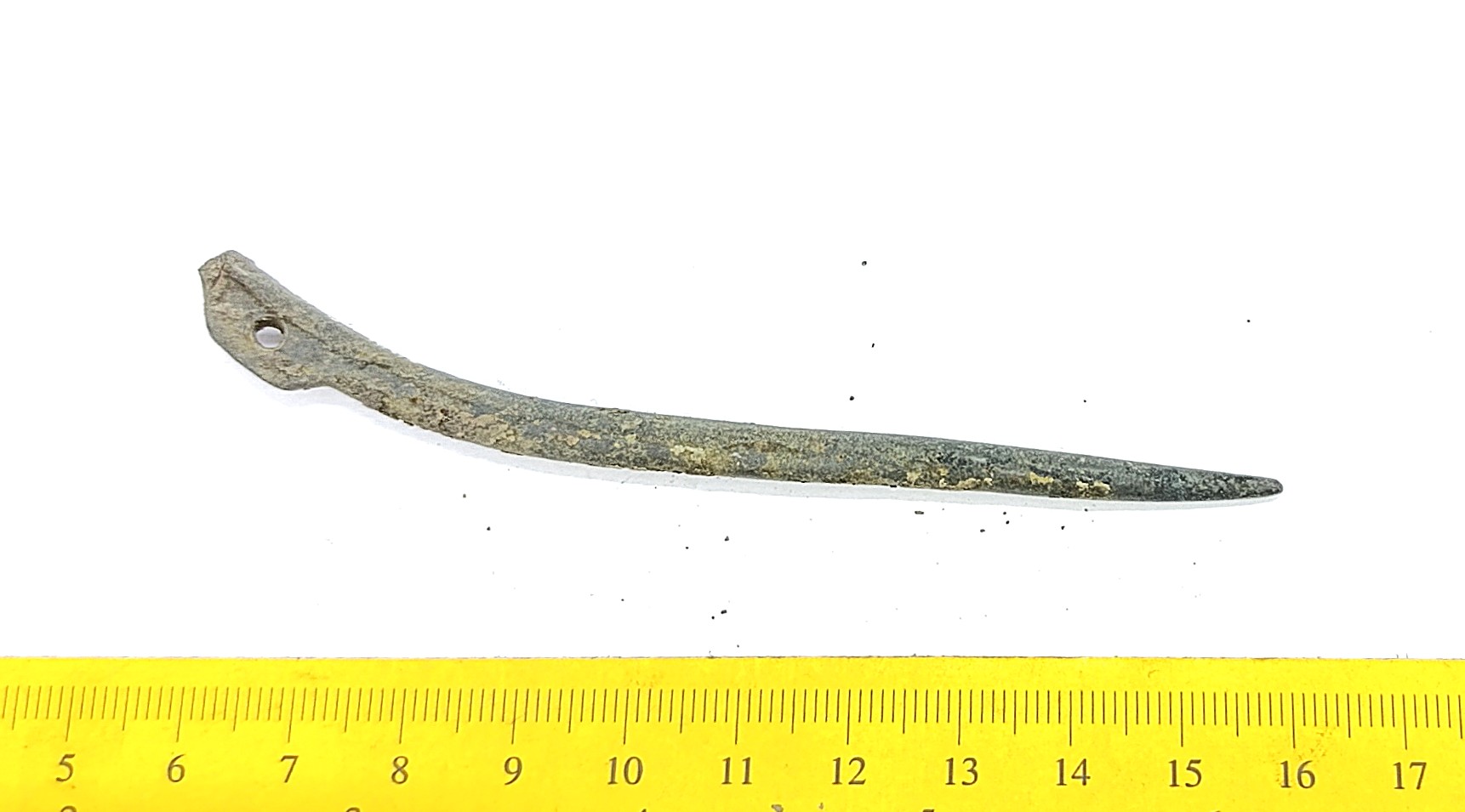
Viltina
Pin shaft, copper alloy.
Century:
12-13
Discovery code:
AI 3884: 5193
Century:
12-13
Discovery code:
AI 3884: 5193
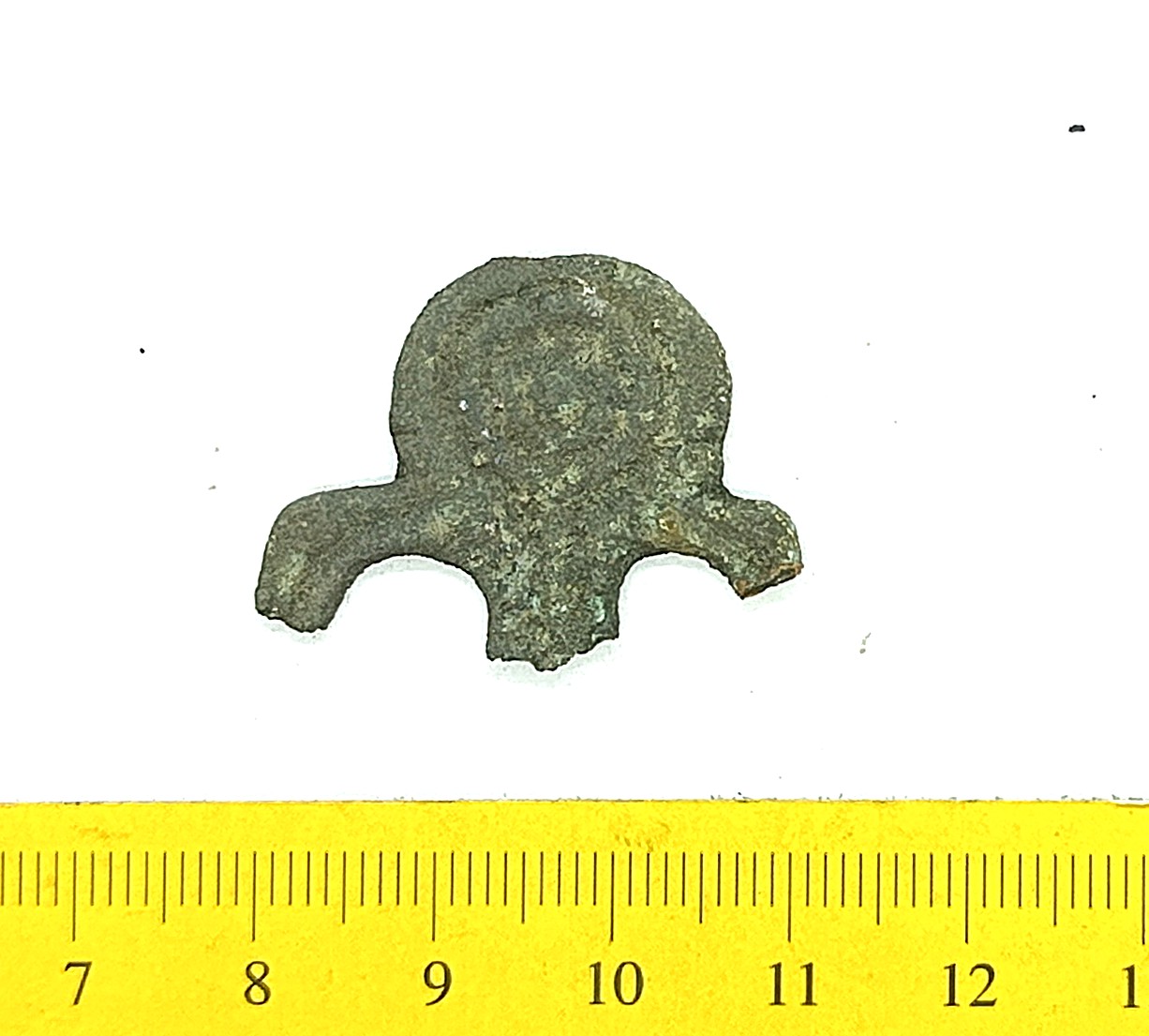
Viltina
Double cross-headed pin with connected terminals, copper alloy.
Century:
13
Discovery code:
AI 3884: 5324
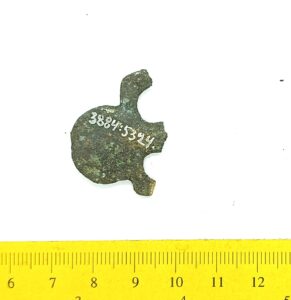 Double cross-headed pin with connected terminals, copper alloy. Such pins are mainly found in inhumations from the 13th-century but were possibly taken into use as early as in the end of the 12th century (see also Mägi et al. 2018, 94, Fig. 14: 1).
Literature:
Mägi, M.; Malve, M. & Toome, T. 2019. Early Christian burials at Valjala churchyard, Saaremaa. – Archaeological Fieldwork in Estonia 2018, 93−118.
Century:
13
Discovery code:
AI 3884: 5324

