
Database
Viltina
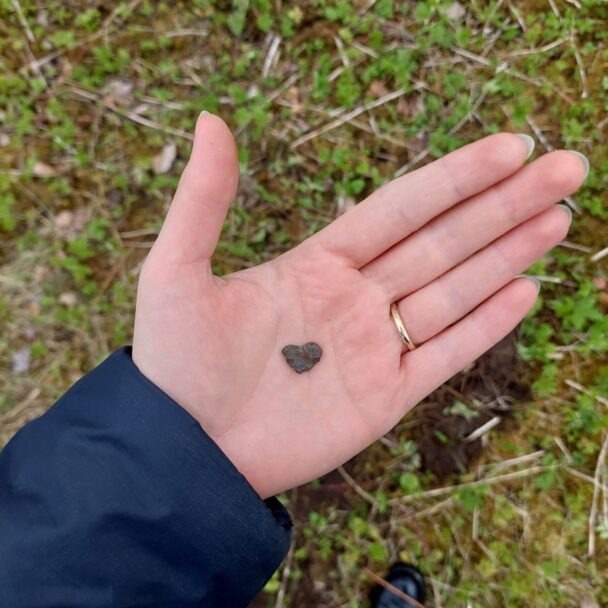
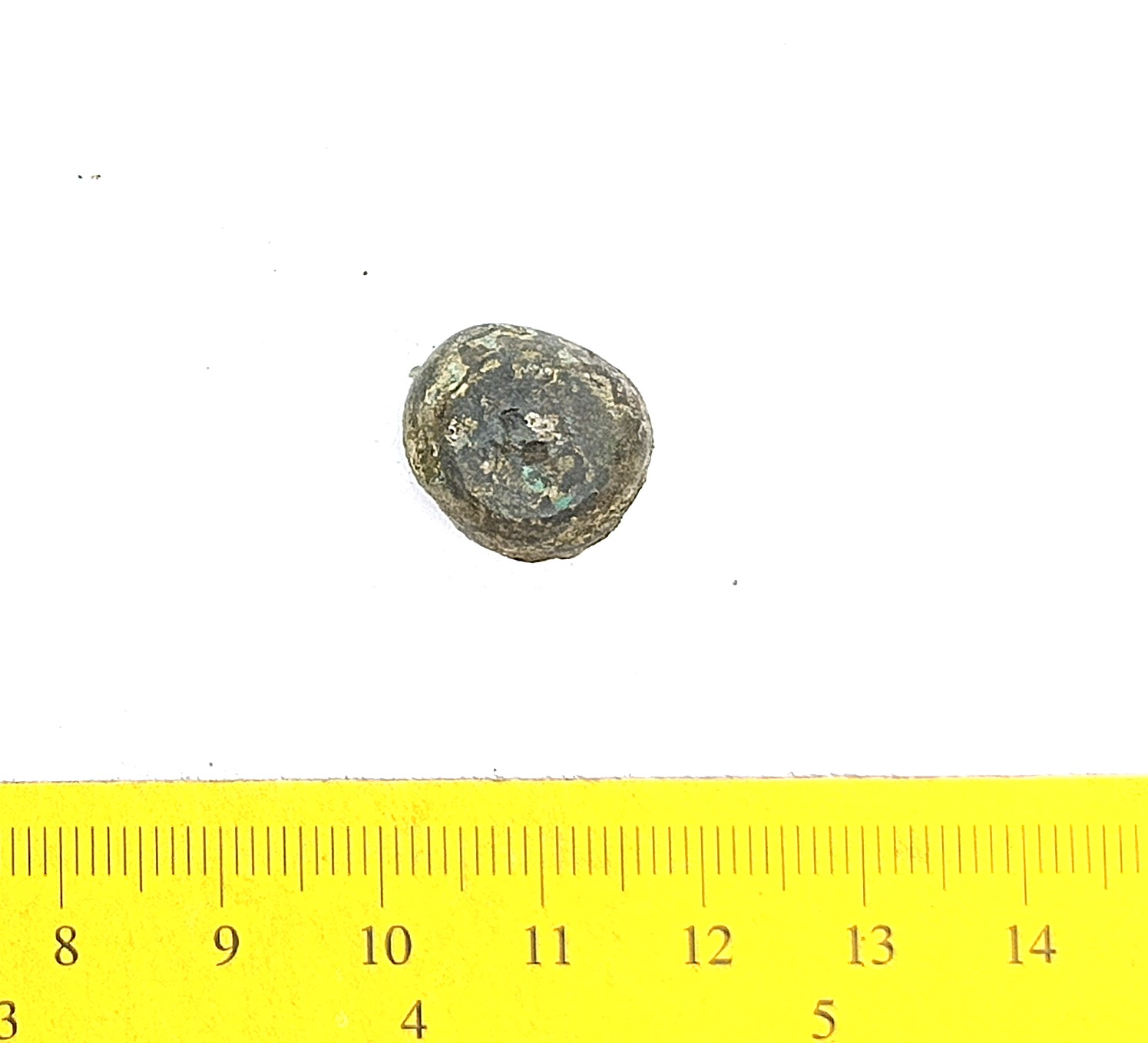
Spherical weight, copper alloy and iron.
Century:
11-12
Discovery code:
AI 3884: 4907
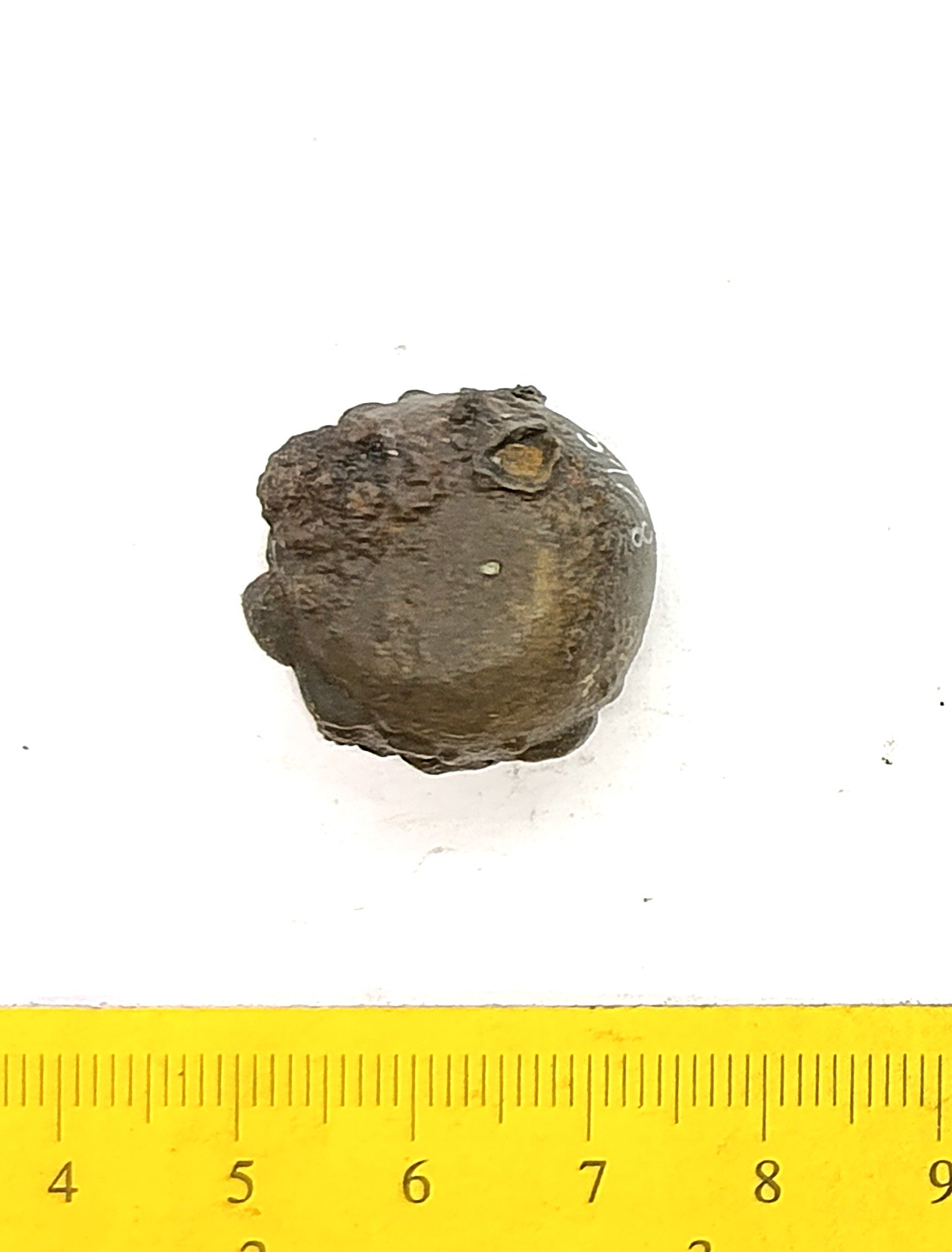
 Spherical weight, copper alloy and iron. Circles on the faces. Such weights are dated to the late 11th century and to the 12th century in Latvia (Berga 2017)
Literature:
Berga, T. 2017. The distribution and chronology of traiding equipment in present-day Latvia in the tenth to thirteenth centuries. – Archaeologia Baltica, 24, 59-77.
Century:
11-12
Discovery code:
AI 3884: 4907
Viltina
Spherical weight, copper alloy and iron.
Century:
11-12
Discovery code:
AI 3884: 5178
 Spherical weight, copper alloy and iron. Circles on the faces. Such weights are dated to the late 11th century and to the 12th century in Latvia (Berga 2017)
Literature:
Berga, T. 2017. The distribution and chronology of traiding equipment in present-day Latvia in the tenth to thirteenth centuries. – Archaeologia Baltica, 24, 59-77.
Century:
11-12
Discovery code:
AI 3884: 5178
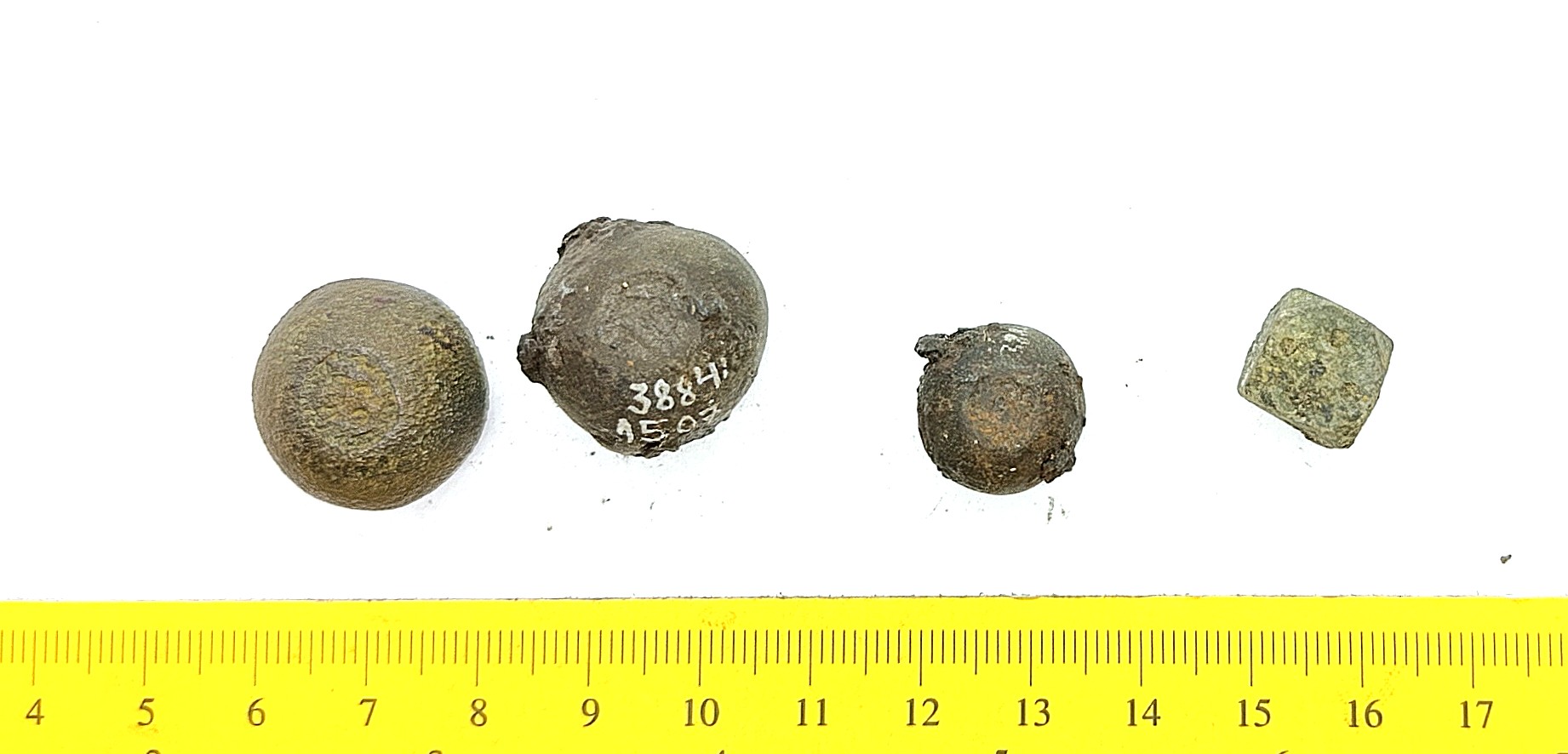
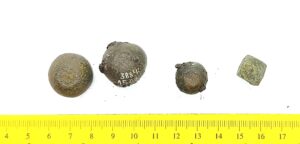
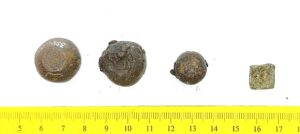 Weights, copper alloy and iron, 4. Such weights in Latvia have been dated to the late 12th and the 13th centuries (Berga, 2017, 73).
Literature:
Berga, T. 2017. The distribution and chronology of traiding equipment in present-day Latvia in the tenth to thirteenth centuries. – Archaeologia Baltica, 24, 59-77.
Century:
10-13
Discovery code:
AI 3884: 5592
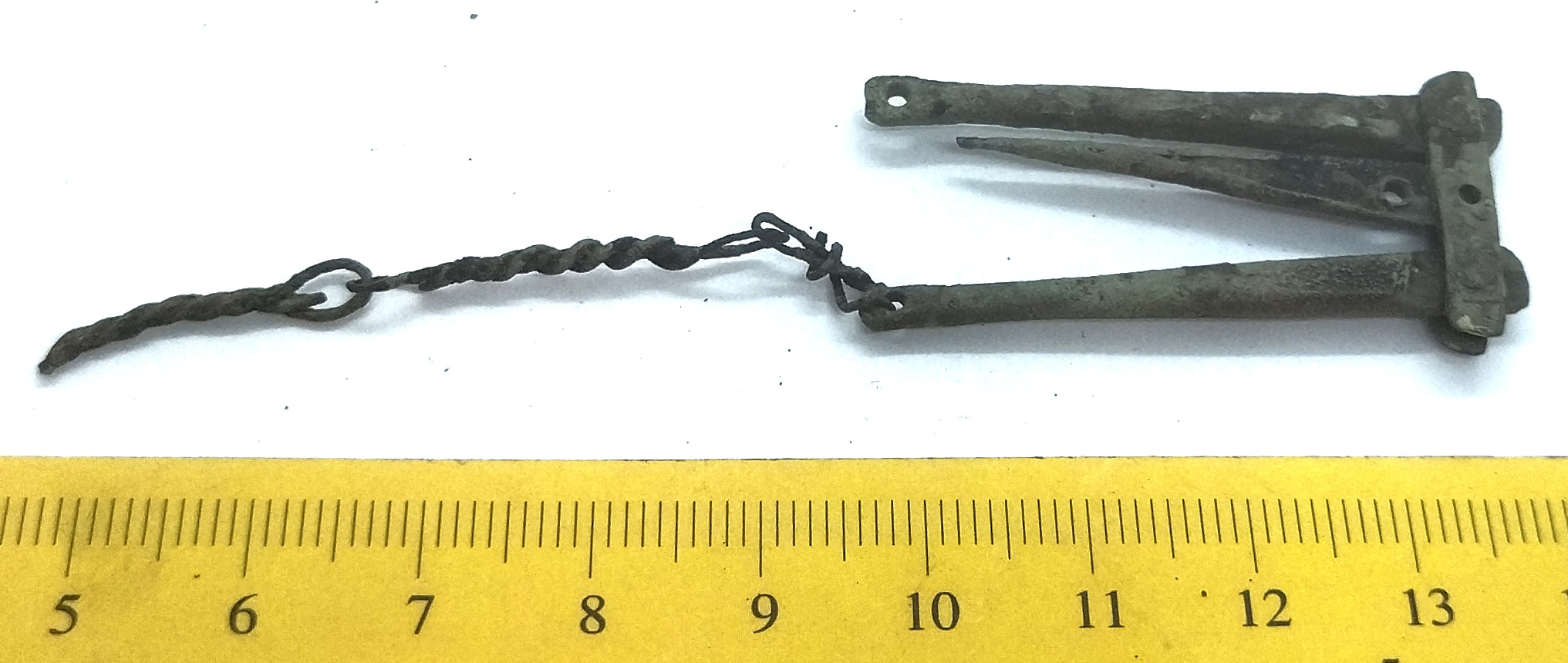
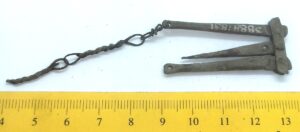
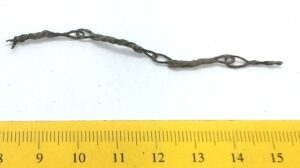 Scales, copper alloy. In both Estonian and Latvian archaeological material scales of this type appeared in the end of the 10th century and they were used until the 13th century (Berga 2017, 62). Scales were used mainly to weigh silver (Laul & Tamla 2014, 39).
Literature:
Berga, T. 2017. The distribution and chronology of trading equipment in present-day Latvia in the tenth to thirteenth centuries. – Archaeologica Baltica, 24: 59–77.
Laul, S. & Tamla, Ü. 2014. Peitleid Lõhavere linnamäelt: Käsitöö- ja ehtevakk 13. sajandi algusest. (Õpetatud Eesti Seltsi Kirjad 10). Õpetatud Eesti Selts, Tartu–Tallinn.
Century:
10-13
Discovery code:
AI 3884: 831
Viltina
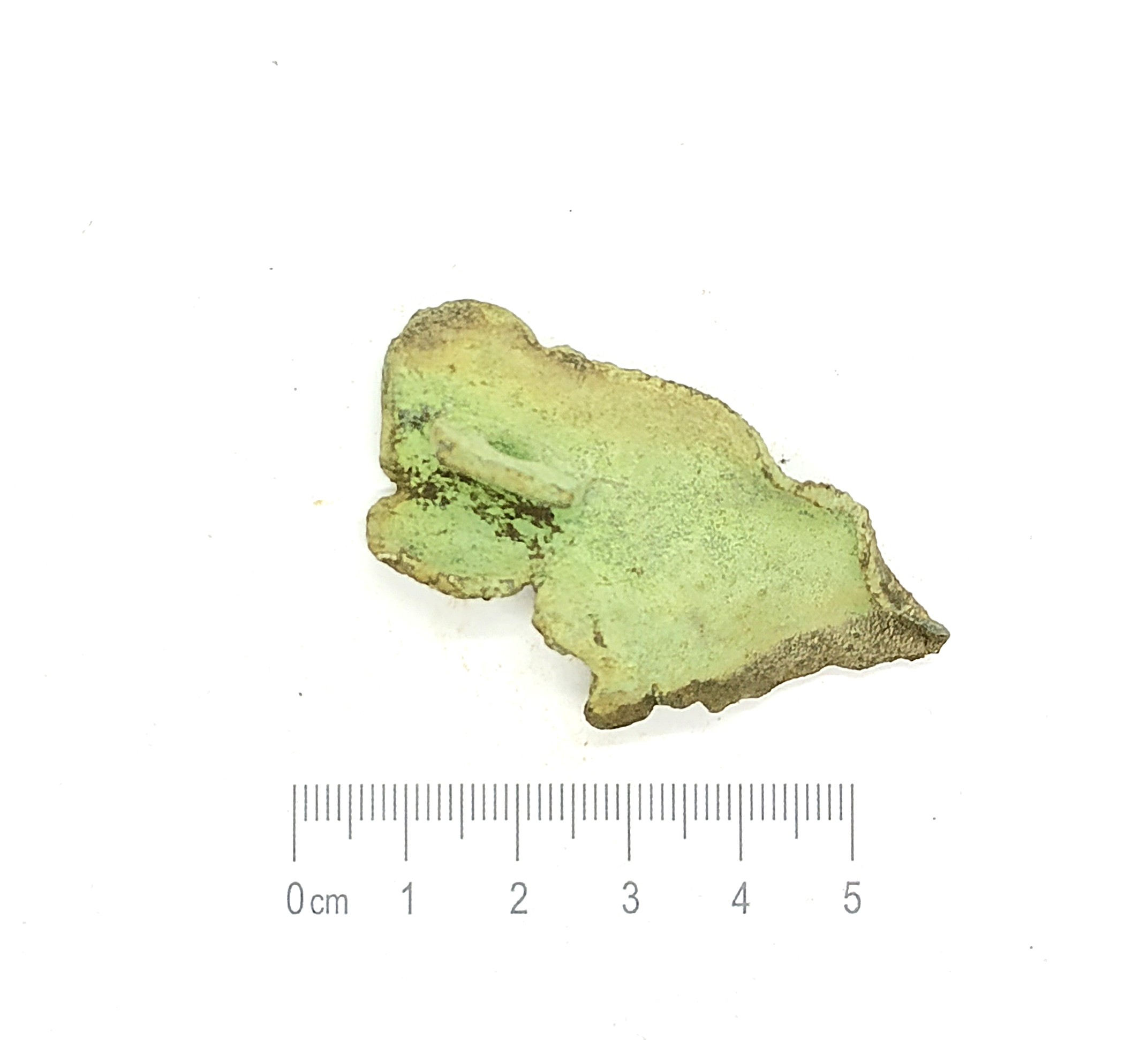
Saaremaa type chain holder, copper alloy.
Century:
12-13
Discovery code:
AI 3884: 382
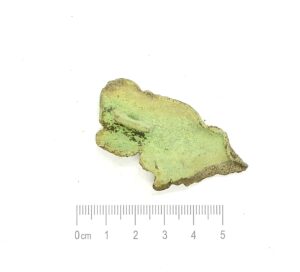
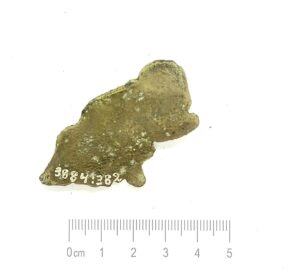
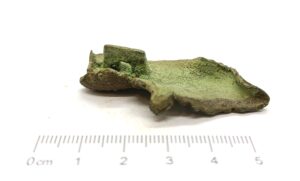 Saaremaa type chain holder, copper alloy. Semi-oval, partly melted. Most likely has been silver-plated. It is a typical chain holder of Saaremaa, also found in northern and western Estonia, with a few examples in the surrounding areas. They can be found in both cremations and inhumation burials, often together with pins of Saaremaa type. Similar chain holders are also known from the Livic areas in Latvia, where they have often been uncovered in inhumation graves together with other Saaremaa-type artefacts (Spirgis 2008, 144-145). Although previously dated to the 11th century, they were probably mainly in use in the 12th-13th centuries (Mägi 2002, 105).
Literature:
Mägi, M. 2002. At the Crossroads of Space and Time. Graves, Changing Society and Ideology on Saaremaa (Ösel), 9th–13th centuries AD. CCC papers: 6. Gotland University College, Centre for Baltic Studies; Institute of History, Department of Archaeology. Tallinn, 2002.
Spirģis, R. 2008. Bruņrupuču saktas ar krūšu važiņrotām un lībiešu kultūras attīstība Daugavs lejtecē 10.-13. gadsimtā. Rīga: Latvijas Vēstures Institūta Apgāds.
Century:
12-13
Discovery code:
AI 3884: 382
Viltina
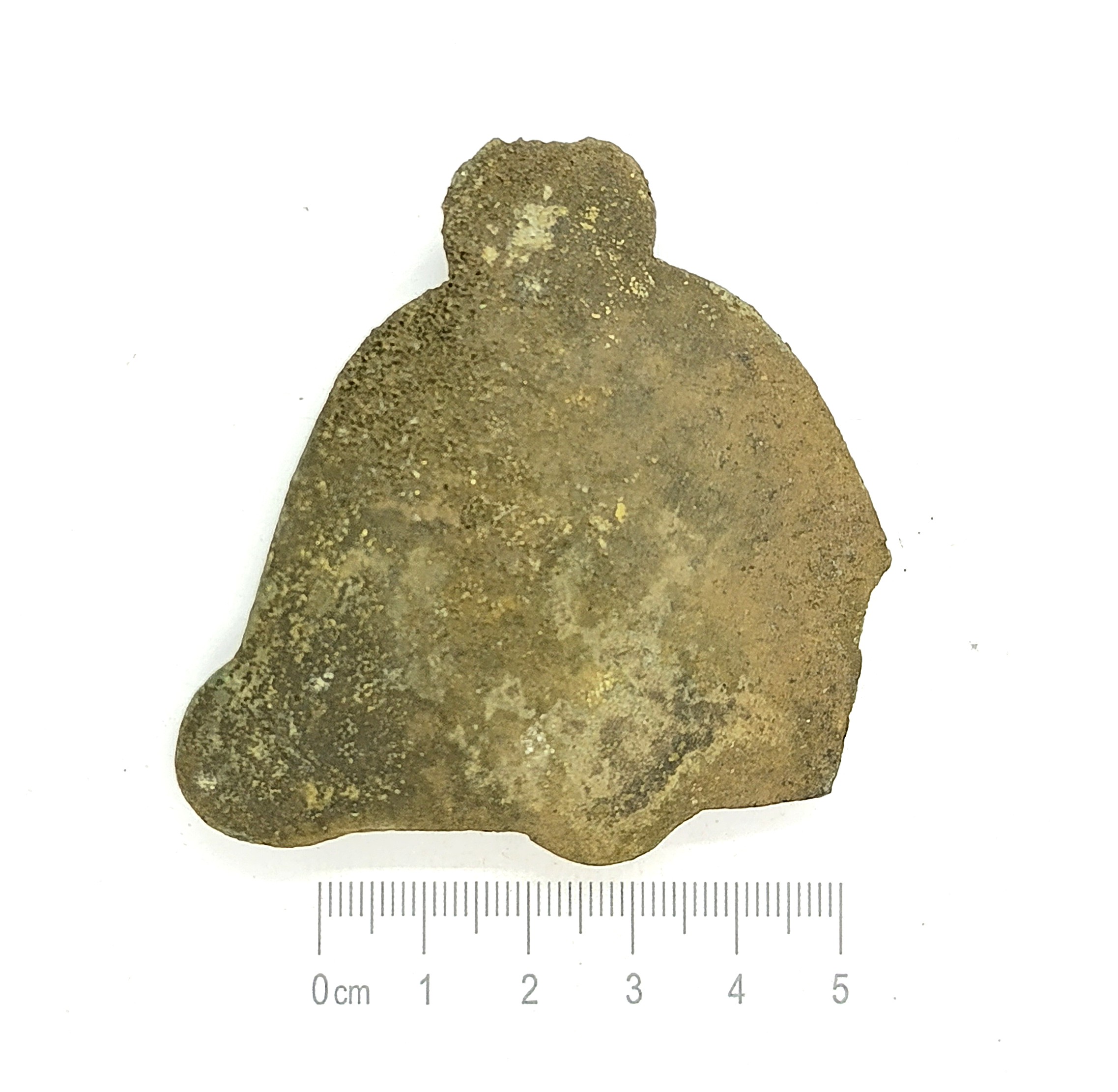
Saaremaa type chain holder, copper alloy.
Century:
12-13
Discovery code:
AI 3884: 1041
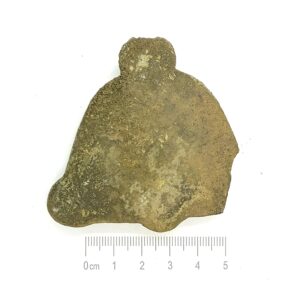
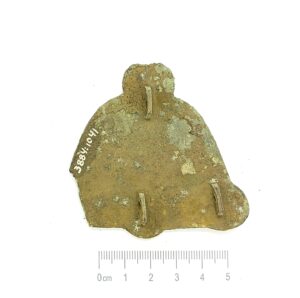
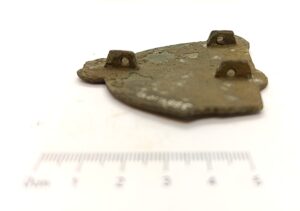 Saaremaa type chain holder, copper alloy. Semi-oval. Most likely has been silver-plated. It is a typical chain holder of Saaremaa, also found in northern and western Estonia, with a few examples in the surrounding areas. They can be found in both cremations and inhumation burials, often together with pins of Saaremaa type. Similar chain holders are also known from the Livic areas in Latvia, where they have often been uncovered in inhumation graves together with other Saaremaa-type artefacts (Spirgis 2008, 144-145). Although previously dated to the 11th century, they were probably mainly in use in the 12th-13th centuries (Mägi 2002, 105).
Literature:
Mägi, M. 2002. At the Crossroads of Space and Time. Graves, Changing Society and Ideology on Saaremaa (Ösel), 9th–13th centuries AD. CCC papers: 6. Gotland University College, Centre for Baltic Studies; Institute of History, Department of Archaeology. Tallinn, 2002.
Spirģis, R. 2008. Bruņrupuču saktas ar krūšu važiņrotām un lībiešu kultūras attīstība Daugavs lejtecē 10.-13. gadsimtā. Rīga: Latvijas Vēstures Institūta Apgāds.
Century:
12-13
Discovery code:
AI 3884: 1041
Viltina
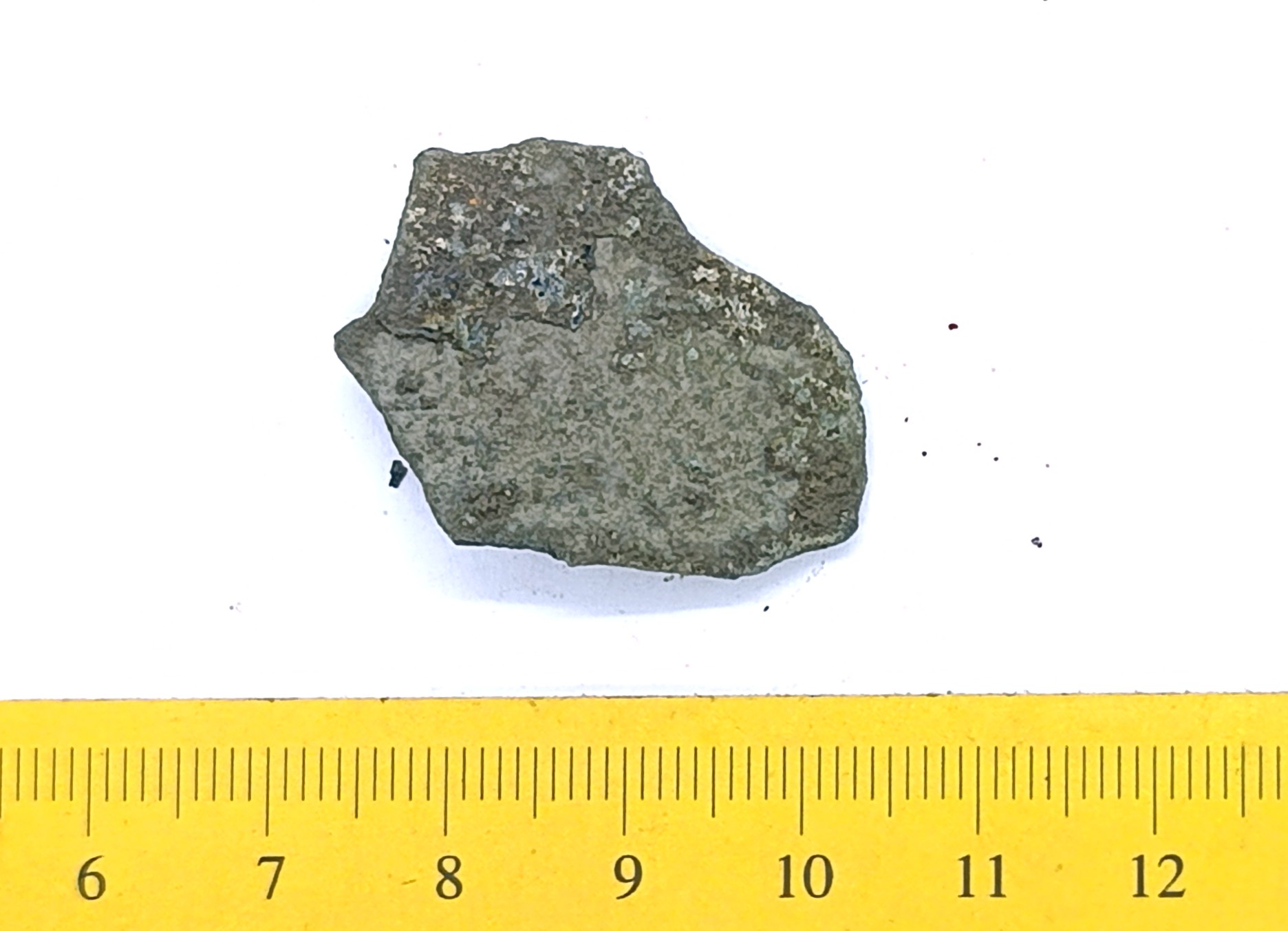
Saaremaa type chain holder, copper alloy.
Century:
12-13
Discovery code:
AI 3884: 1976
Century:
12-13
Discovery code:
AI 3884: 1976
Viltina
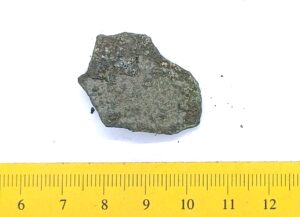
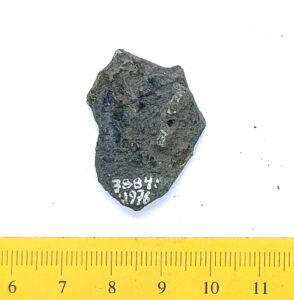
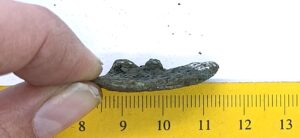
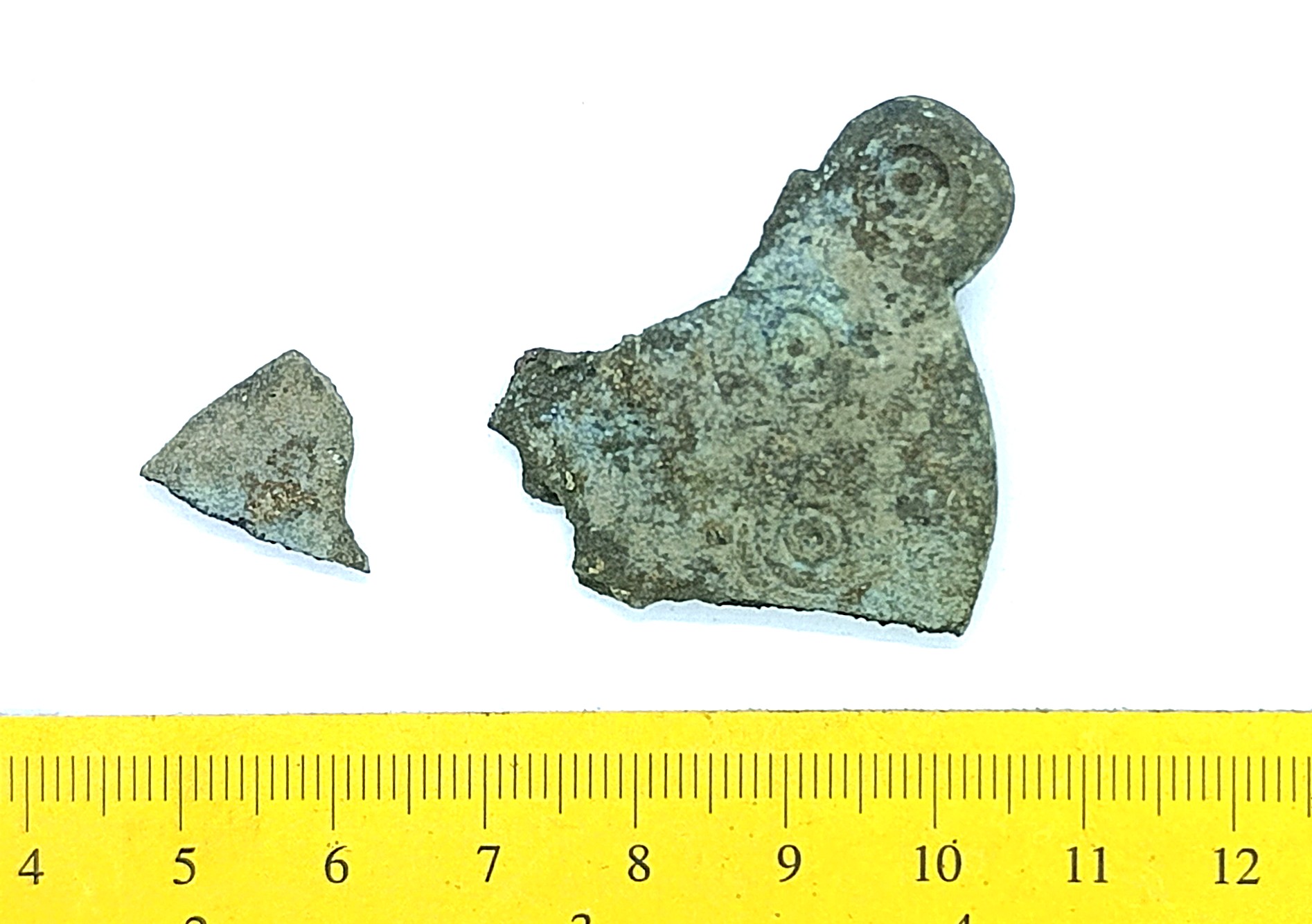
Saaremaa type chain holder, copper alloy.
Century:
12-13
Discovery code:
AI 3884: 2167
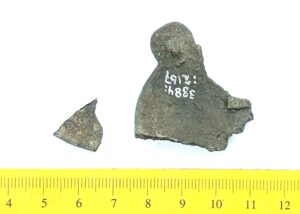
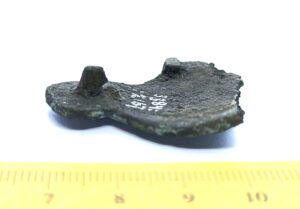 Saaremaa type chain holder, copper alloy. Semi-oval, ornamented with concentric circles. Most likely has been silver-plated. It is a typical chain holder of Saaremaa, also found in northern and western Estonia, with a few examples in the surrounding areas. They can be found in both cremations and inhumation burials, often together with pins of Saaremaa type. Similar chain holders are also known from the Livic areas in Latvia, where they have often been uncovered in inhumation graves together with other Saaremaa-type artefacts (Spirgis 2008, 144-145). Although previously dated to the 11th century, they were probably mainly in use in the 12th-13th centuries (Mägi 2002, 105).
Literature:
Mägi, M. 2002. At the Crossroads of Space and Time. Graves, Changing Society and Ideology on Saaremaa (Ösel), 9th–13th centuries AD. CCC papers: 6. Gotland University College, Centre for Baltic Studies; Institute of History, Department of Archaeology. Tallinn, 2002.
Spirģis, R. 2008. Bruņrupuču saktas ar krūšu važiņrotām un lībiešu kultūras attīstība Daugavs lejtecē 10.-13. gadsimtā. Rīga: Latvijas Vēstures Institūta Apgāds.
Century:
12-13
Discovery code:
AI 3884: 2167
Viltina
End plaque of a chain arrangement, copper alloy.
Century:
11
Discovery code:
AI 3884: 2563
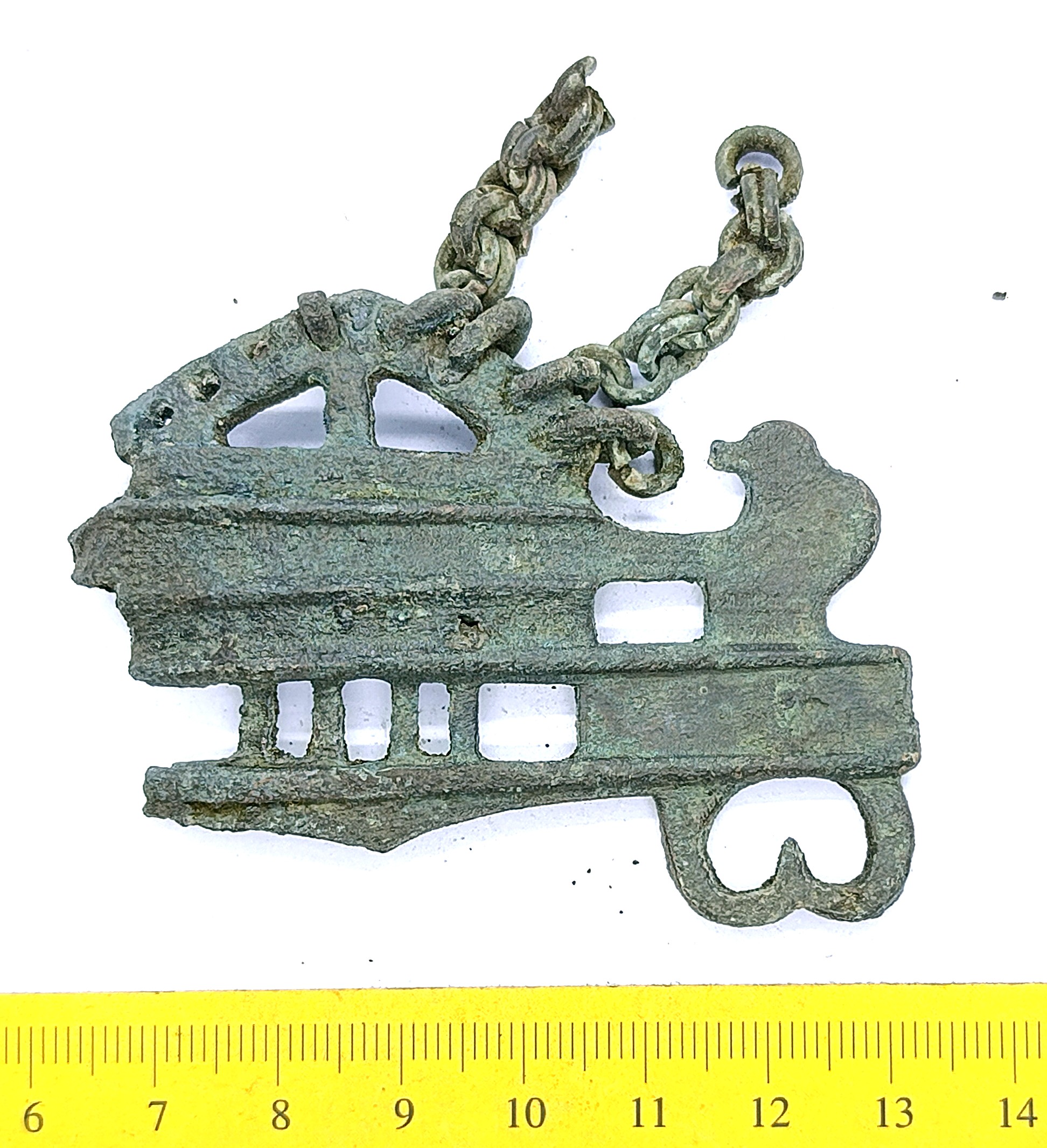
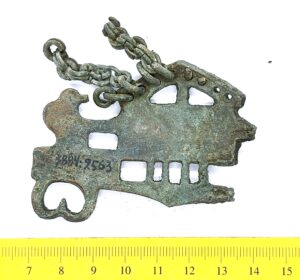 End plaque of a chain arrangement, copper alloy. These types of end plaques were widespread in Saaremaa and coastal Estonia, but also in the Livic areas and northern Couronia, where they have been dated 950–1150 (Zariņa 2006, 363; Spirģis 2008, 427). Most of such plaques seem to belong to the 11th century (Mägi 2019, 75). As demonstrated in Livic inhumation burials, they have additionally fixed the chain arrangement in the front part of the bearer (Zariņa 2006, fig. 196: 1, 189: 2).
Literature:
Zariņa, A. 2006. Salaspils Laukskolas kapulauks 10.–13. gadsimts. Rīga: Latvijas Vēstures Institūta Apgāds.
Spirģis, R. 2008. Bruņrupuču saktas ar krūšu važiņrotām un lībiešu kultūras attīstība Daugavs lejtecē 10.-13. gadsimtā. Rīga: Latvijas Vēstures Institūta Apgāds.
Mägi, M. 2019. Late Viking Age burial place and ritual deposits at Lööne, Saaremaa. – Archaeological Fieldwork in Estonia 2018, 67–78.
Century:
11
Discovery code:
AI 3884: 2563

