
Database
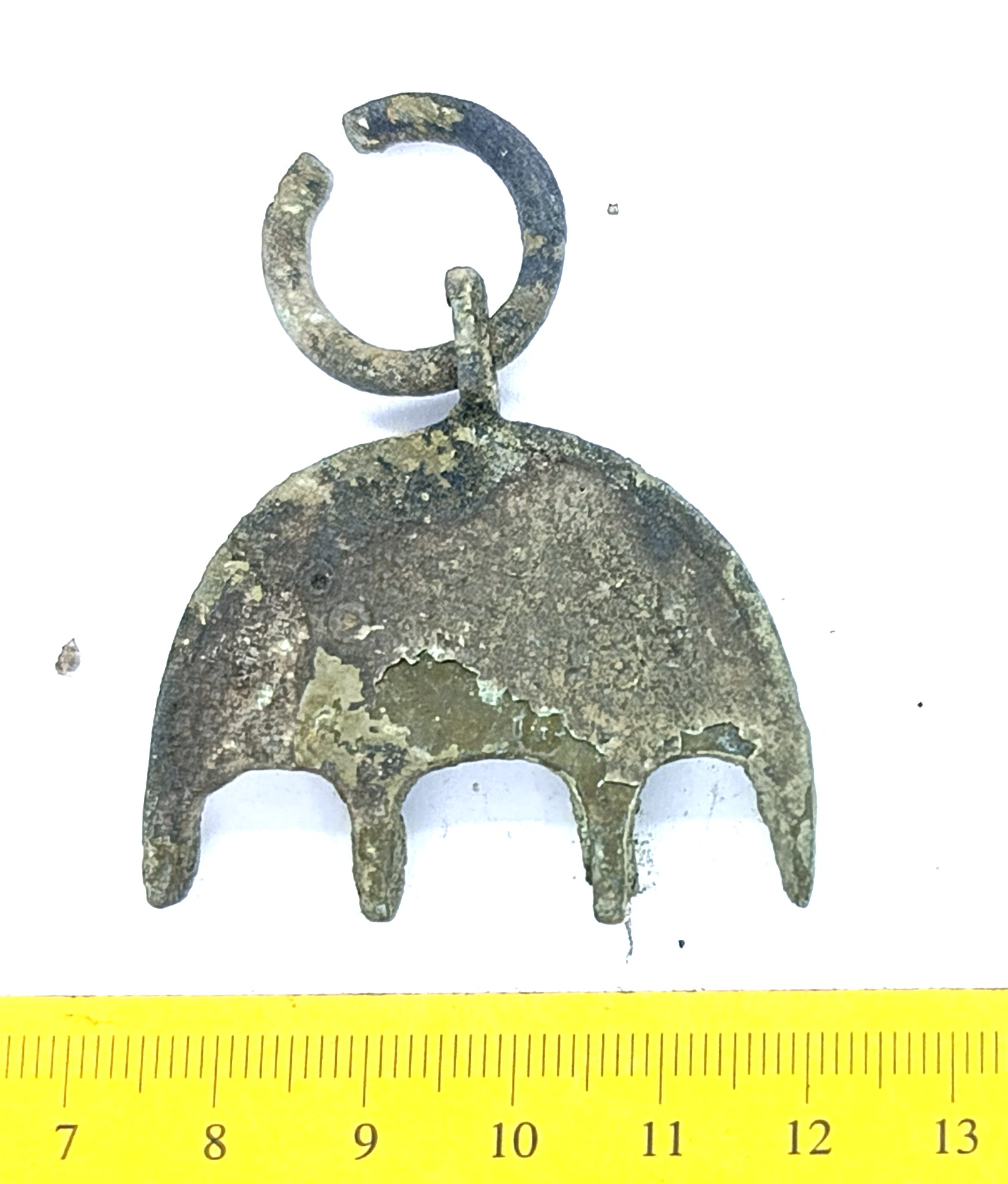
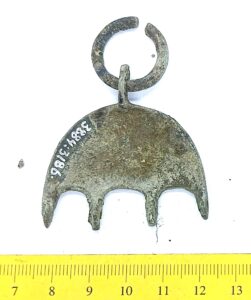
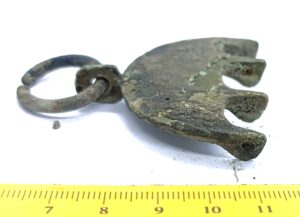 Chain holder, copper alloy. This type of chain-holder is also referred to as segment- or crescent-shaped chain holders. In the material from Salaspils Laukskola cemetery in Latvia, such chain holders appear together with pins dated to the 10th–11th centuries (Zarina 2006, 259–261).
Literature:
Zariņa, A. 2006. Salaspils Laukskolas kapulauks 10.–13. gadsimts. Rīga: Latvijas Vēstures Institūta Apgāds.
Century:
10-11
Discovery code:
AI 3884: 3186
Viltina
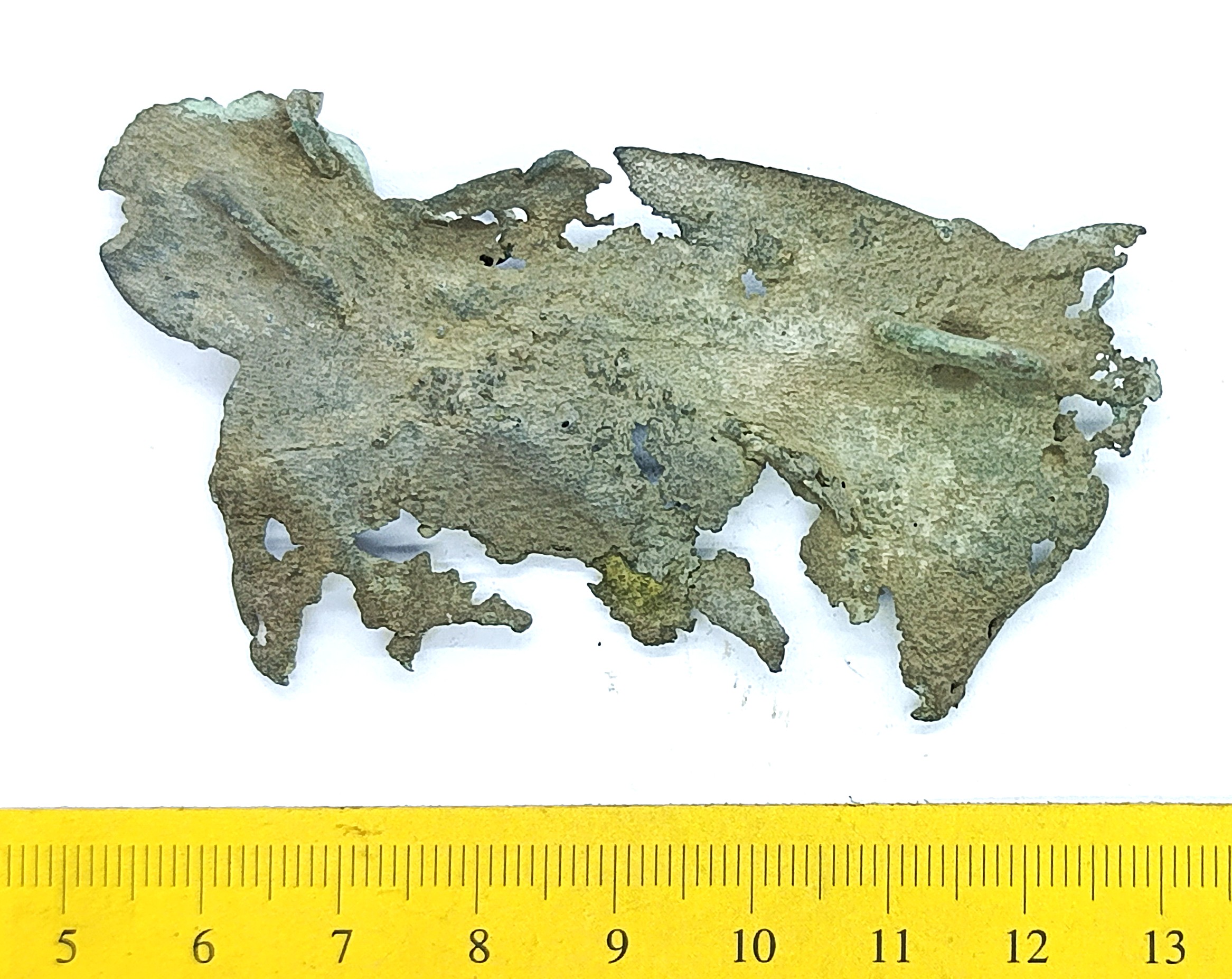
Saaremaa type chain holder, copper alloy.
Century:
12-13
Discovery code:
AI 3884: 3511
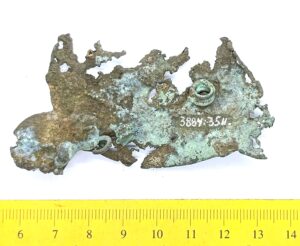
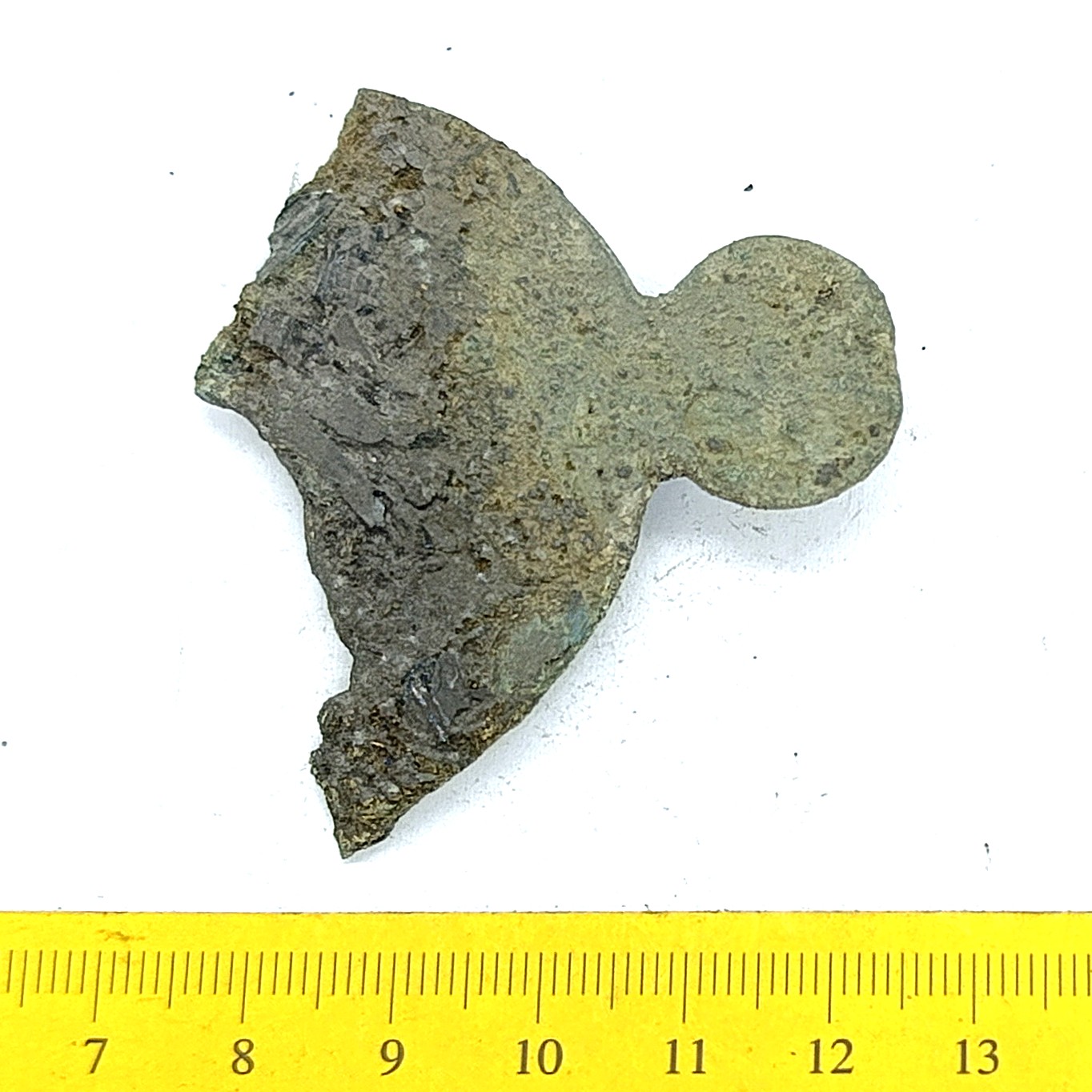
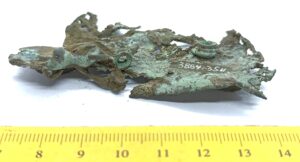 Saaremaa type chain holder, copper alloy. Semi-oval. It is a typical chain holder of Saaremaa, also found in northern and western Estonia, with a few examples in the surrounding areas. They can be found in both cremations and inhumation burials, often together with pins of Saaremaa type. Similar chain holders are also known from the Livic areas in Latvia, where they have often been uncovered in inhumation graves together with other Saaremaa-type artefacts (Spirgis 2008, 144-145). Although previously dated to the 11th century, they were probably mainly in use in the 12th-13th centuries (Mägi 2002, 105).
Literature:
Mägi, M. 2002. At the Crossroads of Space and Time. Graves, Changing Society and Ideology on Saaremaa (Ösel), 9th–13th centuries AD. CCC papers: 6. Gotland University College, Centre for Baltic Studies; Institute of History, Department of Archaeology. Tallinn, 2002.
Spirģis, R. 2008. Bruņrupuču saktas ar krūšu važiņrotām un lībiešu kultūras attīstība Daugavs lejtecē 10.-13. gadsimtā. Rīga: Latvijas Vēstures Institūta Apgāds.
Century:
12-13
Discovery code:
AI 3884: 3511
Viltina
Saaremaa type chain holder, copper alloy.
Century:
12-13
Discovery code:
AI 3884: 3622
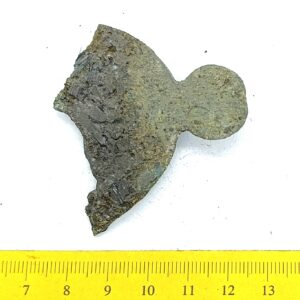
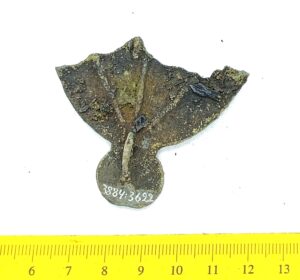
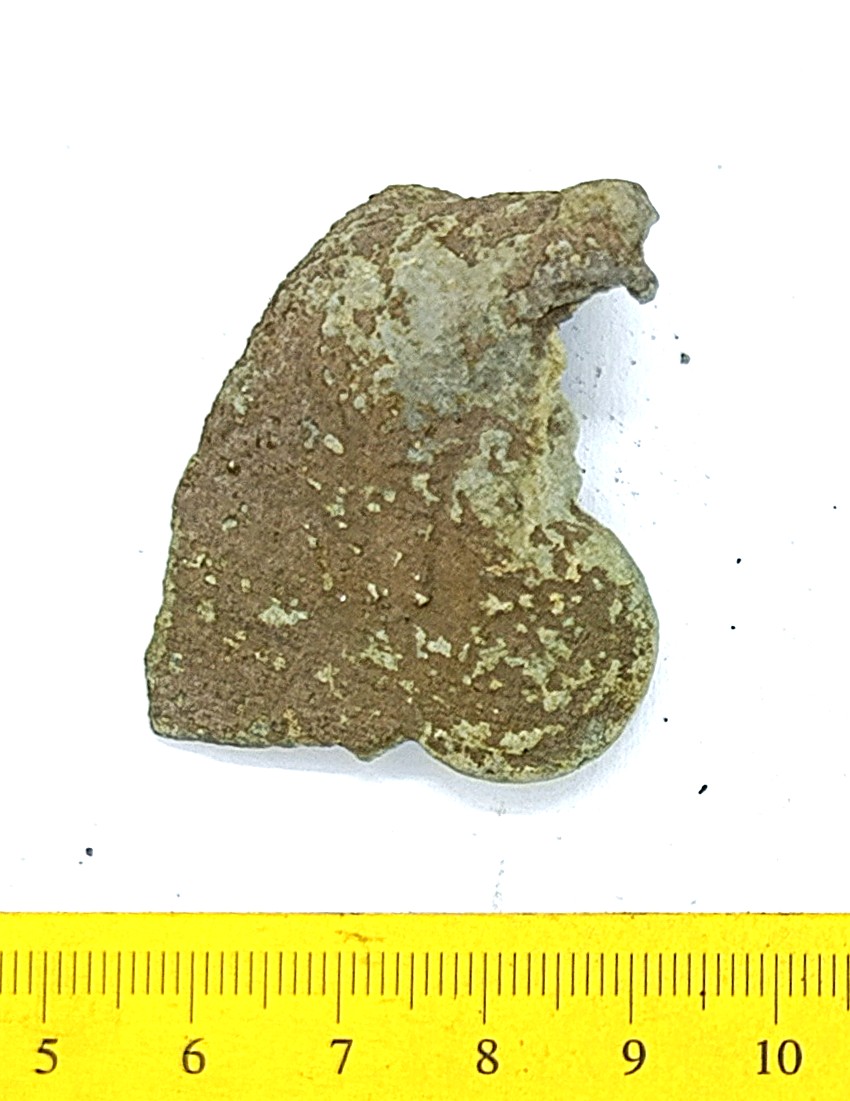
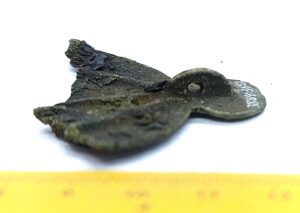 Saaremaa type chain holder, copper alloy. Semi-oval. It is a typical chain holder of Saaremaa, also found in northern and western Estonia, with a few examples in the surrounding areas. They can be found in both cremations and inhumation burials, often together with pins of Saaremaa type. Similar chain holders are also known from the Livic areas in Latvia, where they have often been uncovered in inhumation graves together with other Saaremaa-type artefacts (Spirgis 2008, 144-145). Although previously dated to the 11th century, they were probably mainly in use in the 12th-13th centuries (Mägi 2002, 105).
Literature:
Mägi, M. 2002. At the Crossroads of Space and Time. Graves, Changing Society and Ideology on Saaremaa (Ösel), 9th–13th centuries AD. CCC papers: 6. Gotland University College, Centre for Baltic Studies; Institute of History, Department of Archaeology. Tallinn, 2002.
Spirģis, R. 2008. Bruņrupuču saktas ar krūšu važiņrotām un lībiešu kultūras attīstība Daugavs lejtecē 10.-13. gadsimtā. Rīga: Latvijas Vēstures Institūta Apgāds.
Century:
12-13
Discovery code:
AI 3884: 3622
Viltina
Saaremaa type chain holder, copper alloy.
Century:
12-13
Discovery code:
AI 3884: 3658
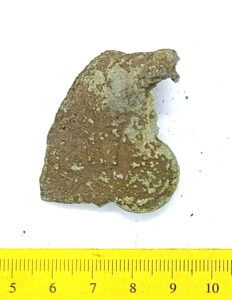
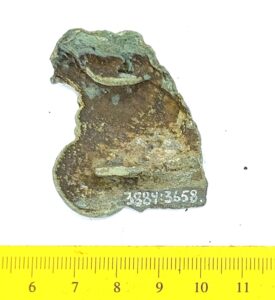 Saaremaa type chain holder, copper alloy. Semi-oval, partly melted. It is a typical chain holder of Saaremaa, also found in northern and western Estonia, with a few examples in the surrounding areas. They can be found in both cremations and inhumation burials, often together with pins of Saaremaa type. Similar chain holders are also known from the Livic areas in Latvia, where they have often been uncovered in inhumation graves together with other Saaremaa-type artefacts (Spirgis 2008, 144-145). Although previously dated to the 11th century, they were probably mainly in use in the 12th-13th centuries (Mägi 2002, 105).
Literature:
Mägi, M. 2002. At the Crossroads of Space and Time. Graves, Changing Society and Ideology on Saaremaa (Ösel), 9th–13th centuries AD. CCC papers: 6. Gotland University College, Centre for Baltic Studies; Institute of History, Department of Archaeology. Tallinn, 2002.
Spirģis, R. 2008. Bruņrupuču saktas ar krūšu važiņrotām un lībiešu kultūras attīstība Daugavs lejtecē 10.-13. gadsimtā. Rīga: Latvijas Vēstures Institūta Apgāds.
Century:
12-13
Discovery code:
AI 3884: 3658
Viltina
Saaremaa type chain holder, copper alloy.
Century:
12-13
Discovery code:
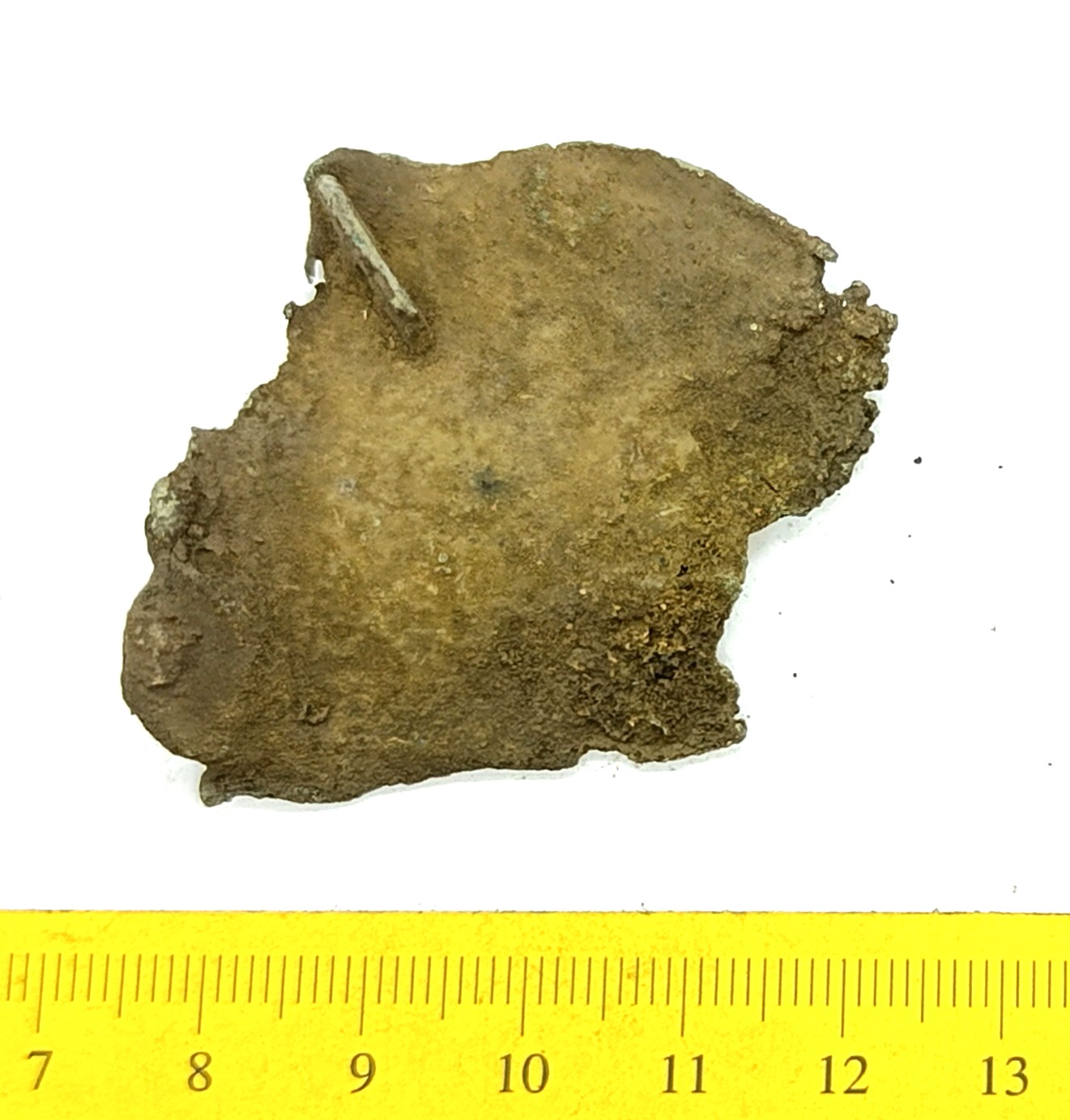
AI 3884: 4715
 Saaremaa type chain holder, copper alloy. Semi-oval. It is a typical chain holder of Saaremaa, also found in northern and western Estonia, with a few examples in the surrounding areas. They can be found in both cremations and inhumation burials, often together with pins of Saaremaa type. Similar chain holders are also known from the Livic areas in Latvia, where they have often been uncovered in inhumation graves together with other Saaremaa-type artefacts (Spirgis 2008, 144-145). Although previously dated to the 11th century, they were probably mainly in use in the 12th-13th centuries (Mägi 2002, 105).
Literature:
Mägi, M. 2002. At the Crossroads of Space and Time. Graves, Changing Society and Ideology on Saaremaa (Ösel), 9th–13th centuries AD. CCC papers: 6. Gotland University College, Centre for Baltic Studies; Institute of History, Department of Archaeology. Tallinn, 2002.
Spirģis, R. 2008. Bruņrupuču saktas ar krūšu važiņrotām un lībiešu kultūras attīstība Daugavs lejtecē 10.-13. gadsimtā. Rīga: Latvijas Vēstures Institūta Apgāds.
Century:
12-13
Discovery code:
AI 3884: 4715
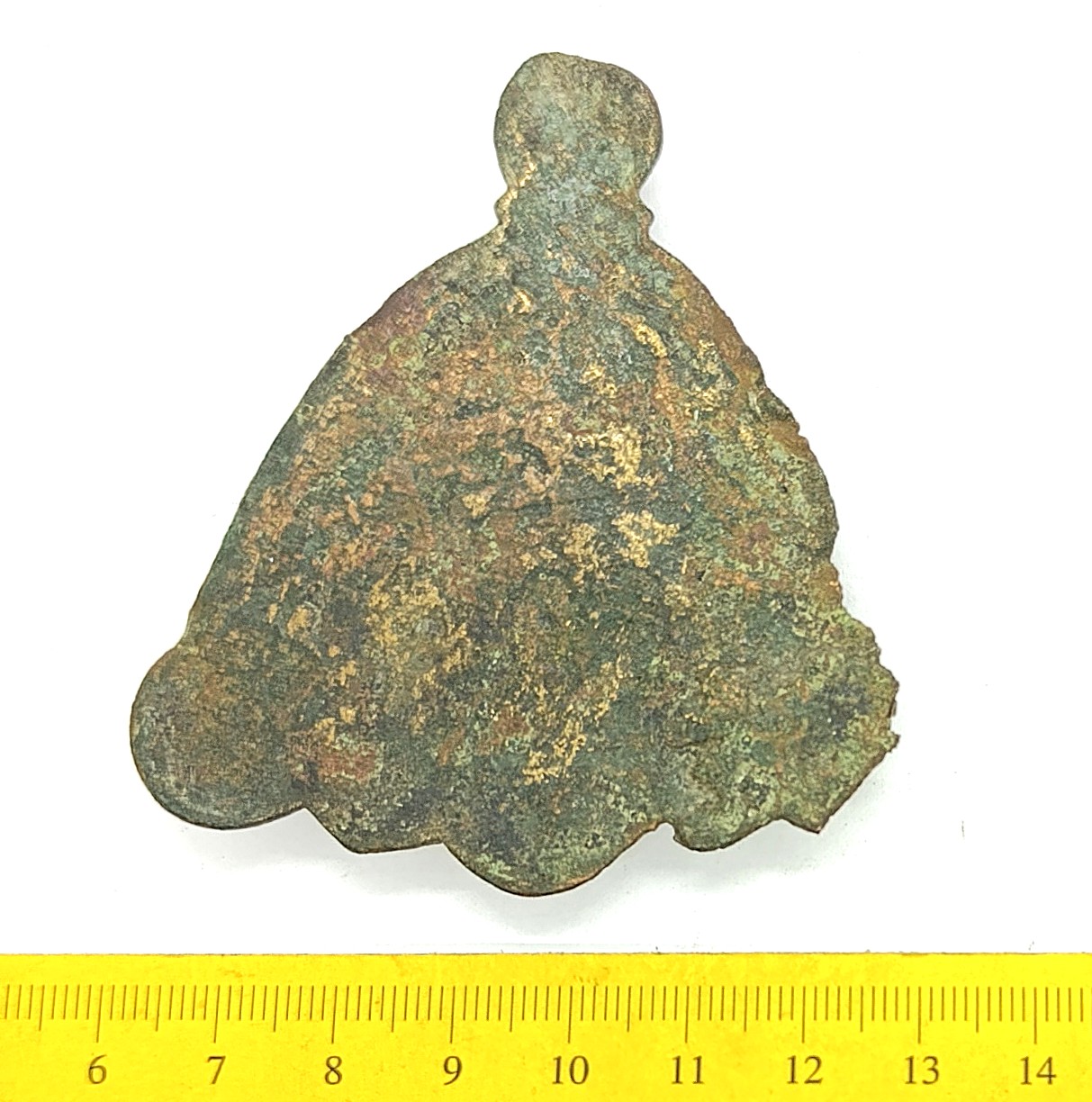
Viltina
Saaremaa type chain holder, copper alloy.
Century:
12-13
Discovery code:
AI 3884: 5590
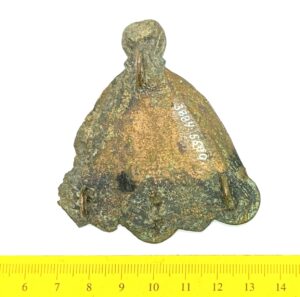
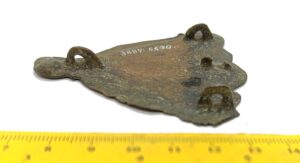 Saaremaa type chain holder, copper alloy. Semi-oval. It is a typical chain holder of Saaremaa, also found in northern and western Estonia, with a few examples in the surrounding areas. They can be found in both cremations and inhumation burials, often together with pins of Saaremaa type. Similar chain holders are also known from the Livic areas in Latvia, where they have often been uncovered in inhumation graves together with other Saaremaa-type artefacts (Spirgis 2008, 144-145). Although previously dated to the 11th century, they were probably mainly in use in the 12th-13th centuries (Mägi 2002, 105).
Literature:
Mägi, M. 2002. At the Crossroads of Space and Time. Graves, Changing Society and Ideology on Saaremaa (Ösel), 9th–13th centuries AD. CCC papers: 6. Gotland University College, Centre for Baltic Studies; Institute of History, Department of Archaeology. Tallinn, 2002.
Spirģis, R. 2008. Bruņrupuču saktas ar krūšu važiņrotām un lībiešu kultūras attīstība Daugavs lejtecē 10.-13. gadsimtā. Rīga: Latvijas Vēstures Institūta Apgāds.
Century:
12-13
Discovery code:
AI 3884: 5590
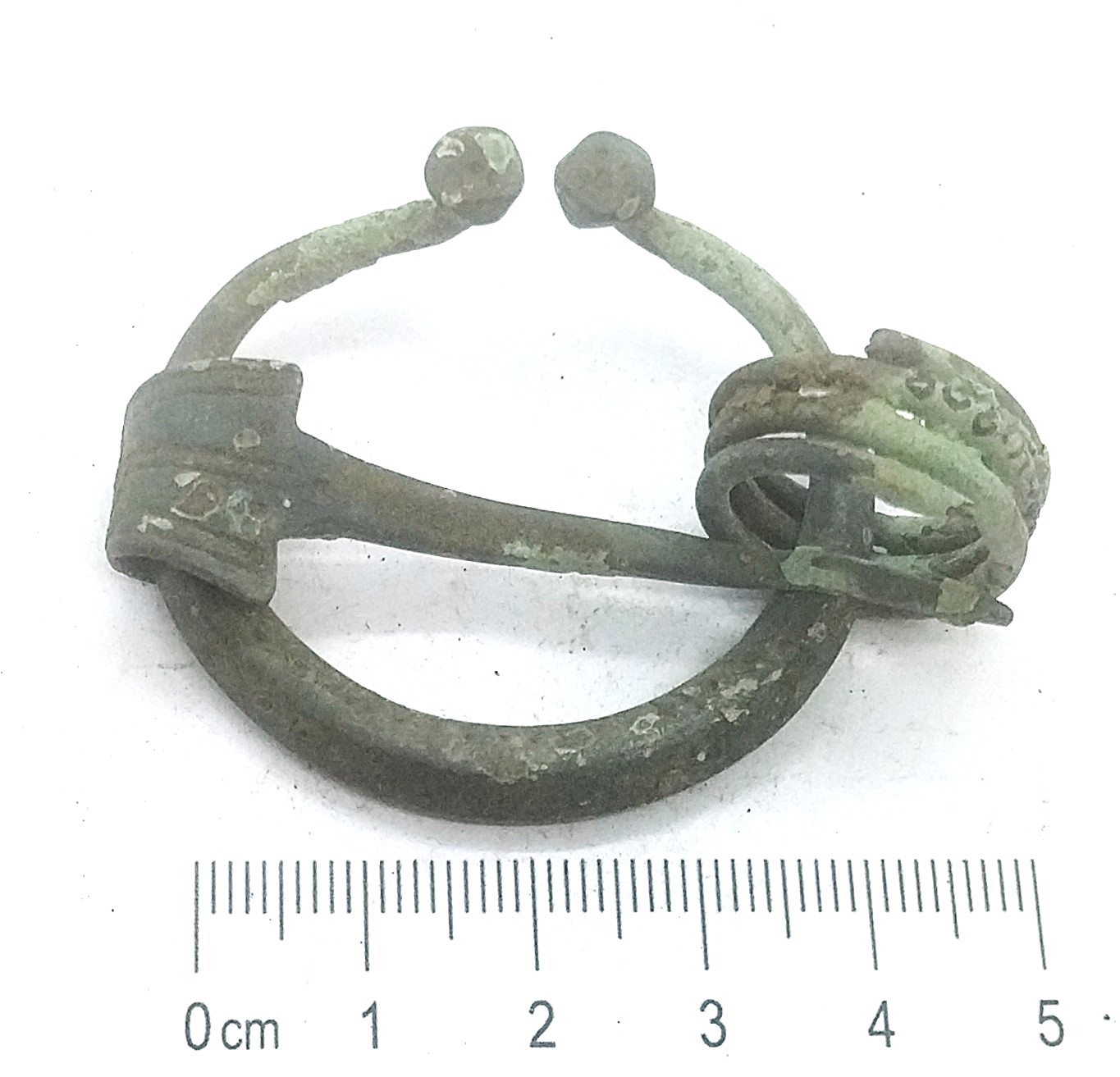
Viltina
Penannular brooch with faceted terminals and big spiral, copper alloy.
Century:
12-13
Discovery code:
AI 3884: 208
Penannular brooch with faceted terminals and big spiral, copper alloy. Such penannular brooches are very widespread in Estonian archaeological material (see also Mägi 2002; Mandel 2017). A big spiral is attached to the brooch’s arch.
Literature:
Mägi, M. 2002. At the Crossroads of Space and Time. Graves, Changing Society and Ideology on Saaremaa (Ösel), 9th–13th Centuries AD. (CCC Papers, 6.) Tallinn.
Mandel, M. 2017. Maidla muinaskalmistu saladused. Eesti Ajaloomuuseum, Tallinn.12.–13. sajand
Century:
12-13
Discovery code:
AI 3884: 208
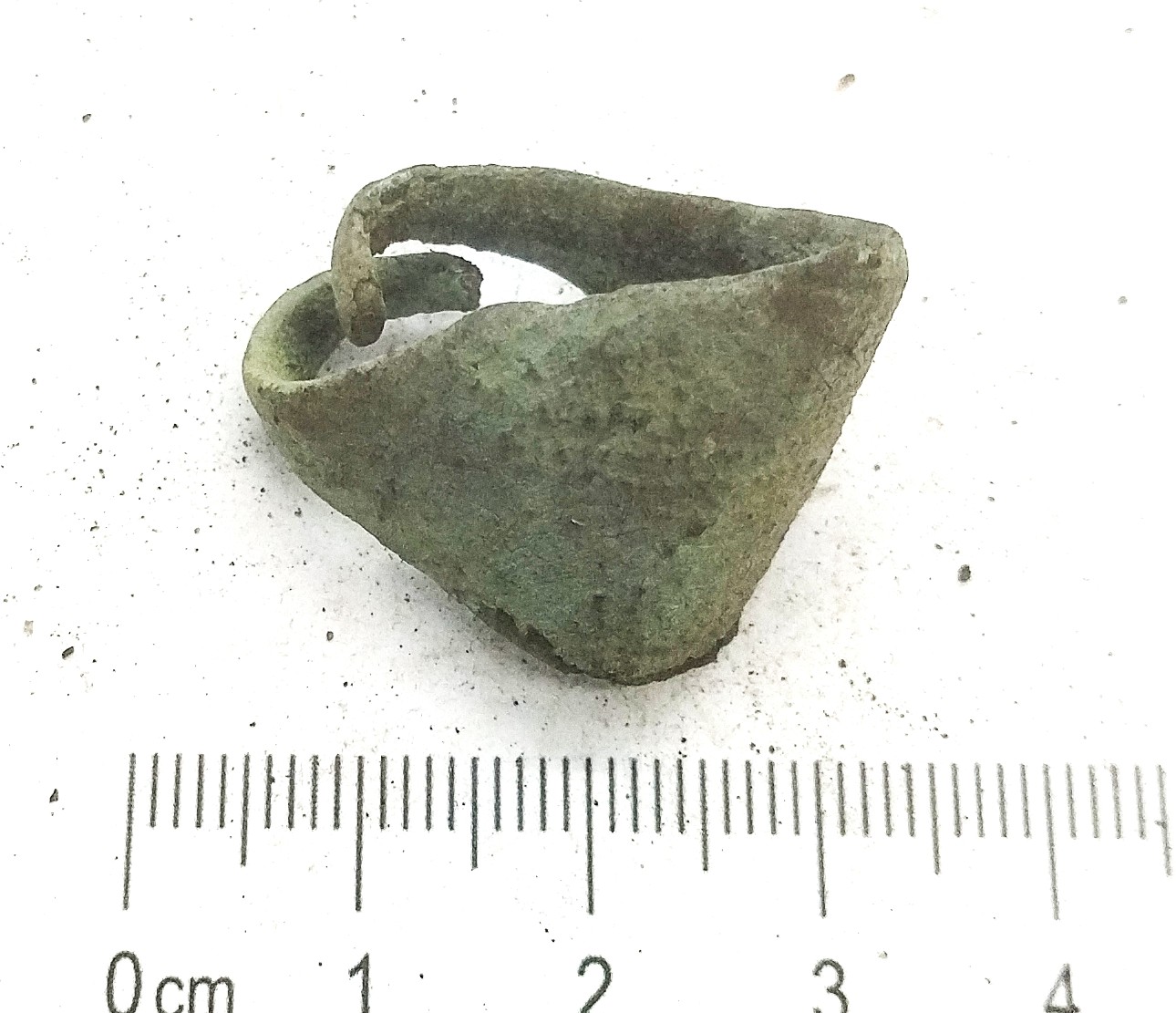
Viltina
Finger-ring with a widening central part, copper alloy.
Century:
11-13
Discovery code:
AI 3884: 265
Finger-ring with a widening central part, copper alloy. Similar rings have been found in the Eura Luistari and Saramäki burials in Finland where they are dated to the 11th century (Lehtsalo-Hilander 1982, 124–126) and from Abelnieki burials in Latvia, where they are dated from the second half of the 11th century to the beginning of the 13th century (Vasks 2008, 157–158). These rings also occur in Gotland, where they are dated to the 11th-12th century in Gotland (Thunmark-Nylen 1998, Pl. 143). In Saaremaa, a similar finger-ring is recorded in Valjala churchyard where it, according to the context, belongs to the 13th or perhaps late 12th century.
Literature:
Lehtsalo-Hilander, P.-L. 1982. Luistari II: The Artefacts. SMYA 82: 2. Helsinki.
Lehtsalo-Hilander, P.-L. 1982. Luistari II: The Artefacts. SMYA 82: 2. Helsinki.
Thunmark-Nylen, L. 2006. Die Wikingerzeit Gotlands. I. Abbildungen der Grabfunde. Almqvist & Wiksell, Stockholm.
Vasks, A. 2008. Kurši padurē? – Pētījumi Kuršu Senatnē. Rakstu Krājums. Latvijas Nacionālā Vēstures Muzeja Raksti, 14, 153–166.
Century:
11-13
Discovery code:
AI 3884: 265
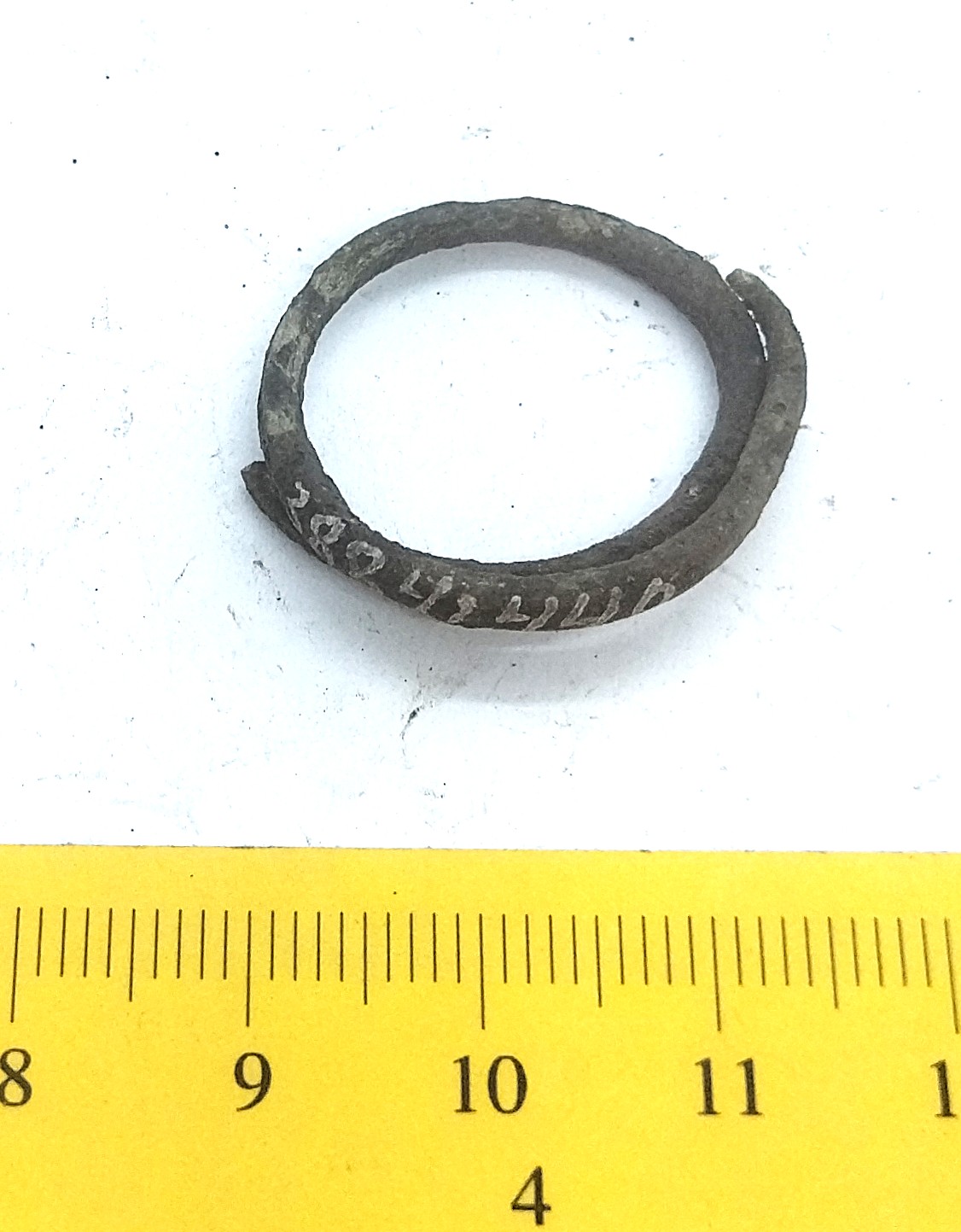
Viltina
Big spiral, copper alloy.
Century:
10-13
Discovery code:
AI 3884: 440
Century:
10-13
Discovery code:
AI 3884: 440

