
Database
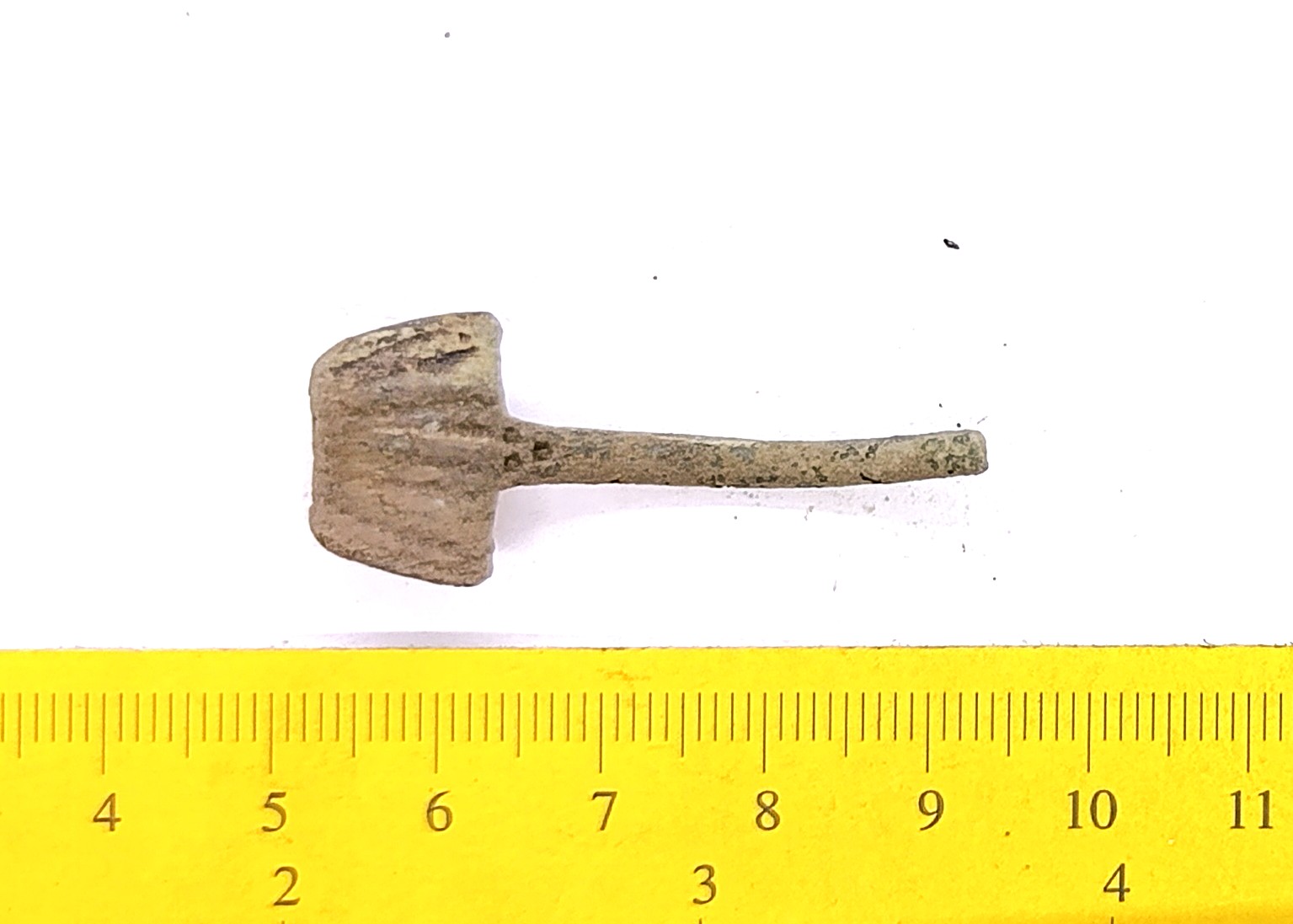
Century:
10-13
Discovery code:
AI 3884: 4174
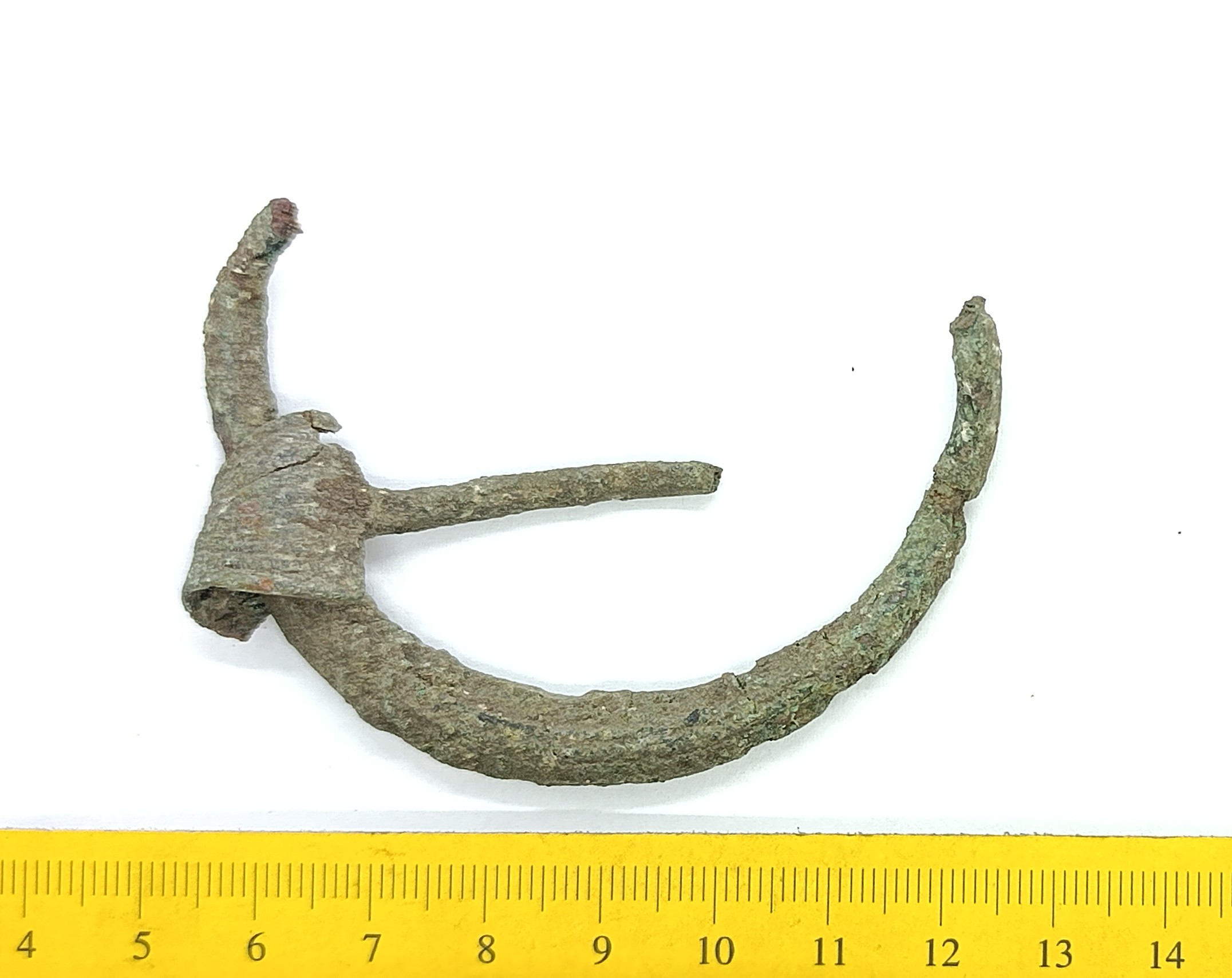
Penannular brooch, copper alloy. With a rhomb-shaped cross-section of the arch, the arch decorated with “wolf-teeth” ornament. Such brooches were widespread in Estonian stone graves (see e.g. Mägi 2002; Mandel 2017), but also occurred in inhumation graves, and can be dated up to the the mid-13th century.
Literature:
Mägi, M. 2002. At the Crossroads of Space and Time. Graves, Changing Society and Ideology on Saaremaa (Ösel), 9th–13th Centuries AD. (CCC Papers, 6.) Tallinn.
Mandel, M. 2017. Maidla muinaskalmistu saladused. Eesti Ajaloomuuseum, Tallinn. “
Century:
12-13
Discovery code:
AI 3884: 4311
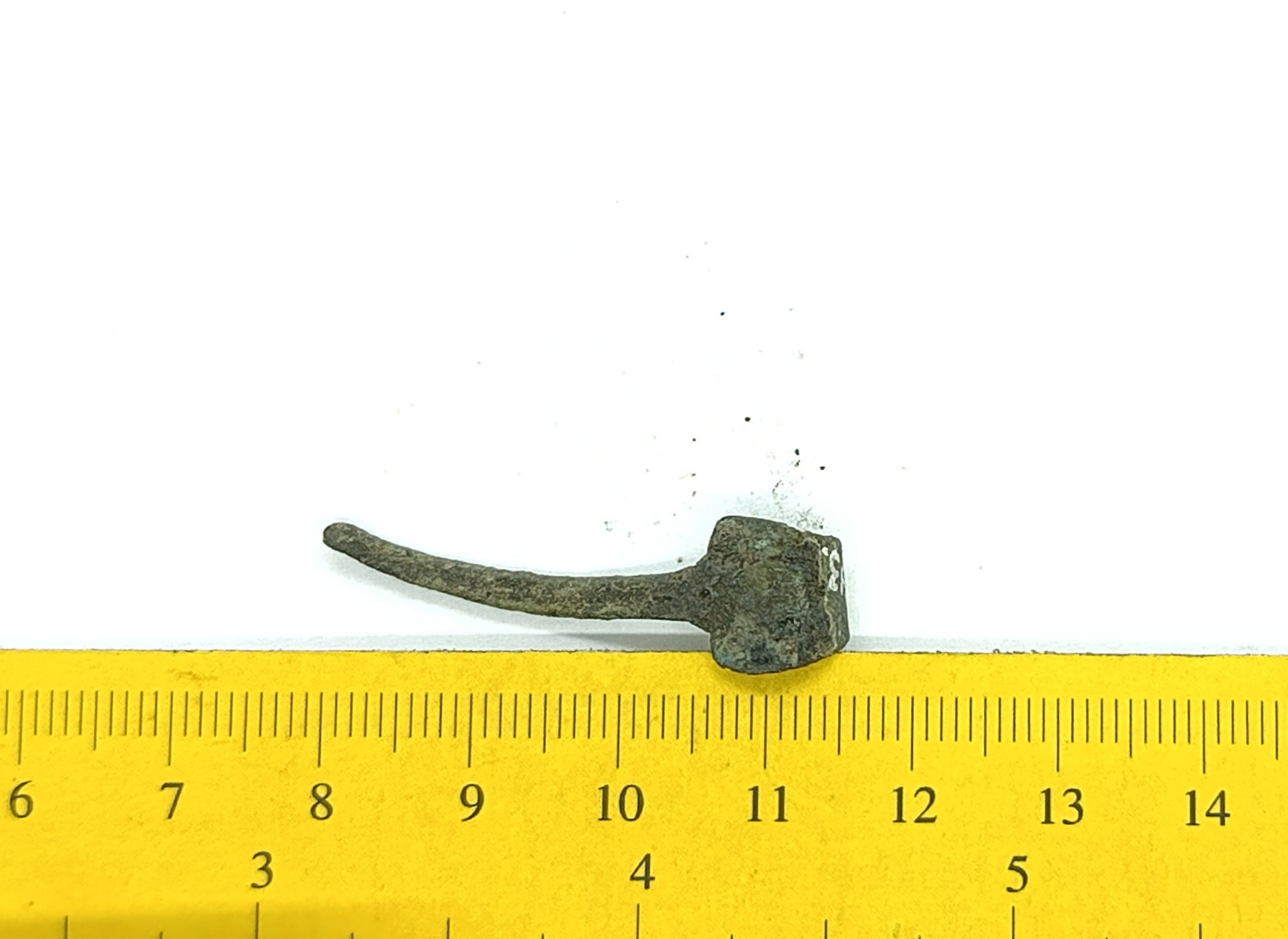
Century:
10-13
Discovery code:
AI 3884: 4343
Century:
10-13
Discovery code:
AI 3884: 4429
Century:
10-13
Discovery code:
AI 3884: 4637
Viltina
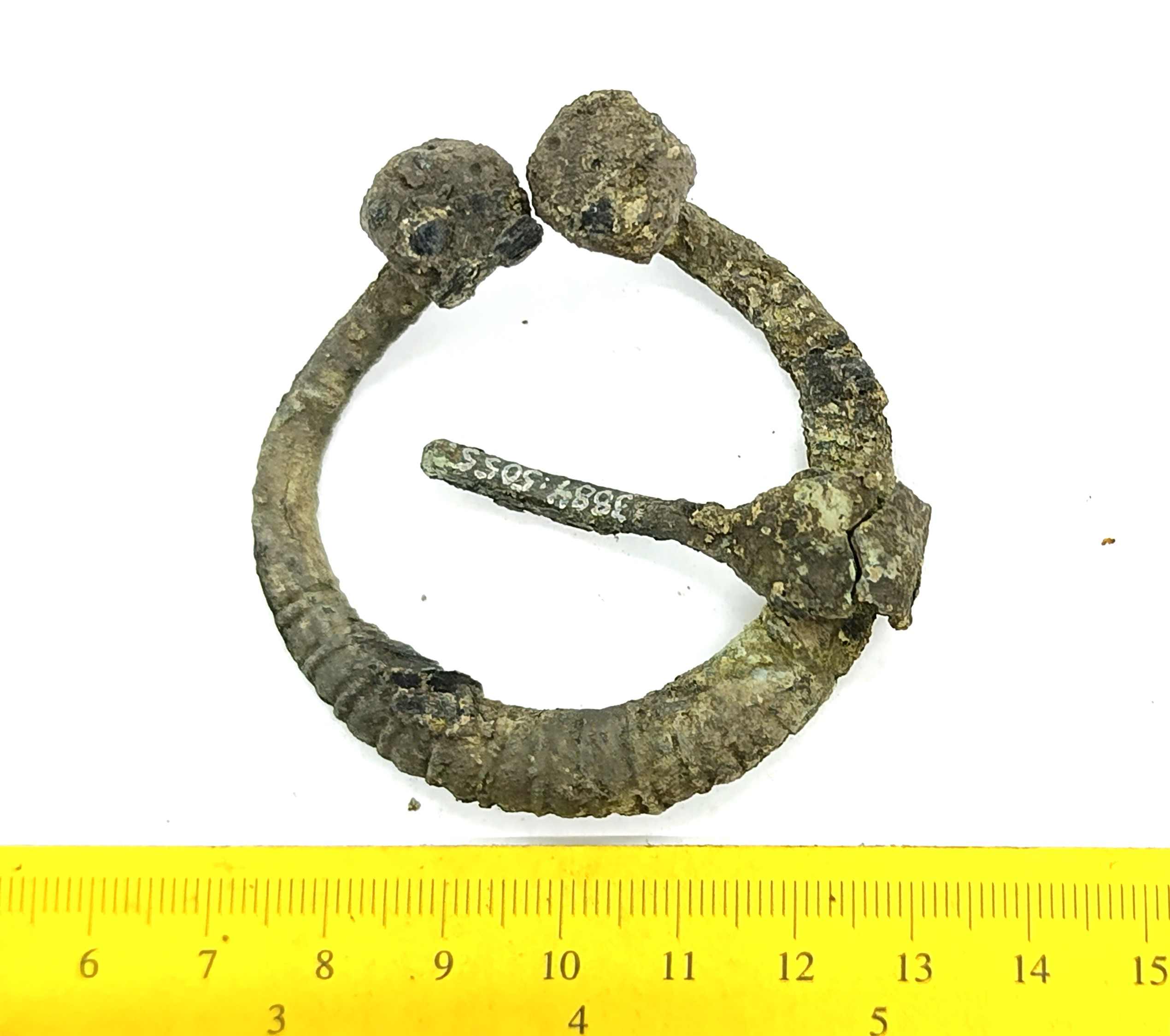
Penannular brooch with knob-shaped terminals, copper alloy.
Century:
13
Discovery code:
AI 3884: 5055
Penannular brooch with knob-shaped terminals, copper alloy. The ring has grooved thicker middle part, transversely grooved. Similar brooches are often found in 13th-14th-century inhumation graves and only seldom in stone graves with cremations. In Karja, such brooch was registered in an inhumation dated to the second half of the 13th century (Mägi 2002, Pl. 125: 1–2), but in Siksälä, South-East Estonia, they also occur in 14th-century graves (Valk et al 2014).
Literature:
Mägi, M. 2002. At the crossroads of space and time: graves, changing society and ideology on Saaremaa (Ösel), 9th–13th centuries AD. Tallinn.
Century:
13
Discovery code:
AI 3884: 5055
Century:
10-13
Discovery code:
AI 3884: 5148
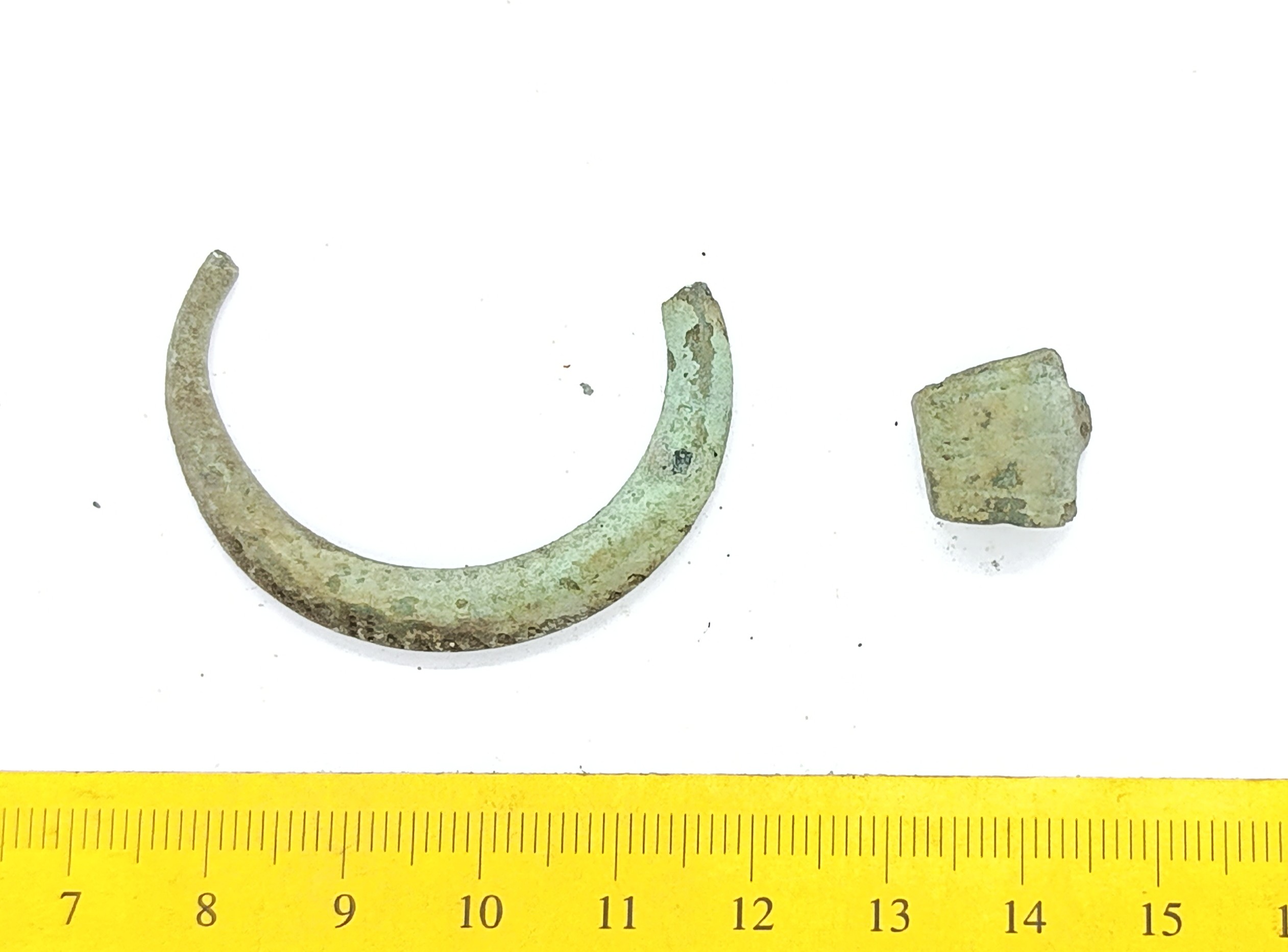
Penannular brooch, copper alloy. With a rhomb-shaped cross-section of the arch, the arch decorated with “wolf-teeth” ornament. Such brooches were widespread in Estonian stone graves (see e.g. Mägi 2002; Mandel 2017), but also occurred in inhumation graves, and can be dated up to the the mid-13th century.
Literature:
Mägi, M. 2002. At the Crossroads of Space and Time. Graves, Changing Society and Ideology on Saaremaa (Ösel), 9th–13th Centuries AD. (CCC Papers, 6.) Tallinn.
Mandel, M. 2017. Maidla muinaskalmistu saladused. Eesti Ajaloomuuseum, Tallinn. “
Century:
12-13
Discovery code:
AI 3884: 5196
Viltina
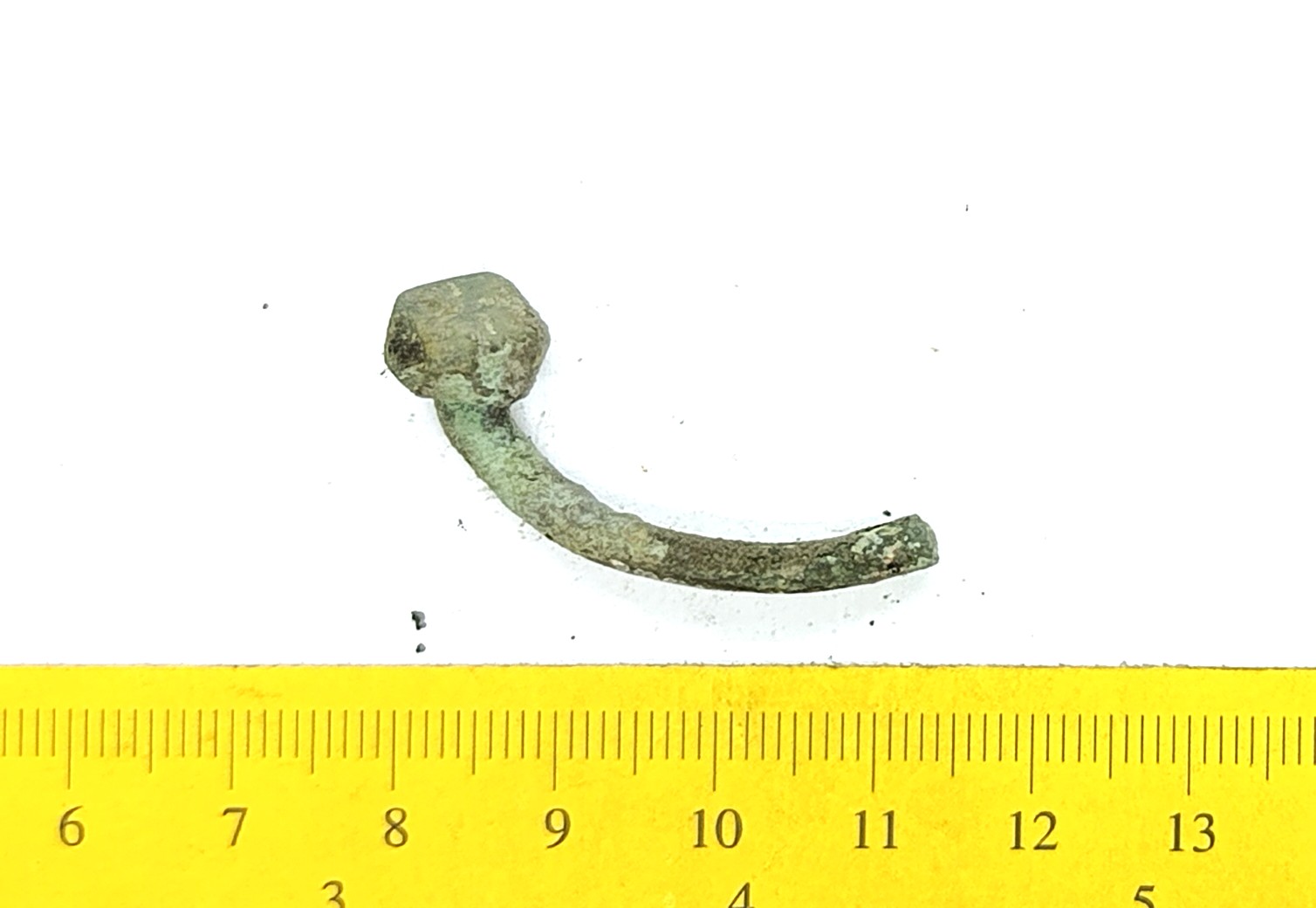
Penannular brooch with faceted terminals, copper alloy.
Century:
12-13
Discovery code:
AI 3884: 5255
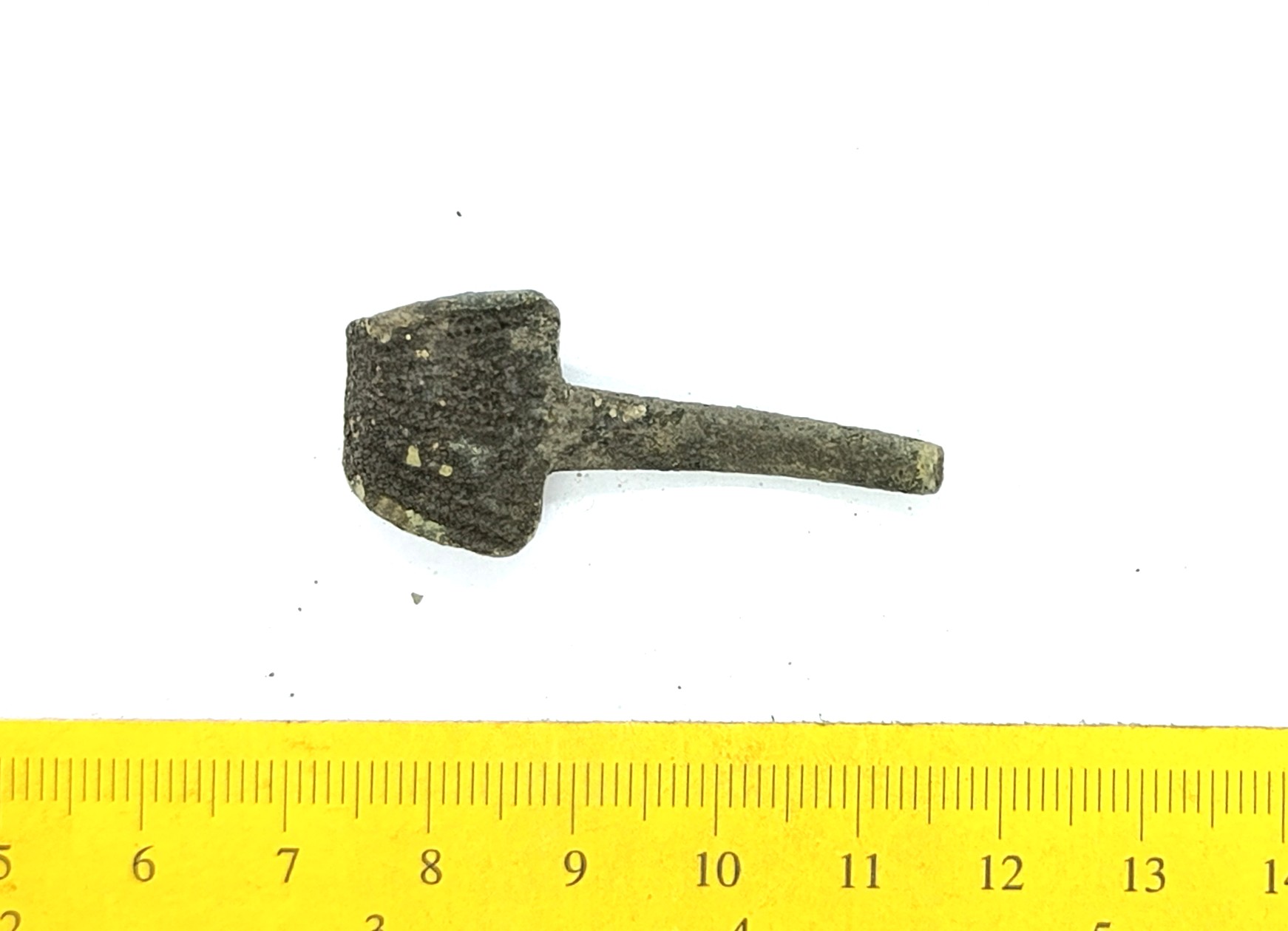
Penannular brooch with faceted terminals, copper alloy. The pin has a broad base. Such brooches were widespread in Estonian stone graves (see e.g. Pauts 1997, 197; Mägi 2002; Mandel 2017), but also occurred in inhumation graves, and can be dated up to the the mid-13th century. It is also possible that such brooches were taken to use as early as in the end of the 11th century.
Literature:
Pauts, H. 1997. Pahaga hoburaudsõled Eestis. – Eesti Ajaloomuuseum. Töid ajaloo alalt, I. Tallinn, 79–115.
Mägi, M. 2002. At the Crossroads of Space and Time. Graves, Changing Society and Ideology on Saaremaa (Ösel), 9th–13th Centuries AD. (CCC Papers, 6.) Tallinn.
Mandel, M. 2017. Maidla muinaskalmistu saladused. Eesti Ajaloomuuseum, Tallinn.
Century:
12-13
Discovery code:
AI 3884: 5255

