Source: Mägi, M. (2021). Viking Age and Medieval harbour site at Mullutu in southern Saaremaa. Archaeological Fieldwork in Estonia, 2020, 107-120.
The Mullutu harbour site is located in southern Saaremaa, east of Kuressaare, in the area of present-day Mullutu Bay. It is one of the most remarkable Viking Age harbour sites discovered on Saaremaa, with archaeological finds providing evidence of the islanders’ extensive connections with other regions of the Baltic Sea. Numerous artefacts discovered at Mullutu have parallels in Scandinavia, Finland, and Courland. The harbour site was already in use in the 8th century and retained some importance until the Late Middle Ages.
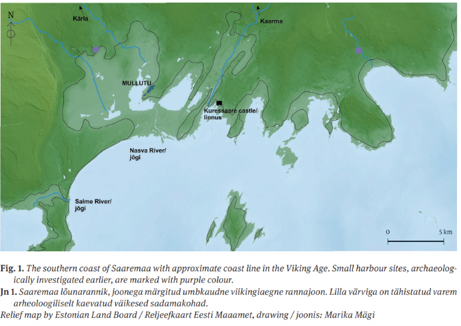
During the Viking Age, the coastline of Saaremaa differed considerably from its present-day configuration. Bodies of water that have since become lakes then formed a large sea bay, one of whose main entrances was located near the present-day Nasva River. The harbour site was situated close to the entrance of the bay, where a naturally steeper section of shoreline allowed vessels to land more easily. Archaeological investigations suggest that a stretch of shoreline approximately 100 metres long may also have been artificially steepened to improve landing conditions.
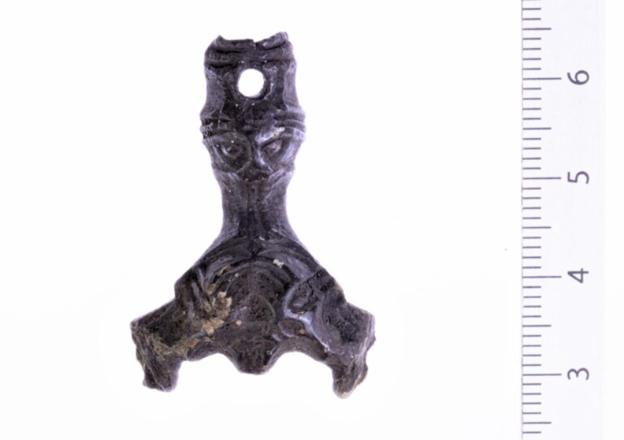
Bronze shield stud discovered at Mullutu, decorated in an animal art style. Similar studs found at Birka have been interpreted as fittings belonging to decorated shield grips. SM 10863: 24. Photo: Jaana Ratas.
The location was favourable for seafarers, as one branch of the Viking Age eastern route, known as Austrvegr, ran from Gotland across the Baltic Sea to Saaremaa, then through the Salme Strait along the island’s southern coast and onwards towards the Gulf of Finland. Mullutu may have provided passing ships with a safe stopping place where their crews could spend the night or seek shelter from bad weather.
The harbour was also located near the meeting point of the later parishes of Kaarma, Kärla, and Anseküla. It may therefore have served as a gathering place for local inhabitants, where they held discussions, organised joint undertakings, or prepared for military expeditions.
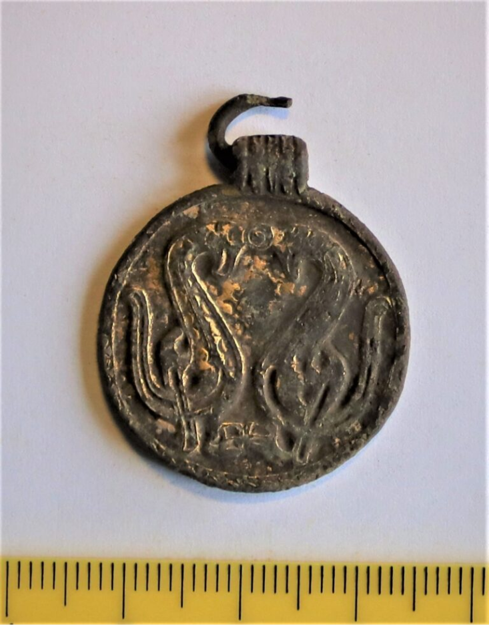
Round bronze and gold pendant. The gilded front is decorated with Broa-style ornamentation depicting two birds facing each other. The reverse features three small circular depressions. SM 10863: 26.
The harbour site was discovered by amateur metal detectorists Tiina Tohv and Karl Laane, and 116 metal artefacts were recovered from the area between 2016 and 2019. In 2020, systematic archaeological investigations were conducted under the direction of Marika Mägi. These involved a metal-detector survey covering approximately 12 hectares and the excavation of five small trenches.
The main concentration of finds was located behind the former beach ridge, within an area of approximately 0.6 hectares. A thin cultural layer was discovered there, containing burnt animal bones, fragments of charcoal, and a small number of pottery sherds. These finds suggest temporary campsites where seafarers may have stopped and prepared food. The presence of lightweight structures is also possible, although no conclusive evidence of such buildings was found. The soil at Mullutu is very shallow, and most artefacts were found directly on the limestone gravel or between stones.
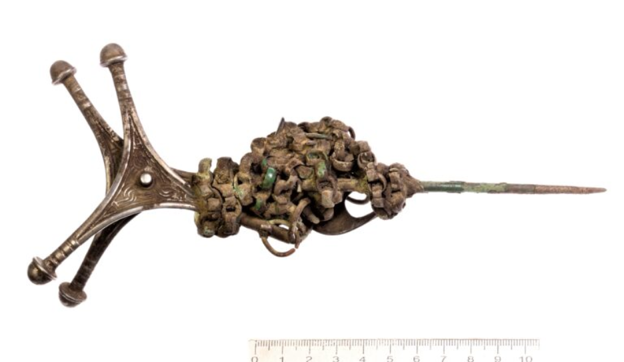
Two dress pins with chain holders and a chain wrapped around the shafts, made of bronze and silver. The knobs are mushroom-shaped, with a moulding and a round knob in the centre of the triangular section. The front is decorated with animal ornamentation. The pinheads are made of silver and terminate in cylindrical ends. The shafts are made of bronze and fit into the heads. One of the shafts is missing. SM 10863: 3. Photo: Jaana Ratas.
Most of the datable finds from Mullutu originate from the 8th–11th centuries, corresponding to the Viking Age. These include numerous items of jewellery, weapons, horse-riding equipment, and objects associated with trade. Particularly noteworthy are two dress pins with triangular silver heads, which were wrapped in a bronze chain and concealed beneath a limestone slab. They probably date to the 8th or early 9th century and may have formed part of a woman’s jewellery set. Based on the circumstances of their discovery, it is possible that the ornaments were deliberately hidden or left there as an offering.
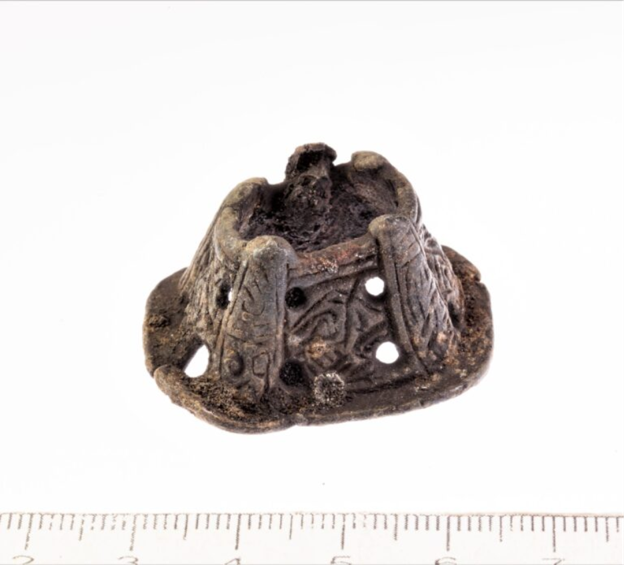
Box-shaped brooch made of copper alloy, decorated with animal ornamentation. Two similar brooches have been found in graves at Birka. Second half of the 9th century or first half of the 10th century. SM 10863: 16. Photo: Jaana Ratas.
Mullutu’s international connections are evidenced by several artefacts of Scandinavian origin or influence, including a gilded bronze pendant, a fragment of a silver ring, and decorative studs. Some of these have close parallels at the Viking Age trading centre of Birka in Sweden.
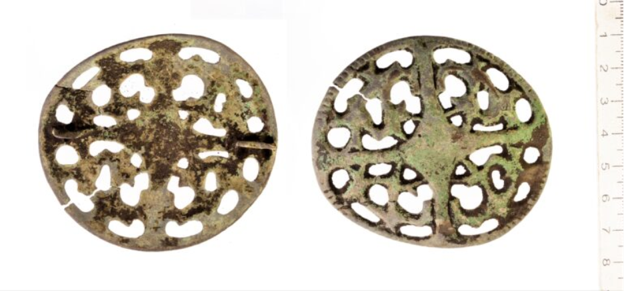
Openwork disc brooch made of copper alloy. A cross motif in the centre; the ornamentation was probably influenced by Germanic animal art. According to current evidence, such brooches were primarily widespread in Finland, where they are thought to have developed under the influence of Gotlandic box-shaped brooches. In recent years, increasing numbers of similar brooches have also been discovered in Estonia. SM 10863: 15. Photo: Jaana Ratas.
A 9th-century openwork circular brooch is associated with Finland, while several pendants and other ornaments have connections with Courland and Semigallia.
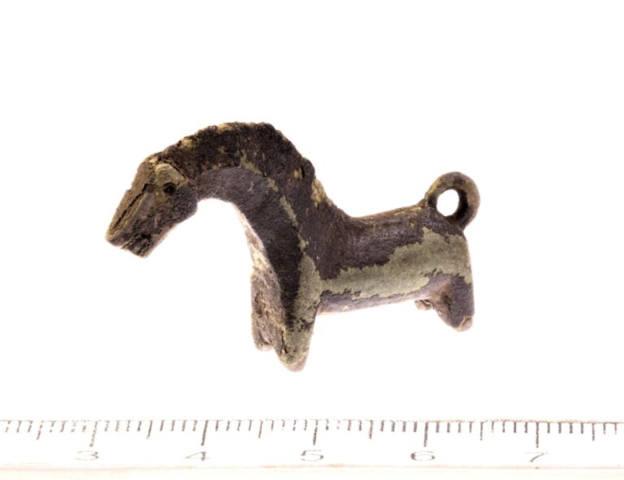
Horse-shaped figurine (identified by some as a dog figurine), made of copper alloy. Such figurines have been interpreted as weights, particularly because they have often been found together with other weights. SM 10863: 27. Photo: Jaana Ratas.
The importance of Mullutu as a trading site is also reflected in the coins and weights discovered there. More than 40 coins and coin fragments have been found, most of them dating from the 9th–11th centuries. These include 23 Arab silver coins, approximately two-thirds of which were minted under the Samanid dynasty and the remainder under the Abbasid dynasty. In addition, 20 weights, a silver ingot, a bronze ingot, and other objects associated with trade have been discovered. The scattered distribution of the coins and weights indicates that they did not form a single concealed hoard but were probably lost during activities taking place at the harbour.
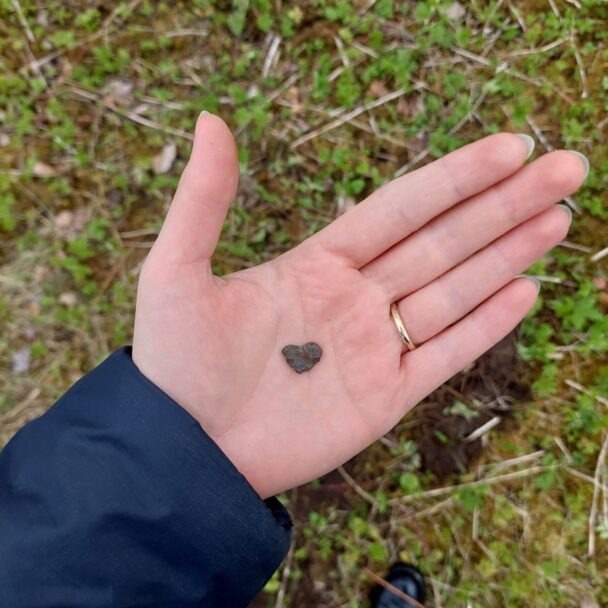
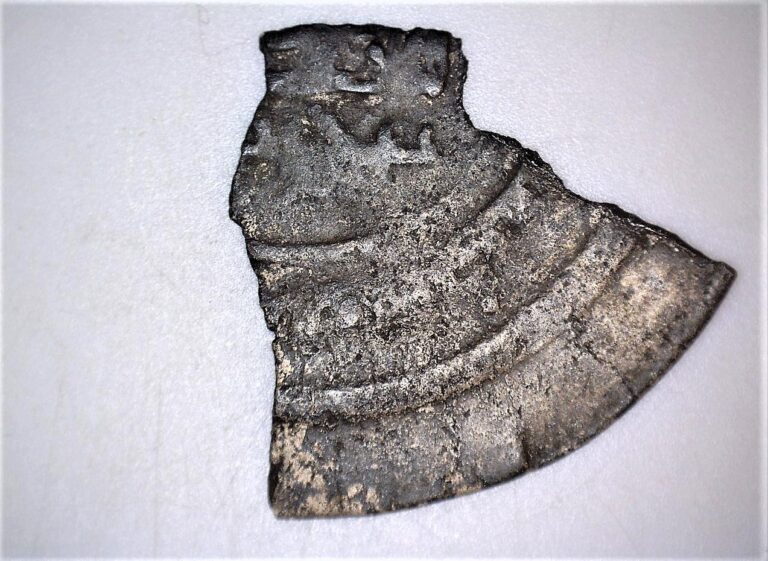
Coin fragments, Samanid dynasty. Reign of Nuh ibn Nasr, mint unknown. Weight: 0.31 g. AD 331–344.
Numerous ship rivets and nails indicate the presence of vessels in the harbour. Knives, a sickle, a hoe, and other tools have also been discovered. Weapon-related finds include spearheads, arrowheads, sword scabbard chapes, and horse-riding equipment. Overall, the archaeological finds suggest that Mullutu was an important stopping place and trading site during the Viking Age, used by both the inhabitants of Saaremaa and seafarers arriving from more distant regions.
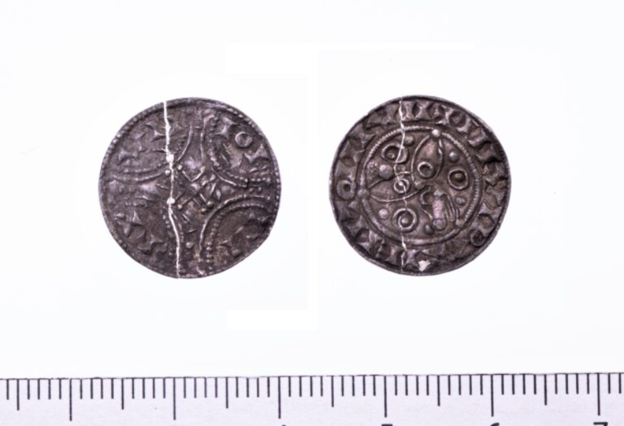
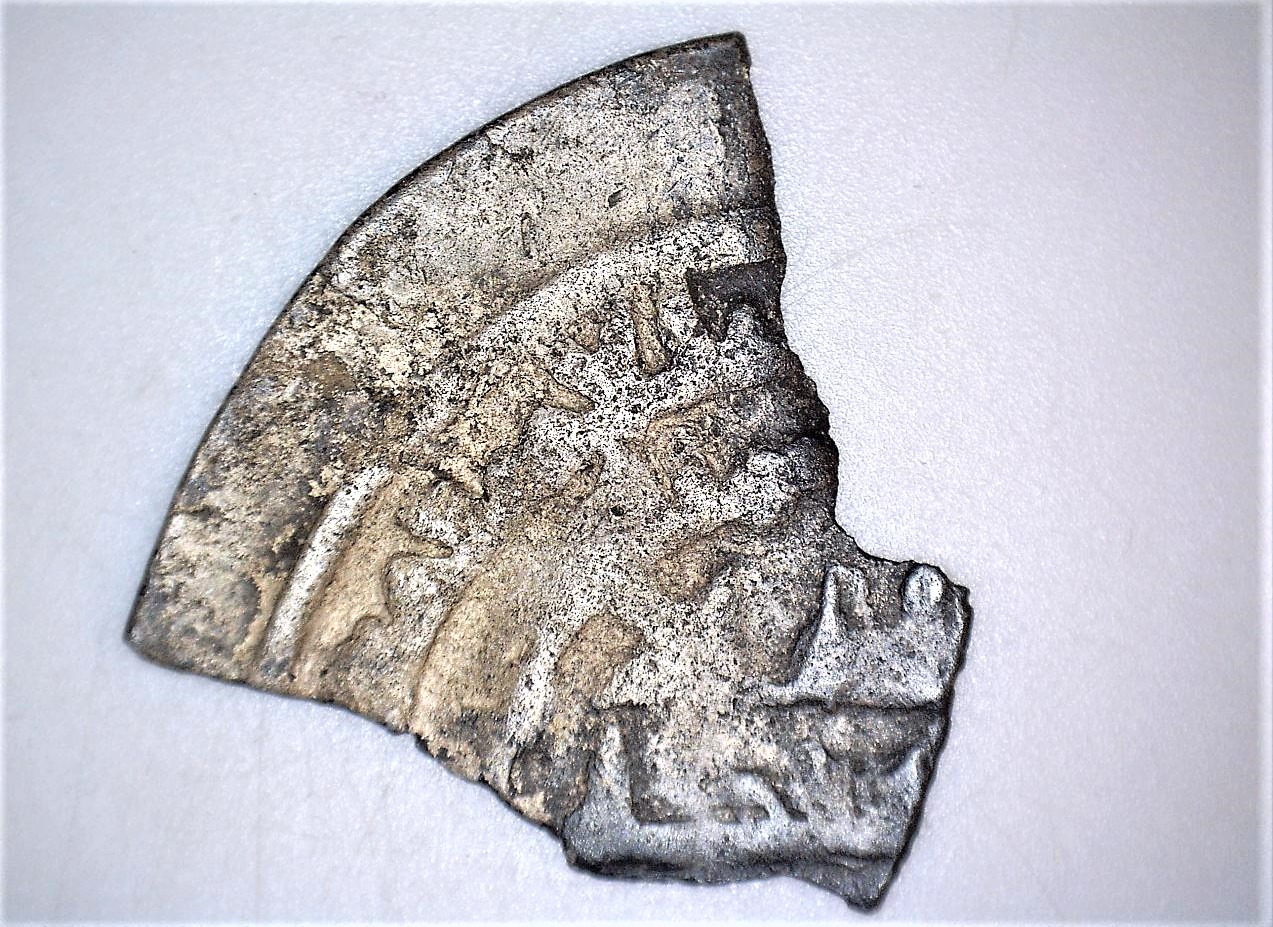
Coin fragments, Denmark, reign of Svend Estridsen (1047–1076), minted in Roskilde. Weight: 0.82 g. AD 1047–1075. SM 10863: 108. Photo: Jaana Ratas.
In the late 11th and 12th centuries, the importance of Mullutu declined considerably. This may have been related to the decline of Viking Age eastern trade, which affected several harbours and trading centres around the Baltic Sea. However, the harbour site did not fall completely out of use.
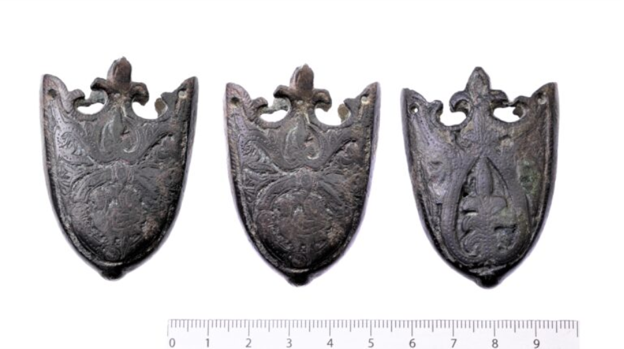
Sword scabbard, copper alloy. SM 10863: 25. Photo: Jaana Ratas.
A new period of more intensive use began in the late 12th and 13th centuries. Nearly a third of the datable finds originate from this period, including numerous penannular brooches, rings, and belt fittings characteristic of Saaremaa. Unlike during the Viking Age, there is no longer clear evidence of international trade. Instead, the jewellery and weapons, including a sword pommel and a crossbow bolt head, suggest that the harbour may have been associated with the local elite. Mullutu may have served as a gathering place for regional assemblies, negotiations, and preparations for military expeditions.
The importance of Mullutu began to decline in the 14th century, when the Bishop of Saaremaa (Osilia) established a stone castle at Kuressaare, around which a new centre began to develop. Kuressaare’s location was better suited to vessels with a deeper draught and provided easier access to the open sea. Nevertheless, Mullutu remained in use during the 14th and 15th centuries, as indicated by a small number of Late Medieval finds.
Explore the archaeological finds from Mullutu in our database: here.